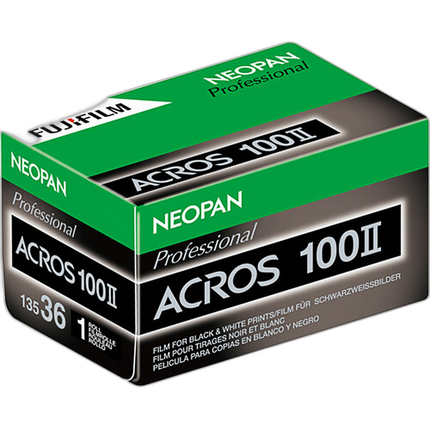
Fujifilm Neopan 100 Acros II Black and White Negative Film (35mm, 36exp)

Key Features
- Fine-grain black and white negative film designed for exceptionally high sharpness and smooth tonal gradation.
- ISO 100 sensitivity makes it ideal for daylight shooting, studio work, landscapes, architecture, and detailed documentary photography.
- Orthopanchromatic emulsion technology helps deliver deep blacks, bright whites, and refined midtone separation.
- Excellent reciprocity characteristics support long exposures with minimal compensation, making it a strong choice for night scenes and long-exposure work.
- 35mm format roll with 36 exposures for classic film cameras and dependable frame count per cartridge.
- Well suited for scanning or darkroom printing thanks to crisp detail, controlled contrast, and clean grain structure.
OVERVIEW
Fujifilm Neopan 100 Acros II is a premium black and white negative film built for photographers who want outstanding sharpness, very fine grain, and elegant tonal rendering in a classic 35mm format. With an ISO 100 speed and 36 exposures per roll, this film is especially popular for landscapes, street scenes in strong light, portraiture with careful lighting, architecture, and fine-art photography where detail and tonal subtlety matter. Acros II continues the legacy of the original Acros line while maintaining the clean, refined look that made it a favorite among black and white film enthusiasts.
One of the defining characteristics of Neopan 100 Acros II is its ability to combine extremely high resolving power with restrained, tight grain. Images tend to show crisp edges, smooth transitions, rich shadow depth, and attractive highlight control. This balance makes the film equally compelling for traditional silver gelatin printing and for high-resolution scanning workflows.
Image Quality and Tonal Character
Acros II is known for a refined monochrome look that feels both modern and timeless. The film produces strong micro-contrast and excellent sharpness without becoming harsh or brittle. Fine textures such as foliage, stone, fabric, skin detail, and architectural surfaces reproduce with clarity, while midtones remain smooth and expressive. This gives photographers room to create dramatic contrast when desired, yet still preserve subtle transitions in gray values.
The orthopanchromatic black and white negative design contributes to its distinctive response, particularly in how it handles tonal separation and apparent acutance. The result is a film stock that can feel especially clean and disciplined in scenes with complex detail, making it a strong option for anyone pursuing a highly polished monochrome aesthetic.
Fine Grain and High Sharpness
Among ISO 100 black and white films, Neopan 100 Acros II is widely appreciated for its exceptionally fine grain. In 35mm, that matters because the smaller negative format benefits greatly from emulsions that preserve detail without excessive texture. Whether you enlarge in the darkroom or scan for digital finishing, this fine-grain structure helps maintain a crisp, professional result.
Sharpness is another major strength. Acros II performs especially well when paired with quality lenses and careful exposure technique. Photographers working with tripod-based setups, rangefinders, or SLRs often choose it when they want to extract maximum detail from a scene without stepping up to a larger film format.
Excellent for Long Exposures
A standout advantage of Acros II is its excellent reciprocity performance. Many black and white films require notable exposure compensation during long exposures, which can complicate night photography, low-light landscapes, interiors, and creative motion-blur images. Acros II is valued because it minimizes that burden compared with many alternatives, helping photographers achieve more predictable results during extended shutter times.
This characteristic has helped make the film particularly attractive for cityscapes after dark, waterfalls, seascapes, cloud movement, and architectural studies at twilight. If long-exposure black and white work is part of your process, Acros II remains one of the most compelling ISO 100 choices available.
Best Uses
Fujifilm Neopan 100 Acros II is versatile, but it shines brightest in situations where precision and tonal quality are the priority. Ideal applications include:
- Landscape photography with abundant fine detail
- Architecture and urban scenes where line definition matters
- Studio portraiture with controlled lighting
- Fine-art black and white projects
- Travel and documentary work in bright conditions
- Long-exposure photography such as night scenes and moving water
- Scanning workflows that benefit from low grain and clean edge detail
How It Compares
Compared with higher-speed black and white films such as ISO 400 emulsions, Acros II generally offers finer grain and a cleaner, more controlled rendering, though it requires more light or slower shutter speeds. Compared with other ISO 100 black and white films, it is especially respected for reciprocity behavior and its polished, high-resolution look. Photographers who prefer a classic, gritty grain pattern may look elsewhere, but those seeking elegance, precision, and subtle tonality often gravitate toward Acros II.
Processing and Workflow Notes
As a black and white negative film, Neopan 100 Acros II is intended for standard black and white chemical processing rather than color C-41 or E-6 workflows. Development choices can influence contrast, grain appearance, and acutance, so photographers can tailor the final look depending on their preferred chemistry and output method. In scanning workflows, Acros II typically responds well to careful exposure and moderate contrast adjustments, while darkroom printers often appreciate its ability to hold fine detail with pleasing tonal separation.
Why Choose Fujifilm Neopan 100 Acros II
This film is an excellent choice for photographers who want a modern black and white stock with premium image quality. Its combination of ISO 100 speed, very fine grain, high apparent sharpness, and notable long-exposure capability gives it broad creative potential. It feels at home in a traditional analog workflow, yet it is equally effective for hybrid shooters who scan negatives for digital editing and output.
For anyone looking to capture richly detailed monochrome images with a clean, sophisticated character, Fujifilm Neopan 100 Acros II remains one of the standout black and white films in the 35mm category.
Recommended Accessories
- 35mm film camera with accurate metering
- Lens hood to reduce flare and preserve contrast
- Yellow, orange, or red black and white contrast filters for tonal control
- Tripod for low-light and long-exposure photography
- Cable release or remote shutter for vibration-free exposures
- Archival negative sleeves for long-term storage
- Film scanner for high-resolution digitizing
- Light meter for precise exposure in challenging scenes
In the History of the Acros Line
The Acros name has long held a strong reputation among film photographers for fine grain, high sharpness, and excellent reciprocity characteristics. Neopan 100 Acros II carries forward that reputation for a new generation of analog shooters, preserving the qualities that made the original stock so well regarded while continuing Fujifilm's legacy in black and white film manufacturing.
Brand
film specifications
| Number of Rolls | 1 |
| Film Format | 35mm |
| Film Size | 35MM |
| Film Processing | Standard Black and White Chemistry |
| Film Speed | ISO 100 |
| Film Sharpness | Very Fine |
| Film Back | Cellulose Triacetate |
| Film Type | Black & White Film |
| Exposures | 36 exp |
| Film Grain | RMS = 7 |
- Fujifilm Neopan 100 Acros II Black and White Negative Film (35mm, 36 exposures)
No creators have tagged this product yet.
Articles featuring this product
Film Stock Showdown: How to Choose the Right Film for Portraits, Landscapes, Street, and Low Light
May 5, 2026
·
Unique Photo
Best Film Stocks for Portraits: Color Rendition, Budget Picks, and Push/Pull Tips
Apr 27, 2026
·
Unique Photo
Community questions about this gear
Ask a question
0
votes
2
answers
105
Can I develop Fujifilm Acros 100 in Ilford DD-X, and how can I adjust contrast?
Photography Stack Exchange contributor
6y ago
0
votes
2
answers
125
How does Fujifilm Superia compare with Kodak Portra color negative film?
Photography Stack Exchange contributor
12y ago
0
votes
2
answers
107
How should I develop Kodak T-Max 100 if it was overexposed by about 1.5–2 stops?
Photography Stack Exchange contributor
10y ago
0
votes
2
answers
136
Why did my Kodak Portra 400 negatives come back looking black and white?
Photography Stack Exchange contributor
15y ago
0
votes
2
answers
142
Can C-41 color negative film be push-processed like black-and-white film?
Photography Stack Exchange contributor
10y ago