If you shoot on Sony E-mount and keep bouncing between the classic purity of primes and the flexibility of zooms, this guide is for you. The debate is especially important for filmmakers, owner-operators, commercial crews, and hybrid creators who need to balance image character, speed, lens swaps, and production efficiency. While a lens comparison tool can help you visualize focal length overlap and system planning, the real-world question is simpler: which lens setup helps you work faster without giving up the look you want?
In the Sony cinema world, high-speed zooms have become a serious alternative to carrying a bag full of primes. The Sigma Cine zoom lineup in particular covers some of the most commonly used focal lengths while maintaining fast apertures and cinema-friendly handling. If you're using a Sony lens compare beta tool to map out your kit, these are the kinds of lenses that can make the prime-versus-zoom debate feel a lot less theoretical.
Prime vs. Zoom on Sony E-Mount: What Are You Really Choosing?
Primes still win when your top priorities are compact single-focal storytelling, a highly specific rendering style, or building a look around one focal length at a time. Many cinematographers love the discipline primes create.
But zooms are often the smarter buying decision when you need:
- Fewer lens changes on set
- Faster coverage for documentary, event, and commercial work
- Consistent gear positioning for follow focus and matte box setups
- Broad focal length coverage with fewer lenses in the case
- A cinema workflow that still delivers a fast T-stop
That is exactly why Sigma's Sony E-mount cine zooms deserve a close look. They narrow the traditional gap between prime-like speed and zoom convenience.
How Sony Lens Comparison Tools Help
A lens comparison tool is most useful when you're deciding whether one zoom can replace several primes, or whether two zooms can cover your full shooting range. On Sony E-mount, comparing an 18-35mm with a 50-100mm, for example, quickly shows how a two-lens setup can handle interviews, narrative scenes, interiors, and tighter detail work.
What the tool cannot decide for you is workflow. That comes down to how you shoot. If your productions move fast, your answer may lean strongly toward zooms. If your work is highly controlled and style-driven, primes may still make sense. But for many Sony shooters, modern cine zooms are the practical middle ground.
Quick Comparison Table
| Lens | Best For | Key Advantage | Mount |
|---|---|---|---|
| Sigma 18-35mm T2 High-Speed Zoom Lens | Wide-to-normal coverage, gimbal, interiors | Fast T2 with highly useful focal range | Sony E |
| Sigma 18-35mm T2 Fully Luminous High-Speed Zoom Lens | Crewed productions, repeatable cinema setups | Premium cine handling and visibility | Sony E |
| Sigma 24-35mm T2.2 FF Zoom Lens | Full-frame wide/normal storytelling | Compact focal range for controlled framing | Sony E |
| Sigma 50-100mm T2 High-Speed Zoom Lens | Portraits, interviews, medium telephoto work | Excellent reach with fast aperture | Sony E |
| Sigma 50-100mm T2 Fully Luminous High-Speed Zoom Lens | High-end narrative and commercial production | Telephoto flexibility with cinema-ready ergonomics | Sony E |
Our Pick
Our Pick: Sigma 18-35mm T2 High-Speed Zoom Lens (Sony E)
For most Sony shooters trying to settle the prime-versus-zoom debate, this is the lens that makes the strongest case for zoom ownership. The 18-35mm range covers a huge amount of real production work, from establishing shots and handheld movement to medium framing in tight locations. Add the fast T2 aperture and cine-oriented design, and it becomes a practical replacement for multiple wide and normal primes in many kits.
Best Sigma Sony Cine Zooms to Consider
Sigma 18-35mm T2 High-Speed Zoom Lens (Sony E)
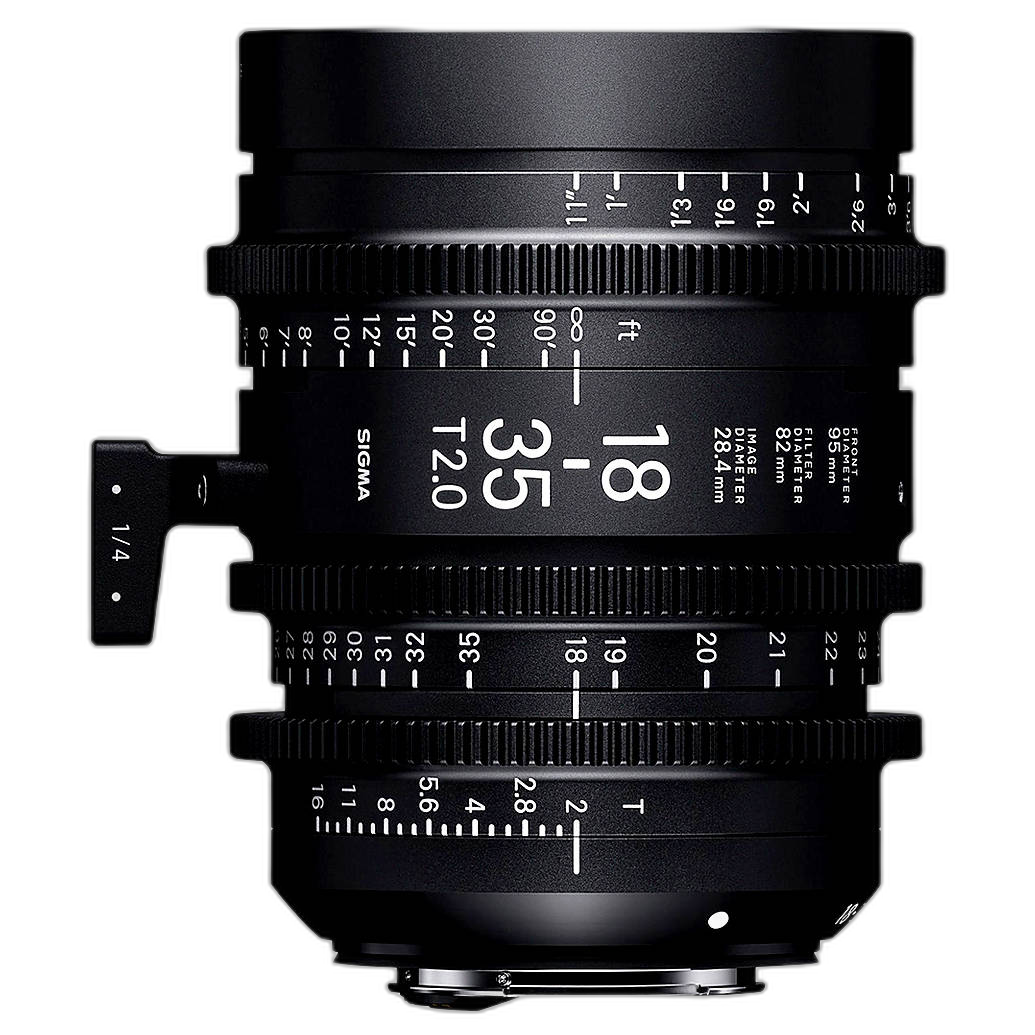
The Sigma 18-35mm T2 High-Speed Zoom Lens is one of the clearest examples of why zooms have become so compelling for Sony users. Its focal range covers a huge portion of everyday cinematic shooting, especially on productions where speed matters. For music videos, documentary work, run-and-gun branded content, and low-budget narrative sets, it can dramatically reduce the need for lens swaps.
If your Sony lens comparison workflow shows that your most-used primes live in the wide-to-normal range, this lens is an easy recommendation. It is particularly strong for shooters who want cinema mechanics without giving up a fast look.
Sigma 18-35mm T2 Fully Luminous High-Speed Zoom Lens (Sony E)
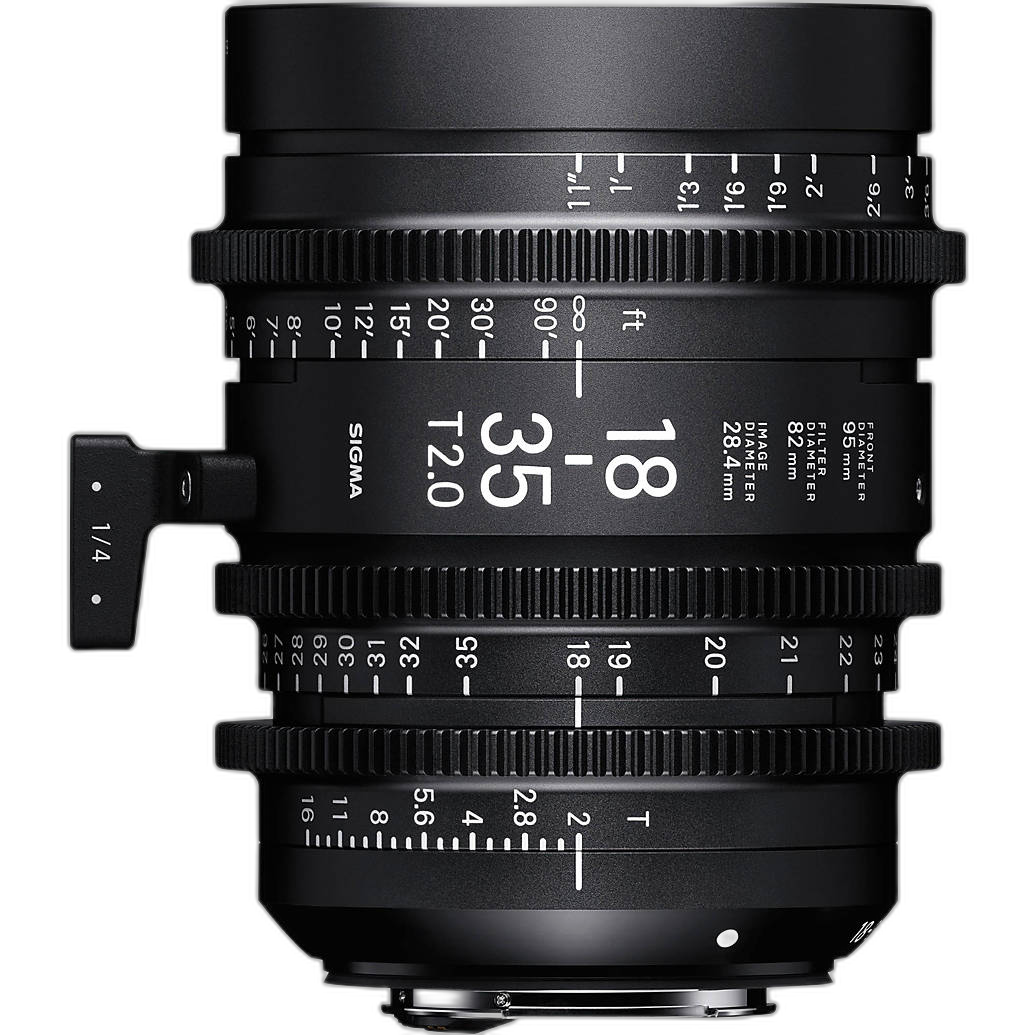
The Fully Luminous version builds on the appeal of the 18-35mm range with a more premium cinema-oriented execution. For crews working in controlled production environments, that can make a real difference in readability and on-set usability. If you routinely build out cameras with focus systems, matte boxes, and assistant support, this version is especially attractive.
For filmmakers who love prime-style discipline but need zoom flexibility, this lens is one of the strongest compromises available in Sony E-mount cine glass.
Sigma 24-35mm T2.2 FF Zoom Lens (Sony E)
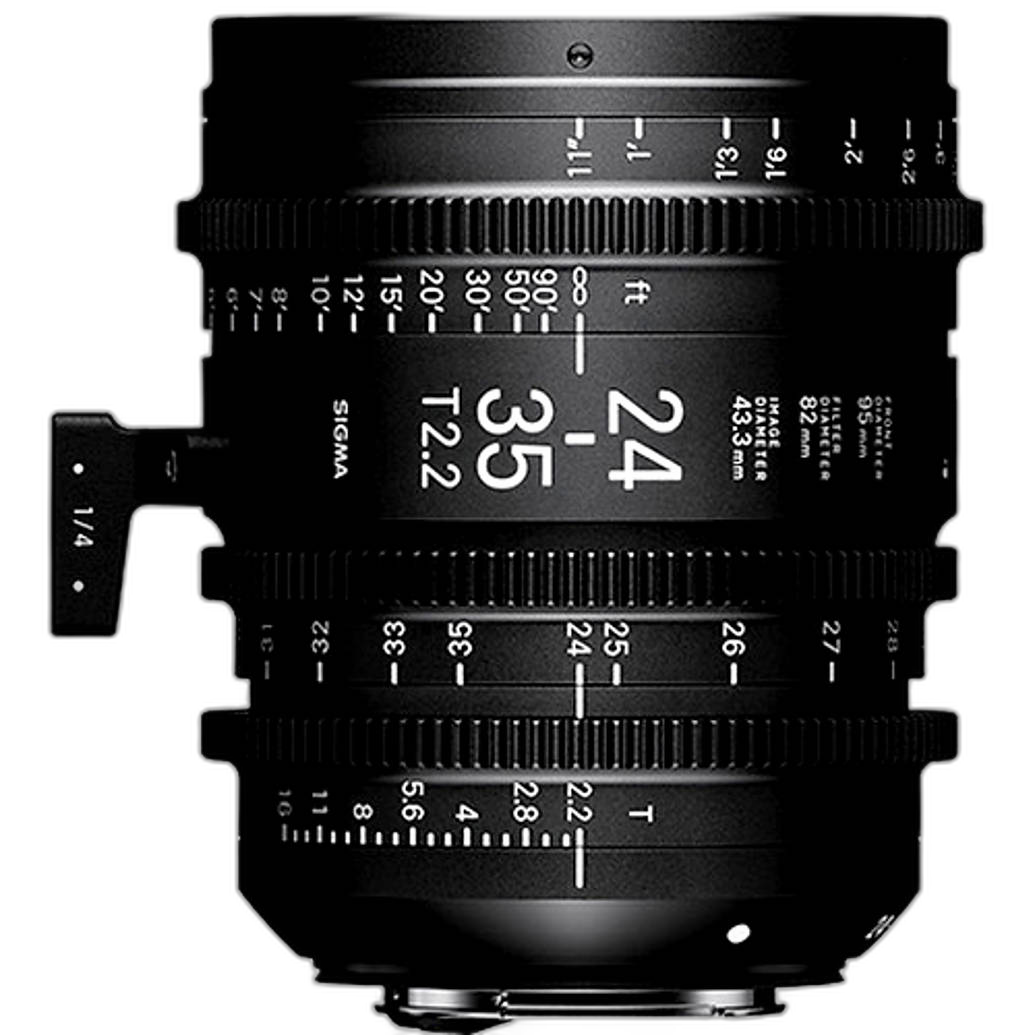
The Sigma 24-35mm T2.2 FF Zoom Lens narrows the range but does so with a very focused purpose. This is a useful option for full-frame shooters who want a refined wide-to-normal toolkit without carrying multiple prime lenses in that range. It is a smart fit for commercial work, dialogue scenes, and careful composition where you do not need a broad zoom ratio but do want flexibility in framing.
Compared to a bag of separate 24mm, 28mm, and 35mm primes, this lens can simplify production while still keeping you in a very cinematic focal length band.
Sigma 24-35mm T2.2 Fully Luminous FF Zoom Lens (Sony E)
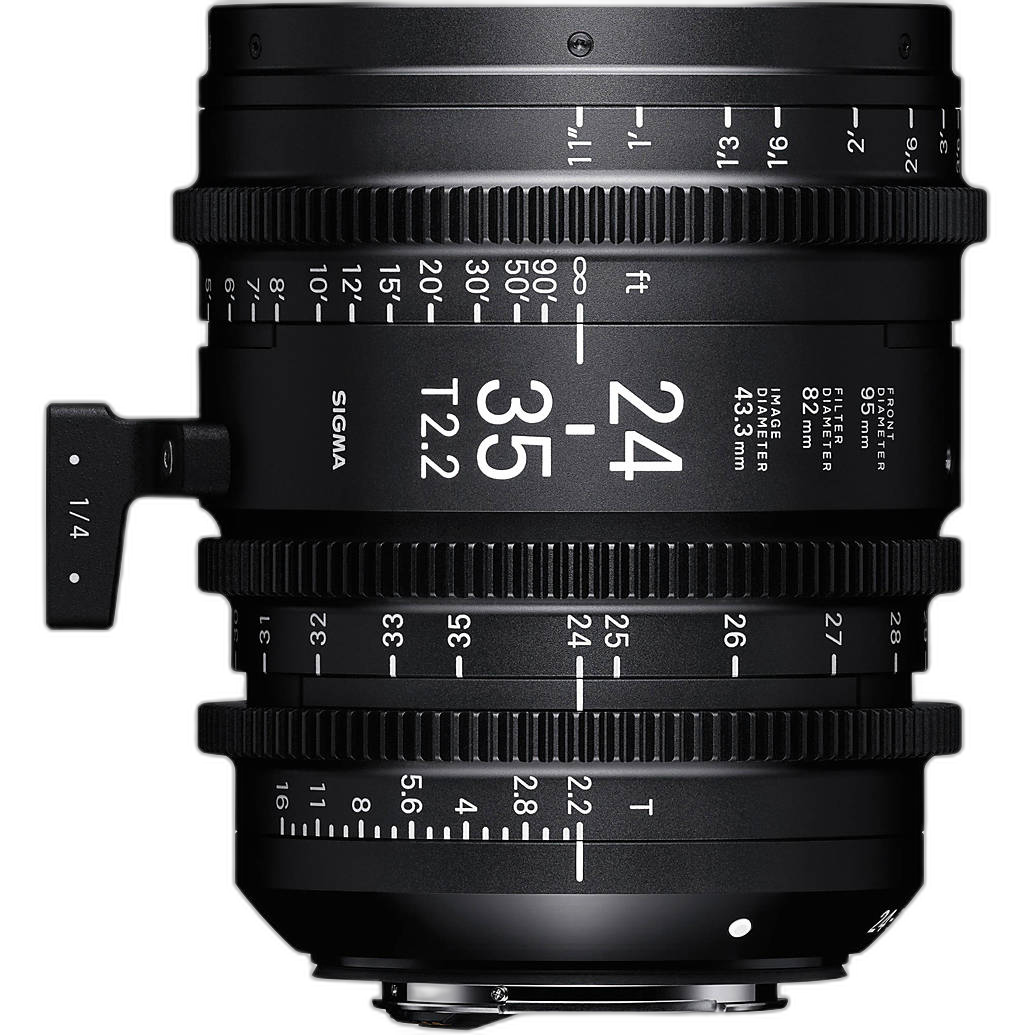
If you want the same full-frame 24-35mm concept with an even more production-friendly cinema build, the Fully Luminous version is worth a serious look. It is ideal for cinematographers who prioritize consistency on set and want a lens that integrates smoothly into a higher-end cine workflow.
For Sony users weighing premium primes against a compact full-frame zoom solution, this lens makes a persuasive argument for going zoom without losing professional set ergonomics.
Sigma 50-100mm T2 High-Speed Zoom Lens (Sony E)
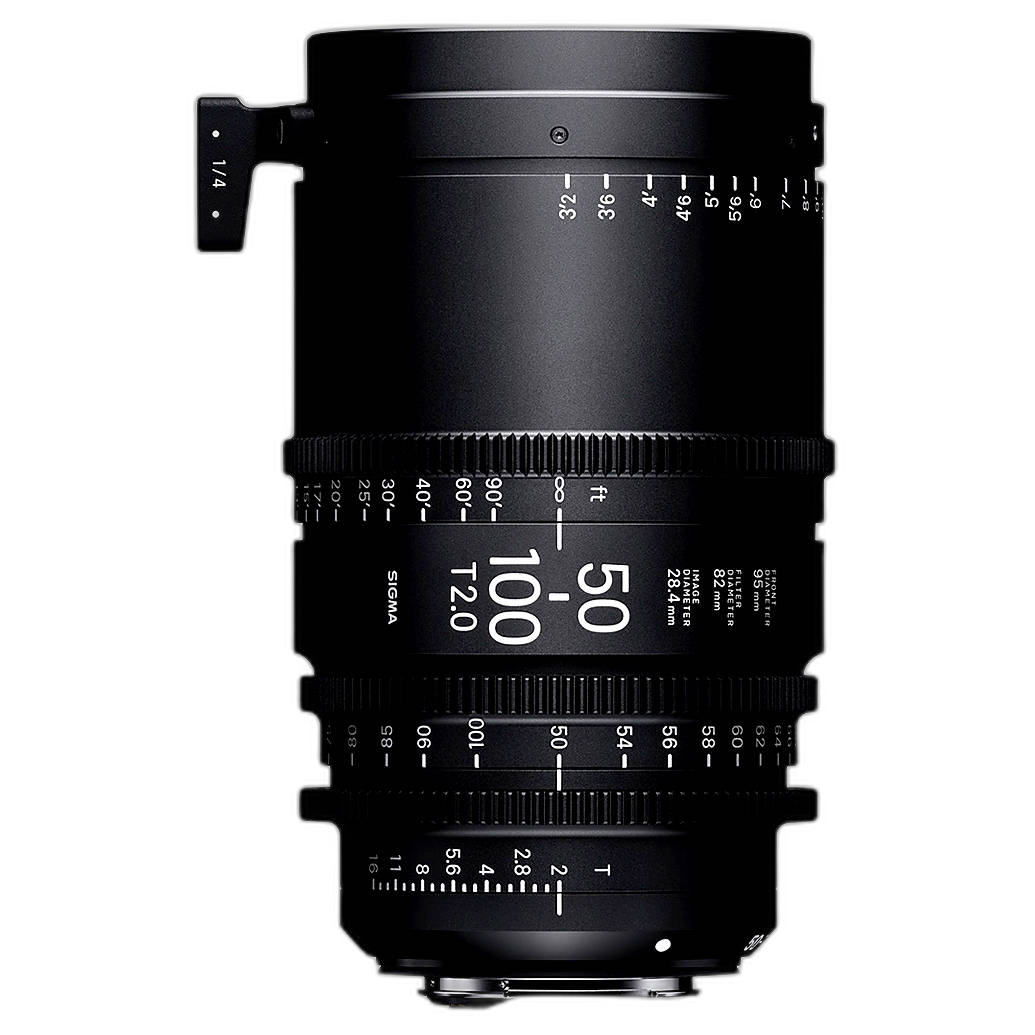
On the longer end, the Sigma 50-100mm T2 High-Speed Zoom Lens is the natural partner to an 18-35mm. This is where the zoom argument gets even stronger. Instead of carrying several portrait and short telephoto primes, Sony shooters can cover interviews, close-ups, product work, and compression-heavy shots with a single lens.
If your comparison planning shows frequent use of 50mm, 85mm, and 100mm-style framing, this lens can make your kit more efficient without forcing a major visual compromise.
Sigma 50-100mm T2 Fully Luminous High-Speed Zoom Lens (Sony E)
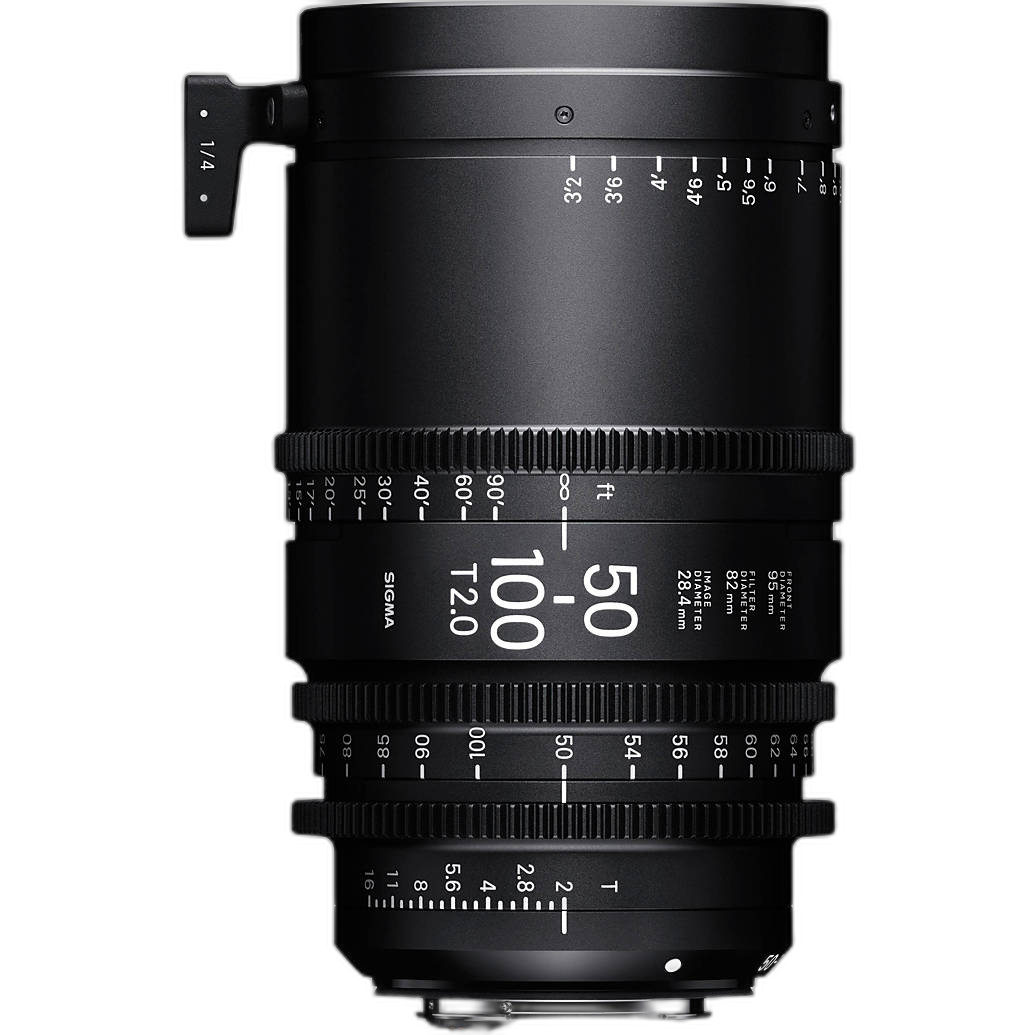
The Fully Luminous 50-100mm is a strong choice for narrative, commercial, and studio productions where long-lens flexibility matters and consistent cine operation is essential. It brings the same useful telephoto coverage while emphasizing a more premium cinema-oriented presentation.
For many Sony crews, pairing this lens with an 18-35mm creates a highly practical two-zoom setup that can replace a large chunk of a prime kit for day-to-day production.
When Zooms Make More Sense Than Primes
If your productions involve changing setups quickly, working in unpredictable environments, or maximizing budget, zooms often win. They are especially useful for:
- Documentary and event filmmaking
- Corporate and branded content
- Small crews and solo operators
- Interview productions needing fast reframing
- Narrative shoots with limited time for lens swaps
In these situations, using a Sony lens compare beta tool may confirm that one or two cine zooms cover the same practical territory as several primes.
When Primes Still Have the Edge
Primes remain compelling if your work depends on a highly specific look, lower weight per lens, or a more intentional focal-length-by-focal-length shooting style. If you already know exactly which focal lengths define your visual identity, primes can still be the better creative choice.
But for many buyers building a Sony E-mount cinema kit today, the bigger question is not whether zooms can compete. It is whether they now cover enough ground that primes become a secondary purchase rather than the foundation of the kit.
Final Recommendation
So, does Sony Lens Compare Beta help settle the prime-versus-zoom debate? It helps clarify focal length overlap and kit planning, but the stronger answer comes from workflow: if you need speed, versatility, and fewer interruptions on set, a high-speed cine zoom is often the smarter buy.
For most Sony shooters, the Sigma 18-35mm T2 High-Speed Zoom Lens (Sony E) is the best starting point, and pairing it with a Sigma 50-100mm T2 creates an especially powerful two-lens setup. If you are building a more premium cine package, the Fully Luminous versions are excellent options. To explore these Sigma Sony cine zooms and find the right fit for your production style, shop with Unique Photo.