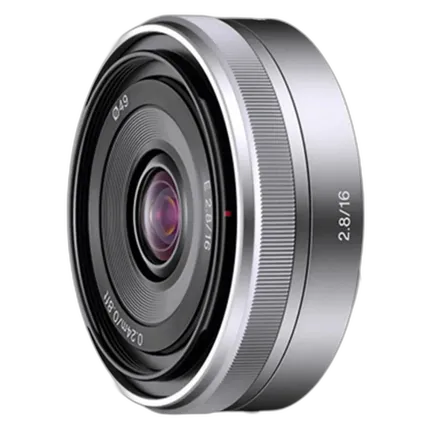
Sony E 16mm f/2.8 Lens (Silver)

Key Features
- 16mm (APS-C) F2.8 wide angle lens
- Ultra-slim (0.89 in) and lightweight design
- High quality aluminum finish
- High performance optics with aspherical lens elements
- Ideal for shooting stills or movies
- 35 mm equivalent focal length: 0.94 in
- Thin, light, and easy to carry, with high-quality optics for crisp still shots and HD video
- Slim, compact, wide angle lens for everyday shooting
- Stylish, light design with high quality aluminum alloy barrel finish
- Ideal for everyday shooting with minimized weight and bulk when camera is carried in a coat pocket or bag
- Compatible with optional VCL-ECU1 ultra-wide converter and VCL-ECF1 fisheye converter.
- High-performance optics with aspheric surface for excellent contrast and sharpness
- Smooth, quiet, high-speed autofocus and aperture adjustment: ideal for still and HD movie shooting
- 7-blade circular aperture for beautiful defocus effects
- Direct Manual Focus with non-rotating focus ring during AF: ideal for precise, comfortable manual focus adjustments.
OVERVIEW
Sony SEL16F28 16mm f/2. 8 Wide-Angle Lens for NEX Series Cameras Landscapes, architecture, snapshots . this 24 mm equivalent (35mm full frame format) E-mount prime lens can cover them all. Compact and extremely lightweight, this lens will always be ready for action without being a burden to carry. While a refined aluminum alloy exterior gives the lens a sophisticated feel, a motor on the inside delivers smooth, quiet autofocus and aperture operation that contributes to high-quality movies as well as stills. When changing your aperture to defocus the background, the light sources appear blurred. This ‘bokeh’ effect of the blurred background can be enhanced with circular aperture blades used in this lens. Conventional aperture blades have flat sides creating unappealing polygonal shaped defocussed points of light. α lenses overcome this problem through a unique design that keeps the aperture almost perfectly circular from its wide-open setting to when it is closed by 2 stops. Smoother, more natural defocusing can be obtained as a result. Aspherical lens design dramatically reduces spherical aberration while also reducing lens size and weight. Spherical aberration is a slight misalignment of the light rays projected on the image plane. This is caused by differences in refraction at different points on conventional spherical lenses which degrade image quality in large-aperture lenses. Specially shaped “aspherical” elements near the diaphragm restore alignment of light rays at the image plane, maintaining high sharpness and contrast even at maximum aperture and can also be used at other points in the optical path to reduce distortion. Well-designed aspherical elements can reduce the total number of elements required in the lens, thus reducing overall size and weight. Advanced Aspherical (AA) elements are an evolved variant, featuring an extremely high thickness ratio between the center and periphery. AA elements are exceedingly difficult to produce, relying on the most advanced molding technology to consistently and precisely achieve the required shape and surface accuracy, resulting in significantly improved image accuracy and quality. The distance encoder plays an integral part in ADI flash metering, which delivers high precision flash metering that is unaffected by the reflectance of subjects or backgrounds. The distance encoder is a lens component that directly detects the position of the focusing mechanism, and sends a signal to the CPU in order to measure distance to the subject. During flash photography, this data is very useful in calculating how much flash output is appropriate to the scene. Only the middle groups of the optical system move to achieve focus, so the overall length of the lens does not change. Other important benefits include fast autofocusing and a short minimum focusing distance. Also, the filter thread at the front of the lens does not rotate, which is convenient if you’re using a polarizing filter. 2012 Sony Electronics All rights reserved. Reproduction in whole or in part without written permission is prohibited. Sony is not responsible for typographic and photographic errors. Features and specifications are subject to change without notice. Sony, BIONZ, BRAVIA, BRAVIA Sync, Cyber-shot, Exmor, InfoLITHIUM, Memory Stick PRO Duo, Memory Stick Duo, the Memory Stick logo, Optical SteadyShot, Remote Commander, Smile Shutter, Stamina, SteadyShot, Theatre Sync, TruBlack, and Xtra Fine LCD are trademarks of Sony. Microsoft, Windows, and Windows Vista are trademarks of Microsoft Corporation. Mac OS and iMovie are trademarks of Apple Computers, HDMI is a trademark of HDMI Licensing . All other trademarks are trademarks of their respective owners.
E 16mm F2.8 Wide Angle Lens
Landscapes, architecture, snapshots … this 24 mm equivalent (35mm full frame format) E-mount prime lens can cover them all. Compact and extremely lightweight, this lens will always be ready for action without being a burden to carry. While a refined aluminum alloy exterior gives the lens a sophisticated feel, a motor on the inside delivers smooth, quiet autofocus and aperture operation that contributes to high-quality movies as well as stills.
Technology
Circular Aperture
When changing your aperture to defocus the background, the light sources appear blurred. This ‘bokeh’ effect of the blurred background can be enhanced with circular aperture blades used in this lens. Conventional aperture blades have flat sides creating unappealing polygonal shaped defocussed points of light. α lenses overcome this problem through a unique design that keeps the aperture almost perfectly circular from its wide-open setting to when it is closed by 2 stops. Smoother, more natural defocusing can be obtained as a result.
Aspherical lens elements
Aspherical lens design dramatically reduces spherical aberration while also reducing lens size and weight. Spherical aberration is a slight misalignment of the light rays projected on the image plane. This is caused by differences in refraction at different points on conventional spherical lenses which degrade image quality in large-aperture lenses. Specially shaped “aspherical” elements near the diaphragm restore alignment of light rays at the image plane, maintaining high sharpness and contrast even at maximum aperture and can also be used at other points in the optical path to reduce distortion. Well-designed aspherical elements can reduce the total number of elements required in the lens, thus reducing overall size and weight. Advanced Aspherical (AA) elements are an evolved variant, featuring an extremely high thickness ratio between the center and periphery. AA elements are exceedingly difficult to produce, relying on the most advanced molding technology to consistently and precisely achieve the required shape and surface accuracy, resulting in significantly improved image accuracy and quality.
Distance encoder
The distance encoder plays an integral part in ADI flash metering, which delivers high precision flash metering that is unaffected by the reflectance of subjects or backgrounds. The distance encoder is a lens component that directly detects the position of the focusing mechanism, and sends a signal to the CPU in order to measure distance to the subject. During flash photography, this data is very useful in calculating how much flash output is appropriate to the scene.
Additional Features:
Internal focusing
Only the middle groups of the optical system move to achieve focus, so the overall length of the lens does not change. Other important benefits include fast autofocusing and a short minimum focusing distance. Also, the filter thread at the front of the lens does not rotate, which is convenient if you’re using a polarizing filter.
Brand
lens specification
| Lens Min. Focus Distance | 9.45" / 24 cm |
| Lens Filter Size | 49 mm (Front) |
| Minimum Aperture | f/22 |
| Diaphragm Blades | 7, Rounded |
| Optical Design | 5 Elements in 5 Groups |
| Image Stabilization | No |
| Focal Length | 16mm |
| Angle of View (diagonal) | 83° |
| Maximum Aperture | f/2.8 |
| Maximum Magnification | 0.08x |
| Focus Type | Autofocus |
| Mount Type | Sony E |
- Sony E 16mm f/2.8 Lens (Silver)
- ALC-F49S 49mm Front Lens Cap
- ALC-R1EM Rear Lens Cap
- Sony Alpha A6700 Mirrorless Camera (Body Only)
- Sony Alpha a7R IVA Mirrorless Digital Camera (Body Only)
- Sony a7R VI Mirrorless Camera
- Sony ZV-E1 Mirrorless Vlog Camera (Body Only, White)
- Sony Alpha a1 Mirrorless Digital Camera (Body Only)
- Sony ZV-E10 Mirrorless Camera with 16-50mm f/3.5-5.6 II Lens (White)
- Sony Alpha A7C II Mirrorless Camera (Body Only, Black)
- Sony a6700 Mirrorless Camera with 16-50mm f/3.5-5.6 II Lens
- Sony ZV-E10 Mirrorless Camera (Body Only, Black)
- Sony ZV-E1 Mirrorless Vlog Camera with 28-60mm Lens (Black)
- Used Sony A9 III Body - Excellent
- *Open Box* Sony Alpha a9 II Mirrorless Digital Camera (Body Only)
- Sony a7 V Mirrorless Camera with 28-70mm II Lens (Open Box)
- Sony FX5 Cinema Camera with XLR Handle Unit
- Sony FX5 Cinema Camera
- Sony ZV-E10 Mirrorless Camera with 16-50mm Lens (Black)
- Used Fair Sony Alpha a7R V Mirrorless Digital Camera (Body Only)
- Used Sony A6000 Mirrorless Camera Body Only (Sliver) - Excellent
- Used Sony a6400 Body Only - Good Condition
- Used Sony Alpha A7C II (Body Only Silver) - As Is *Scratch on Sensor*
- Used Sony A7R IIIA Body Only - Good
- Used Good Sony Alpha a9 III Mirrorless Camera (Body Only) - GOOD
- Used Sony Alpha A7C II Mirrorless Camera (Body Only Silver) - Good
- Used Sony A6000 Body Only (Black) - Excellent
No creators have tagged this product yet.
Articles featuring this product
Sony E 16mm f/2.8 Lens vs Sony E-Mount 16mm f/2.8 Wide-Angle Lens (Silver): What's the Difference?
Aug 22, 2025
·
Tommy William
Sony 10-18mm f/4 OSS E-Mount Wide Zoom Lens vs Sony E PZ 10-20mm f/4 G Lens: Comparing Wide-Angle AP
Aug 22, 2025
·
Tommy William
Sony FE 70-200mm Series Comparison: f/2.8 GM OSS, f/2.8 GM OSS II, and f/4 G OSS Full-Frame E-Mount
Aug 22, 2025
·
Tommy William
Street Ready Showdown: Zeiss Batis 18mm f/2.8 (Sony E) vs Flic Film Street Savvy 400
May 9, 2026
·
Unique Photo
Sony E 18-200mm f/3.5-6.3 OSS LE vs Sony E 18-200mm f/3.5-6.3 OSS: Which Zoom Lens is Best for APS-C
Aug 22, 2025
·
Tommy William
Community questions about this gear
Ask a question
0
votes
2
answers
283
0
votes
2
answers
216
What mount does a Vivitar 28mm f/2.8 lens with “MIR” use, and how can I adapt it to Sony E-mount?
Photography Stack Exchange contributor
9y ago
0
votes
2
answers
153
What is an Optimar 2-inch f/1.4 Infrared Industries lens, and can it be adapted to Sony E-mount?
Photography Stack Exchange contributor
9y ago
You may also like
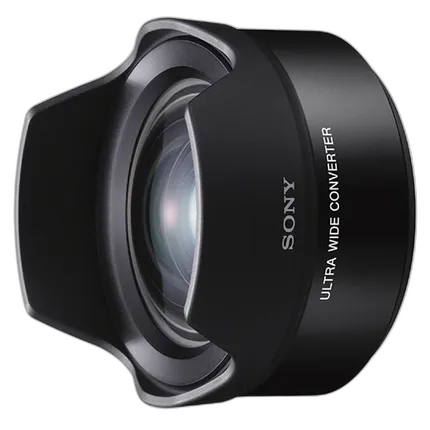
Sony Ultra Wide Converter For 16mm f/2.8 E-Mount and 20mm f/2.8 Lenses
- Sony ultra wide converter
- For SEL16F28 & SEL20F28
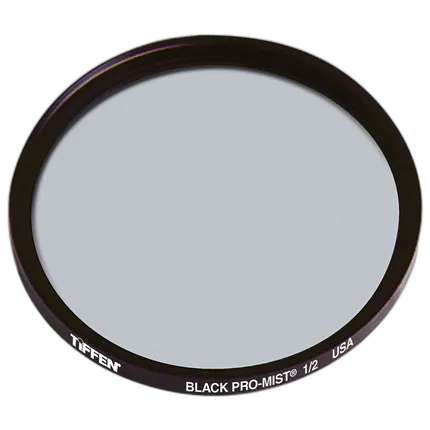
Tiffen 49mm Black Pro-Mist 1/2 Filter
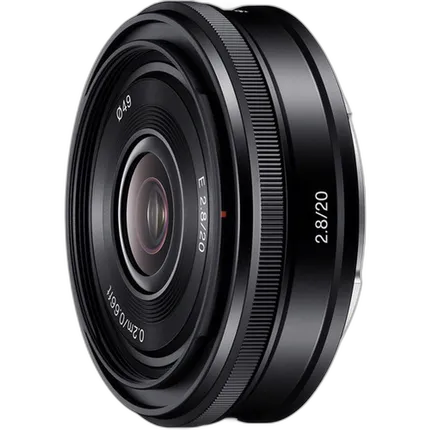
Sony E 20mm f/2.8 E-mount Prime Lens
- - 20mm Prime Lens - Aperture Range: f/2.8-22 - 30mm Equivalent in 35mm Format - Internal Stepping Motor - Direct Manual Focus - 7.8" (0.2 m) Minimum Focus Distance - 3 Aspherical Lens Elements - Ultra-compact Design - Fits Sony NEX-mount Cameras
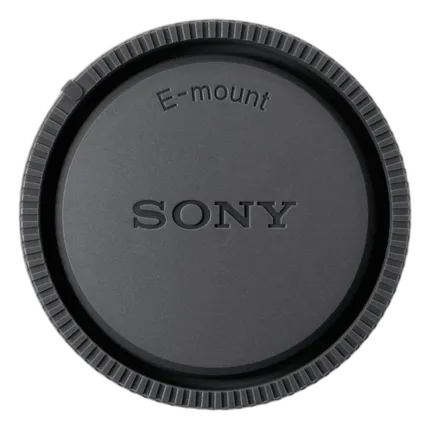
Sony ALC-R1EM Rear Lens Cap
- Designed for E-Mount Lenses
- Protects Rear Element of Lens
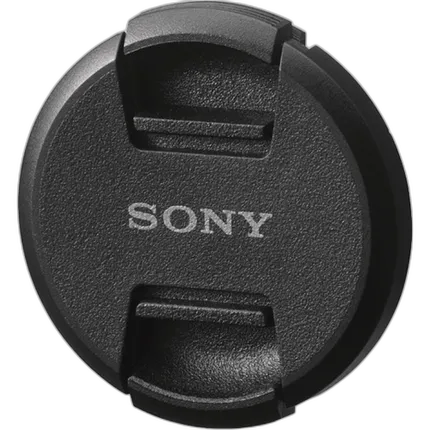
Sony ALC-F49S 49mm Front Lens Cap
- For 49mm Diameter Lenses
- Protects Front Element of Lens