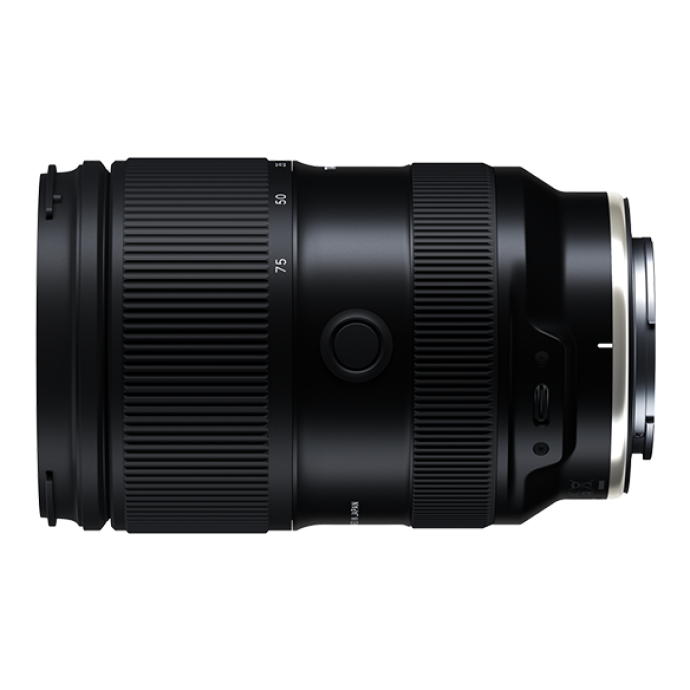
When Tamron announced the 28-75mm f/2.8 Di III RXD (Model A036) on April 26, 2018, it landed at exactly the right moment. Sony’s full-frame mirrorless system had already proven itself as a serious platform for working photographers and ambitious enthusiasts, but one obstacle remained stubbornly in place: the cost of entry. Bodies had become more appealing and more capable, yet fast standard zooms for full-frame E-mount still represented a major investment. Into that gap stepped Tamron with a lens that looked refreshingly straightforward on paper—28-75mm, constant f/2.8, Sony E mount, and a launch price of $799—but its importance was much larger than its spec sheet.
Historically, this lens matters because it helped change the conversation around Sony full-frame. Instead of asking whether photographers could afford to build a practical native lens kit, many began asking why they would spend more if a compact third-party option could cover the most useful focal range with a bright aperture and modern mirrorless design. The A036 was not merely another standard zoom. It was one of the first lenses to make Sony’s full-frame mirrorless ecosystem feel broadly attainable.
A Turning Point for Full-Frame E-Mount
By 2018, Sony had established itself as the leading force in full-frame mirrorless, but lens pricing remained a real concern. Native fast zooms were available, and some were excellent, but cost often pushed buyers toward compromise. They might start with slower kit lenses, adapt older DSLR glass, or postpone adding a professional-grade standard zoom altogether. That made the arrival of a native Tamron f/2.8 standard zoom especially significant.
Tamron was already well known for making practical lenses that balanced price, performance, and portability. In the DSLR era, the company had built a reputation around fast standard zooms that delivered strong value for photographers who needed dependable everyday tools without flagship-level pricing. The 28-75mm f/2.8 Di III RXD carried that philosophy into the mirrorless age. It was not designed as an extravagant prestige object. It was designed to be used—daily, heavily, and by photographers who wanted results more than status.
Why 28-75mm Mattered
At first glance, 28-75mm may seem slightly unconventional compared with the more familiar 24-70mm range. But that difference is part of what made the A036 possible and distinctive. By beginning at 28mm rather than 24mm, Tamron was able to pursue a smaller, lighter, and less expensive design while preserving the constant f/2.8 aperture that so many photographers consider essential.
For a huge range of photography, 28-75mm covers the heart of everyday shooting. The wide end is useful for documentary work, travel, environmental portraiture, and general walk-around photography. The middle range handles event coverage and street shooting naturally. The longer end reaches into classic portrait territory. Combined with f/2.8 throughout the zoom range, the lens promised the flexibility that has long made the fast standard zoom one of the most important tools in photography.
That was the heart of the A036’s appeal: it focused on the focal lengths photographers actually use most, then delivered them in a package that was more approachable than many expected for native full-frame E-mount.
Tamron’s Mirrorless Strategy Comes into Focus
The A036 was also historically important as an expression of Tamron’s early mirrorless thinking. Rather than simply repurposing a DSLR-era formula, Tamron developed a lens specifically for Sony’s full-frame mirrorless mount. That mattered. Mirrorless cameras invited a different kind of lens design conversation—one centered not only on optical quality, but also on compactness, balance, and the practical experience of carrying a camera all day.
The Tamron 28-75mm f/2.8 Di III RXD fit neatly into that mindset. Sony’s full-frame mirrorless bodies were often praised for delivering high image quality in relatively compact cameras. Pairing them with oversized, expensive glass could undermine some of that advantage. Tamron recognized that many photographers wanted a lens that felt proportionate to the bodies they were using. In that sense, the A036 was not just affordable; it was philosophically aligned with mirrorless.
The Meaning of RXD
Tamron designated the lens with RXD, or Rapid eXtra-silent stepping Drive, underscoring that this was a native mirrorless-era design. Quiet autofocus was becoming increasingly important as stills and video workflows continued to converge, and Sony users expected native lenses to work naturally with the camera system’s contemporary focusing technologies. The A036 arrived at a time when buyers were paying close attention not only to image quality, but also to operational polish—autofocus behavior, balance, responsiveness, and day-to-day usability.
The Price That Changed the Market
The most startling fact about the Tamron 28-75mm f/2.8 Di III RXD at launch was simple: $799. In 2018, that number immediately gave the lens historical weight. A constant-aperture f/2.8 standard zoom for Sony full-frame, introduced at that price, represented a serious shift in expectations.
For enthusiasts considering their first full-frame system, the A036 lowered the barrier significantly. For professionals assembling lighter kits or backup bodies, it offered a compelling practical option. For existing Sony users, it put pressure on the idea that native full-frame mirrorless glass had to be expensive to be worthwhile. Even photographers who did not buy the lens could feel its effect, because it helped redefine what buyers expected from the E-mount ecosystem.
That effect is one reason the A036 deserves to be remembered as more than a successful product. It was a market-shaping lens. It introduced competition where competition was badly needed, and it did so in the most visible category possible: the standard zoom that many photographers buy first and use most.
A Lens for the Real World
There is a long tradition in camera history of “bridge” products—gear that helps move a system from early adoption into wider acceptance. The Tamron 28-75mm f/2.8 Di III RXD belongs in that category. It offered enough speed for low-light shooting and subject separation, enough range for daily assignments, and enough affordability to feel realistic for hobbyists and working photographers alike.
Just as important, it arrived with a sense of practicality that resonated strongly in 2018. Photographers were increasingly interested in lighter kits. Travel shooters wanted less weight. Event photographers wanted capable zooms that did not feel burdensome after long days. Hybrid creators wanted lenses that integrated naturally with mirrorless autofocus behavior. The A036 spoke to all of those needs at once.
That practicality also explains why the lens quickly earned attention beyond spec-driven comparisons. It fit into bags easily. It made compact Sony bodies feel more like an intentional system and less like a compromise between small cameras and large lenses. It gave users a lens they could leave on the camera for long stretches—often the highest compliment one can pay a standard zoom.
How the A036 Fit Tamron’s Broader Legacy
Tamron has often been at its best when identifying the overlap between what photographers need and what they can realistically afford. The company’s history is full of lenses that became popular not because they were the most extravagant options, but because they solved real problems honestly. The 28-75mm f/2.8 Di III RXD continued that tradition in a particularly visible way.
In the DSLR years, third-party manufacturers sometimes occupied a secondary role in the minds of buyers, seen primarily as alternatives to first-party products. By 2018, that dynamic was changing. For many Sony shooters, Tamron’s lens was not just a cheaper substitute. It was the smart choice on its own terms. That distinction matters historically, because it marks a shift in how third-party lenses were perceived in the mirrorless era: not merely as budget options, but as system-defining tools.
Why It Endures as an Archival Landmark
Looking back from a historical perspective, the Tamron 28-75mm f/2.8 Di III RXD (A036) stands out because it delivered a clear message at exactly the right time. Sony full-frame no longer had to feel financially out of reach for photographers who wanted a fast, native standard zoom. A practical, modern, constant-f/2.8 option existed, and it came from a company with deep experience serving photographers who valued performance without excess.
Its basic facts remain striking even now: announced April 26, 2018, built for Sony E mount, covering 28-75mm with a constant f/2.8 aperture, and introduced at $799. That combination was enough to make the lens memorable. The broader effect it had on buying decisions, system confidence, and expectations for third-party mirrorless lenses is what makes it historically significant.
Final Thoughts
The Tamron 28-75mm f/2.8 Di III RXD (A036) deserves its place in the story of modern mirrorless photography because it made a premium shooting experience feel attainable. It was a lens for working shooters, serious enthusiasts, and anyone who wanted a native Sony full-frame standard zoom without paying a premium that overshadowed the camera itself. In that sense, it did more than fill a catalog slot—it helped democratize a system.
For photographers interested in landmark lenses, system history, or finding current Tamron gear, Unique Photo is a great place to buy, compare, or learn more about the equipment that shaped the mirrorless era.