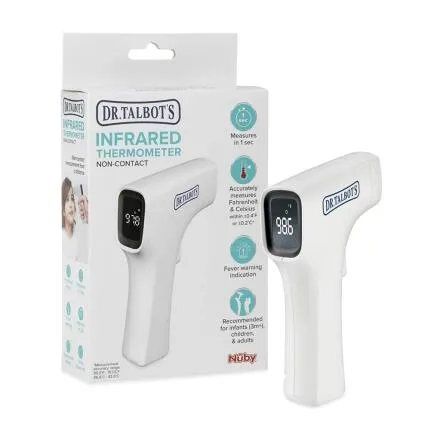
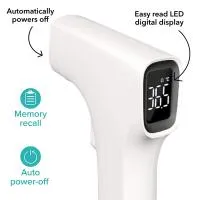
White Infrared Thermometer W With Handles


Key Features
- Non-contact infrared thermometer designed for quick surface temperature readings.
- Dual side handles provide a more stable, secure grip during use.
- White body design offers a clean, easy-to-spot appearance in home, office, or facility settings.
- Helpful for fast screening of object or surface temperatures without physical contact.
- Simple handheld form factor supports convenient operation and portability.
OVERVIEW
The White Infrared Thermometer W With Handles is a handheld non-contact temperature reading device built for fast, convenient measurement of surfaces and objects. Its infrared sensing design allows users to take readings without direct physical contact, making it a practical choice wherever cleanliness, speed, and ease of use are important. The integrated handles help improve control and stability, which can be especially useful in repeated measurement scenarios or shared-use environments.
Key Features
This infrared thermometer combines a straightforward handheld design with a non-contact measuring method that helps reduce unnecessary touching of objects or surfaces. The dual-handle configuration distinguishes it from simpler one-handed designs by offering a more balanced hold. The white exterior can also be beneficial in bright, clinical, educational, or professional environments where visibility and a clean appearance matter.
Benefits of Non-Contact Temperature Measurement
Infrared thermometers are valued for their speed and convenience. Instead of requiring direct contact, they detect emitted infrared energy from a target surface, allowing the user to capture a reading quickly. This makes them useful for general screening tasks, checking surface temperatures, monitoring equipment exteriors, or evaluating environments where minimizing contact is preferred. In comparison with traditional contact thermometers, non-contact designs can be faster to deploy and easier to use across multiple targets.
Ergonomics and Handling
The inclusion of handles suggests a focus on user comfort and control. A handled format can make positioning easier, especially when aiming at a consistent distance or when the device is used repeatedly throughout the day. This can help reduce hand fatigue and support steadier measurements compared with smaller, less structured handheld units.
Typical Use Cases
This type of infrared thermometer can be useful in a wide variety of settings, including offices, schools, retail counters, reception areas, warehouses, workshops, light industrial spaces, and general home use. It may be used to check the temperature of surfaces, equipment housings, packaging, appliances, or other objects where a rapid, touch-free reading is helpful. For best results, users should follow the manufacturer instructions regarding proper distance, aiming, and intended measurement application.
How It Compares to Contact Thermometers
Compared with standard contact-based thermometers, an infrared model offers faster spot checks and avoids the need to touch the measured item. This can improve workflow and reduce cleanup concerns in shared environments. However, as with most infrared devices, readings are influenced by aiming accuracy, target surface properties, and measurement distance. For applications requiring highly specific or regulated measurement protocols, users should confirm that this style of thermometer matches their intended use.
Usage Tips
For the most consistent readings, keep the sensor area clean, use the thermometer at the recommended distance, and aim squarely at the target surface. Avoid measuring through glass or transparent barriers unless the manufacturer specifically states this is supported. Large changes in ambient temperature may affect performance temporarily, so it is often best to allow the device to acclimate before use. Repeated measurements on the same target can also help confirm consistency.
Recommended Accessories
Practical accessories for an infrared thermometer may include replacement batteries if applicable, a protective storage pouch or case, disinfectant-safe cleaning cloths for the exterior housing, and labeling supplies for shared workplace use. In professional environments, a carrying cart, log sheet, or digital recordkeeping workflow may also help streamline repeated screening tasks.
Design and Product Category Background
Infrared thermometry has become widely adopted because it simplifies quick temperature checks in both personal and professional settings. Devices in this category are popular for their balance of speed, hygiene, and convenience. A handled version like this one reflects a more specialized physical design intended to support comfortable operation, stable aiming, and easy integration into high-traffic or routine screening workflows.
Important Note
Because detailed manufacturer specifications were not provided, buyers should verify exact operating range, power requirements, display features, accuracy tolerance, and intended measurement type before purchase. As with any infrared thermometer, performance and suitability depend on correct use and the application it was designed for.
- White Infrared Thermometer W With Handles
No creators have tagged this product yet.
Articles featuring this product
Home Developing: Tips for Getting Consistent Results with C-41 and B&W Film
Jul 28, 2026
·
Unique Photo
Developing Film at Home vs Using a Professional Lab: Cost, Quality, Workflow, and Sustainability
Jun 5, 2026
·
Unique Photo
Community questions about this gear
Ask a question
0
votes
2
answers
278
Can dust be detected automatically when scanning traditional black-and-white silver halide film?
Photography Stack Exchange contributor
12y ago
0
votes
2
answers
197
0
votes
2
answers
170
0
votes
2
answers
188
Can you do infrared photography with a digital camera?
Photography Stack Exchange contributor
16y ago
0
votes
2
answers
158
0
votes
2
answers
179
Why is fine art photography so often black and white?
Photography Stack Exchange contributor
12y ago