Sharpness vs. Bokeh: Which Lens Qualities Matter Most for Portrait Photography?
When you’re building a portrait kit, two words dominate the conversation: sharpness and bokeh. Should you prioritize tack-sharp eyes or creamy background blur? The answer depends on your style, subject, and how you use your gear. Here’s a complete guide from the team at Unique Photo to help you decide what matters most—and how to get both.
What photographers mean by “sharpness” in portraits
Sharpness is the perception of fine detail and edge definition. In portraits, true sharpness means crisp eyes, textured eyelashes, and well-defined hair strands while retaining pleasing skin detail.
What affects sharpness:
- Optics and aperture: Most lenses peak 1–3 stops down from wide open. Shooting a fast prime at f/1.4 can be slightly softer than at f/2–2.8—sometimes a desirable look for skin.
- Focus accuracy: Eye-detect AF, single-point AF, and careful technique matter more than resolution charts.
- Shutter speed and stability: Motion blur masquerades as a “soft lens.” Use 1/2x–1x focal length on stabilized bodies, faster for moving subjects.
- Diffraction: At very small apertures (e.g., f/16), overall sharpness can drop.
What bokeh is—and why it matters in portraits
Bokeh describes the quality of the out-of-focus areas. Good bokeh looks smooth and non-distracting; poor bokeh looks nervous with hard edges or “onion rings.”
What influences bokeh:
- Aperture size and blade shape: Wider apertures (f/1.2–f/2) and rounded blades render rounder, smoother blur discs.
- Lens design and aberrations: Spherical aberration, longitudinal chromatic aberration (LoCA), and mechanical vignetting influence blur character (cat’s-eye shapes near the frame edges).
- Background distance and texture: Distance between subject and background and the pattern of lights/leaves can make bokeh appear smoother or busier.
Sharpness vs. bokeh in portrait photography: which matters more?
Both are important, but for most portraits, prioritize sharpness on the eyes and a background that supports the subject. Consider your use case:
- Headshots and beauty: Eye sharpness first. Shoot around f/2–f/4 for predictable focus and flattering depth of field.
- Dreamy, artistic portraits: Bokeh and subject isolation are key. Use fast primes wide open (f/1.2–f/1.8) with a clean, distant background.
- Environmental portraits: Balance both. Stop down a bit (f/2.8–f/5.6) to keep context recognizable while keeping the subject dominant.
- Groups: Depth of field and even sharpness take priority—often f/4–f/8 depending on spacing.
How aperture, focal length, and distance shape sharpness and bokeh
- Aperture: Wider apertures increase background blur but can reduce corner sharpness and focus tolerance. Stopping down increases sharpness uniformity and depth of field.
- Focal length: Longer lenses (85–135mm on full frame) magnify blur and compress perspective (from the shooting distance you choose), creating flattering head-and-shoulders portraits.
- Distance: Closer subject distance yields shallower depth of field and larger blur discs; step back for more face in focus.
Sensor size and depth of field: full-frame vs. APS-C vs. Micro Four Thirds
For the same framing and f-number, smaller sensors show deeper depth of field. To get a similar look across systems:
- Full-frame: 85mm at f/2 for classic portraits.
- APS-C: 56mm at f/1.4–f/2 (85mm equivalent), or 50–60mm primes for a similar blur.
- Micro Four Thirds: 45mm at f/1.8–f/1.2 or 75mm at f/1.8 for creamy separation.
Prime vs. zoom lenses for portraits
- Primes: Typically offer faster apertures (f/1.2–f/1.8), high center sharpness, and pleasing bokeh. Ideal for isolation and low light.
- Zooms: Modern zooms are impressively sharp; a 24–70mm f/2.8 or 70–200mm f/2.8 gives flexibility and excellent results, especially around 70–135mm.
Tip: If bokeh is your priority on APS-C or Micro Four Thirds, a fast prime (f/1.2–f/1.8) will deliver a stronger background blur than a slower zoom.
Real-world portrait settings you can try today
- Classic headshot (single subject): 85mm-eq, f/2, 1/250s, ISO 100–400. Focus on the eye closest to camera; enable Eye AF.
- Environmental portrait: 35–50mm-eq, f/2.8–f/4, 1/250s. Keep the background a few steps behind to maintain separation.
- Golden hour backlight: 50–85mm-eq, f/1.8–f/2, expose for the face; use a reflector or fill flash for catchlights.
- Group portrait: 35–85mm-eq, f/4–f/5.6, place subjects in a single plane to keep all eyes sharp.
Troubleshooting: if your portraits look soft or bokeh looks busy
- Soft eyes wide open? Stop down one stop; increase shutter speed; verify Eye AF and fine-tune focus position.
- Busy bokeh? Increase subject-to-background distance; simplify the background; try a longer focal length or faster prime.
- Color fringing in blur (LoCA)? Stop down slightly or correct in post; some lenses show magenta/green fringing at wide apertures.
- Skin looks too sharp? Use softer light (larger modifiers, closer distance) and subtle skin retouching rather than defocusing.
Recommended cameras and pairings from Unique Photo
All of the following are available at Unique Photo, with a deep selection of portrait-friendly primes and zooms to match.
- Canon EOS R50 two-lens kit: Beginner-friendly with reliable Eye AF. Add a fast RF prime to enhance background blur.
- Canon EOS R10 with 18–150mm: Versatile zoom for everyday portraits; pair with an RF 85mm or 50mm for subject isolation.
- Canon EOS R100 double lens zoom kit: Budget path into the RF system; upgrade bokeh with a compact fast prime.
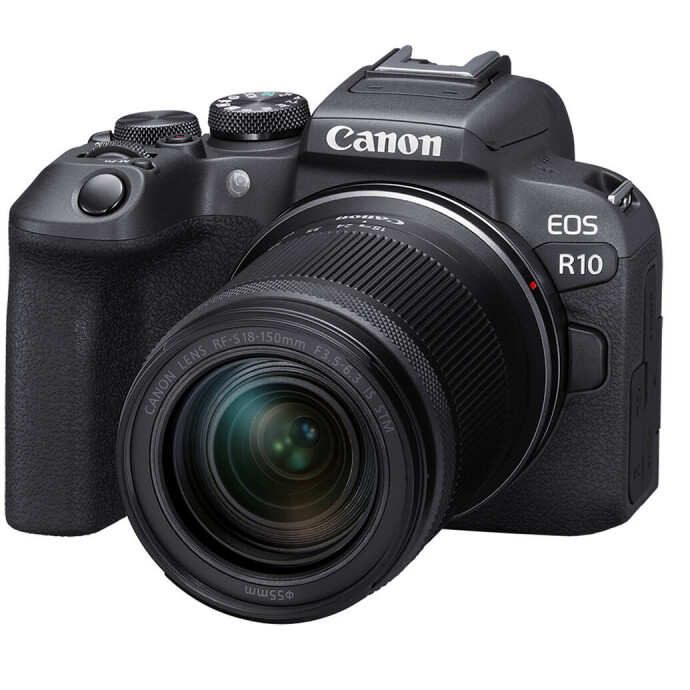
- FUJIFILM X-T30 III: Classic controls and film simulations; pair with a 56mm f/1.2–1.4 for premium bokeh.
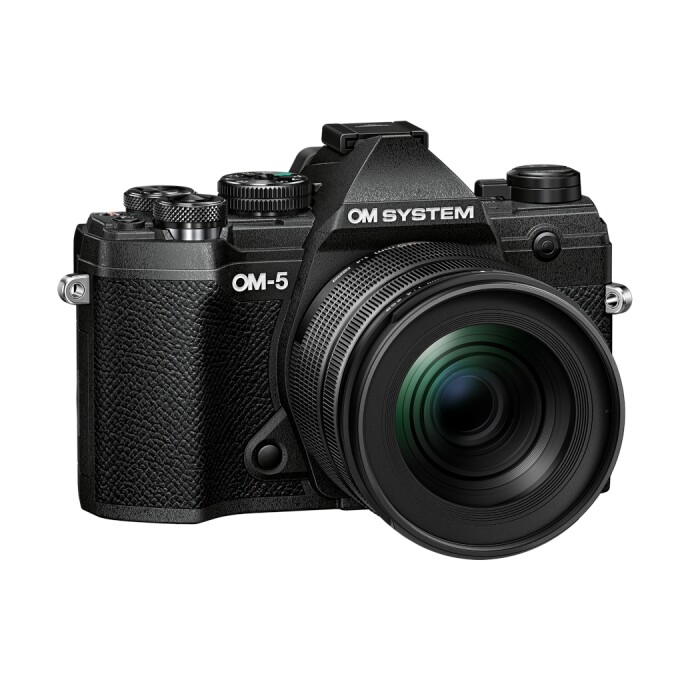
- OM SYSTEM OM‑5 with 12–45mm f/4 PRO: Lightweight, stabilized. Add a 45mm f/1.8 or 75mm f/1.8 for shallow depth of field on Micro Four Thirds.
Budget-friendly ways to get creamier bokeh—without losing sharpness
- Choose a fast 50mm or portrait prime: The affordable 50mm f/1.8 (or system equivalent) is a bokeh powerhouse.
- Use distance creatively: Keep your subject a few feet from the background and step closer to your subject.
- Light smart: Large, soft light sources reduce harsh detail in skin while keeping eyes sharp and lively.
- Stop down slightly: If focus is inconsistent at f/1.4, try f/2—often sharper while still very blurry in the background.
Bottom line: balancing sharpness and bokeh for portraits
For most portrait work, prioritize eye sharpness and choose bokeh that supports your subject—usually achieved with a fast prime, a flattering focal length, and thoughtful background control. With modern autofocus and careful technique, you can have both: crisp, engaging eyes and silky, distraction-free backgrounds.
Shopping or upgrading? Unique Photo’s team can help you match the right body and lens for your portrait style, whether you prefer clinical sharpness, a dreamy look, or a balanced approach.
Next steps and internal linking suggestions
Explore these sections at Unique Photo to build your portrait kit:
- Portrait Lenses (50mm, 85mm, 90–105mm macro, 70–200mm f/2.8)
- Mirrorless Cameras (Canon EOS R, FUJIFILM X Series, OM SYSTEM)
- Lighting & Modifiers (softboxes, reflectors, portable strobes)
- Education: Portrait classes, workshops, and one-on-one lessons
- Rentals: Try fast primes and zooms before you buy