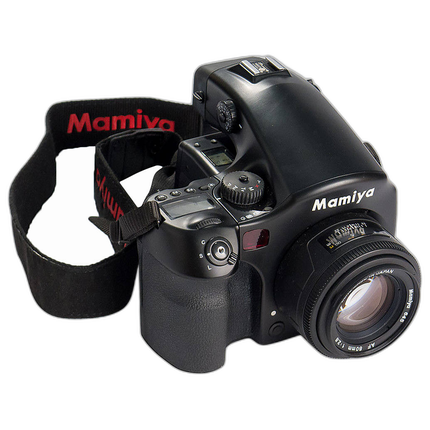
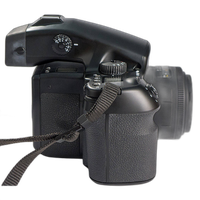
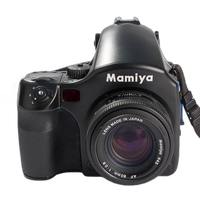
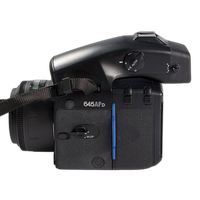
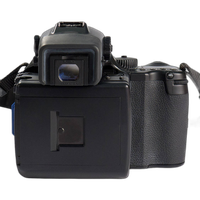
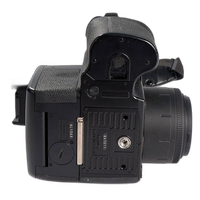
Used Mamiya 645AFD w/ 80mm f/2.8 AF lens and 120 Back - Good
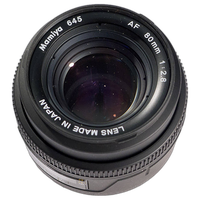
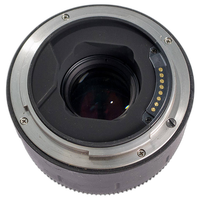
Key Features
- Mamiya 645AFD
- With 80MM F/2.8 AF lens
- With 120 back
- Fixed prism viewfinder
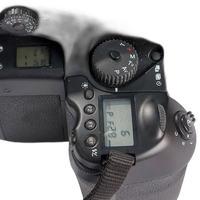
- LCD panel
- Continuous shooting at 1.2 fps
- TTL phase-difference detection AF
- Built-in data printing
- Hot shoe
- Depth-of-field preview button
- 6 AA-size batteries
View info on our used equipment grading scale.
Overview
THIS IS A USED ITEM
IMAGES ARE FOR ILLUSTRATIVE PURPOSES ONLY
Condition: Good
The Mamiya 645AFD is a medium format SLR camera that is designed to offer compatibility with digital backs. It comes with an 80mm f/2.8 lens and 120 film back. You can use the center-weighted average, spot, variable ratio, and manual method for exposure metering. Frame the shot by using the fixed prism viewfinder that has 0.71× magnification and 94% of the actual field of view. The standard matte focusing can be interchanged with the checker or microprism type C screens. The AF sub-beam turns on when there is no sufficient slight or contrast in the scene. You can attach a flash unit to the hot shoe. The camera has a built-in data printing function that superimposes the camera settings used to take a particular picture at the bottom.
Optics and Focus
The Mamiya 80mm f/2.8 AF Lens is provided with the camera. Its optical construction includes 6 elements in 5 groups. The lens provides 85° field of view. You can use the autofocus function of the lens to capture images of objects that are 2.3 feet away from it. The wide aperture of f/2.8 offers shallow depth of field and bright results. You can attach a 58mm filter to the front thread. The camera uses TTL phase-difference detection AF that activates in low light and has a maximum working range of 20 feet. Half-press the shutter release button to lock the autofocus.
Sensor and Screen
The camera has a fixed prism viewfinder with 0.71× magnification and 94% screen coverage. You can adjust the diopter from -2.5 to +0.5 dpt. Although the viewfinder has a typical matte focusing screen, it can be interchanged with the checker or microprism screens when using M645 compatible lenses. You can see camera-related information in the viewfinder such as the focus display, aperture value, shutter speed, current metering mode, and more. The top LCD panel shows similar settings with the addition of data imprinting, ABL, self-timer, type of film, and more.
Image and Video
The camera comes with 120 film back. You can also use 220 rolls by rotating the back. This camera has a built-in motor to automatically advance the film. You can choose the single frame or continuous frame advance of 1.2 fps. The camera can take 1 to 5 exposures on a single frame.
Other Features
The camera has a hot shoe that can mount electronic flash units. Once the flash is attached to the shoe, you can synchronize it with the shutter speed at 1/125th of a second. The camera has a data imprinting function that allows you to superimpose camera settings as well as the date on the photograph. To use the "FUNCTION" and "F1" keys to imprint camera settings on the image, and press the F2 key to superimpose date. The camera can be mounted to tripods with 1/4-inch or 3/8-inch studs. You can use 6 AA batteries to function the camera. A single CR2032 battery is required for the film magazine.
Brand
camera attributes
| Exposure Modes | Program AE, Aperture Priority, Shutter Priority, and Manual; METERING: Center- Weighted Averaging (AV), Spot (S) and Variable Ratio (A-S auto change); Switches between Average and Spot modes depending on the relative contrast within the overall image. Provides exposure settings suited to a wide range of subjects and lighting. Spot mode will be automatically selected when the brightness within the measured range is lower than the brightness of the overall picture by about 1.5 EV or greater, and the Average mode is selected when the Spot exposure metering value is the same or brighter than the Average value. When the difference between spot and average is between .75 and 1.5 EV, the appropriate exposure is achieved at an intermediate value; AE LOCK: Yes (AEL button): Released by pressing twice or shutter operation; light metering value differentiation in viewfinder exposure compensation display when AEL button is held down; +/- 6EV (in 1/3 steps) |
| Camera Type | Autofocus, 6 x 4.5cm, Single-Lens-Reflex camera |
| Electronic Shutter | Electronically controlled vertical metal focal-plane shutter; AE 30secs to 1/4000sec in 1/8th steps; Manual 30secs to 1/4000sec in 1/2 steps; "X" (Locks shutter speed to 1/125th sec, while allowing for full control of aperture values), "B" (Bulb, electronically controlled), "T" (Time, mechanically controlled) |
| Lens Mount | Bayonet Mamiya 645 AF Mount; M645 Mount can be used with strict limitations (manual focus confirmation, stopped-down metering) |
physical specifications
| Color | Black |
| Weight | 61 oz. (1730g) (without battery) |
| Dimensions | 60.6 x 51.48 x 71.76" (153 x 128 x 184mm) |
film specifications
| Film Back | Interchangeable type; Accepts film insert which switches from 120 to 220 film by rotating pressure plate; External LCD Display on film magazine shows ISO speed, type of film (120/220), exposure number; Dark slide pocket; Also features databus connections to accept digital backs |
| Film Type | 120 roll film (16 exposures) 220 roll film (32 exposures); Polaroid Land Pack Film as well as Fuji Polaroid (any of the 3 1/4 x 4 1/4" pack film series, i.e Fuji FP100C, Polaroid 669, 664, 679) NOTE: Tripod Adapter N or N2 is required with a Polaroid Back. Adapter N2 has a larger base and contains anti-twist pins for secure camera support |
| Film Format | 6 x 4.5cm |
viewfinder specifications
| Viewfinder Type | Fixed prism finder magnification 0.71x, Built-in diopter adjustment (-2.5 to +0.5 diopter, separate diopter correction lenses provide adjustment ranges of -5 to -2 diopter and 0 to +3 diopter); Built-in eye-piece shield; Interchangeable focusing screens: Matte (Standard), Checker (Grid) and manual focus microprism for M645 lenses |
shutter
| Self Timer | 3 - 60 secs. (default setting: 10 sec., can be set in 1sec. steps between 3 and 10secs., and 10 sec. steps between 10 and 60 secs.) |
flash attributes
| External Power Source | Camera uses 6 "AA" batteries (alkaline-magnesium, lithium or NI-MH); Film magazine power supply is a CR2032 battery. This battery is used to supply power to the LCD panel on top of film magazine when it is removed from the camera. When the roll film holder is attached to the body, the power is supplied from the camera body; External Battery Case PE401 available. This case provides battery protection when shooting in extreme cold weather. 6 "AA" batteries are inserted in to the case (PE401) which is then kept in your pocket. A cord from the case to the camera provides the power for the camera. Power receptacle is located on the bottom of the camera body |
used condition
| Used Condition | Good Condition |
| Good Condition | Small amount of cosmetic wear and some blemishes |
lens specification
| Maximum Aperture | f/2.8 |
lens
| Focal Length | 80mm |
detailed specifications
| Focusing System | Autofocus; TTL phase-difference detection type: Automatically activates under low light/low contrast with activation range of approx. 9m (20ft.) with 80mm f/2.8 AF lens in Single AF Mode only: Automatic switching to flash unit's built-in sub-beam when Metz flash unit is attached. "Autofocus Lock" possible with half-press on shutter release in "Single" Shot" Mode |
control specifications
| Exposure Compensation | +/- 3 EV (in 1/3 steps) |
- Used Mamiya 645AFD W/ 80MM F/2.8 AF lens and 120 Back
No creators have tagged this product yet.
Articles featuring this product
Best Beginner-Friendly Film Cameras: Real-World Advice, Model Pros & Cons, and Smart Tips for Buying
May 9, 2026
·
Unique Photo
Practical, Robust Film Cameras: How to Choose for Longevity, Lens Options, and Serviceability
May 22, 2026
·
Unique Photo
Medium Format FAQ: Mamiya vs Pentax vs Hasselblad for Portraits & Landscapes
Jul 3, 2026
·
Unique Photo
Community questions about this gear
Ask a question
0
votes
2
answers
74
Do Nikon extension tubes with electronic contacts work with E-type lenses?
Photography Stack Exchange contributor
8y ago
0
votes
2
answers
399
Why does this lens produce oval, swirly bokeh toward the edges of the frame?
Photography Stack Exchange contributor
12y ago
0
votes
2
answers
126
Can I use inherited Pentax SFXn lenses on a used Pentax DSLR, and are they worth keeping?
Photography Stack Exchange contributor
9y ago
0
votes
2
answers
76
You may also like
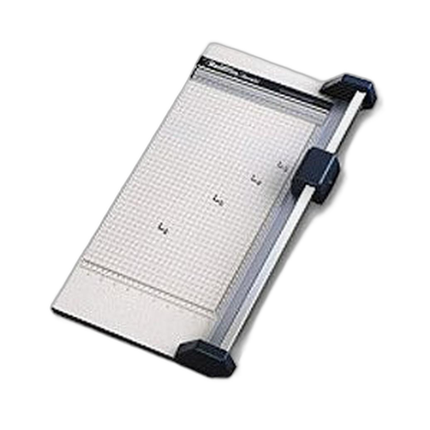
Rotatrim Monorail Series 26 Trimmer