Tilta Full Camera Cage for Sony a7/a9 Series - Tilta Gray

Key Features
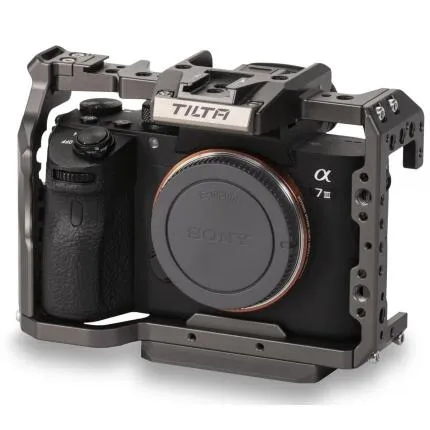
- Form-fitting full camera cage designed for select Sony a7 and a9 series cameras.
- Provides multiple accessory mounting points for handles, monitors, microphones, lights, and other rigging tools.
- Durable aluminum-alloy construction balances strength, protection, and relatively low weight.
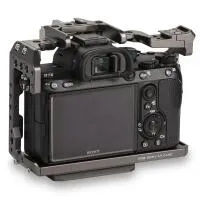
- Maintains access to key camera controls, battery compartment, and ports for efficient shooting workflows.
- Tilta Gray finish offers a clean, professional look that matches modern cinema rig builds.
- Ideal for handheld video, tripod-based production, gimbal setups, and expanded hybrid shooting configurations.
OVERVIEW
Compatible With
- Sony a7 series cameras
- Sony a9 series cameras
Built for Hybrid and Cinema-Style Workflows
The Tilta Full Camera Cage for Sony a7/a9 Series in Tilta Gray is a precision-designed protective rigging solution for creators who want to expand the functionality of their Sony mirrorless camera without sacrificing access or handling. A full cage surrounds the camera body with a rigid exoskeleton, helping protect the camera while providing a broader platform for mounting essential accessories used in video production, content creation, livestreaming, documentary work, and commercial filmmaking.
This style of cage is especially useful for users who need to attach monitors, microphones, wireless receivers, top handles, side handles, articulating arms, compact LED lights, cable clamps, or other production accessories directly to the camera body. By moving these accessories onto the cage rather than the camera's limited built-in mounting areas, you gain a cleaner, more secure, and more adaptable setup.
Form-Fitting Design for Sony a7/a9 Series
Tilta cages are known for their camera-specific engineering, and this model is built to fit compatible Sony a7 and Sony a9 series bodies closely. A form-fitting cage helps minimize unwanted movement between the camera and cage, which is important for stability, repeatability, and confidence when building out a professional rig. It also helps preserve access to important buttons, doors, strap points, and connection areas needed during real-world shooting.
Compared with more generic universal cages, a dedicated cage typically offers a better balance of protection, ergonomics, and mounting efficiency. It reduces bulk where possible while still creating a strong frame around the camera body.
Durable Aluminum-Alloy Construction
The cage is constructed from aluminum alloy, a material widely used in professional camera support systems because it offers a strong combination of rigidity, durability, and manageable weight. This makes it suitable for shooters who need dependable performance on location, in the studio, or during travel production.
Aluminum construction also contributes to long-term reliability when the cage is used repeatedly with mounted accessories. Whether you are adding a monitor on top, a microphone on the side, or building a more advanced handheld rig, the cage provides a stable structural foundation for your setup.
Expanded Mounting Flexibility
One of the main reasons to add a full camera cage is to dramatically expand mounting options. This Tilta cage is designed to serve as the core of a modular camera build, allowing you to configure your camera for different shooting situations. For example, a stripped-down lightweight setup may be ideal for gimbal work, while a more accessorized build may better suit interviews, narrative filmmaking, product videos, or event coverage.
With a cage-based system, accessories can be placed in more practical positions for monitoring, balance, and cable routing. That means a cleaner build, less stress on the camera body itself, and more flexibility when adapting to changing production needs.
Improved Camera Protection and Handling
Beyond accessory support, a full cage also adds an extra degree of physical protection around the camera body. While it is not a substitute for a hard case during transport, it can help protect vulnerable edges and mounting areas during daily use, setup changes, and fast-paced production environments.
The cage can also improve handling by giving operators more secure contact points when lifting or repositioning the camera. When paired with optional top or side handles, it becomes easier to carry and operate the camera in a more controlled and comfortable manner, particularly during handheld shooting sessions.
Useful for Tripod, Handheld, and Gimbal Shooting
This cage can serve as a versatile base whether your workflow is primarily tripod-based, handheld, or mobile. For tripod work, the cage helps support monitor mounting and audio accessories while keeping the camera organized. For handheld applications, it creates a better starting point for adding handles and improving rig balance. For gimbal users, a cage can simplify attaching lightweight accessories or repositioning support hardware around the camera body, though final balance will depend on the total configuration.
That versatility makes it a valuable upgrade for creators who regularly switch between photography and video or who use the same camera body across different types of productions.
Tilta Ecosystem Advantages
Tilta has developed a strong reputation in the filmmaking world for producing practical, modular camera accessories aimed at both emerging creators and experienced professionals. A camera cage like the TA-T17-FCC-G fits naturally into that ecosystem, making it easier to expand your rig over time with compatible handles, mounting accessories, power solutions, and production hardware from Tilta and other industry-standard accessory makers.
For users building a long-term rigging setup, choosing a cage from a recognized system brand can make future upgrades simpler and more cohesive.
How It Compares to a Half Cage or Baseplate-Only Setup
A full cage offers more wraparound protection and more mounting real estate than a half cage, making it especially attractive for users who plan to attach several accessories at once. Compared with using only a baseplate or L-bracket, a full cage generally provides significantly more flexibility for side and top mounting, improved camera security, and better support for more complex builds.
If your goal is to create a production-ready mirrorless rig with room to grow, a full cage is often the most comprehensive place to start. If you prefer the most minimal footprint possible, a half cage may be lighter, but it typically offers fewer attachment points.
Best Use Cases
This cage is well suited to a variety of creators and shooting styles, including videographers, filmmakers, content creators, educators, livestreamers, and multimedia journalists. It is especially useful when the camera needs to support external monitoring, better audio capture, wireless systems, or ergonomic handles for more controlled operation.
It is also a smart option for users who want to protect their camera body while maintaining a professional-looking rig with room for future customization.
Recommended Accessories
To get the most from a full camera cage, consider pairing it with a top handle for easier low-angle shooting and transport, a side handle for handheld comfort, an external monitor for better focus and framing, an articulating arm or monitor mount, a compact shotgun microphone or wireless audio receiver, a quick release plate system, cable management accessories, and a padded carrying case sized for a rigged mirrorless setup. Depending on your workflow, a baseplate with rod support can also be helpful for follow focus or matte box integration.
Usage Tips
When installing the cage, make sure the camera is seated fully and secured tightly according to the manufacturer's instructions so the fit remains stable. Before a shoot, test access to battery doors, memory card slots, articulating screens, and cable connections. If you are using multiple accessories, distribute weight thoughtfully to avoid creating an unbalanced rig. For gimbal use, keep the build as light and compact as possible and rebalance carefully after every change.
It is also wise to periodically check fasteners after transport or extended shooting days, especially if your rig includes heavier accessories such as field monitors, batteries, or wireless transmitters.
Design and Brand Background
Tilta has become a well-regarded brand among filmmakers for producing cinema accessories that bridge professional functionality and accessible modular design. As mirrorless cameras have become increasingly popular for video production, products like dedicated camera cages have grown in importance, helping smaller camera bodies support the accessories and workflows once reserved for larger cinema systems. This cage reflects that evolution by giving Sony a7/a9 series users a stronger physical platform for production without abandoning the compact advantages of mirrorless cameras.
Brand
physical specifications
| Dimensions | Form-fitting full cage dimensions vary with installed camera body |
| Color | Gray |
size & weight
| Weight | Lightweight aluminum-alloy cage; exact weight not specified |
detailed specifications
| Camera Mount | Sony a7/a9 series camera body mount |
| Material | Aluminum Alloy |
| Mounting | Accessory mounting via integrated cage mounting points |
| Compatibility | Sony |
support specifications
| Plate Type | Not applicable |
- Tilta Full Camera Cage for Sony a7/a9 Series - Tilta Gray
- Documentation
No creators have tagged this product yet.
Articles featuring this product
The Complete Sony Alpha Full-Frame Release History: A7, A9 & A1 (2013–Present)
Oct 16, 2013
·
Unique Photo
What’s the Best Travel Camera Setup for Lightweight Shooting? Panasonic LUMIX ZS300 vs Travel Trip
Sep 10, 2026
·
Unique Photo
Sony A7 IV vs Sony FX30 for Portrait & Event Photography: Real-World Findings
Apr 20, 2026
·
Unique Photo
Community questions about this gear
Ask a question
0
votes
2
answers
179
0
votes
2
answers
434
Why do LED lights cause banding with silent shutter, and why is the Sony A9 less affected?
Photography Stack Exchange contributor
6y ago
0
votes
2
answers
203
Are there any compact full-frame mirrorless cameras for street photography and travel?
Photography Stack Exchange contributor
8y ago
0
votes
2
answers
304