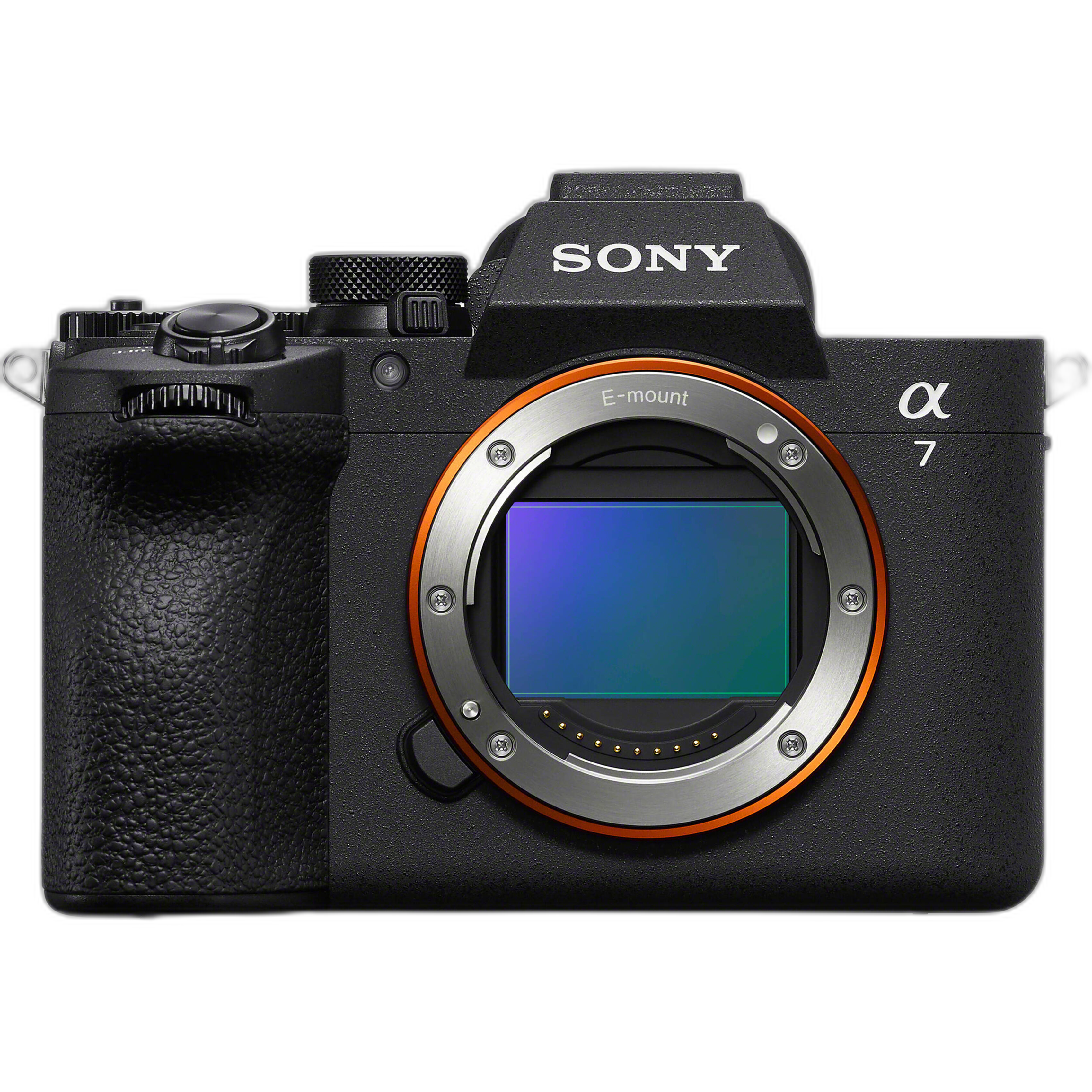
When Sony introduced the original A7 and A7R in 2013, it marked one of the most important turning points in modern camera history. Full-frame image sensors were no longer confined to larger DSLR bodies or niche rangefinder systems. With the arrival of compact, interchangeable-lens cameras built around the Sony E mount, Sony established a new direction for professional and enthusiast photography alike.
This archival guide traces the release history of Sony’s full-frame Alpha mirrorless system from its beginnings with the first A7 / A7R (2013) through the expansion of the line into specialized branches such as the speed-focused A9 family and the flagship A1. Rather than treating the lineup as a simple list of products, this history looks at how Sony developed the series generation by generation, what each body represented at the time of release, and how the system matured into one of the dominant platforms in professional imaging.
For photographers trying to understand Sony’s naming, positioning, and progression, the story becomes much clearer when viewed chronologically. The A7 line became the broad foundation. The A7R branch pushed resolution. The A7S branch emphasized sensitivity and video. The A9 series redefined Sony’s approach to speed and blackout-free shooting. And the A1 ultimately stood as an all-around flagship, combining the company’s highest ambitions into a single full-frame mirrorless body.
The Beginning of Sony Full-Frame Mirrorless
Before the first full-frame Alpha mirrorless bodies arrived, Sony had already established itself as a serious camera manufacturer through the Alpha DSLR and SLT lines, as well as the APS-C E-mount mirrorless system. But 2013 was the watershed moment. On October 16, 2013, Sony formally unveiled the A7 and A7R, the cameras that launched its full-frame mirrorless lineage.
Just as important as the sensor format was the mount. Sony built the system around the Sony E mount, extending an existing mirrorless lens standard into full-frame territory. That decision proved critical. It gave Sony a path to compact body design while also creating room for a growing family of native FE lenses. In hindsight, it was one of the most consequential mount decisions of the digital era.
The original A7 and A7R were not identical twins. They immediately established a pattern that would define Sony’s product strategy for years: one model aimed at broader general-purpose use, and another aimed more directly at maximum detail and image quality. That split became a core element of the Alpha full-frame lineup.
The First Generation: A7 and A7R (2013)
Sony A7
The original Sony A7 was the camera that made the biggest conceptual statement. It brought a full-frame sensor to a body significantly smaller than a conventional DSLR, while preserving an electronic viewfinder, interchangeable lenses, and enthusiast-oriented controls. At the time, that combination felt genuinely disruptive. Sony was not merely offering another camera body; it was proposing that full-frame photography no longer required the bulk photographers had learned to accept.
The A7 was positioned as the more versatile of the launch pair. In broad historical terms, it became the template for what the mainstream full-frame mirrorless camera could be: capable across travel, portraiture, documentary work, and daily photography, while still offering the depth-of-field and low-light benefits associated with the format.
Sony A7R
Launched alongside it, the Sony A7R established the resolution-focused branch of the family. This was the camera for photographers prioritizing detail, landscape work, studio use, architecture, and other applications where maximum image fidelity mattered most. Its very existence signaled that Sony intended the Alpha full-frame line to be segmented with purpose, not simply updated in lockstep.
From the start, the distinction between A7 and A7R helped photographers orient themselves. Even when later generations became more complex, the foundation remained understandable: A7 for balanced all-around use, A7R for resolution.
Why These Cameras Mattered
The first generation was significant for several reasons. First, Sony made full-frame mirrorless feel practical rather than experimental. Second, the company tied that promise to the existing E mount, laying the groundwork for lens-system growth. Third, the launch demonstrated that a mirrorless system could be structured in tiers and specialties rather than treated as a one-size-fits-all proposition.
In historical perspective, the debut of the A7 and A7R in 2013 stands as one of the clearest break points between the DSLR-dominated era and the modern age of full-frame mirrorless photography.
The Early Expansion of the A7 Concept
Once Sony established the basic A7 formula, the company moved quickly to expand the concept into a fuller family. This was a defining characteristic of the Alpha strategy: rapid iteration. Sony did not leave the platform static for long. Instead, it refined ergonomics, autofocus, imaging pipelines, stabilization, battery performance, and video capability across multiple branches.
Over time, the naming structure became clearer:
- A7: the generalist model, intended as the balanced center of the lineup.
- A7R: the high-resolution branch.
- A7S: the sensitivity- and video-oriented branch.
The addition of the A7S line was especially important. While the original 2013 launch centered on general-purpose and resolution-oriented bodies, Sony soon recognized that low-light shooting and video performance could support a distinct identity of their own. The A7S family became known for prioritizing sensitivity and motion production needs, helping to cement Sony’s standing among hybrid shooters and filmmakers.
Second-Generation Maturity: Refinement, Stabilization, and Confidence
The second generation of Sony full-frame Alpha bodies represented a broader shift from bold concept to maturing system. If the first A7 generation proved that compact full-frame mirrorless was possible, the second generation worked to make it more convincing in day-to-day use.
This phase of development is historically associated with several broader advances in the line: improved handling, stronger autofocus performance, increasing confidence in professional use, and in many models, the inclusion of in-body image stabilization. Those improvements mattered because early mirrorless adoption often hinged on practical concerns. Photographers were asking not just whether Sony’s cameras were innovative, but whether they were robust enough to replace established systems in the field.
Sony’s answer, generation by generation, was to keep tightening the formula.
The A7 II Era
The A7 II branch represented a meaningful step in this process. As the everyday, all-around line evolved, Sony improved the camera’s physical confidence and shooting versatility. The A7 series increasingly looked less like a daring alternative and more like a mainstream professional and enthusiast choice.
That change in perception was crucial. The A7 line did not succeed on novelty alone. It succeeded because Sony continued to address the practical demands of photographers who needed a camera system to perform across weddings, editorial assignments, travel, portrait sessions, and personal work.
The A7R II and the Rise of Sony as a Serious Professional Contender
If the original A7R drew attention from detail-oriented still photographers, the A7R II era was one of the moments when Sony’s broader imaging ambitions became unmistakable. The line was no longer merely competing on compactness. It was competing on sensor technology, autofocus sophistication, and image quality leadership. For many photographers, this generation was when Sony full-frame mirrorless moved from interesting to indispensable.
The A7R family also helped Sony build a reputation among landscape, commercial, and studio photographers who wanted resolution without returning to larger camera formats or DSLR bodies.
The A7S Series and Video Identity
The A7S line deserves special recognition in any history of Sony full-frame Alpha cameras because it expanded the meaning of the system beyond still photography. Sony understood early that mirrorless bodies could become powerful tools not only for photographers, but also for videographers, filmmakers, and hybrid creators.
As the A7S branch evolved, it became one of the most recognizable names in Sony’s lineup. Even for users who never purchased one, the A7S family helped define Sony’s public reputation in low-light imaging and compact full-frame video production.
Third-Generation Breakthrough: The A7 III and the Mainstreaming of the System
If one were to identify the point at which the Sony full-frame mirrorless system moved from major player to widespread standard-bearer, the third generation would be central to that argument. By this period, Sony had refined not only the bodies but the entire surrounding ecosystem: lenses, autofocus reliability, battery life, user familiarity, and market confidence.
A7 III
The A7 III became especially important in the historical arc of the lineup. It was widely understood as the camera that brought a high level of performance to the center of Sony’s range. In many ways, it embodied the maturity of the A7 concept. Rather than serving as a compromise model, the standard A7 line increasingly became the camera many photographers could adopt as a primary professional or enthusiast tool.
This was a notable shift from the earliest years of mirrorless, when photographers often viewed such cameras as secondary bodies, travel companions, or specialized options. By the time of the A7 III era, the conversation had changed. For many users, Sony Alpha full-frame mirrorless had become the main system.
A7R III and A7R IV
The A7R III and later A7R IV continued to push the high-resolution branch forward. The A7R line no longer existed merely as a variation on the A7. It had become a deeply established category of its own: a camera family for image-makers who wanted maximum detail but increasingly refused to give up speed, autofocus capability, and overall flexibility.
This progression is one of the most interesting features of Sony’s release history. Early digital-camera segmentation often required obvious tradeoffs. As the Alpha line evolved, those tradeoffs narrowed. The A7R line retained its identity, but it became more versatile with each generation.
A7S III
The A7S III occupies a special place in the chronology because it arrived after heightened anticipation and reflected just how influential the A7S concept had become. By then, video performance was no longer a side story in camera design. It was central. The A7S branch’s continued relevance showed that Sony had built not just a stills system with video features, but a modern imaging ecosystem responsive to multiple professional disciplines.
The A9 Series: Sony’s Speed-Driven Professional Statement
While the A7 family formed the backbone of the system, Sony’s ambitions did not stop at balanced, resolution-focused, or video-oriented bodies. The introduction of the A9 series signaled a more direct challenge to the traditional domain of high-speed professional cameras.
The A9 line was historically important because it represented Sony’s confidence in mirrorless technology for action, sports, news, and wildlife work—areas where responsiveness, autofocus tracking, and viewfinder behavior had long been seen as strengths of top-tier DSLRs. Sony’s development of the A9 family helped shift that perception decisively.
What the A9 Represented
The A9 series was not simply a faster A7. It was a statement that Sony intended to compete at the very highest levels of professional imaging. Features such as rapid continuous shooting and blackout-free viewing became closely associated with the line’s identity, helping redefine what mirrorless cameras could offer in demanding real-time photography.
That mattered historically because sports and press photographers are among the most demanding users in the industry. Winning their confidence requires more than technical novelty. It requires consistency, reliability, and trust. The A9 series became part of Sony’s larger campaign to show that full-frame mirrorless could perform under pressure where timing was everything.
A9 to A9 II
The move from the original A9 to the A9 II reflected Sony’s broader pattern of practical refinement. Once a technical breakthrough had been established, the next step was often to improve operational polish, workflow integration, and the camera’s fit within professional assignments. That progression mirrored the larger history of the Alpha system: innovation first, then deeper field readiness.
The A1: The Flagship Convergence
With the release of the A1, Sony effectively brought together the major branches of its full-frame mirrorless strategy into a single flagship. Historically, the A1 stands as the camera that attempted to unify the speed associated with the A9 line, the resolution associated with the A7R line, and the broad professional authority Sony had been building across the entire Alpha family.
In earlier eras of camera design, photographers often chose among clear specialties: one body for speed, another for maximum detail, another for advanced video. The A1 represented Sony’s effort to reduce those divisions at the highest level. It was not meant to replace the distinct identities of the A7, A7R, A7S, or A9 families, but rather to crown the system with a no-compromise flagship.
From a historical standpoint, the A1 also served as evidence of how far Sony had come since 2013. The company that launched the original A7 and A7R as a daring mirrorless alternative had, within less than a decade, built a system credible enough to support a true top-tier flagship for the professional market.
Understanding the Lineage at a Glance
For readers trying to orient themselves within Sony’s release history, it helps to think of the full-frame Alpha family in branches rather than as a single straight line.
The A7 Branch
This is the core, all-around series. It began with the original A7 in 2013 and evolved into the central recommendation for many photographers wanting balanced performance across genres.
The A7R Branch
Starting with the A7R in 2013, this branch emphasized high resolution and image detail. Over time, it became increasingly versatile while retaining its identity as the choice for photographers prioritizing maximum fidelity.
The A7S Branch
Developed as the sensitivity- and video-focused line, the A7S family helped define Sony’s reputation among filmmakers and low-light shooters. It is one of the clearest examples of Sony identifying a specialized audience and building a lasting sub-line around it.
The A9 Branch
This is Sony’s speed-oriented professional series, associated with sports, action, and blackout-free high-speed shooting. Historically, it marked Sony’s direct challenge to the elite performance categories long dominated by flagship DSLRs.
The A1
The A1 stands apart as the flagship convergence camera, bringing together the strengths Sony had developed across the broader system.
Why the Sony E Mount Was So Important
No release history of Sony full-frame Alpha bodies is complete without recognizing the central role of the Sony E mount. The mount is the connective tissue of the entire story. Camera bodies rise and fall by generation, but the mount defines the system’s continuity.
By choosing to build its full-frame mirrorless future around E mount, Sony created a platform that could support broad lens development over time. That decision gave photographers confidence that the system was not a one-off experiment. It was a growing ecosystem. As the body lineup expanded from A7 and A7R into A7S, A9, and A1 territory, the mount remained the unifying standard.
This continuity helped Sony achieve something difficult in any transitional era: it encouraged adoption by making the system feel open-ended. Buyers were not simply choosing a single camera body. They were entering a mount with room to grow.
Sony’s Historical Legacy in Full-Frame Mirrorless
Looking back from the present, the importance of the Sony Alpha full-frame release history is clear. The original A7 and A7R in 2013 did more than introduce two cameras. They accelerated an industry-wide shift. They demonstrated that compact full-frame mirrorless cameras could be serious tools, and they established a system architecture broad enough to support multiple specialties and generations.
Over the years, Sony’s Alpha full-frame family evolved from a bold idea into a comprehensive professional platform. The standard A7 line matured into a dependable all-purpose series. The A7R line became a benchmark for resolution-oriented work. The A7S line became deeply influential in hybrid and video circles. The A9 line showed mirrorless could dominate in speed-critical photography. And the A1 crowned the system with a flagship that reflected the convergence of Sony’s major strengths.
That is why this release history matters. It is not merely the chronology of a product family. It is the history of one of the most significant shifts in contemporary camera design.
Final Thoughts
From the first A7 / A7R (2013) onward, Sony’s full-frame mirrorless Alpha cameras have formed one of the defining lineages of the digital era. Built on the Sony E mount, the system has expanded generation by generation into a broad family of cameras serving photographers, filmmakers, journalists, and hybrid creators at every level.
For anyone researching the Sony Alpha full-frame story—whether to understand its history, compare generations, or begin building a system today—the lineage from A7 to A9 to A1 remains essential reading. To explore Sony cameras, lenses, and accessories, or to learn more about the Alpha system, visit Unique Photo, where photographers can shop current gear and connect with knowledgeable experts.