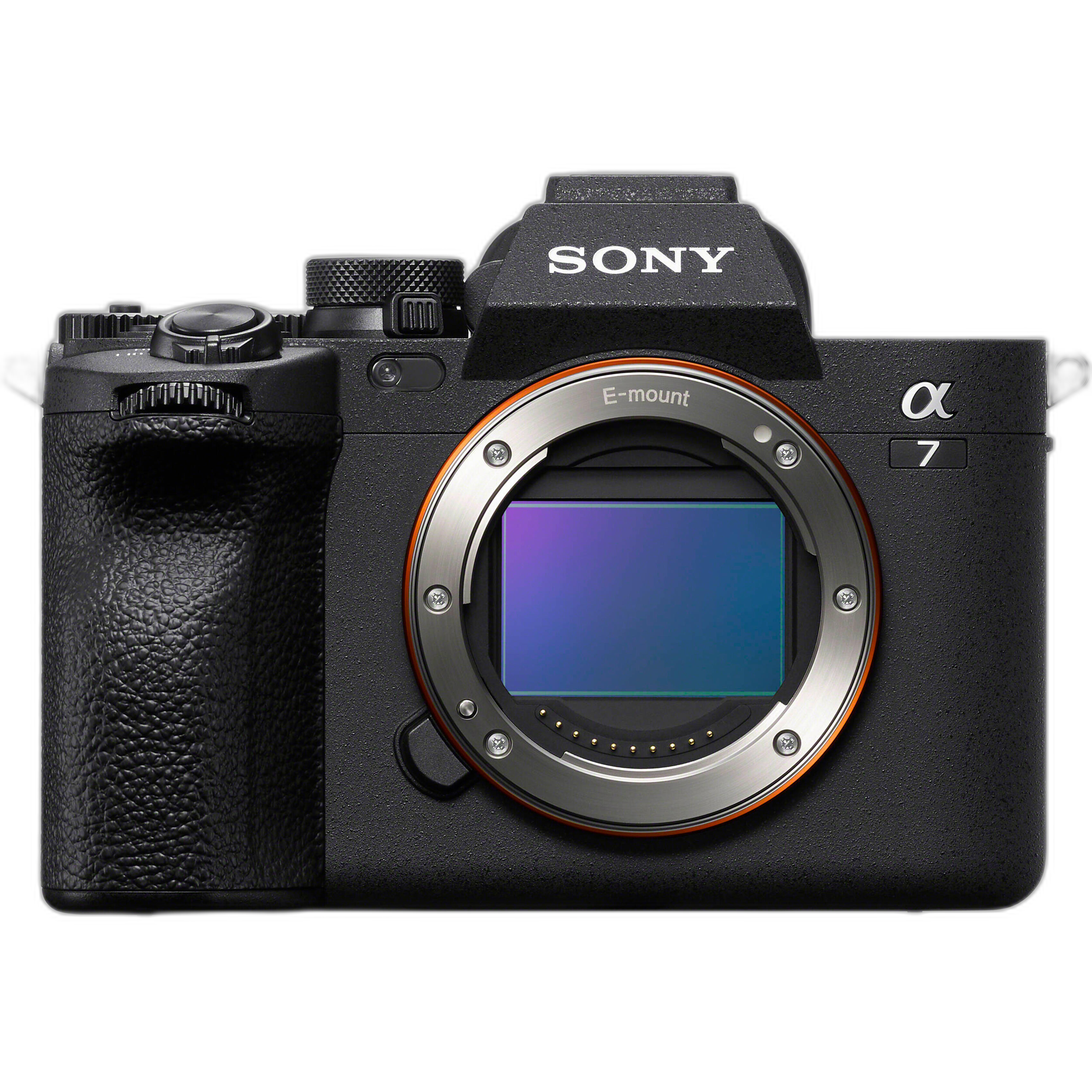
Sony has officially announced the a7 IV, introducing a major update to one of the most important cameras in the modern full-frame mirrorless market. Since the original a7 series helped redefine expectations for compact interchangeable-lens full-frame cameras, each new generation has carried unusual weight. With the a7 IV, Sony is clearly positioning its new model as a true hybrid tool for photographers, filmmakers, and content creators who want a camera that can handle demanding stills and serious video without stepping into the company’s higher-tier specialty lines.
Announced on October 21, 2021, the Sony a7 IV arrives with a 33MP full-frame BSI sensor, 4K60 video, and the versatile Sony E mount, all at a launch price of $2,499. On paper alone, that combination makes it one of the most ambitious “all-around” models Sony had yet introduced in the Alpha lineup.
A New Chapter for Sony’s Core Full-Frame Camera
The a7 line has long occupied a central place in Sony’s mirrorless strategy. Where the a7R series emphasized resolution, the a7S line targeted video and low-light work, and the a9 line pursued speed for professional action shooters, the standard a7 models were designed to balance capability, price, and broad appeal. That balancing act is not easy, especially by 2021, when photographers and filmmakers increasingly expected one body to do nearly everything well.
The Sony a7 IV appears to answer that challenge directly. Rather than functioning as a modest refresh, it looks like a meaningful step forward in both imaging and video performance. The move to a 33-megapixel backside-illuminated full-frame sensor places it in an especially interesting position. It offers a noticeable boost in resolution over prior generations of Sony’s standard a7 line while still signaling that this camera is intended for hybrid shooters, not only for those chasing maximum pixel count.
For many users, that sensor choice may prove to be the announcement’s biggest headline. Thirty-three megapixels is enough to satisfy a wide range of commercial, portrait, editorial, travel, and landscape photographers, while still remaining practical for day-to-day workflow. It is the kind of specification that suggests Sony wanted the a7 IV to feel like a real upgrade without pushing the model too far into the territory of the a7R family.
The Hybrid Pitch Comes Into Focus
If the sensor tells one half of the story, the video specification tells the other. The inclusion of 4K60 is a clear signal that Sony sees the a7 IV not merely as a stills camera with decent video, but as a modern multimedia platform. By late 2021, hybrid production had become the norm for many working creatives. Wedding photographers were often delivering highlight films. Commercial shooters were expected to produce short-form motion assets alongside still campaigns. Independent creators needed one camera body for YouTube, interviews, travel coverage, and client work.
In that context, 4K60 matters. It opens the door to smoother motion rendering and more flexible slow-motion interpretation in 4K workflows, both of which are highly useful in practical production. Just as importantly, it helps keep the a7 IV competitive at a time when buyers were paying close attention to whether a camera could genuinely serve both still and video needs.
Sony had already built a formidable reputation in video-oriented mirrorless design before this release, and the a7 IV seems intended to bring more of that confidence into the company’s mainstream full-frame offering. Historically, that is a significant development. Cameras in the “base” full-frame line were once often defined by compromise. By contrast, the a7 IV’s announcement suggests that Sony believed the standard model should now be a highly capable creator camera in its own right.
The Importance of the Sony E Mount
The a7 IV also benefits from arriving within the now-mature Sony E-mount ecosystem. That point should not be overlooked. One of the major reasons Sony became so influential in the mirrorless market was not simply body innovation, but the rapid expansion of a lens system that could support enthusiasts and professionals alike.
By 2021, E mount had become one of the most established platforms in full-frame mirrorless photography. Native lens options covered everything from compact primes and general-purpose zooms to specialized portrait, sports, macro, and cinema-oriented choices. Third-party support had also become an important part of the mount’s strength, helping make the system more accessible and flexible for different budgets and shooting styles.
That ecosystem gives the a7 IV extra significance as an announcement. A camera like this is rarely judged only on its body specifications. It is judged on what kind of long-term system it invites the user into. In Sony’s case, the answer was already compelling. For many potential buyers in 2021, the a7 IV would not just be an appealing standalone camera; it would be a gateway into one of the deepest mirrorless lens lineups available.
Positioning and Price
At a launch price of $2,499, the Sony a7 IV entered the market at a level that reflected both inflation in camera capabilities and Sony’s confidence in the model’s place within the Alpha family. This was not a budget full-frame camera, nor was it priced as a flagship. Instead, it occupied the strategically important middle ground where serious enthusiasts, working professionals, and hybrid creators often shop most carefully.
That pricing says a lot about the camera’s intended role. Sony was effectively arguing that the a7 IV offered enough performance to justify stepping beyond entry-level full-frame bodies while still remaining attainable compared to more specialized professional models. Historically, this has often been the sweet spot for cameras that go on to have long and influential product lives.
It also reflects a broader shift in the camera market during the late 2010s and early 2020s. As lower-end interchangeable-lens camera sales contracted, manufacturers increasingly focused on more capable enthusiast and professional products. The a7 IV’s announcement fits squarely within that transition: fewer compromises, more hybrid functionality, and pricing that acknowledges a more performance-driven market.
Why This Announcement Mattered
The a7 IV’s launch mattered because the standard a7 line has historically served as a kind of benchmark camera. It tends to reveal what Sony believes a general-purpose full-frame mirrorless body should be at a given moment. In 2021, Sony’s answer was telling: more resolution, stronger video, and a continued commitment to the all-in-one hybrid concept.
That made the camera especially relevant to buyers who did not want to maintain separate systems for stills and motion. It also put pressure on the rest of the market. Whenever Sony updates a core Alpha model, competitors and consumers alike pay attention, because those cameras often help define expectations for the category. The a7 IV seemed poised to do exactly that.
For photographers, the appeal was straightforward: a modern full-frame sensor with enough resolution for demanding work in a relatively compact mirrorless body. For filmmakers and creators, the presence of 4K60 strengthened the case that this was a practical production tool rather than a token hybrid. And for existing Sony users, the camera represented a new body option that could slot naturally into an already broad E-mount setup.
An Archival View of the a7 IV Introduction
Looking back at the announcement from its 2021 release period, the Sony a7 IV stands out as more than a routine generational update. It was a statement about where the mainstream full-frame mirrorless camera was heading. The old distinctions between “photo camera” and “video camera” were continuing to erode, and Sony responded with a model that clearly embraced that reality.
Its combination of a 33MP full-frame BSI sensor, 4K60 video, Sony E-mount compatibility, and a $2,499 launch price placed it in a highly competitive and highly important position. For many users at the time, it looked like the camera that could do almost everything they needed without forcing them into a niche specialization.
As an archival milestone in Sony’s Alpha history, the a7 IV marks the moment the company’s standard full-frame line took another decisive step toward becoming a fully modern hybrid platform. For photographers and creators watching the market in late 2021, that was big news indeed.
If you want to explore Sony cameras, lenses, and accessories, or learn more about landmark releases like the a7 IV, Unique Photo is a great place to buy gear and stay connected to the history of photography technology.