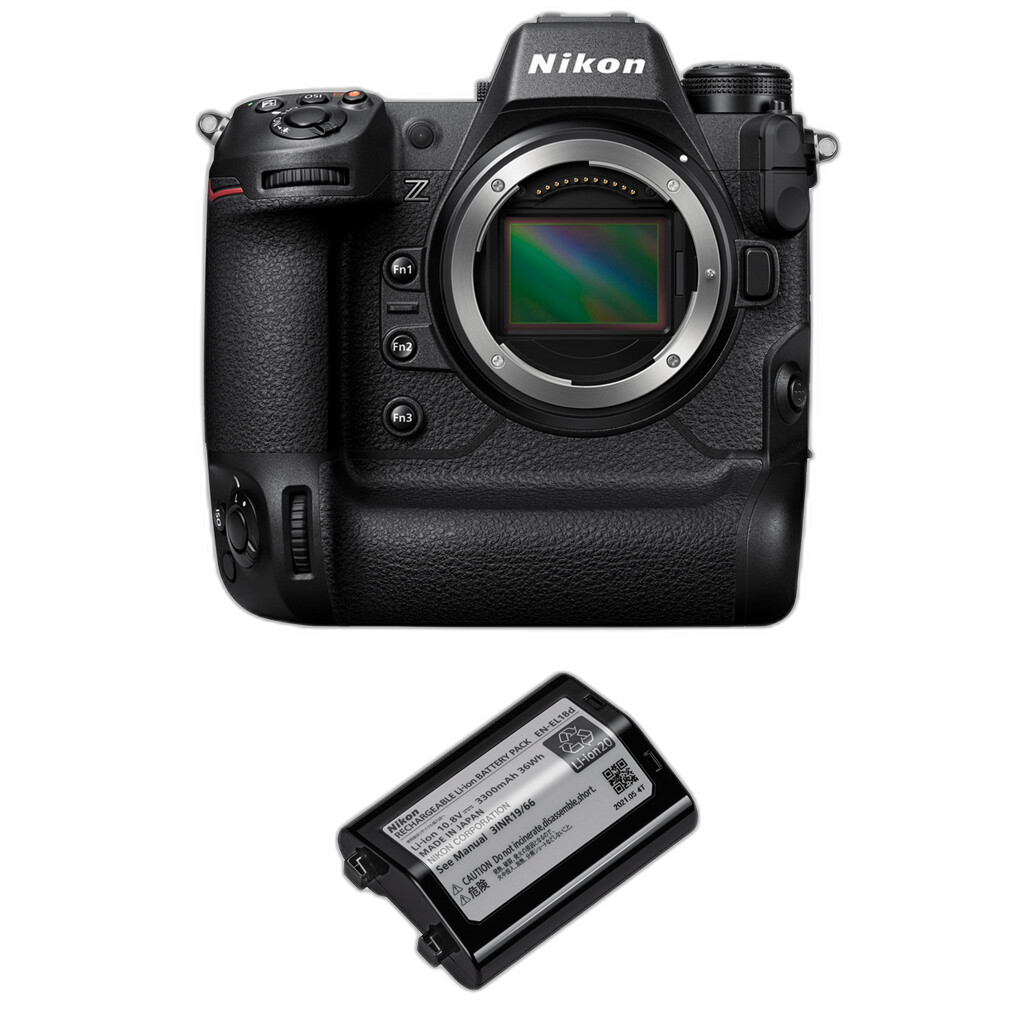
In October 2021, Nikon unveiled the Z9, a camera that immediately signaled a major turning point for both the company and the broader professional camera market. As Nikon’s flagship mirrorless body, the Z9 arrived not as a cautious step forward, but as a bold statement: a 45.7MP stacked full-frame sensor, headline-grabbing speed, advanced video ambitions, and perhaps most notably, a design that dispensed with a traditional mechanical shutter altogether. For working photographers and longtime Nikon users, this announcement marked the moment when the Z system fully entered the top tier of professional imaging.

A Flagship Mirrorless Camera with a Clear Purpose
The Nikon Z9 was announced on October 28, 2021, as the company’s highest-end Z-mount camera to date. Positioned above earlier full-frame Z models, it was aimed squarely at professionals in sports, wildlife, news, commercial, and hybrid photo/video production. Its integrated vertical-grip body and flagship naming made the intent obvious: this was the spiritual mirrorless successor to Nikon’s long line of pro bodies, bringing the speed and durability expectations of that class into the Z system.
Just as important, the Z9 represented Nikon’s answer to a changing high-end market. By 2021, professional mirrorless cameras were no longer an experiment or a niche alternative. They had become central to how many photographers and filmmakers worked. The Z9 was Nikon’s declaration that its mirrorless platform was ready for the most demanding assignments.
The 45.7MP Stacked Full-Frame Sensor
At the core of the Z9 is a 45.7MP stacked full-frame sensor. That specification alone put it in rare company at launch. A resolution level in the mid-40MP range offered broad appeal: enough detail for commercial, editorial, and landscape applications, while still supporting the speed expected of a flagship camera intended for action work.
The fact that Nikon used a stacked sensor was especially significant. In practical terms, stacked sensor architecture is associated with faster data readout than more conventional designs. Around the Z9’s launch, that mattered for several reasons: quicker continuous shooting, reduced blackout concerns, strong subject tracking potential, and the ability to support increasingly advanced video modes. It also helped explain Nikon’s confidence in making one of the camera’s most talked-about design choices: eliminating the mechanical shutter.
No Mechanical Shutter: A Radical Flagship Decision
One of the defining points of the Z9 announcement was Nikon’s decision to omit a mechanical shutter entirely. For a flagship professional camera, this was a major development. Mechanical shutters had long been a standard component even in advanced mirrorless models, in part because they were seen as a safeguard against rolling shutter artifacts and as a familiar, trusted solution for professionals.
By removing the mechanical shutter from the Z9, Nikon was making a statement about how far sensor and processing technology had advanced. The company was effectively saying that, for this camera, electronic shutter performance was ready to stand on its own at the highest level of professional use. Historically, that made the Z9 one of the most important camera announcements of its moment. It was not merely another spec-sheet escalation; it was a visible rethinking of what a top-tier professional stills camera could be.
For photographers following industry trends in 2021, this was one of the strongest indicators that the mirrorless flagship had matured into something distinct from the DSLR before it, rather than simply imitating it without a reflex mirror.
Speed Built for Action
Nikon announced the Z9 with burst rates of up to 20 fps in RAW and up to 120 fps in JPEG, placing it firmly in the elite speed class. Those figures underscored the camera’s intended audience: photographers who need to capture rapidly changing moments with precision, whether at a sporting event, on assignment for wire service work, or tracking wildlife behavior.
For years, flagship cameras were judged in large part by how confidently they could handle speed-intensive scenarios. The Z9’s announced performance showed Nikon was not approaching this market cautiously. Instead, it was offering a camera that sought to combine high resolution with the sort of rapid-fire responsiveness often associated with specialized action bodies.
The 120 fps JPEG mode, in particular, was a headline feature because it suggested an emphasis on capturing fleeting expressions and split-second motion in ways that would have seemed extraordinary in earlier generations of professional digital cameras. Even photographers who would not use that mode every day could see what it represented: the Z9 was designed to remove as many timing limitations as possible.
8K Video and the Expanding Hybrid Flagship
Video was another central part of the Z9 story. At launch, Nikon emphasized 8K30 video capability, with 8K60 arriving later. This was a meaningful step not only for Nikon’s mirrorless lineup, but for the idea of the flagship camera itself. By 2021, top-end cameras were increasingly expected to serve both still photographers and serious video creators, and the Z9 clearly embraced that hybrid role.
8K capture carried both practical and symbolic weight. Practically, it offered extremely high-resolution acquisition for productions needing detail, reframing flexibility, or future-facing deliverables. Symbolically, it showed that Nikon intended the Z9 to be discussed not only alongside pro sports and news cameras, but also among the most advanced hybrid imaging tools of its era.
The mention that 8K60 would come later is also very much in keeping with the moment in which the Z9 was announced. In the early 2020s, camera launches increasingly involved a combination of available-at-release features and roadmap-based enhancements through firmware. The Z9 fit squarely into that evolving model, where high-end cameras were presented as platforms that could gain expanded capabilities after launch.
Nikon Z Mount at the Professional Peak
The Z9 also had strategic importance for the Nikon Z mount itself. Since the introduction of the Z system, Nikon had been steadily building out its lens lineup and camera range, but a true flagship body carries special meaning. It serves as a signal to agencies, long-time professionals, and system buyers that a mount is ready for the most demanding levels of work.
By bringing a no-compromise pro body to the Z mount, Nikon strengthened the perception of the system as a complete professional ecosystem rather than an emerging alternative. That mattered not just for camera buyers, but for the broader confidence of the market. Flagship bodies often function as proof-of-concept machines for an entire mount, showing what a company believes its platform can ultimately do.
Launch Price and Market Position
The Nikon Z9 launched at $5,499 in the U.S., a price that placed it firmly in premium professional territory while also making it a highly competitive flagship announcement for 2021. In historical context, the pricing was part of the camera’s impact. A flagship body with this sensor resolution, this level of speed, and 8K video aspirations attracted immediate attention because it was positioned as an uncompromising tool for top-end users.
For Nikon shooters considering the transition from DSLR to mirrorless at the professional level, the Z9 was more than just another new body. It was the model that suggested the future of Nikon’s highest-performance system had decisively shifted to Z mount.
Why the Z9 Announcement Mattered
Looking back, the Z9’s announcement stands out because it brought several industry themes together in one camera: stacked-sensor speed, high-resolution capture, serious 8K video, and a confident break from the mechanical shutter tradition. Any one of those elements would have made the camera notable. Combined in a flagship Nikon body, they made the Z9 one of the most important camera introductions of 2021.
It was also an announcement with historical weight for Nikon itself. The Z9 was not simply a new model number at the top of the range. It was a statement that the company’s mirrorless ambitions had reached their flagship expression. For photographers who had watched Nikon’s professional cameras evolve across film, DSLR, and now mirrorless eras, the Z9 represented a clear milestone.
Conclusion
As announced in 2021, the Nikon Z9 arrived as a defining flagship: a 45.7MP stacked full-frame Nikon Z-mount camera capable of 20 fps RAW, 120 fps JPEG, and 8K30 video at launch, with 8K60 to follow later. Its elimination of the mechanical shutter made it one of the boldest professional camera releases of its generation, and its launch price of $5,499 positioned it as a serious tool for photographers and hybrid creators who needed top-tier performance.
For those interested in Nikon history, flagship mirrorless development, or the continuing evolution of the Z system, the Z9 remains an essential camera to study. To buy Nikon gear or learn more about the system, visit Unique Photo.