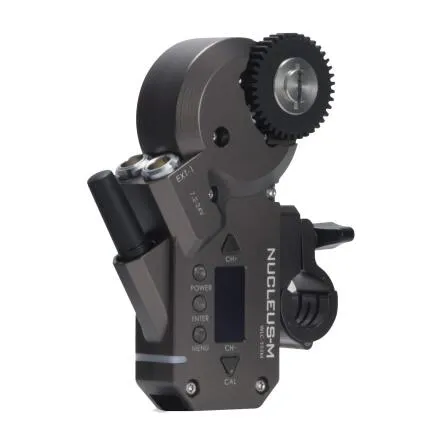
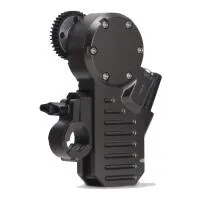
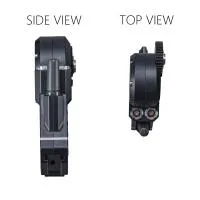
Tilta Nucleus-M Motor Kit I

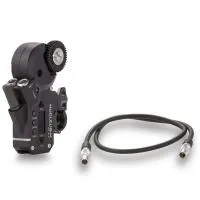

Key Features
- 3-channel wireless lens control system designed for professional focus, iris, and zoom operation
- Includes 2.4 GHz hand unit, dual motors, MDR receiver, handles, batteries, chargers, rods, and hard case
- Long-range wireless operation up to approximately 1000 feet in open environments
- Precision lens mapping with adjustable A/B hard stops, lens mark disk support, and low-latency response
- Suitable for gimbals, drones, handheld rigs, tripods, shoulder rigs, and cinema camera builds
- High-torque motors help drive a wide range of cine and DSLR lens gears with reliable performance
OVERVIEW
The Tilta Nucleus-M Motor Kit I (WLC-T03-M1) is a professional wireless lens control solution built for filmmakers who need accurate, dependable remote control over lens functions on demanding productions. Designed around a 3-channel architecture, the Nucleus-M system gives crews the flexibility to control focus, iris, and zoom in a compact ecosystem that works across cinema cameras, DSLR and mirrorless video rigs, handheld builds, stabilizers, vehicle rigs, jibs, and drone setups.
This kit is centered on Tilta’s modular wireless control platform and typically includes the FIZ hand unit, two wireless motors, an MDR receiver, handle-based control components, power accessories, mounting hardware, and a protective carrying case. The result is a highly adaptable package for owner-operators, focus pullers, DIT-supporting crews, indie narrative productions, commercials, documentaries, and fast-moving run-and-gun cinema workflows.
Compatible With
- Cinema, mirrorless, and DSLR camera rigs using 15mm or 19mm rod-based lens motor mounting
- Geared cine lenses with standard 0.8 MOD focus, iris, or zoom rings
- Many DSLR and mirrorless lenses when paired with included or compatible lens gear rings
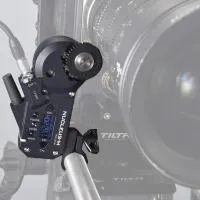
- Handheld, tripod, shoulder, gimbal, jib, crane, car-mount, and drone camera support systems that can accommodate the Nucleus-M receiver and motors
Professional Wireless FIZ Control
The Nucleus-M platform is designed to deliver responsive wireless control over critical lens functions. Focus pullers can make precise focal adjustments from the hand unit, while operators can configure handles or alternate control modes for specific rig styles. With support for multi-channel operation, the system is especially useful when a production requires independent control of focus, iris, and zoom or when an operator wants to split functions between crew positions.
Its wireless range of up to roughly 1000 feet under ideal conditions makes it practical for larger sets, crane work, remote vehicle shots, and gimbal applications where physically accessing the lens is difficult or impossible. Low-latency response is a major advantage in narrative and commercial work, where repeatable marks and accurate timing are essential.
Motor Performance and Precision
The included motors are built to provide strong torque for driving a broad array of lenses, from lightweight mirrorless glass to many standard cine lenses with stiffer rings. This helps the system maintain smooth motion and reliable repeatability during focus pulls, iris transitions, or zoom moves. For crews working with lenses that have marked witness distances or repeatable movement requirements, the Nucleus-M offers the kind of tactile and operational precision expected from a serious FIZ setup.
Lens mapping, adjustable hard stops, and removable marking disks allow assistants to create repeatable control points for scene blocking and rehearsed camera moves. These features are especially valuable for narrative filmmaking, interviews with subject movement, product cinematography, and stylized rack-focus work.
Modular Design for Flexible Rigging
One of the Nucleus-M system’s biggest strengths is modularity. The hand unit can serve as the core focus pulling tool, while included handles and receiver components help integrate the system into a wide range of camera support configurations. Whether the camera is mounted on a shoulder rig, gimbal, slider, dolly, or remote head, the system can be adapted to the build as long as proper rod support and power distribution are available.
This flexibility also makes the kit appealing to small crews. A single operator can configure the system for solo shooting, while larger productions can divide responsibilities between an operator and a 1st AC. As a result, the Nucleus-M remains one of the most recognizable wireless lens control systems for productions that need professional functionality without moving to much larger or more expensive FIZ ecosystems.
Ideal Applications
The Tilta Nucleus-M Motor Kit I is well suited for narrative filmmaking, music videos, branded content, live production-style cinema work, interviews, documentary setups with remote cameras, studio builds, and technical motion-control environments. It is particularly beneficial whenever lens access is obstructed by a matte box, cage, gimbal frame, vehicle mount, or distance between camera and crew.
On gimbals and drones, the system helps maintain cinematic lens control where manual lens adjustments would otherwise be impractical. On shoulder rigs and handheld builds, it can reduce the need to touch the lens barrel directly, helping maintain shot stability. On tripod-based drama sets, it gives focus pullers repeatable marks and more confident control over complex subject movement.
Build Quality and Workflow Benefits
Tilta designed the Nucleus-M with production use in mind, combining durable materials with a portable format that travels well between locations. The included hard case helps protect the system in transit and keeps motors, cables, power accessories, and control units organized. For crews managing multiple rig changes in a day, that organization can save time and reduce setup friction.
In practical workflow terms, the kit improves shot consistency, speeds lens adjustments, and supports more polished camera movement. It also enables collaborative camera operation, where one crew member frames and moves the camera while another concentrates solely on focus control. That separation of roles can significantly improve keeper rates during demanding scenes.
How It Compares
Compared with basic single-channel follow focus systems, the Nucleus-M offers substantially more flexibility thanks to its multi-channel architecture, stronger wireless capability, and broader rig integration. Compared with manual follow focus units, it removes the need for direct lens contact and opens the door to remote operating scenarios. Compared with higher-tier enterprise cinema FIZ systems, it remains a cost-effective choice while still delivering robust feature depth for many independent and professional productions.
Usage Tips
- Balance your rig fully before calibrating motors, especially on gimbals and drones
- Use properly aligned 15mm or 19mm rods to reduce motor strain and ensure smooth gear mesh
- Confirm lens gear fitment and avoid over-tight mesh to preserve motor performance and reduce noise
- Label marking disks clearly for narrative scenes with repeated blocking
- Keep spare batteries charged for long shooting days and remote-location work
- Recalibrate when switching lenses or changing gear-ring positions
Recommended Accessories
- 0.8 MOD lens gear rings for still lenses without built-in cine gears
- 15mm LWS rods or 19mm studio rods depending on your camera support system
- Rod clamps, baseplates, and cages for secure motor and receiver mounting
- V-mount or Gold mount battery systems with proper D-Tap outputs for extended runtime
- Additional Nucleus-M motors for full 3-channel focus, iris, and zoom control
- Monitor mounts and wireless video systems for complete remote operating workflows
- Spare 18650 batteries and chargers for uninterrupted production use
System Background
The Tilta Nucleus-M series became popular by bringing advanced wireless FIZ control to a broader range of filmmakers than traditional high-end cinema systems typically served. Its blend of affordability, modularity, long-range control, and practical real-world performance helped it become a common sight on indie film sets, commercial shoots, gimbal rigs, and owner-operator cinema builds. The Motor Kit I package reflects that same philosophy: offering a powerful starting point for serious wireless lens control with room to expand into more advanced multi-operator configurations.
Why Choose the Tilta Nucleus-M Motor Kit I
If you need a proven wireless follow focus ecosystem that can scale from lightweight mirrorless rigs to more advanced cinema productions, the Tilta Nucleus-M Motor Kit I is a compelling option. It combines strong motor torque, long-range 2.4 GHz control, modular rigging flexibility, and professional workflow features in a field-ready package. For creators who value precise focus control, smoother collaboration on set, and better access to remote camera operation, this kit remains a practical and highly capable investment.
Brand
power system
| Battery Capacity | |
| Battery Type | 18650 rechargeable batteries |
| Battery Runtime |
physical specifications
| Dimensions | |
| Weight | |
| Color | Black |
battery/charger attributes
| Power Output |
detailed specifications
| Material | Aluminum alloy, stainless steel, and durable composite materials |
| Mounting | 15mm and 19mm rod mount support |
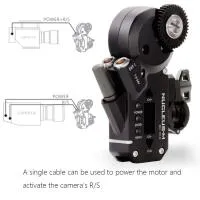
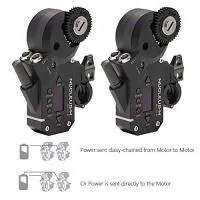
| External Power Supply | Supports external power via production battery/power distribution connections depending on component |
gimbal specifications
| Wireless Protocol | 2.4 GHz wireless |
| Compatibility | Compatible with cine, DSLR, and mirrorless camera rigs using 15mm or 19mm rod support and lenses with 0.8 MOD gearing or compatible lens gear rings |
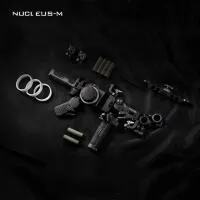
- Tilta Nucleus-M FIZ hand unit
- 2 x Nucleus-M wireless lens motors
- MDR receiver
- Hand grips / handle control components
- Batteries and battery chargers
- Rod mounting accessories and cables
- Hard carrying case
- Documentation
No creators have tagged this product yet.
Articles featuring this product
Community questions about this gear
Ask a question
0
votes
2
answers
129
0
votes
2
answers
130
0
votes
2
answers
146
0
votes
2
answers
133
Why does my Canon EF 50mm f/1.4 focus slower on EOS M than other USM lenses?
Photography Stack Exchange contributor
8y ago
0
votes
2
answers
124