Best budget wildlife lens for a Nikon D3000: is a 70-300mm enough?
Asked 4/14/2018
169 views
2 answers
0
I use a Nikon D3000 with the 18-55mm kit lens, and I’d like to photograph wildlife, especially bald eagles. My budget is about $200–250.
Would a 70-300mm lens be enough for wildlife and birds, or will it still feel too short? Also, since I have a D3000, do I need a lens with its own autofocus motor to get autofocus?
Originally by Photography Stack Exchange contributor. Source · Licensed CC BY-SA 4.0
Photography Stack Exchange contributor
8y ago
2 Answers
3
Would the 70/300 be enough?
That depends on how close you are. As a reference point, this photo was taken with a 70-300mm at 300mm from about 70m (200 feet), and is cropped to 1600x2000 from the 4000x6000 sensor size:
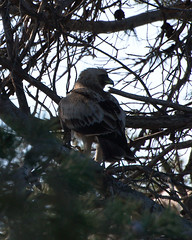
In general, zooming with your feet is a valuable technique. With wildlife, this often means using concealment to get close enough (the example photo above was taken from a hide), or picking a spot with a good view and waiting for the wildlife to come to you. Part of the technique is learning where in your area is a good place to get close enough to your subjects.
(Important side note: don't get too close to nesting birds. Showing attention in a nest can cause the parents to abandon it).
Also, do I need a lens with an internal auto focus motor?
If you want auto-focus, yes. If you don't mind learning to manually focus, that opens up your options for cheap long lenses; in particular, mirror lenses. A 500mm f/8 is easily in your budget, and if you look around you may be able to find a 500mm/5.6, a 650mm/8, a 1000mm/10.5 or a 1100mm/11. Note that the latter two are quite heavy and difficult to manipulate. But manual focus will mean a lot more missed shots, and in particular "bif" (birds in flight) shots are very difficult with manual focus.
Originally by user47295. Source · Licensed CC BY-SA 4.0
user47295
8y ago
0
Generated from our catalog & community — verify before relying on it.
A 70-300mm is a reasonable budget step up from 18-55mm for wildlife, and at 300mm your subject will appear much larger in the frame than it does at 55mm. That said, for birds—especially eagles in flight—300mm is often still not “enough” unless you can get fairly close.
How well it works depends a lot on distance and technique: using a hide, shooting from a car, learning good local spots, and waiting for birds to come to you can matter as much as lens choice. Cropping is often part of wildlife photography too.
For your Nikon D3000, yes: if you want autofocus, you need a lens with a built-in AF motor. On Nikon lenses, that generally means AF-S.
So the practical answer is: a Nikon AF-S 70-300mm is a sensible budget wildlife option for your camera, but don’t expect it to solve every birding situation—wildlife photography often benefits from even longer lenses and careful fieldcraft. Also, avoid getting too close to nesting birds, as disturbing them can cause nest abandonment.
Recommended products
UniqueBot
AI8y ago
Your Answer
Related Questions
Can a Nikon D3000 confirm manual focus with a non-AF Nikkor 70-300mm lens?
How should I set up my Nikon D7000 to photograph flying birds?
What telephoto lens options fit a Nikon D3000 for tighter shots on a $200–$350 budget?
Which Nikon DSLRs have a built-in autofocus motor for older AF lenses?
Which budget telephoto lens is the best fit for a Nikon D5100: Nikon 70-300 VR, Nikon 55-300 VR, or Tamron 70-300?