Choosing the right wide-angle lens for landscape photography can feel overwhelming, especially when you start comparing edge sharpness, distortion, flare behavior, filter compatibility, and real-world usability in the field. That is exactly why many Sony shooters are talking about the Sony Lens Compare Beta: it gives photographers a visual way to compare optical performance and decide which lens best fits their style.
At Unique Photo, we often hear the same question from Sony users: how should you interpret lens comparison tools when shopping for a landscape lens? The answer is that charts and comparison widgets are useful, but they work best when paired with practical shooting priorities. For landscapes, that means balancing image quality with focal length, portability, weather resistance, and how you actually compose outdoors.
In this guide, we will break down how photographers are using the Sony Lens Compare Beta, what its metrics really mean, and which Sony wide-angle lenses make the most sense for landscape photography.
What Is the Sony Lens Compare Beta and Why Are Landscape Photographers Using It?
The Sony Lens Compare Beta is designed to help photographers evaluate multiple Sony lenses side by side. For landscape shooters, that is especially valuable because wide-angle lenses often look similar on paper while performing very differently at the edges of the frame or in high-contrast scenes like sunrise, mountains, and coastal views.
Users typically turn to the tool to compare:
- Center versus corner sharpness
- Distortion at wide focal lengths
- Vignetting behavior
- Performance at different apertures
- How one zoom range compares to another for travel and hiking
The key takeaway from most discussions is that the tool is best used as a starting point, not the final word. Landscape photography often involves stopping down to f/8 or f/11, focus stacking, and careful post-processing. A lens that looks slightly weaker wide open may still be fantastic in actual field use.
How to Interpret Sony Lens Compare Beta Metrics for Wide-Angle Landscape Photography
One of the biggest points of debate is how much weight to give each metric. When selecting a lens for landscapes, the most important numbers are not always the most obvious ones.
Sharpness: Landscape photographers care about corner-to-corner consistency more than portrait shooters do. If the Sony Lens Compare Beta shows stronger edge and corner performance, that can matter for images with foreground elements stretching to the frame edges.
Distortion: Ultra-wide lenses naturally introduce more distortion. For landscape scenes, this may not be a major issue if you shoot organic subjects like mountains, forests, and shorelines. But if you include horizons, architecture, or straight lines, lower distortion can save editing time.
Vignetting: Some falloff in the corners is common, especially at the widest focal lengths. This is usually easy to correct in post, so many experienced photographers rank it below sharpness and flare resistance.
Aperture comparisons: Don’t judge a landscape lens only at its maximum aperture. Many landscape shooters work at f/8, f/11, or even narrower apertures for greater depth of field. Compare performance where you actually plan to shoot.
Real-world handling: Metrics do not show how a lens feels on a long hike, how easy it is to use with a tripod, or whether the bulbous front element limits filter options. That is where personal shooting experience matters.
Best Sony Wide-Angle Lens Options for Landscape Photography
If you are using the Sony Lens Compare Beta to narrow your choices, a few Sony lenses stand out as especially relevant for landscape work.
Sony FE 12-24mm f/2.8 GM Lens is one of the most compelling options for serious landscape photographers who want an ultra-wide field of view, premium optics, and professional-level build quality. At 12mm, it opens up dramatic foreground-heavy compositions, expansive skies, and tight interior viewpoints that are impossible with less extreme zooms.
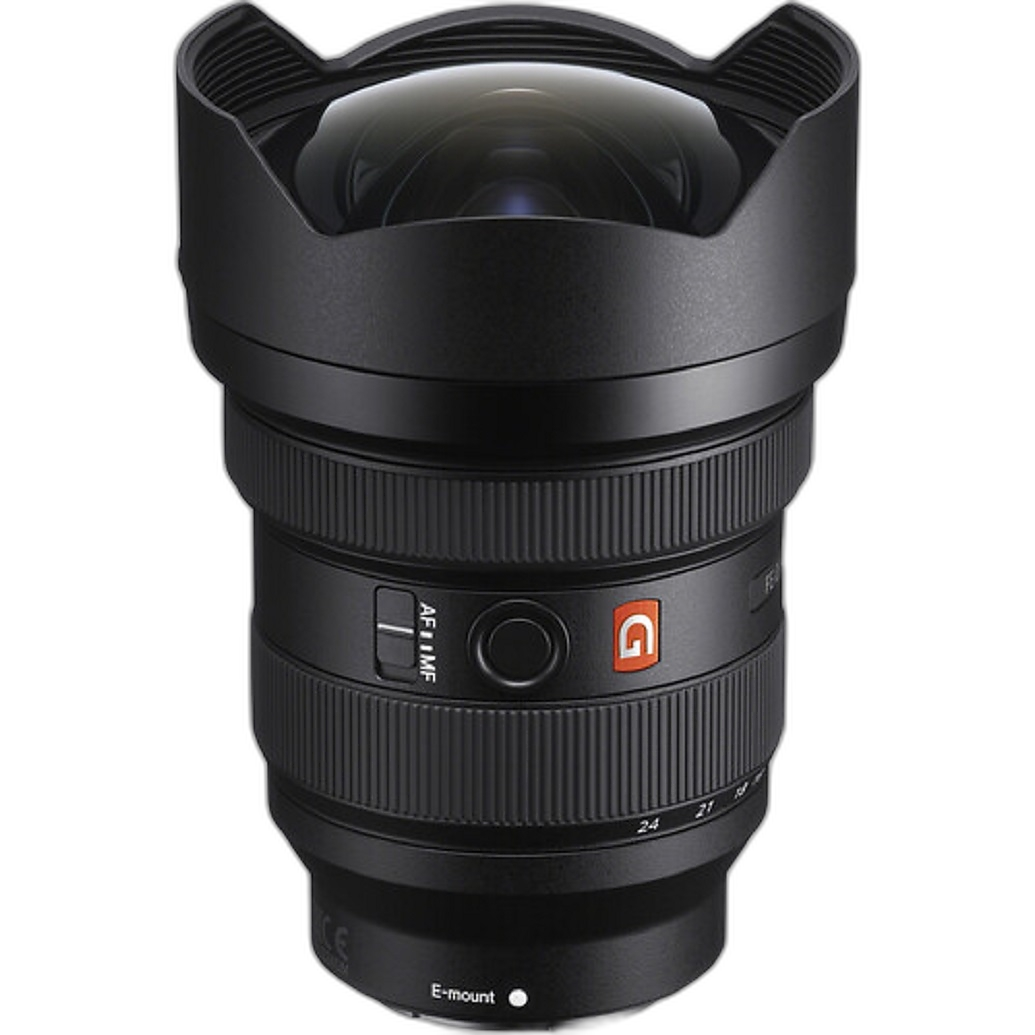
For photographers comparing lenses at Unique Photo, the Sony FE 12-24mm f/2.8 GM Lens is often the one that sparks the most discussion because it combines elite wide-angle coverage with the kind of sharpness landscape shooters want from corner to corner. It is especially appealing for seascapes, dramatic vistas, astrophotography, and environmental scenes where exaggerating scale is part of the creative goal.
Another useful point of comparison is the Sony FE 24-105mm f/4 G OSS Lens. While it is not an ultra-wide specialist, many landscape photographers value it as a highly versatile travel and hiking lens. At 24mm, it is still wide enough for many scenic compositions, while the longer end gives you the flexibility to isolate peaks, compress layers of landscape, or capture detail shots without changing lenses.
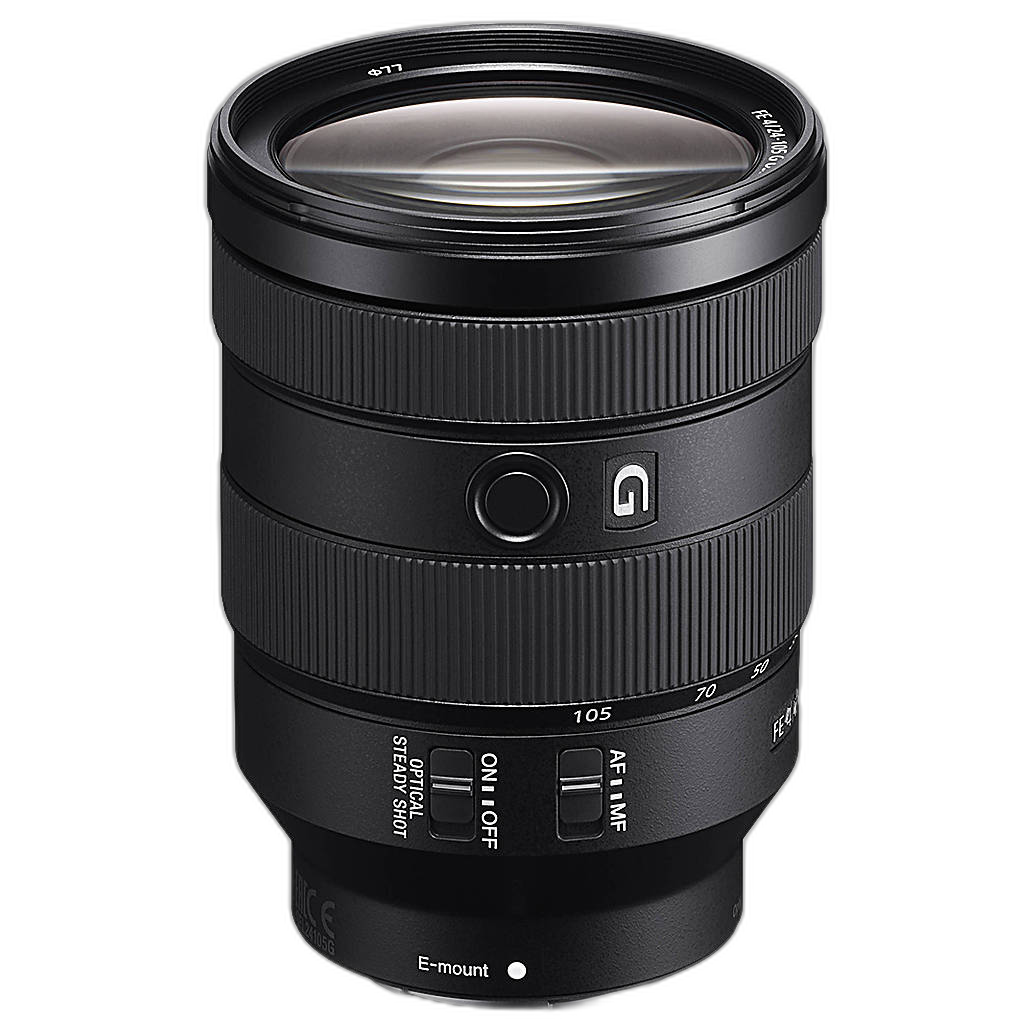
For some photographers, the comparison comes down to a simple question: do you need maximum width, or do you need maximum flexibility? The Sony Lens Compare Beta can help reveal optical differences, but the real answer depends on how you shoot.
Sony FE 12-24mm f/2.8 GM vs Sony FE 24-105mm f/4 G OSS for Landscapes
These two Sony lenses serve different kinds of landscape photographers, and they are a perfect example of why comparison tools need context.
Choose the Sony FE 12-24mm f/2.8 GM if you want:
- True ultra-wide coverage for expansive compositions
- Stronger perspective exaggeration with close foreground subjects
- A premium lens for dramatic vistas, interiors, and night landscapes
- A specialized lens dedicated to wide-angle work
Choose the Sony FE 24-105mm f/4 G OSS if you want:
- A more versatile one-lens travel setup
- Wide to short-telephoto coverage for mixed landscape scenes
- Less need to swap lenses in changing weather
- A practical balance of image quality, portability, and range
In forum-style discussions, many members point out that the “best” landscape lens is often the one that matches your shooting habits. If you frequently work from dramatic foreground elements and love immersive ultra-wide scenes, the 12-24mm is hard to beat. If you hike all day and prefer flexibility over extreme width, the 24-105mm may produce more keepers overall.
What the Sony Lens Compare Beta Does Not Tell You
Even a helpful lens comparison tool cannot fully account for the realities of field photography. Experienced landscape photographers often add their own checklist beyond the charts.
Filter use: This matters a lot for landscape work. Neutral density filters and polarizers are common tools for long exposures, waterfalls, and controlling reflections. Some ultra-wide lenses are less convenient for traditional filter systems because of their front element design.
Weather and weight: A lens can test beautifully, but if it is too heavy for your hiking style, you may leave it at home. A slightly less specialized lens that you carry more often can be the better choice.
Flare resistance: Shooting into low-angle sun is common in landscape photography. Comparison metrics may hint at performance, but real-world flare behavior is something photographers often learn through sample images and field reports.
Compositional preference: Some photographers naturally see landscapes at 16mm or wider, while others build stronger images in the 24mm to 50mm range. No online tool can decide that for you.
Landscape Photography Tips Members Commonly Share When Comparing Sony Wide-Angle Lenses
Beyond the technical debate, photographers tend to share practical advice that is just as useful as the Sony Lens Compare Beta itself.
- Compare at landscape apertures: Look at performance around f/8 and f/11, not just wide open.
- Think about your foreground style: Ultra-wide lenses shine when you work close to rocks, flowers, leading lines, or textures.
- Check corner quality for large prints: If you print big, edge sharpness matters more.
- Don’t obsess over tiny chart differences: Technique, tripod stability, weather, and light often matter more.
- Consider your editing workflow: Distortion and vignetting can often be corrected easily, while poor composition cannot.
This is one reason photographers shopping with Unique Photo often compare both specs and intended use before making a final decision. A lens is not just a set of metrics; it is a tool for how you shoot.
How to Choose the Best Sony Landscape Lens for Your Shooting Style
If you are still deciding after using the Sony Lens Compare Beta, try simplifying the decision with these questions:
Do you want the widest possible perspective?
If yes, the Sony FE 12-24mm f/2.8 GM Lens is a strong choice for photographers who want dramatic wide-angle impact and premium image quality.
Do you want a single lens for landscapes, travel, and general use?
If yes, the Sony FE 24-105mm f/4 G OSS Lens offers a highly practical focal range with excellent flexibility.
Do you shoot mostly from a tripod at golden hour?
You may care more about corner detail, flare behavior, and filter workflow than autofocus speed.
Do you hike long distances?
Portability and all-around usability may matter just as much as ultra-wide coverage.
These are the kinds of decisions the Sony Lens Compare Beta can support, but not fully answer on its own.
Final Thoughts on Using the Sony Lens Compare Beta for Wide-Angle Landscape Photography
The Sony Lens Compare Beta is a useful resource for narrowing down wide-angle lenses for landscape photography, but it works best when paired with real-world priorities. Metrics like sharpness, distortion, and vignetting are important, yet they should be interpreted through the lens of how landscapes are actually made: stopped down, carefully composed, and often captured in changing outdoor conditions.
For photographers who want a premium ultra-wide experience, the Sony FE 12-24mm f/2.8 GM Lens stands out as an exceptional option. For those who want a more flexible everyday landscape zoom, the Sony FE 24-105mm f/4 G OSS Lens remains a smart and versatile choice. At Unique Photo, both kinds of photographers are easy to understand, because both approaches are valid.
If you are building out your Sony landscape kit, consider exploring more from Unique Photo, including Sony full-frame lenses, landscape filters and accessories, tripods for long exposures, and additional E-mount lens options that match your shooting style.