When you’re shooting portraits indoors, you’re balancing a few competing priorities: you want flattering, creamy background blur (bokeh) without sacrificing enough sharpness to retain crisp eyes and lifelike detail. In this guide, the Unique Photo team explains how to choose the right focal length and aperture for indoor portraits, how sensor size changes your choices, and which lens types make sense for common rooms, small studios, and lifestyle sessions.
Sharpness vs. bokeh for indoor portraits: what actually matters
Sharpness is the lens’s ability to resolve fine detail—think tack-sharp eyelashes and textured hair. Bokeh describes how smoothly the background is rendered when it’s out of focus, often influenced by aperture design, optical formula, and focal length.
Indoors, you’re often working with limited space and light. That makes fast primes (f/1.2–f/2) popular: they keep ISO down and deliver subject separation even when backgrounds are close. The key is striking balance:
- If you shoot very close at f/1.2–f/1.4, depth of field can be razor-thin. Stopping down to f/1.8–f/2.2 often improves eye-to-eye sharpness while preserving beautiful blur.
- Micro-contrast and eye AF accuracy matter as much as headline resolution. A lens with consistent focus and pleasant bokeh at f/2 can beat an ultra-fast lens that misses focus wide open.
Best focal lengths for indoor portraits (and why)
Choose focal length based on working distance and the look you want:
- Full-frame 35mm: Storytelling environmental portraits in tight spaces; moderate blur with context.
- Full-frame 50mm: Classic “nifty fifty” for waist-up/three-quarter portraits; versatile in average-sized rooms.
- Full-frame 85mm: Flattering compression and smoother background; needs more distance—great in larger rooms or small studios.
- APS-C 23–35mm (≈35–50mm equiv.): Environmental and waist-up portraits indoors.
- APS-C 50–56mm (≈75–85mm equiv.): Classic head-and-shoulders look with softer backgrounds.
- Micro Four Thirds 25mm (≈50mm) and 45mm (≈90mm): Compact options with excellent sharpness; fast apertures help maintain blur.
Prime vs. zoom for indoor portraits
Primes are typically faster, cleaner wide open, and deliver creamier bokeh. Indoors, a 35mm, 50mm, or 85mm-equivalent prime is hard to beat. Zooms like 24–70mm f/2.8 excel in flexibility but usually need more light or higher ISO to match prime subject separation.
- Choose a prime if you want maximum blur, low-light capability, and a consistent look.
- Choose a zoom if you’re shooting events or need quick framing changes without moving.
Aperture choices: f/1.2 vs f/1.8 vs f/2.8 vs f/4
- f/1.2–f/1.4: Dreamy blur and low ISO; watch for razor-thin focus planes at close distances.
- f/1.8–f/2.2: Sweet spot indoors—great sharpness with flattering separation and easier focusing.
- f/2.8: Works well with longer focal lengths or if you can increase lighting; more depth of field for groups.
- f/4: Use with wider lenses or when you have plenty of light; better for environmental portraits with more context.
Sensor size and working distance: full-frame vs APS-C vs Micro Four Thirds
Full-frame sensors naturally give a shallower depth of field for the same framing and aperture, helpful for blur indoors. APS-C and Micro Four Thirds can produce equally gorgeous portraits if you use slightly longer focal lengths or faster apertures. Room size matters: the longer the lens, the more space you’ll need to step back for comfortable framing.
Recommended indoor portrait lens types by system
Here are dependable styles of lenses that balance sharpness and bokeh for indoor portraits. Pair them with your favorite mirrorless body from Unique Photo.
- Canon RF mount (full-frame): RF 50mm f/1.8 for value; RF 85mm f/2 Macro IS for flattering compression; faster RF 50mm/85mm f/1.2 for premium blur.
- Canon RF-S (APS-C): A fast 33–56mm-equivalent prime is ideal for shallow depth of field in small rooms; consider RF 35mm f/1.8 on RF-S bodies as a versatile environmental portrait option.
- Fujifilm X mount: XF 35mm (≈50mm) f/1.4 or f/2 for classic rendering; XF 33mm f/1.4 for modern sharpness; XF 56mm f/1.2 for creamy headshots.
- Micro Four Thirds (OM SYSTEM/Panasonic): M.Zuiko 25mm f/1.8 or 25mm f/1.4 for everyday indoor portraits; M.Zuiko 45mm f/1.8 for budget-friendly headshots with smooth bokeh.
Not sure which to pick? Unique Photo’s experts can help match a lens to your shooting space, system, and budget.
Lighting your indoor portraits without losing bokeh
- Use off-camera flash or continuous LED at low power with large modifiers (umbrellas/softboxes) to add catchlights while keeping ISO low.
- Place your subject away from the background (4–8 feet) to boost blur without opening the aperture further.
- Bounce light off white walls/ceilings to avoid harsh shadows at moderate apertures like f/2–f/2.8.
Camera settings and technique for crisp eyes and creamy backgrounds
- Focus: Enable eye-detection AF; use single-point if eye-detect struggles.
- Shutter speed: 1/125–1/250 for still subjects; raise if your subject is active.
- ISO: Use Auto ISO with a max you can accept; let aperture control your blur and light balance.
- Distance: Step back slightly and use a longer focal length for smoother backgrounds and flattering compression.
- Stop-down strategy: If shooting at f/1.2–f/1.4, test at f/1.8–f/2.2 for increased keeper rate while retaining bokeh.
Great bodies to pair with fast portrait primes
Any modern mirrorless body with reliable eye AF will make your indoor portrait work easier. These kits available at Unique Photo pair beautifully with fast primes for low-light sessions.
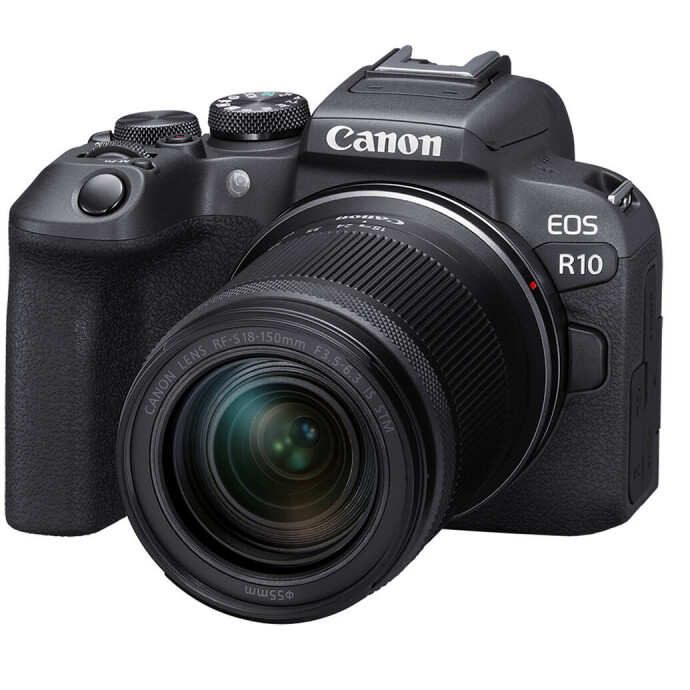
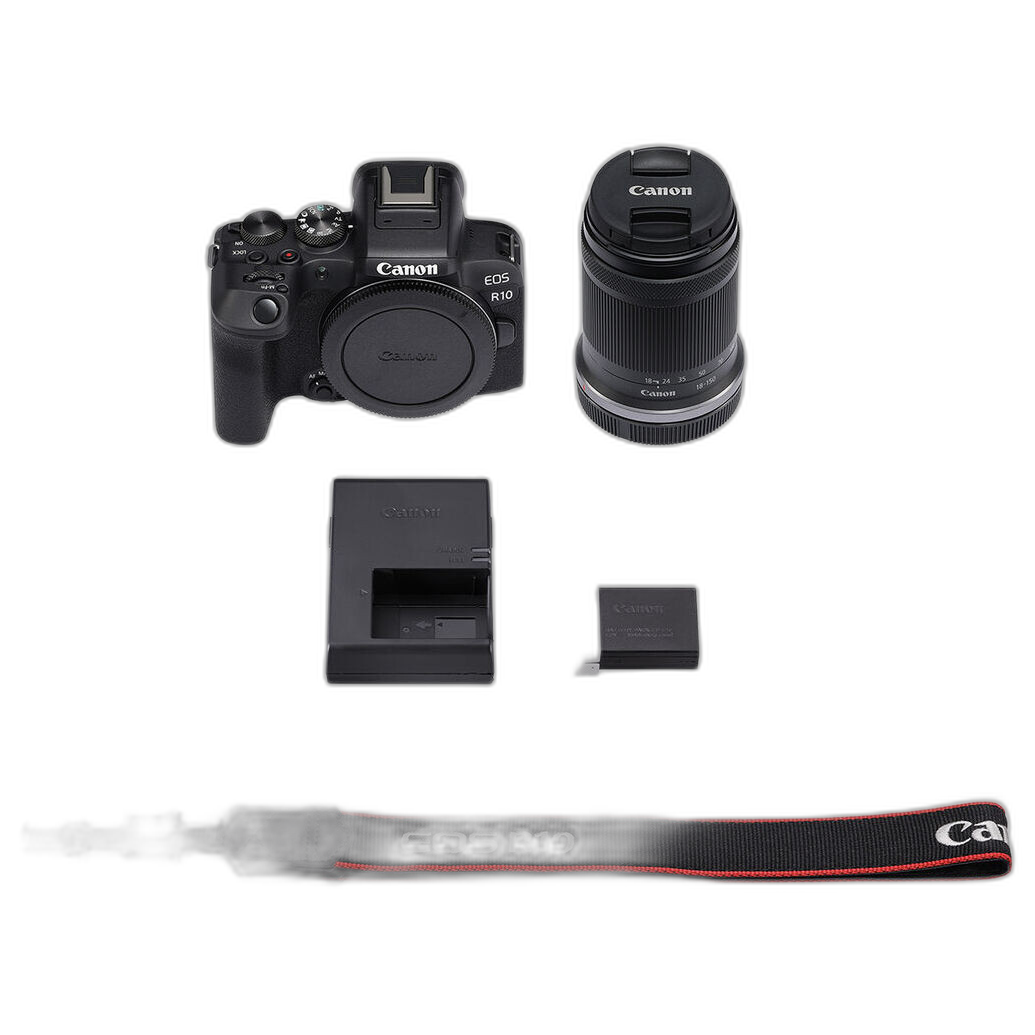
Canon EOS R10: Fast autofocus and subject tracking in a compact APS-C body; add a fast RF or RF-S prime for shallow depth of field in living rooms or home studios.
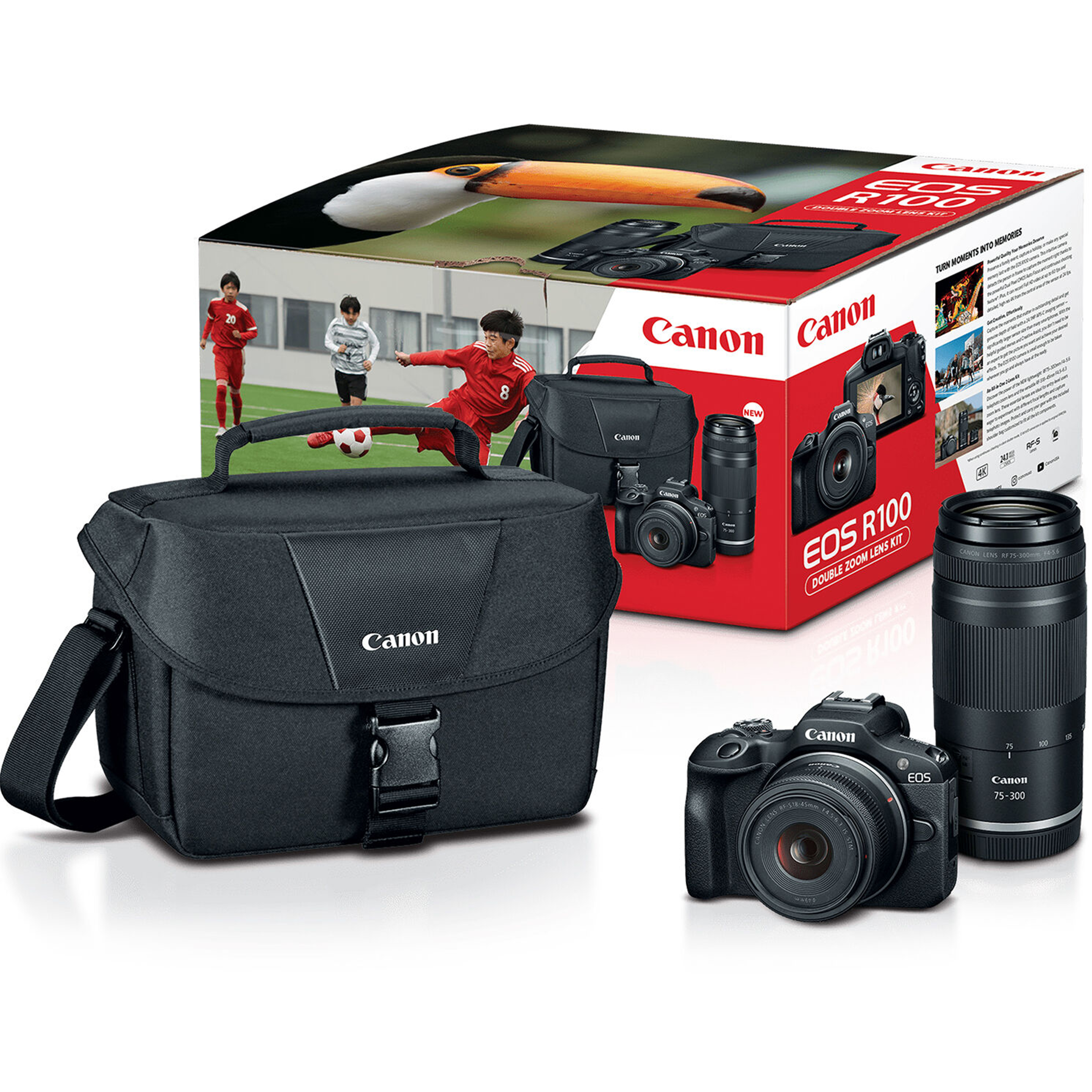
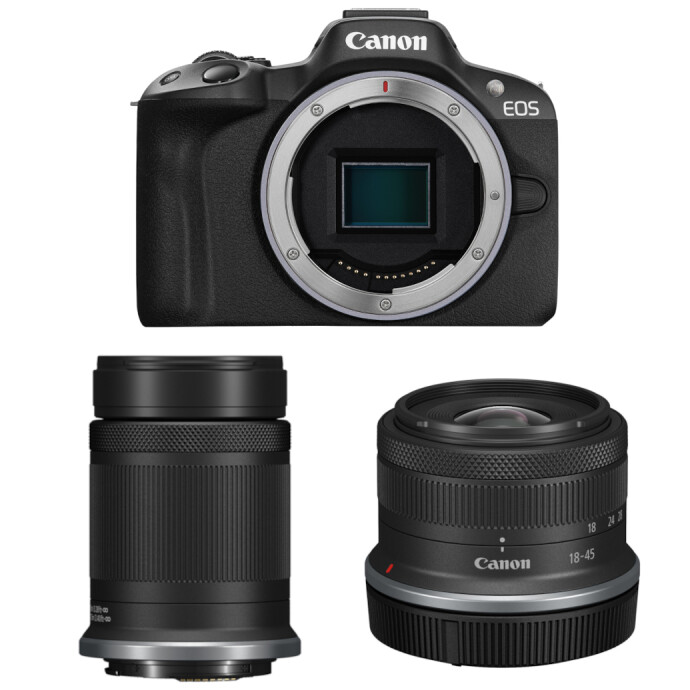
Canon EOS R100 Double Lens Zoom Kit: A fantastic entry point—add a bright 50mm-equivalent prime to get that classic bokeh indoors.
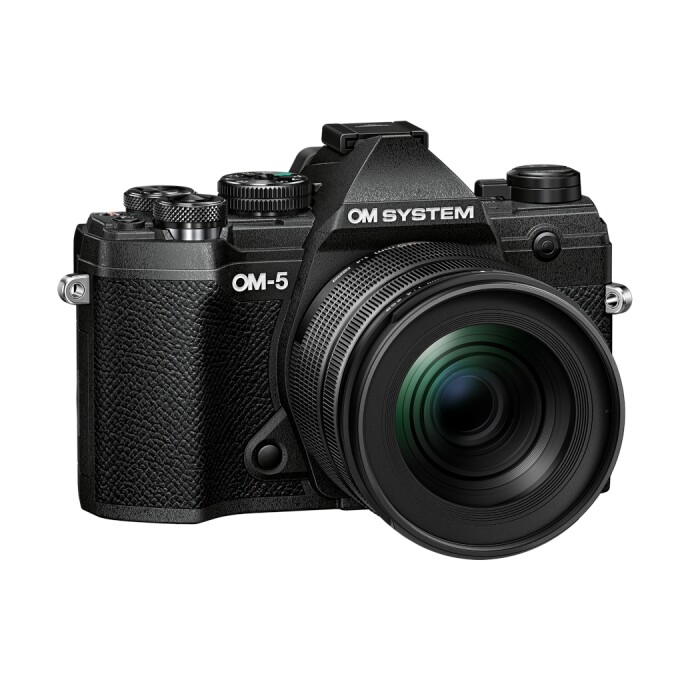
OM SYSTEM OM-5 with 12–45mm PRO: In-body stabilization and compact lenses make handheld indoor portraits easy; pair with a 25mm f/1.8 or 45mm f/1.8 for creamy blur.
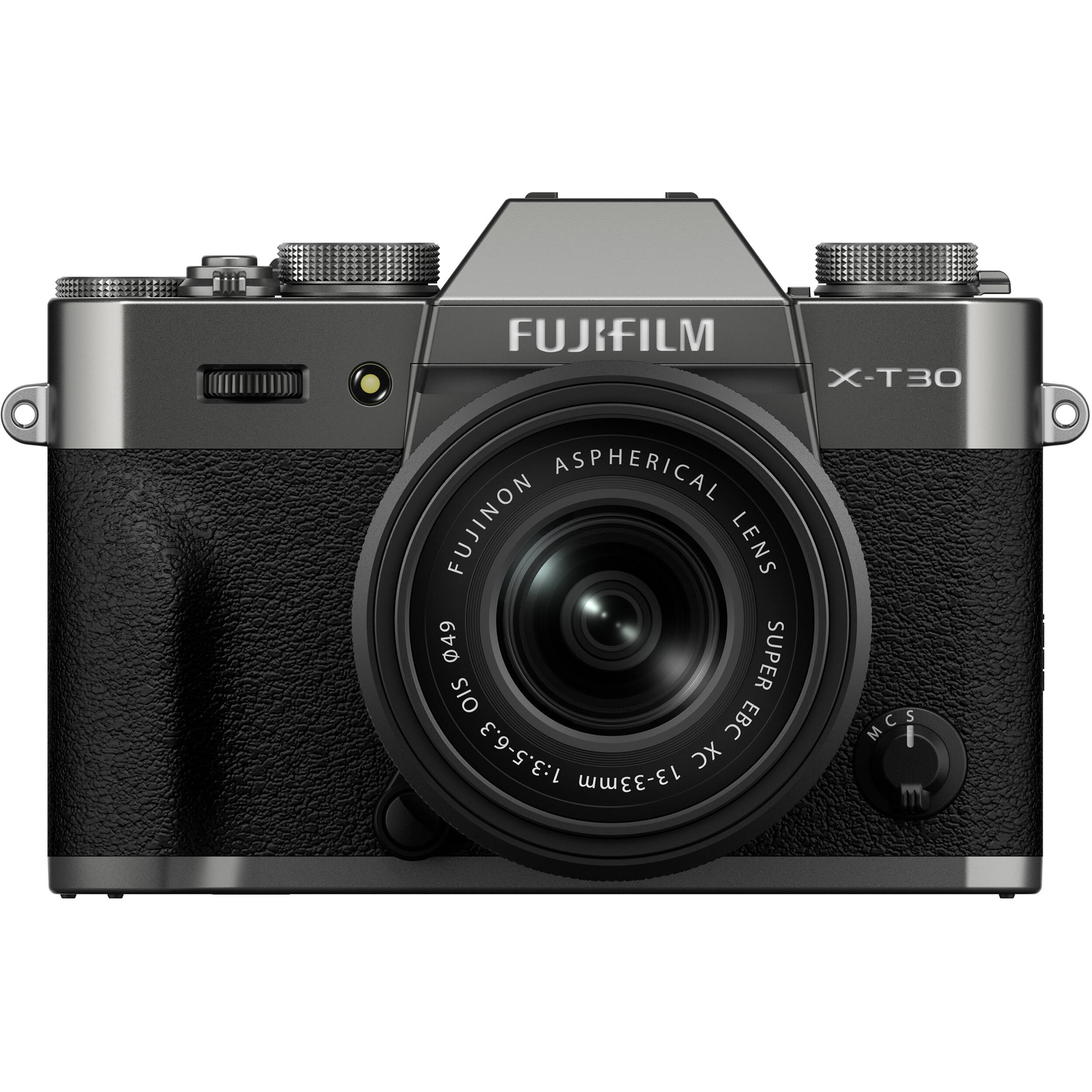
Fujifilm X-T30 III: Classic controls and color science; combine with XF 33mm f/1.4 or XF 56mm for stunning indoor headshots.
FAQ
- Is f/1.2 too soft indoors? Not necessarily. Many modern f/1.2 lenses are sharp wide open, but for groups or very close headshots, stopping down to f/1.8–f/2.2 increases your hit rate.
- Do I need image stabilization? IBIS or lens IS helps at slower shutter speeds but won’t freeze subject motion. Maintain 1/125–1/250 for people and add light if needed.
- Prime or zoom for family sessions in small rooms? A 35mm or 50mm-equivalent prime is often the easiest way to get sharp, flattering images with gentle blur in tight spaces.
Conclusion: build your indoor portrait kit with Unique Photo
For indoor portraits, start with a fast prime in the right focal length for your space, then add consistent lighting. The sharpness-versus-bokeh balance typically lands around f/1.8–f/2.2 for headshots and f/2.8 for small groups. Visit Unique Photo online or in-store to compare lenses side-by-side and talk with our experts about your specific room size, camera system, and budget.
Internal linking suggestions:
- Canon Mirrorless Cameras
- Fujifilm X Series Cameras
- OM System Cameras
- Mirrorless Lenses
- Portrait Lighting (Flashes and LEDs)
- Photography Classes and Workshops