Sony’s Lens Compare (Beta) is a powerful way to shortlist the best Sony E-mount glass for landscape photography—fast. Whether you’re planning wide, sweeping vistas or detail-rich scenes at mid-telephoto, this guide from the experts at Unique Photo walks you through practical, field-tested tips to get the most out of Sony’s comparison tool, with real lens examples and buying insights.
How to use Sony Lens Compare Beta for landscape recommendations
Start by filtering for full-frame E-mount lenses, then refine by focal length and aperture. Add 2–4 lenses to the compare view so you can evaluate specs, MTF, size/weight, minimum focus, and stabilization side by side.
- Pick your focal length first: ultra-wide for grand vistas; standard zoom for flexibility; short tele for compression and detail.
- Compare weight and size if you hike—grams matter on long trails.
- Note weather sealing for all-season reliability.
- Check filter compatibility if you rely on NDs, grads, or polarizers.
Ultra-wide vs. standard zoom: which is better for landscapes?
Use the Compare tool to pit an ultra-wide against a flexible standard zoom. Two proven choices for landscape shooters are below.
Sony FE 12–24mm f/2.8 GM – for expansive scenes, dramatic perspectives, and nightscapes.
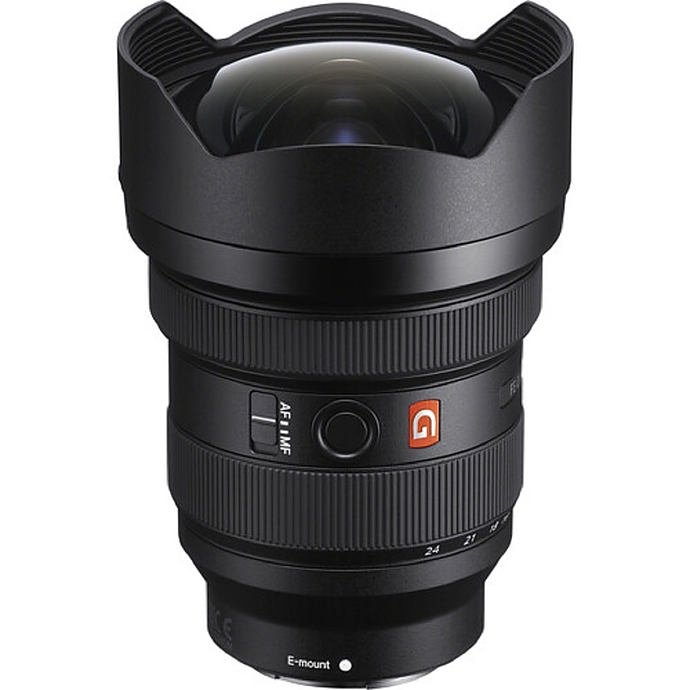
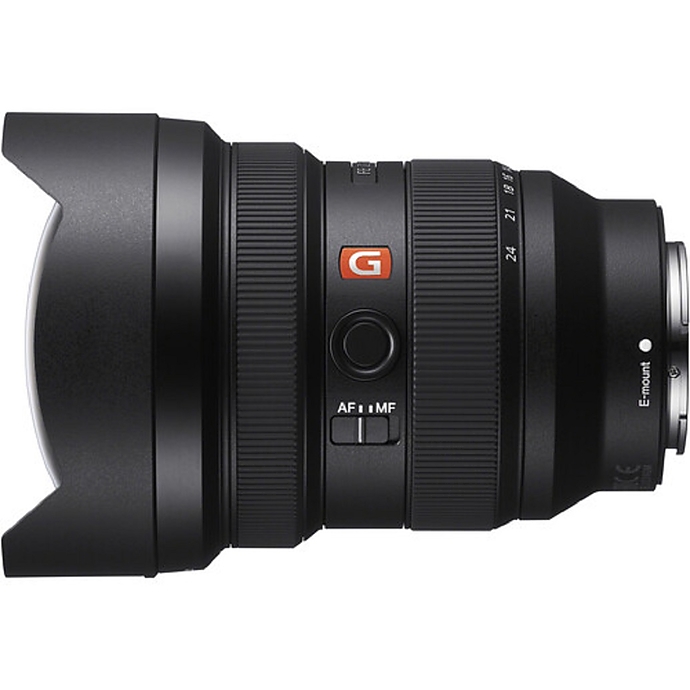
- Pros in the tool: extreme width (12mm), fast f/2.8 for astro/twilight, top-tier G Master optics.
- Consider: bulbous front element means specialized filter solutions instead of standard screw-ins.
Sony FE 24–105mm f/4 G OSS – a do-it-all landscape workhorse for travel, hiking, and mixed subjects.
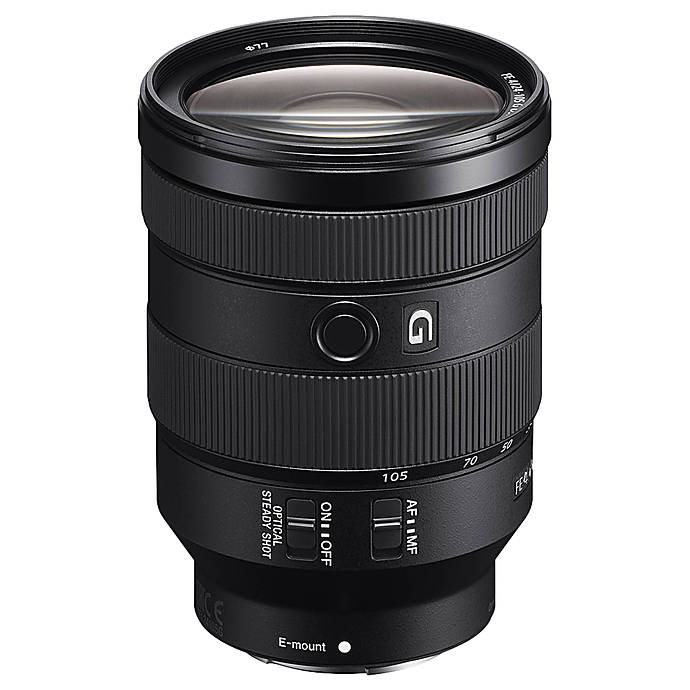
- Pros in the tool: flexible range from wide to short tele, optical stabilization (OSS), takes common 77mm filters.
- Consider: f/4 is fine for most daylight landscapes; for astro, f/2.8 glass is preferable.
Tip: Add both lenses in Sony’s Lens Compare to visualize trade-offs in weight, sharpness, and filter use before you buy at Unique Photo.
Reading MTF charts for landscape sharpness
MTF charts in Sony’s Compare are invaluable for predicting corner-to-corner performance.
- Look for high, flat lines across the frame (sagittal and meridional) for consistent edge sharpness—key for vistas with foreground detail.
- Check performance at wide and typical landscape apertures (f/4–f/8). Many lenses peak around f/5.6–f/8.
- Astro shooters: evaluate wide-open MTF and sample images for coma/astigmatism at the edges.
What specs matter most for landscape in the Compare tool?
- Focal length range: 12–20mm for grand scale; 24–70/105mm for versatility; 70–200mm for compression and distant details.
- Weight/size: if you backpack, prioritize sub-700g options or plan your kit (ultra-wide plus one lightweight tele).
- Weather sealing: cross-check gasketed mount and sealing notes for unpredictable conditions.
- Minimum focus distance: closer focus enables immersive foregrounds and focus stacking.
- Stabilization (OSS): helps with hand-held twilight and long focal lengths; pair with in-body stabilization.
- Filter compatibility: screw-in threads simplify ND/grad use; bulbous elements need specialized holders.
Filter strategy: grads, NDs, and polarizers with ultra-wide lenses
In Sony Lens Compare, note filter thread size or if none is available. The FE 24–105mm f/4 G OSS accepts 77mm filters, making it straightforward to use a circular polarizer or ND. Ultra-wide options like the 12–24mm f/2.8 GM require dedicated holders.
- Need a holder? Systems like the NiSi lineup offer dedicated solutions for specific G Master ultra-wides. For example, a 100mm holder exists for the Sony FE 14mm f/1.8 GM, and other holders are available for bulbous-front designs.
- Graduated ND filters help balance bright skies and dark foregrounds at sunrise/sunset.
- Polarizers reduce glare on foliage and wet rocks; use sparingly at ultra-wide focal lengths to avoid uneven skies.
Hands-on validation: shortlist in the tool, confirm in the field
After comparing in Sony’s tool, test your top picks. If you’re near our store, visit Unique Photo for in-person demos and side-by-side shooting.
- Bracket test shots at f/4–f/11 to see how corner sharpness and vignetting evolve.
- For astro, test wide open; examine star shapes in the corners for coma.
- Check focus breathing if you also shoot video of landscapes.
- Evaluate flare resistance with the sun at the frame edge.
Example landscape kits built from Compare results
- Lightweight two-lens kit: Ultra-wide zoom (for hero vistas) + 24–105mm (for everything else). Swap filters only on the 24–105; use a holder on the ultra-wide when needed.
- One-lens travel kit: 24–105mm f/4 G OSS for cityscapes, hikes, and detail studies with minimal gear.
- Nightscape kit: 12–24mm f/2.8 GM for stars and Milky Way at 12–16mm; add a stable tripod and intervalometer.
Learn landscape technique with Unique University
Gear is half the equation—technique completes the image. Consider hands-on education with Unique University:

Courses like “Macro and Landscape Photography at Duke Farms with Michael Downey” help you master composition, filtration, and practical field workflows that pair perfectly with the lenses you choose via Sony’s Lens Compare.
Quick checklist for using Sony Lens Compare Beta like a pro
- Define your primary landscape style: ultra-wide vistas, mixed travel, or detail-driven tele.
- Add 2–4 candidate lenses and check focal range, weight, weather sealing, filter use.
- Study MTF across the frame at f/4–f/8; ensure strong corners.
- Review sample images for flare, sunstars, vignetting, and coma.
- Confirm real-world handling at Unique Photo before you buy.
FAQs: Sony Lens Compare Beta for landscape shooters
Do I need f/2.8 for landscapes? Not always. For daylight, f/4 or slower is fine at base ISO on a tripod. Choose f/2.8 for astro and blue hour flexibility.
Is OSS essential? Helpful on mid-tele zooms like the 24–105mm for hand-held shooting. On a tripod, turn stabilization off.
12–24mm vs. 24–105mm? The 12–24mm is unbeatable for epic width and nightscapes; the 24–105mm excels when you want one lens for everything without changing glass.
Conclusion and internal linking suggestions
Sony’s Lens Compare Beta removes guesswork from building a landscape kit. Use it to weigh focal length, sharpness, weight, and filter workflow, then confirm with hands-on time at Unique Photo. Our team can help you dial in the right combination for the way you shoot.
Suggested internal links to add:
- Shop Sony E-mount lenses
- Sony G Master lenses
- Landscape filter systems (ND, GND, CPL) and holders
- Tripods and heads for landscape photography
- Unique University classes and photo walks
- Used lenses and trade-ins