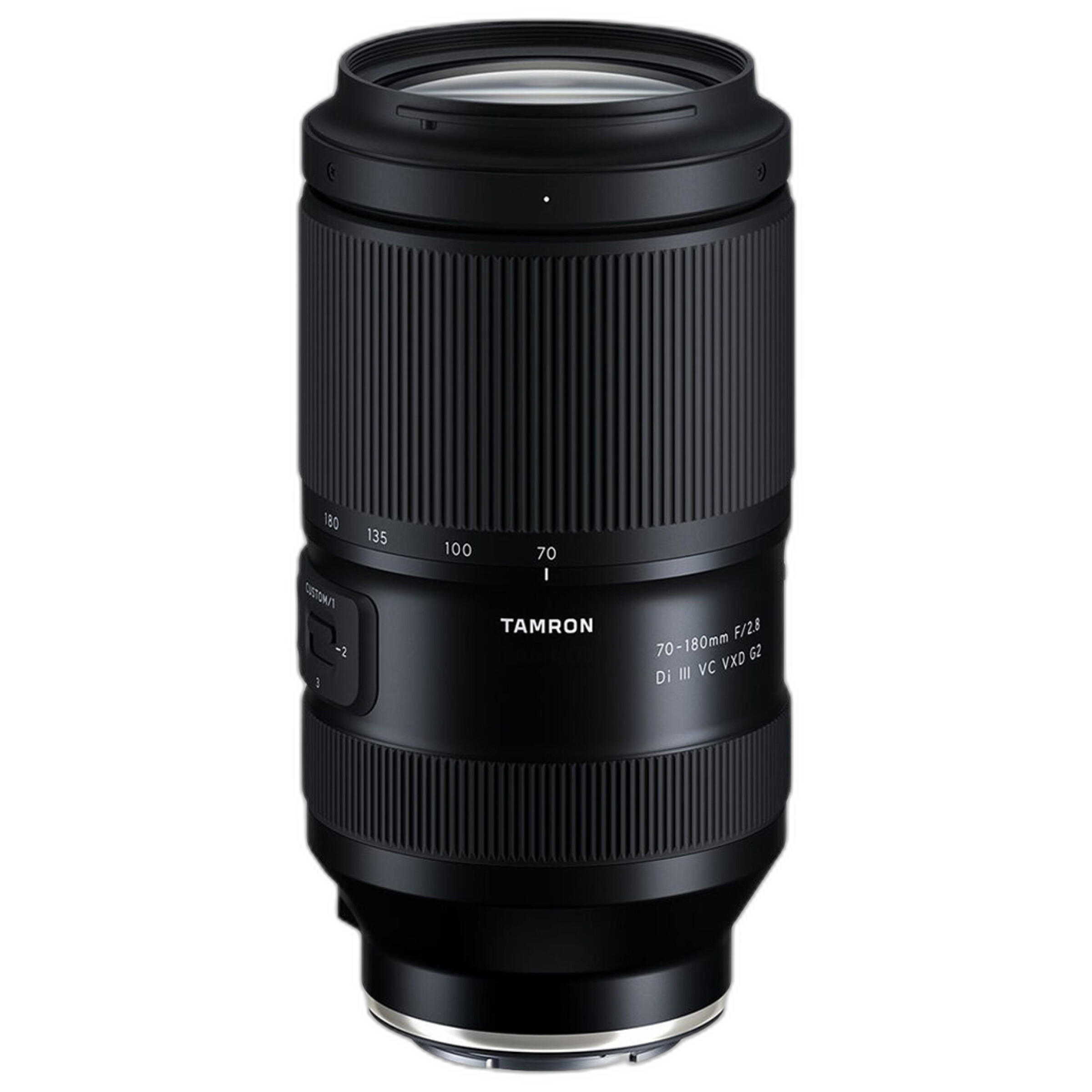
When Tamron introduced the 70-180mm f/2.8 Di III VXD for Sony E-mount in April 2020, it immediately stood out as a different kind of fast telephoto zoom. For years, the 70-200mm f/2.8 had been one of the most established categories in photography: indispensable for portraits, events, sports, and general telephoto work, but also typically large, heavy, and expensive. Tamron’s new lens challenged that convention. By trimming the long end slightly from 200mm to 180mm and focusing on mirrorless design from the ground up, Tamron delivered a lens that promised professional-grade speed in a more compact, more approachable package.
At a launch price of $1,199, the Tamron 70-180mm f/2.8 entered Sony’s full-frame E-mount system at a particularly important moment. Sony’s mirrorless ecosystem was already mature enough to support serious professional and enthusiast use, but there was still strong demand for alternatives to first-party premium zooms. Tamron had already built momentum with its well-regarded f/2.8 zoom lineup for Sony, and this telephoto model completed a particularly appealing trio for many photographers. Historically, it represented not just another lens release, but part of a broader shift toward smaller, lighter full-frame systems that did not automatically force users into the bulk traditionally associated with fast telephoto glass.
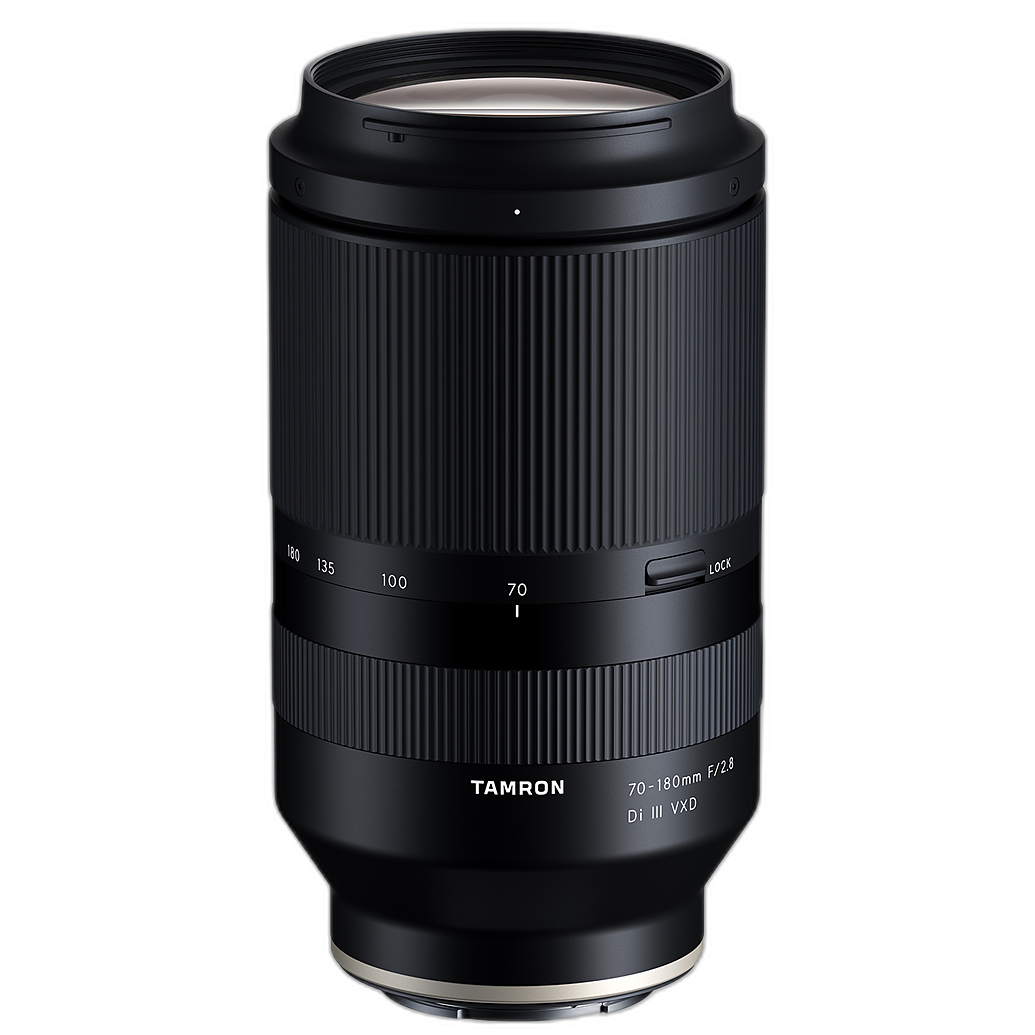
A New Take on the Classic Fast Telephoto Zoom
The 70-200mm f/2.8 format has long been a staple because it covers an extraordinarily useful range. From short telephoto portraiture at the wide end to tighter framing for stage work, ceremonies, and field sports at the long end, it is often one of the first serious lenses photographers add after a standard zoom. Tamron’s 70-180mm f/2.8 maintained most of that practical versatility while rethinking what mirrorless users really needed.
The most obvious departure was the focal range itself: 70-180mm rather than 70-200mm. On paper, that missing 20mm may look significant simply because it breaks with convention. In practice, however, the difference between 180mm and 200mm is modest for many applications, especially when weighed against the benefits in size, weight, and cost that such a design can help enable. For photographers who valued portability and speed as much as absolute reach, the tradeoff made a great deal of sense.
Equally important was the lens’s native Sony E mount design. This was not an adapted DSLR-era optic reworked for mirrorless use. It was built specifically for Sony’s full-frame mirrorless cameras, reflecting the industry’s increasing confidence that mirrorless was no longer an emerging niche but a fully established platform. That distinction mattered in 2020, when photographers were paying close attention not only to image quality but also to how well lenses balanced on smaller camera bodies and integrated with modern autofocus systems.
Why the Tamron 70-180mm f/2.8 Mattered in 2020
To understand why this lens drew so much attention at launch, it helps to remember the broader photographic landscape of the time. Sony had become one of the dominant forces in full-frame mirrorless photography, attracting everyone from wedding shooters to hybrid creators and travel-focused enthusiasts. But the cost of building a complete fast-aperture kit could still be substantial, especially if photographers relied only on top-tier first-party lenses.
Tamron had carved out an important role by offering serious optical tools at notably aggressive prices. The 70-180mm f/2.8, with its $1,199 launch price, fit squarely into that strategy. It gave Sony shooters a constant f/2.8 telephoto zoom at a price that made it much more attainable for advanced amateurs, working freelancers, and professionals building a secondary or lightweight kit. In historical terms, that affordability was not incidental; it was central to the lens’s identity.
For many users, this lens was attractive not because it tried to replace every traditional 70-200mm f/2.8 on every metric, but because it aligned more closely with how a growing number of mirrorless photographers actually worked. Event and portrait photographers wanted speed and subject isolation. Travel and documentary shooters wanted something less burdensome to carry. Sony users invested in compact bodies wanted lenses that did not erase that portability advantage. Tamron recognized those priorities and built a lens that addressed them directly.
Constant f/2.8 and the Appeal of Speed
The constant f/2.8 aperture was one of the lens’s defining strengths. In practical photographic terms, that meant several things. First, photographers could maintain the same maximum aperture throughout the zoom range, simplifying exposure decisions in changing situations. Second, f/2.8 remained a highly desirable balance between brightness and portability, enabling subject separation and lower-light shooting without venturing into the size and cost extremes of exotic prime lenses.
For portrait photographers, the combination of telephoto compression and f/2.8 depth of field made this lens especially compelling. Faces can be rendered with flattering perspective at the shorter end of the range, while 135mm to 180mm offers even stronger background compression for more dramatic isolation. Event photographers similarly benefit from a fast telephoto zoom that can move quickly between candid moments, tighter details, and more distant subjects.
In 2020, the importance of a dependable f/2.8 telephoto zoom was hardly new. What felt new was the notion that such performance no longer had to come in the biggest, heaviest form factor available. Tamron’s lens was part of that larger normalization of compact high-performance optics for mirrorless systems.
Sony E-Mount and System Building
Lens launches are often most meaningful when viewed as part of a system rather than in isolation. For Sony E-mount photographers, the Tamron 70-180mm f/2.8 made particular sense as a complement to other fast zoom options already available in the lineup. It helped create a coherent path for users who wanted broad focal coverage with a consistent approach to size, speed, and value.
This was especially important for photographers assembling a practical working kit. A telephoto zoom is rarely purchased as a standalone novelty; it is usually one piece of a larger toolkit. Tamron’s strategy in the Sony mirrorless space had been to give users compelling alternatives to more expensive native options, and the 70-180mm f/2.8 strengthened that reputation. It showed that third-party lenses for Sony were no longer merely budget compromises. They were increasingly central, well-considered choices in the system.
From a historical perspective, that was one of the most consequential aspects of the release. By 2020, the third-party lens market for mirrorless had become much more significant than it had been in earlier digital eras. Tamron was one of the companies helping define that transition.
A Compact Telephoto Zoom With Broad Appeal
Not every photographer needs the exact same telephoto lens, and that is precisely why the Tamron 70-180mm f/2.8 found such a receptive audience. Sports specialists working at larger venues may still prefer more reach. Some photographers may favor the prestige or feature sets of premium first-party lenses. But for a huge segment of Sony shooters, this lens landed in a sweet spot.
It offered the classic usefulness of a 70-200-class zoom while being intentionally more compact and more affordable. It served portrait photographers who wanted subject separation and flexibility. It fit event and wedding work where mobility is essential. It appealed to enthusiasts looking to step into a fast telephoto for the first time without crossing into a dramatically higher price bracket. And because it was designed specifically for Sony E mount, it aligned with the practical realities of mirrorless shooting rather than carrying over old assumptions from DSLR design.
The Historical Place of the Tamron 70-180mm f/2.8
Looking back, the Tamron 70-180mm f/2.8 Di III VXD stands as an important example of how lens design evolved in the mirrorless era. It did not simply imitate the traditional 70-200mm formula; it adapted that formula to a new generation of cameras and users. The lens reflected a broader industry realization that photographers would embrace thoughtful compromises if those compromises delivered meaningful gains in portability, affordability, and day-to-day usability.
That is why this lens remains notable as an archival release from 2020. Its focal range of 70-180mm, constant f/2.8 aperture, Sony E mount, and $1,199 launch price told a clear story. Tamron was betting that many photographers would prefer a telephoto zoom designed around real-world balance rather than convention for convention’s sake. The market response at the time made it clear that this was a smart reading of where mirrorless photography was headed.
Final Thoughts
The Tamron 70-180mm f/2.8 Di III VXD arrived at a moment when Sony shooters were increasingly looking for lenses that matched the spirit of mirrorless: capable, mobile, and reasonably priced. By offering a fast telephoto zoom with a slightly unconventional range, Tamron created one of the more interesting and influential alternatives in the E-mount ecosystem of its era.
For photographers researching this lens today as part of Sony system history, it remains a strong example of Tamron’s role in reshaping expectations around telephoto zooms. To explore Tamron lenses, compare gear, or learn more about standout releases from the mirrorless era, Unique Photo is an excellent place to shop and stay informed.