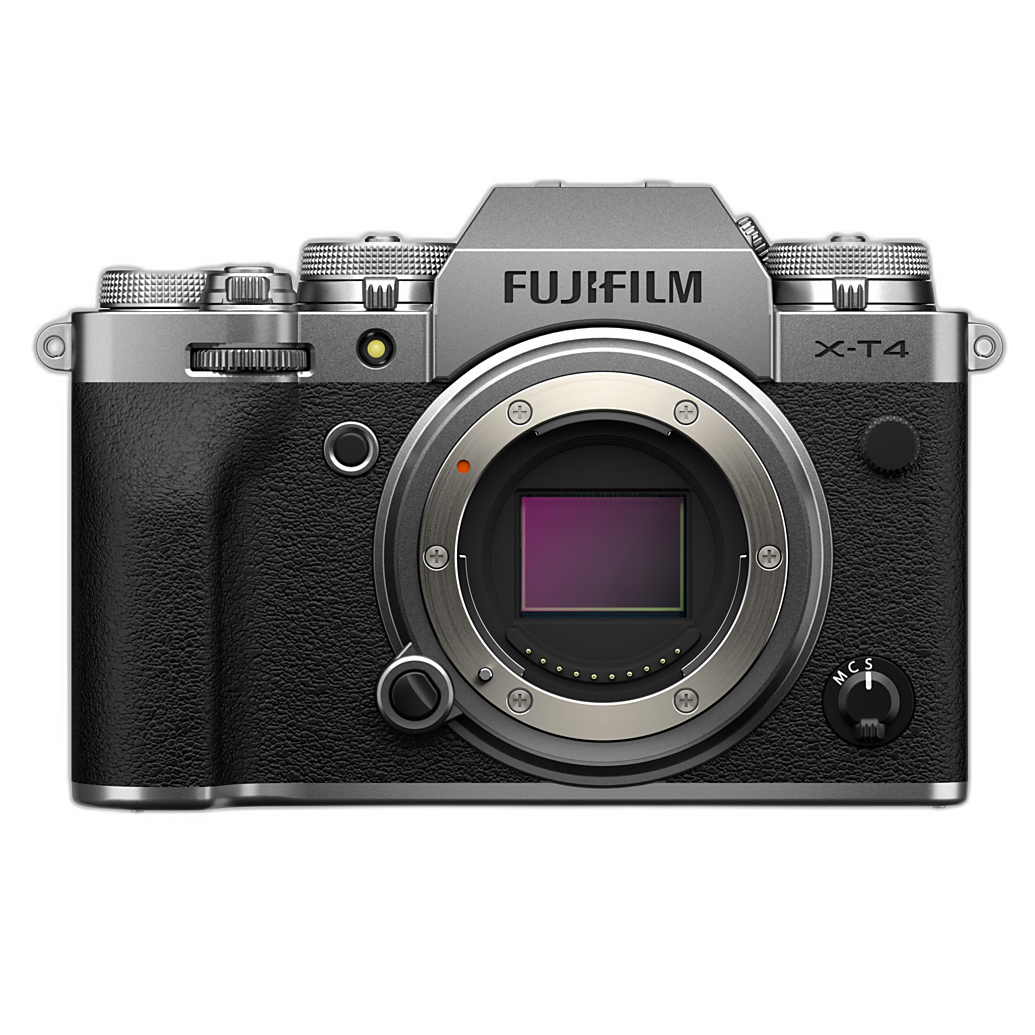
Fujifilm has officially announced the Fujifilm X-T4, a major new release for the company’s X-mount system and an especially important moment in the history of the X-T line. With the X-T4, Fujifilm brings in-body image stabilization to its flagship SLR-styled APS-C series, pairing that long-awaited feature with the proven 26.1MP X-Trans 4 APS-C sensor and robust 4K60 video capabilities. Announced on February 26, 2020, the X-T4 arrived as a camera clearly aimed at hybrid shooters who wanted Fujifilm’s classic handling and color science, but with a broader toolset for both stills and motion.
At launch, the X-T4 was priced at $1,699 in the U.S., positioning it as a premium body within the Fujifilm X system. For enthusiasts and working photographers alike, it represented more than a routine update. Historically, it marked a turning point: the X-T series, long admired for its tactile controls and photographic character, now embraced a feature set that put it even more directly into competition with the most versatile mirrorless bodies of its era.
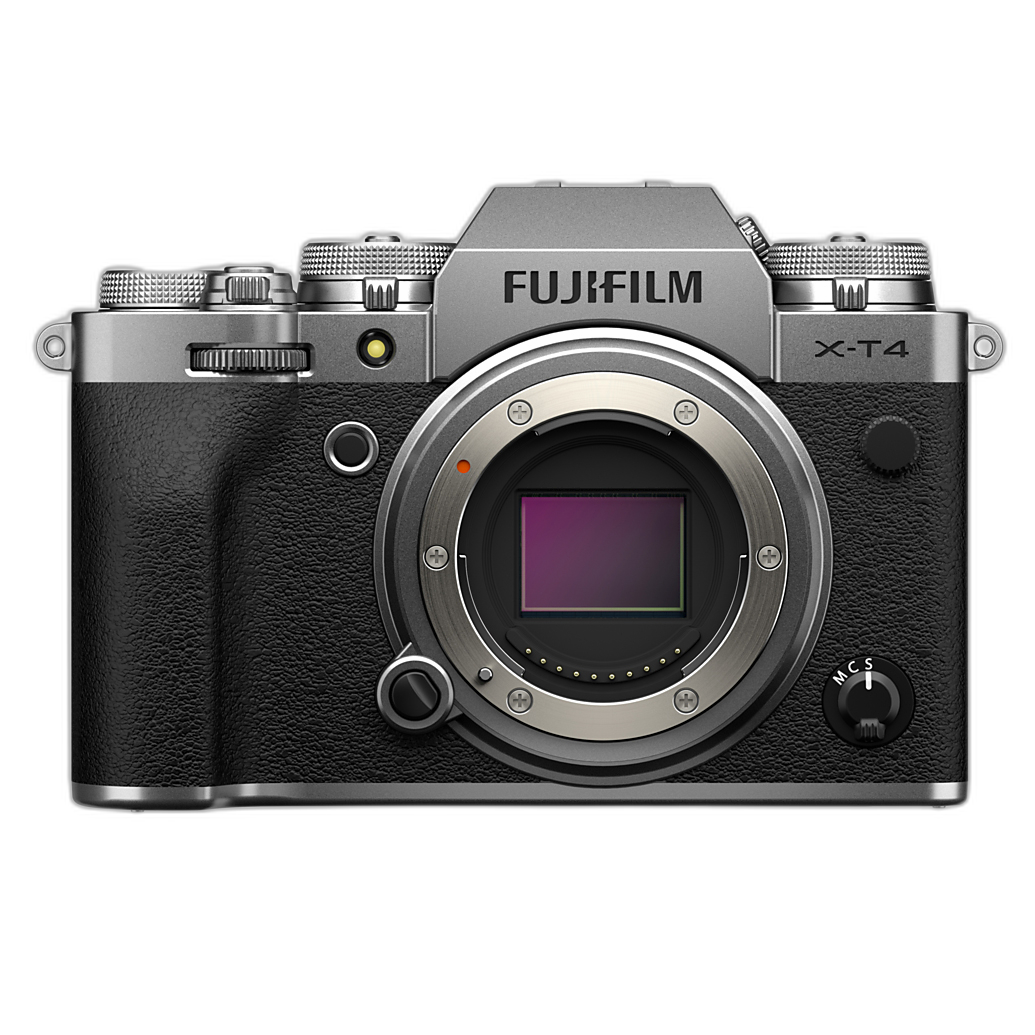
A Defining Update for the X-T Series
Before the X-T4, Fujifilm’s X-T line had already built a strong identity. Cameras in the series were known for their central viewfinder hump, dedicated exposure dials, and a shooting experience that appealed to photographers who valued direct control. The X-T4 retained that core identity, but the headline addition was impossible to ignore: IBIS rated at up to 6.5 stops.
That specification was especially notable in 2020. Stabilization in the body had become an increasingly important feature across the mirrorless market, and many photographers had been waiting for Fujifilm to bring it to the flagship X-T platform. While Fujifilm users had access to optical stabilization in select lenses and had already seen IBIS appear elsewhere in the company’s lineup, integrating it into the X-T series felt significant. It expanded the X-T4’s appeal for low-light handheld photography, travel work, documentary shooting, and video capture, all without changing lenses or relying on lens-based stabilization alone.
In historical terms, the X-T4 can be seen as Fujifilm’s effort to evolve the X-T concept without abandoning its roots. Rather than reinventing the series, the company sharpened its capabilities in ways that reflected broader industry trends and user demand.
The 26.1MP X-Trans 4 Sensor Remains Central
At the heart of the X-T4 is Fujifilm’s familiar 26.1-megapixel X-Trans 4 APS-C sensor. By the time of the announcement, this sensor was already well established as one of the company’s key imaging platforms, known for delivering a strong balance of detail, speed, and the distinctive image quality that had become part of Fujifilm’s appeal.
The use of the X-Trans design remained an important part of Fujifilm’s identity. Unlike conventional Bayer-pattern sensors, Fujifilm’s X-Trans approach had long been positioned as a way to reduce moiré and preserve detail without relying in the same way on an optical low-pass filter. For users invested in the Fujifilm ecosystem, the X-T4 promised continuity in look and output, while adding a more advanced physical platform around that sensor.
This continuity mattered. Rather than introducing a new sensor generation, Fujifilm chose to refine the camera around a trusted imaging core. That made the X-T4 feel less like an experimental leap and more like a mature flagship body designed to get the most out of a proven foundation.
IBIS Changes the Practical Experience
The inclusion of up to 6.5 stops of in-body image stabilization was not just a headline spec; it had real implications for the way photographers and filmmakers could use the camera. Handheld still shooting at slower shutter speeds became more practical, and video users stood to benefit from smoother motion capture in situations where a tripod, monopod, or gimbal might not be ideal.
For Fujifilm X-mount shooters, this also broadened the usefulness of many lenses in the system. Since stabilization now resided in the body, photographers could potentially gain stabilization benefits even when using lenses that did not incorporate optical stabilization. In a system with a broad range of compact primes and specialty optics, this was a meaningful step forward.
Historically, this is one of the reasons the X-T4 remains such an important model in the Fujifilm timeline. It was the camera that made the flagship X-T concept more flexible for the realities of contemporary shooting, especially for creators working across both photo and video disciplines.
4K60 Underscores the Hybrid Push
Another major pillar of the X-T4 announcement was 4K video at up to 60 frames per second. That capability signaled clearly that Fujifilm was not treating the camera as a stills-first body with merely adequate video. Instead, the X-T4 was positioned as a serious hybrid tool at a time when creators increasingly expected a single camera to handle both high-quality photography and advanced motion work.
4K60 offered practical creative flexibility, particularly for smoother motion rendering and slow-motion possibilities in post when working on 24p or 30p timelines. Combined with in-body stabilization, it made the X-T4 particularly attractive to solo creators, event shooters, documentarians, and multimedia journalists who needed mobility without sacrificing core video features.
In the larger context of 2020 mirrorless camera development, this mattered. The market was rapidly converging around the idea that a flagship interchangeable-lens body should perform convincingly in both media. The X-T4’s spec sheet showed that Fujifilm understood that shift and intended to keep the X system highly competitive.
Fujifilm X Mount and System Strength
The Fujifilm X mount was already one of the company’s strongest assets by the time the X-T4 debuted. A camera body can only be as compelling as the system around it, and Fujifilm had spent years building out a lens lineup that appealed to a wide range of users, from compact everyday primes to professional zooms.
The X-T4 therefore arrived not in isolation, but as part of a mature ecosystem. That context is important historically. Fujifilm was no longer simply making a case for APS-C mirrorless as an alternative; by 2020, it was demonstrating that APS-C could anchor a serious professional and enthusiast system with depth, identity, and longevity.
For buyers considering the X-T4 at launch, the value proposition was clear: a stabilized flagship body, a well-established mount, and image output tied to Fujifilm’s highly regarded color rendering and photographic ethos.
Launch Pricing and Market Position
With a launch price of $1,699, the Fujifilm X-T4 entered the market as a premium APS-C mirrorless camera. That pricing reflected both its flagship status and the significance of its new feature set. It was not merely a cosmetic or incremental update; it was a substantial refinement intended to satisfy existing Fujifilm users while attracting creators who might otherwise compare it with full-frame alternatives or other hybrid mirrorless offerings.
Price always helps define a camera’s historical role. In the case of the X-T4, the launch figure placed it in a competitive and ambitious position. Fujifilm was effectively asserting that the X-T series belonged in the upper tier of enthusiast and professional mirrorless cameras, not simply as a style-driven option, but as a practical workhorse with advanced stabilization and strong video credentials.
Why the X-T4 Matters in Retrospect
Looking back at the X-T4 announcement, what stands out most is how carefully Fujifilm balanced continuity and change. The camera preserved the spirit of the X-T line while addressing one of the biggest feature requests from its user base. It kept the trusted 26.1MP X-Trans 4 APS-C sensor, expanded capability with IBIS up to 6.5 stops, and reinforced its modern relevance with 4K60 video.
As an archival milestone, the X-T4 represents the moment the X-T series became more fully rounded as a flagship system camera. It appealed to photographers who wanted stabilization without giving up Fujifilm’s traditional control philosophy, and to hybrid shooters who needed stronger video functionality in a compact interchangeable-lens body.
For anyone exploring the history of Fujifilm’s X-mount system, the X-T4 remains one of the key bodies of the early 2020s. To shop Fujifilm cameras and lenses or learn more about standout models from the X system, visit Unique Photo.