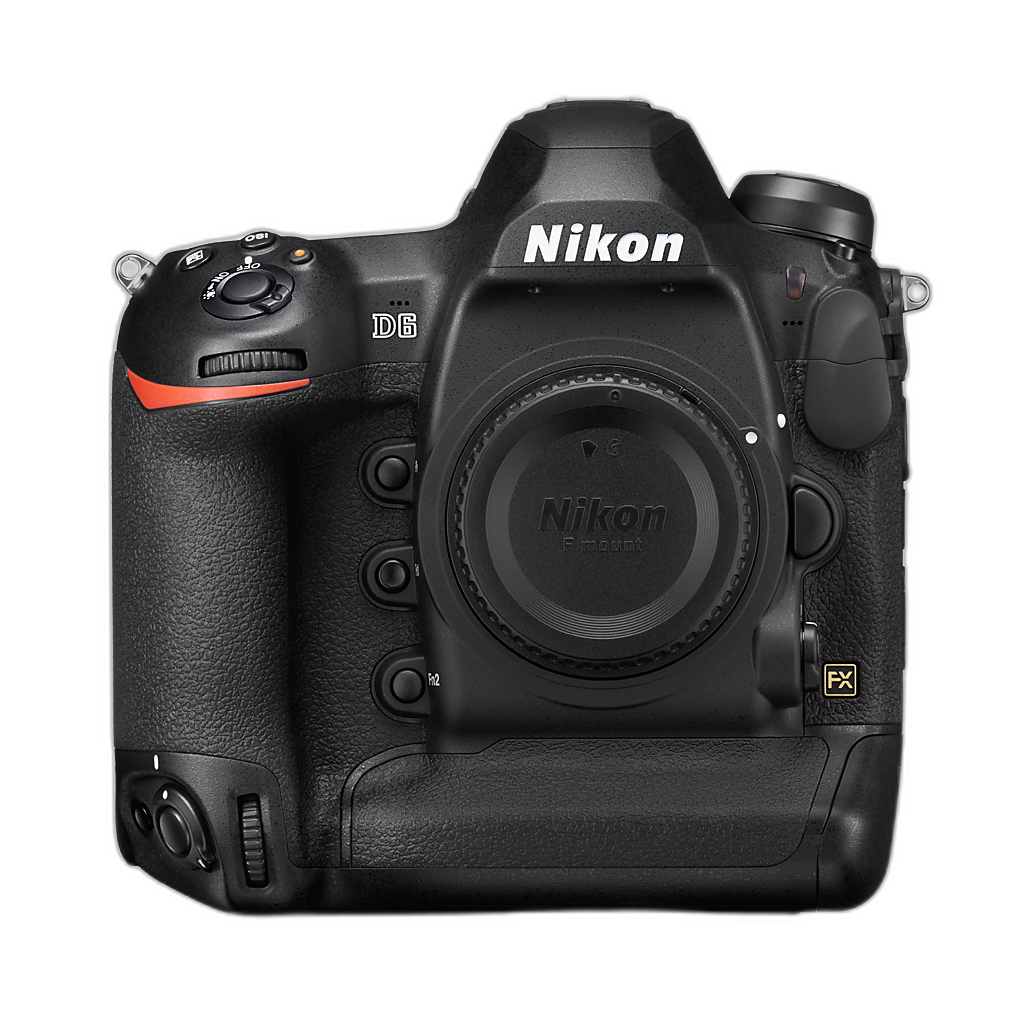
When Nikon announced the D6 on February 12, 2020, it arrived as the latest expression of a very specific camera lineage: the company’s flagship, single-digit professional DSLR series. Built around speed, reliability, and the practical needs of working photojournalists, sports shooters, and wire-service professionals, the D6 was not introduced as a radical reinvention. Instead, it was presented as a refined, purpose-built tool for photographers who depend on fast response, durable construction, and dependable autofocus under pressure.
In historical hindsight, the D6 also carries added significance. It stands as the last of Nikon’s pro single-digit DSLRs, closing a chapter that stretches back through cameras that helped define modern professional digital photography. For Nikon users deeply invested in the F-mount system, the D6 represented both continuity and culmination.
A Flagship DSLR for the Working Professional
The Nikon D6 launched at $6,499 in the U.S., placing it squarely in the flagship category where outright value is measured less by feature checklists and more by consistency in mission-critical use. This was a camera aimed at professionals covering major sporting events, breaking news, political assignments, and other fast-moving situations where split-second timing matters more than novelty.
At its core, the D6 paired a 20.8-megapixel full-frame sensor with a shooting rate of 14 frames per second. Those numbers tell an important story. Nikon did not chase resolution for its own sake here. Instead, the D6 followed the established flagship DSLR formula: enough resolution for editorial, agency, and publication needs, while prioritizing speed, file handling, and dependable performance in difficult lighting. This balance was especially attractive to photographers transmitting images on tight deadlines, often directly from the sidelines or from event venues.
The Evolution of Nikon's Single-Digit DSLR Tradition
By the time the D6 appeared, Nikon’s professional DSLR identity was already deeply rooted. The single-digit series had long served as the company’s statement of intent in the pro market: rugged bodies with integrated vertical grips, extensive physical controls, long-life shutters, and ergonomics designed for photographers who work with gloves, in rain, in dust, and under pressure.
The D6 inherited that legacy directly. It used the Nikon F mount, reinforcing its place within one of the most historically significant interchangeable-lens ecosystems in photography. For many Nikon professionals, that mattered as much as any individual specification. A flagship body is never just a camera body; it is a central piece of a broader system. The D6 was built to slot into existing F-mount workflows with the lenses, accessories, and field habits photographers had already developed over years or decades of professional use.
Seen from the perspective of 2020, the D6 represented Nikon’s continued commitment to the DSLR at the highest level, even as the industry’s momentum was clearly shifting toward mirrorless systems. That made the camera feel at once current and symbolic: current because many professionals still preferred optical viewfinders and DSLR handling, symbolic because it embodied the peak of a mature technology.
Autofocus Built for Pressure
One of the D6’s defining announcements was its autofocus system: 105 points, all cross-type. For the intended audience, this was one of the camera’s most consequential practical features. Cross-type points are especially valued for their ability to detect detail in multiple orientations, which can improve subject acquisition and consistency in real-world shooting.
Just as important as the point count was Nikon’s emphasis on reliability and subject tracking in demanding environments. Professional sports and news photography often challenge autofocus systems in ways spec sheets do not fully capture: cluttered backgrounds, poor stadium lighting, erratic movement, obstructions between shooter and subject, and the need to switch rapidly between horizontal and vertical compositions. A flagship camera lives or dies by how confidently it handles those situations.
The D6’s autofocus design reflected Nikon’s understanding that high-end users care less about novelty than about repeatability. The ability to trust focus, frame after frame, is what separates a professional body from a consumer model dressed in tougher clothes. In that sense, the D6 fit squarely within the expectations of Nikon’s flagship tradition.
Speed, Handling, and the DSLR Experience
At 14 fps, the D6 delivered the kind of sustained speed professionals expect from a top-tier sports and press camera. But flagship shooting speed is not merely about maximizing frame counts. It is about making a camera feel immediate. The best professional DSLRs respond with minimal hesitation, encouraging a direct connection between the photographer’s reflexes and the machine’s behavior.
That is where the D6’s format and design philosophy mattered. The integrated-grip DSLR body remains one of the most practical shapes ever created for prolonged professional use. It balances large telephoto lenses well, offers duplicate controls for vertical shooting, and generally prioritizes tactile confidence over compactness. For photographers who spend entire days on assignment, these qualities are not cosmetic advantages; they directly affect fatigue, speed, and accuracy.
The D6 also arrived at a moment when many professionals still valued the optical viewfinder experience. For action photography in particular, the immediacy and natural rendering of an optical finder remained a meaningful advantage in the minds of many users. The D6, then, was not just another camera body. It was a statement that Nikon still understood and served the needs of DSLR-first professionals, even as mirrorless technology advanced rapidly.
Why the D6 Mattered in 2020
Release timing matters in camera history, and the D6’s February 2020 introduction came at a transitional moment. The professional market was watching mirrorless systems gain ground quickly, and every flagship DSLR announcement carried an added layer of interpretation. Was this a continuation of the established order, or a final refinement before a broader shift?
In practical terms, the D6 offered reassurance to Nikon’s established pro base. It told long-time F-mount users that their workflow, lens investments, and DSLR preferences still had a top-level home. For agencies and independent professionals alike, continuity can be just as valuable as disruption. Deadlines do not reward experimentation for its own sake; they reward tools that work, every day, under pressure.
That is why the D6 was significant beyond its raw specifications. It represented confidence in a mature professional formula. It acknowledged that many working photographers wanted better autofocus, proven speed, and operational refinement more than they wanted a complete change in shooting experience.
The Last of Nikon's Pro Single-Digit DSLRs
With the benefit of hindsight, the Nikon D6 has taken on a distinct historical identity. It is widely understood as the last of Nikon’s pro single-digit DSLRs, the endpoint of a flagship family that helped define digital professional photography for two decades. That status gives the camera a weight beyond its launch role. It was not just Nikon’s current flagship DSLR in 2020; it became the final chapter of a lineage built around the F mount, the optical viewfinder, and the integrated pro body.
For Nikon historians and enthusiasts, that makes the D6 especially notable. Cameras become historically important not only because of what they introduced, but because of what they conclude. The D6 concluded an era in which the premier professional Nikon was expected to be a robust DSLR with a built-in grip, exceptional autofocus, and total integration into the F-mount ecosystem.
Yet it would be wrong to view the D6 only as an ending. At release, it was also a fully contemporary working machine, designed to earn its keep on assignments where reliability outweighed everything else. That dual identity is part of what makes it so compelling today.
Conclusion
The Nikon D6 entered the market in 2020 as a flagship DSLR focused on what professional photographers value most: a 20.8MP full-frame sensor, 14 fps shooting, a 105-point all cross-type autofocus system, and full compatibility with the long-established Nikon F mount. Introduced at $6,499, it was built not to chase trends, but to deliver confidence in the field.
As an archival milestone, the D6 now stands as the final Nikon pro single-digit DSLR, a camera that marks both the maturity of the DSLR era and the lasting importance of Nikon’s flagship F-mount tradition. To learn more about historic Nikon cameras, explore professional gear, or shop current equipment, visit Unique Photo.