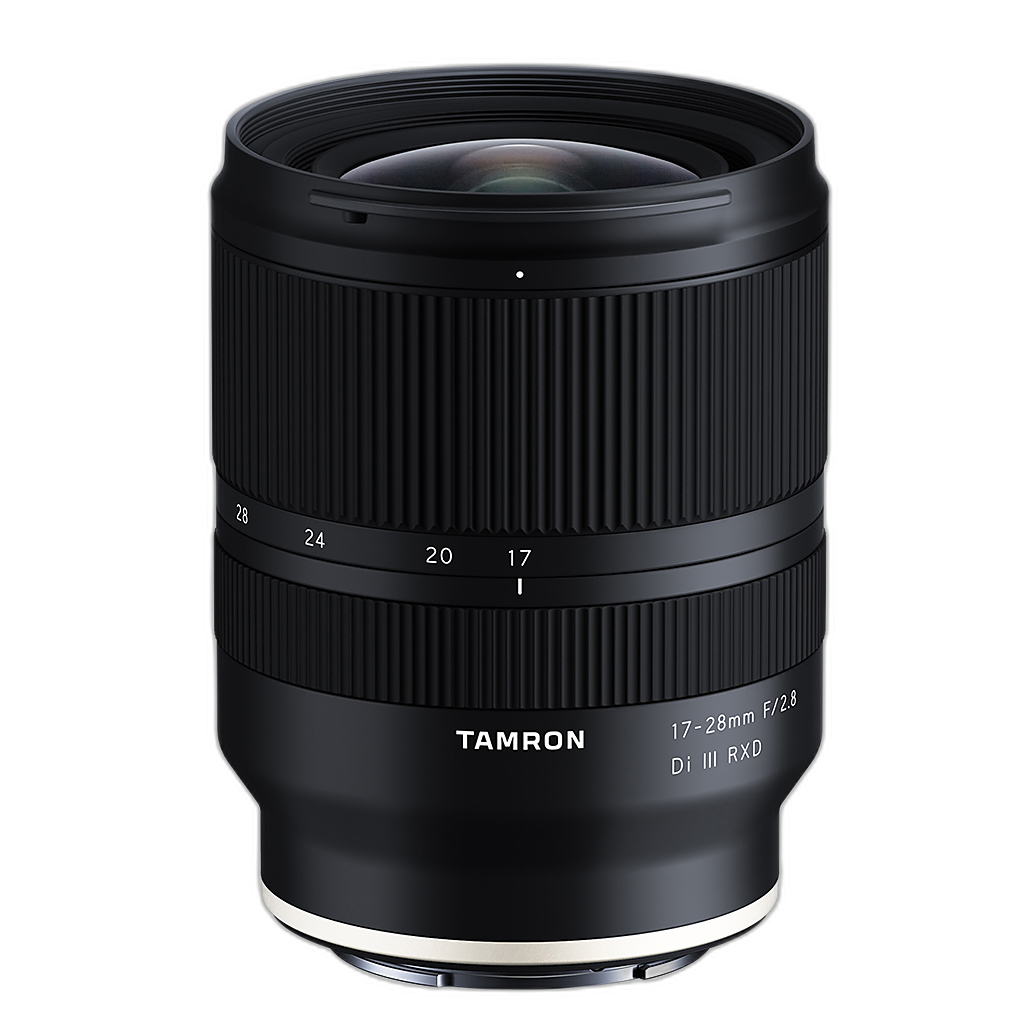
When Tamron introduced the 17-28mm f/2.8 Di III RXD for Sony E mount in July 2019, it immediately stood out as a lens aimed squarely at a growing audience of full-frame mirrorless photographers who wanted speed, portability, and value in one package. At a time when Sony FE users were rapidly building out lightweight travel, landscape, event, and video kits, Tamron’s arrival with a constant f/2.8 ultra-wide zoom at a launch price of $899 felt significant. It was not simply another third-party option. It was part of a broader shift in the Sony ecosystem, where independent lens makers were helping define what a practical full-frame mirrorless system could look like.

A New Kind of Full-Frame Wide Zoom
The Tamron 17-28mm f/2.8 Di III RXD was designed for Sony E-mount full-frame cameras, covering an extremely useful focal range from 17mm to 28mm with a bright constant f/2.8 aperture. That combination made it immediately attractive to photographers working in landscapes, architecture, interiors, travel, environmental portraiture, weddings, and even astrophotography. Wide-angle zooms have long been a cornerstone of serious camera systems, but historically they often came with compromises in size, weight, or price. Tamron’s concept here was refreshingly direct: deliver the speed enthusiasts and professionals want, while keeping the lens compact and comparatively affordable.
That affordability mattered. With a launch price of $899 in the United States, the lens entered the market well below many premium first-party f/2.8 wide zooms. For Sony shooters who had invested in cameras such as the Alpha 7 series but still wanted to keep their overall system nimble and cost-conscious, Tamron’s new lens represented a compelling opportunity.
Part of Tamron’s Mirrorless Strategy
By 2019, Tamron was becoming one of the most important third-party voices in the Sony full-frame mirrorless space. The company had already shown that it understood an underserved niche: photographers who did not necessarily need the largest, most expensive lens in a category, but who still demanded modern optical performance and practical usability. The 17-28mm f/2.8 Di III RXD fit neatly into that strategy.
Its significance becomes even clearer when viewed in context. Rather than chasing traditional DSLR-era design assumptions, Tamron was helping shape a mirrorless philosophy centered on compact dimensions and balanced handling. Full-frame no longer had to mean oversized gear. For photographers carrying their cameras all day, hiking with them, flying with them, or building lightweight video rigs, that idea carried real appeal.
Why 17-28mm Was Such a Smart Range
Wide Enough for Drama
At 17mm, the lens offered the kind of sweeping perspective that landscape and architecture photographers value, with enough breadth for dramatic foreground emphasis and expansive environmental scenes. For travel photographers, 17mm could capture city streets, interiors, and grand vistas without requiring a second ultra-wide specialty lens.
Practical at the Long End
The choice to end at 28mm was equally telling. While some ultra-wide zooms stretch a bit farther, 28mm remains a highly practical focal length for documentary-style shooting, environmental portraits, and handheld walkaround work. In real use, it made the lens feel less specialized than its widest setting might suggest. Photographers could move from immersive scenic compositions to more natural wide reportage framing without changing lenses.
A Constant f/2.8 Advantage
The constant f/2.8 aperture gave the lens a distinctly serious character. Faster apertures are valuable not only for low-light work, but also for maintaining consistent exposure while zooming, an especially useful trait for video shooters. For still photographers, f/2.8 offered flexibility for available-light interiors, event work, and night scenes, while also supporting subject separation that is sometimes overlooked in discussions of wide-angle lenses.
Built for Sony E-Mount Users
Because this lens was created specifically for Sony E mount in the full-frame mirrorless era, it reflected a design philosophy more tightly aligned with the cameras it was meant to serve. That mattered both ergonomically and historically. Early mirrorless users often depended on adapted DSLR lenses, accepting size penalties and uneven autofocus behavior. By contrast, native mirrorless designs like the 17-28mm f/2.8 Di III RXD represented a more mature stage in the system’s development.
For Sony shooters, native integration meant a cleaner shooting experience and a lens that felt like part of the platform rather than a workaround. That helped strengthen Tamron’s reputation as more than an accessory manufacturer. In this period, it was becoming a central player in how many photographers actually built their Sony kits.
The Meaning of “Affordable” in 2019
The word affordable can be relative in camera gear, especially when discussing full-frame fast zooms. But in 2019, an $899 launch price for a new full-frame Sony E-mount ultra-wide zoom with a constant f/2.8 aperture was notable. It made advanced wide-angle capability more reachable for enthusiasts stepping up from slower zooms or APS-C systems, and it also gave working photographers an option that preserved budget for other essentials like a standard zoom, tripod, lighting, or storage.
This pricing approach was part of what made the lens historically interesting. Tamron was not merely undercutting competitors on cost. It was helping redefine buyer expectations. Sony photographers could increasingly expect capable, native, full-frame lenses that did not automatically demand flagship-level spending.
A Lens for the Real-World Shooter
One reason the 17-28mm f/2.8 Di III RXD resonated so quickly is that it addressed how many photographers actually work. Not every wide zoom is purchased for niche architectural assignments or carefully planned landscape outings. Many are bought by people who need one reliable, high-quality wide lens that can travel anywhere and handle a broad variety of subjects.
In that respect, the Tamron was easy to understand. It suited travel photographers who wanted to keep a shoulder bag light. It appealed to wedding and event shooters who needed wide coverage in cramped interiors. It made sense for vloggers and hybrid creators who valued a bright aperture and a manageable lens size. And for hobbyists building a capable Sony full-frame kit without overspending, it represented one of the clearest value propositions in the system at the time of release.
Its Place in Tamron and Sony History
Looking back, the Tamron 17-28mm f/2.8 Di III RXD belongs to an important chapter in mirrorless lens history. By the late 2010s, Sony had firmly established itself as a leader in full-frame mirrorless, but the long-term strength of any mount depends on lens variety and accessibility. Third-party manufacturers played a crucial role in that expansion, and Tamron was among the most influential.
This lens is emblematic of that moment. It showed that wide-aperture zooms for full-frame mirrorless did not have to follow old assumptions about bulk and price. It also reinforced the idea that third-party lenses could be central choices rather than backup options. For many Sony users, Tamron was no longer the brand they considered only after looking elsewhere. It was often the first stop.
Conclusion
The Tamron 17-28mm f/2.8 Di III RXD arrived in 2019 as a timely, well-positioned lens for Sony E-mount photographers who wanted serious ultra-wide performance in a compact and comparatively affordable form. With its 17-28mm focal range, constant f/2.8 aperture, Sony E compatibility, and $899 launch price, it captured a key trend in the mirrorless era: high-value gear designed for real-world use rather than just spec-sheet prestige.
As an archival release-period lens spotlight, it remains a strong example of how Tamron helped broaden the appeal of the Sony full-frame system. To explore Tamron lenses, compare current options, or learn more about the history of standout optics like this one, visit Unique Photo.