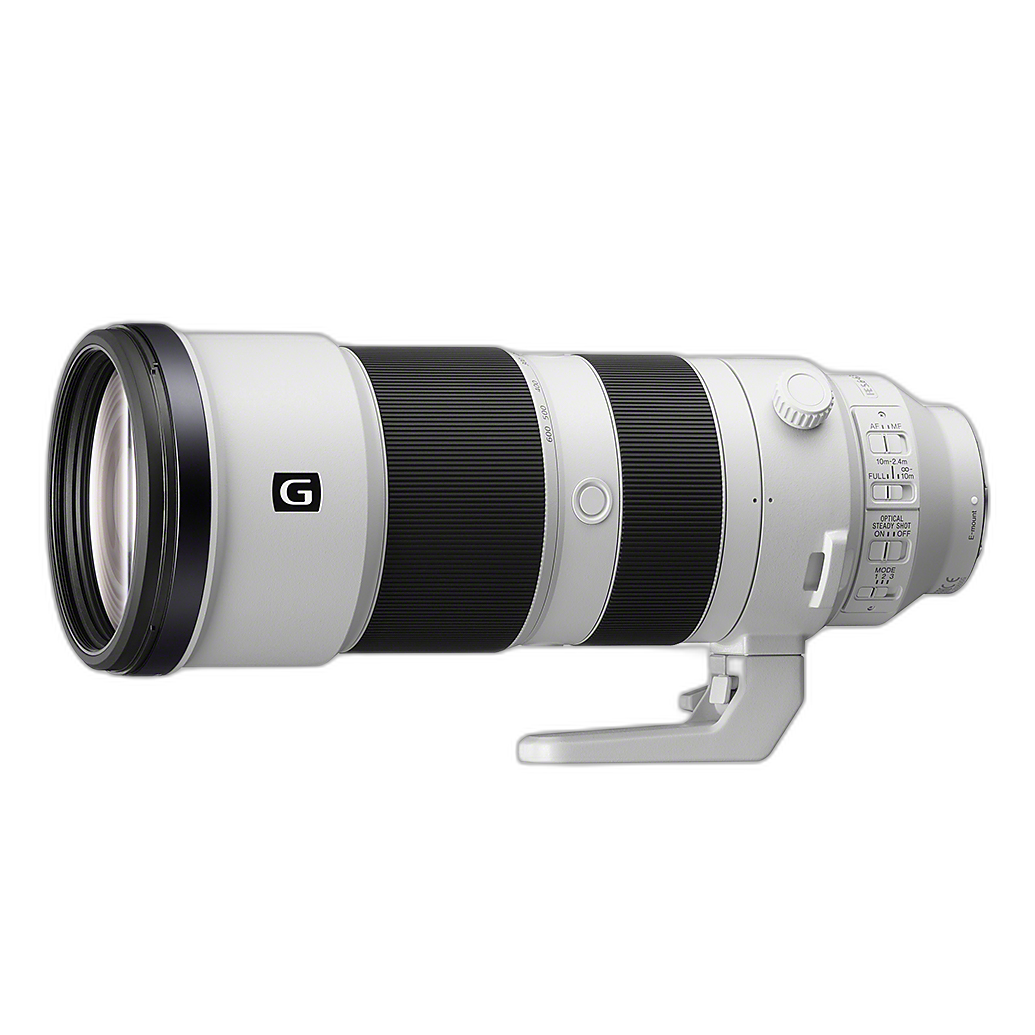
When Sony introduced the FE 200-600mm f/5.6-6.3 G OSS on June 11, 2019, it landed at a particularly important moment in the evolution of the full-frame mirrorless system. Sony had already established itself as a serious force in professional and enthusiast photography, but long telephoto coverage remained one of the areas that most clearly signaled whether a system was truly ready for wildlife, aviation, motorsports, and field sports specialists. With a reach extending from 200mm to 600mm, Optical SteadyShot built in, and a launch price of $1,999, this lens immediately stood out as one of the most consequential super-telephoto zooms in the Sony FE lineup.
Historically, lenses in this category tend to define systems. They are the tools photographers rely on when subjects are distant, unpredictable, or simply inaccessible. In that context, the FE 200-600mm G OSS was more than just another addition to the catalog. It was a declaration that Sony’s E-mount had matured into a platform with serious long-lens intent.

A Long-Reach Zoom for a Growing System
By 2019, Sony’s full-frame mirrorless bodies had already earned strong reputations for autofocus performance, high-resolution sensors, and increasingly robust handling. What many working photographers and dedicated enthusiasts wanted next was a native lens that could cover true super-telephoto distances without forcing them into the much higher prices associated with big exotic primes.
The Sony FE 200-600mm f/5.6-6.3 G OSS answered that need directly. Its focal range made practical sense from the start. At 200mm, photographers had enough flexibility to frame larger wildlife, sideline action, or aircraft on approach. At 600mm, the lens entered the territory where distant birds, small animals, and field sports subjects become much more photographically accessible. That broad range made it especially attractive as a single-lens solution for shooters who needed versatility as much as reach.
Just as importantly, this was a native Sony E-mount optic designed for the FE ecosystem. That mattered in an era when many users still relied on adapted DSLR telephotos to cover the long end. A native FE super-telephoto zoom brought with it the promise of tighter integration with Sony bodies, especially in autofocus behavior and stabilization coordination.
Why the 200-600mm Range Matters
Super-telephoto zooms occupy a unique place in photographic history because they bridge two different needs. On one hand, they deliver the reach that nature and sports photographers demand. On the other, they provide flexibility that fixed focal lengths cannot. The 200-600mm range is especially useful because it starts at a point that remains practical for tracking larger or nearer subjects while extending far enough for highly specialized applications.
For wildlife photographers, this kind of range means fewer missed opportunities when subjects move unpredictably. A bird taking off from a nearby branch, a deer emerging farther down a trail, or a raptor circling overhead can all require significant reframing in seconds. For sports shooters, the same flexibility helps when action shifts rapidly across the field or track. A lens that can move from moderately tight to very tight framing without a lens change offers a clear operational advantage.
Historically, this versatility has always been one of the strongest arguments in favor of high-end telephoto zooms. In mirrorless systems, where portability and adaptability are often central selling points, the FE 200-600mm G OSS fit naturally into the broader philosophy of the format.
The Significance of G-Series Positioning
Sony’s G designation has long signaled a lens intended to balance strong optical performance with professional-grade usability. While the FE 200-600mm G OSS did not carry the even more exclusive G Master label, its place in the lineup was still highly significant. It was positioned as a serious tool for demanding photographers rather than a casual consumer telephoto.
That distinction mattered because the audience for a 200-600mm lens is inherently specialized. Buyers in this segment are often making careful decisions based on autofocus reliability, handling, stabilization, and real-world field usefulness rather than simply shopping by headline magnification. The G badge suggested that Sony understood this audience and aimed to deliver a lens with practical credibility, not just numerical appeal.
At its $1,999 launch price, the lens also occupied an important market position. It was not inexpensive in absolute terms, but within the realm of native super-telephoto optics, it represented a comparatively accessible path to serious reach. That pricing helped broaden the appeal beyond full-time professionals to dedicated enthusiasts and aspiring specialists who wanted a dependable long lens without stepping into the dramatically higher price tier of large-aperture telephoto primes.
Optical SteadyShot and the Realities of Long-Lens Shooting
Any discussion of a lens like this must include stabilization. Sony equipped the FE 200-600mm with OSS, or Optical SteadyShot, a critical feature in a lens designed for handheld and field use at extreme focal lengths. Historically, image stabilization has transformed telephoto photography by making long lenses more practical in varied light and more forgiving during real-world use.
At 600mm, even small movements are magnified in the frame. For wildlife photographers working from vehicles, on foot, or from temporary positions in the field, stabilization can be the difference between an image that feels controlled and one that is difficult to hold steady. The same is true for sports and aviation shooters who may be panning, reacting quickly, or working for extended periods without support.
In the mirrorless era, stabilization also carried symbolic weight. It reflected the expectation that advanced systems should offer not only image quality and autofocus sophistication but also the practical aids needed to support demanding shooting scenarios. On the FE 200-600mm G OSS, Optical SteadyShot was not an afterthought; it was central to the lens’s identity as a serious long-range tool.
An f/5.6-6.3 Aperture in Historical Context
The maximum aperture of f/5.6-6.3 places this lens in a familiar and important category of super-telephoto zooms. Historically, lenses in this class often strike a deliberate balance: they offer substantial focal reach while keeping size, weight, and price below the levels associated with constant-aperture professional telephoto zooms or ultra-fast exotic primes.
For many photographers, that tradeoff is more than reasonable. Wildlife and sports work often takes place in daylight or variable outdoor conditions where focal length is the first priority. Reach is what enables the shot in the first place. In that sense, a 600mm long end at f/6.3 is often far more useful than a faster lens that cannot get tight enough on a distant subject.
Seen from the release-period perspective, Sony’s decision here was pragmatic. Rather than chasing a specification that would have dramatically increased the cost and likely the bulk, the company produced a lens aimed at broad usability. That approach helped the FE 200-600mm G OSS become relevant not only to professionals but also to serious hobbyists building wildlife and sports kits around Sony’s rapidly evolving mirrorless bodies.
A Lens That Helped Define Sony’s Wildlife and Sports Credentials
It is difficult to separate the FE 200-600mm G OSS from the broader story of Sony’s rise in action-oriented photography. Camera systems are judged not just by their flagship bodies but by the completeness of their lens ecosystems. A strong super-telephoto zoom is one of the clearest signs that a manufacturer intends to serve photographers who work at distance.
In archival hindsight, this lens can be seen as one of the products that strengthened Sony’s credibility among bird photographers, wildlife specialists, airshow enthusiasts, and many sports shooters. It offered native E-mount users a compelling reason to stay within the system rather than looking elsewhere for long-range capability. That was especially meaningful in 2019, when mirrorless competition was intensifying and lens lineups were under close scrutiny.
Its appeal was straightforward: substantial 200-600mm coverage, built-in Optical SteadyShot, full-frame Sony E-mount compatibility, and pricing that made serious reach more attainable than many expected from a native lens in this class. Those traits gave it immediate relevance and helped it earn a reputation as a practical go-to telephoto rather than a niche curiosity.
Lasting Importance
Looking back at the FE 200-600mm f/5.6-6.3 G OSS from its release period, what stands out most is how clearly it addressed a real need. It was not merely about adding another box to Sony’s lens chart. It was about giving the FE system a dependable, purpose-built super-telephoto zoom that photographers could realistically adopt for demanding field use.
That combination of reach, stabilization, native integration, and relatively attainable pricing made the lens historically important within the Sony FE lineup. For many photographers, it represented the point at which Sony’s mirrorless system felt fully convincing for wildlife and sports work.
If you want to explore the history of landmark lenses like the Sony FE 200-600mm G OSS, or shop current Sony gear, Unique Photo is a great place to buy, compare options, and learn more from photographers who know the system well.