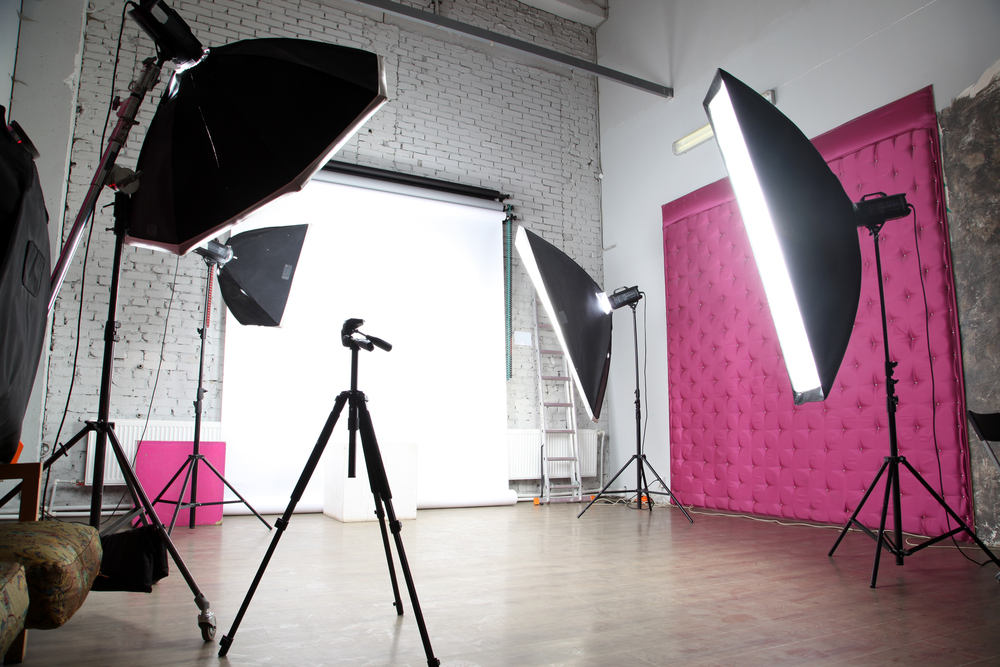

Studio lighting can be a daunting task for those who are inexperienced in its finer nuances. But, the fact is something else entirely. In reality most photo lighting techniques aren't as difficult as they're made out to be. A standard photo studio kit, plus a few flash heads and some other regular accessories should suffice in achieving the desired lighting effect. In fact, it's relatively simpler to utilize a studio lighting setup as compared to an off- camera flash. Let's go through some of the standard studio lighting equipment you'll require to pull off any kind of shoot successfully. Light Stands: Pulling off the right kind of studio flash is mostly about placing your light source strategically away from your camera. In this respect, light stands are of vital importance. They effortlessly support flash heads and can be placed at exactly the right angle and distance from your subject. Flash Heads: Almost all studio kits come with two flash heads. One is a flash tube and the other is a modeling light. Most of these flash heads are equipped with a highly useful switchable "slave" feature, which permits one flash to be triggered by another. This allows you to connect your camera to just one of the flash heads making your operation more user-friendly. Umbrella: A brolly styled umbrella is the most common type of lighting accessory. Since, the flash is directed into the brolly, the light is splendidly reflected back onto your subject. These umbrellas are available in myriad reflective surface, of which the most regularly used surfaces are gold, silver, and white. Softbox: Compared to brollies, softboxes are a tad more sophisticated in their functioning. The tricky part is to understand how to properly assemble these tent styled accessories. Once you master their assembly, using them becomes simple and you'll generally prefer them over other light enhancing devices. Softboxes are known to provide softer, more flattering light, and better illumination. Snoot/Honeycomb: A snoot and a honeycomb are two accessories, which assist you in focusing the light to better effect. They make for perfect backlight sources and can also be used to effectively isolate a specific section of an image. Reflector: A simple reflector always manages to enhance your lighting effect within a studio setup, particularly if you're using a singular light source. Just remember to use a reflector in the exact same manner you would use natural light. When used correctly, reflectors perform the same function (indoors), as natural light does outdoors. In other words, they too bounce the light back onto the subject and fill up any harsh shadow regions of your image. The aforementioned tips might be useful in using a studio light kit to better effect, but in order to become a more accomplished photographer, you need to actually shoot a whole lot of photos and put yourself thorough different challenging situations. Keeping the above tips in mind, you need to tackle as many diverse lighting scenarios as possible in order to master the art of better photo lighting.