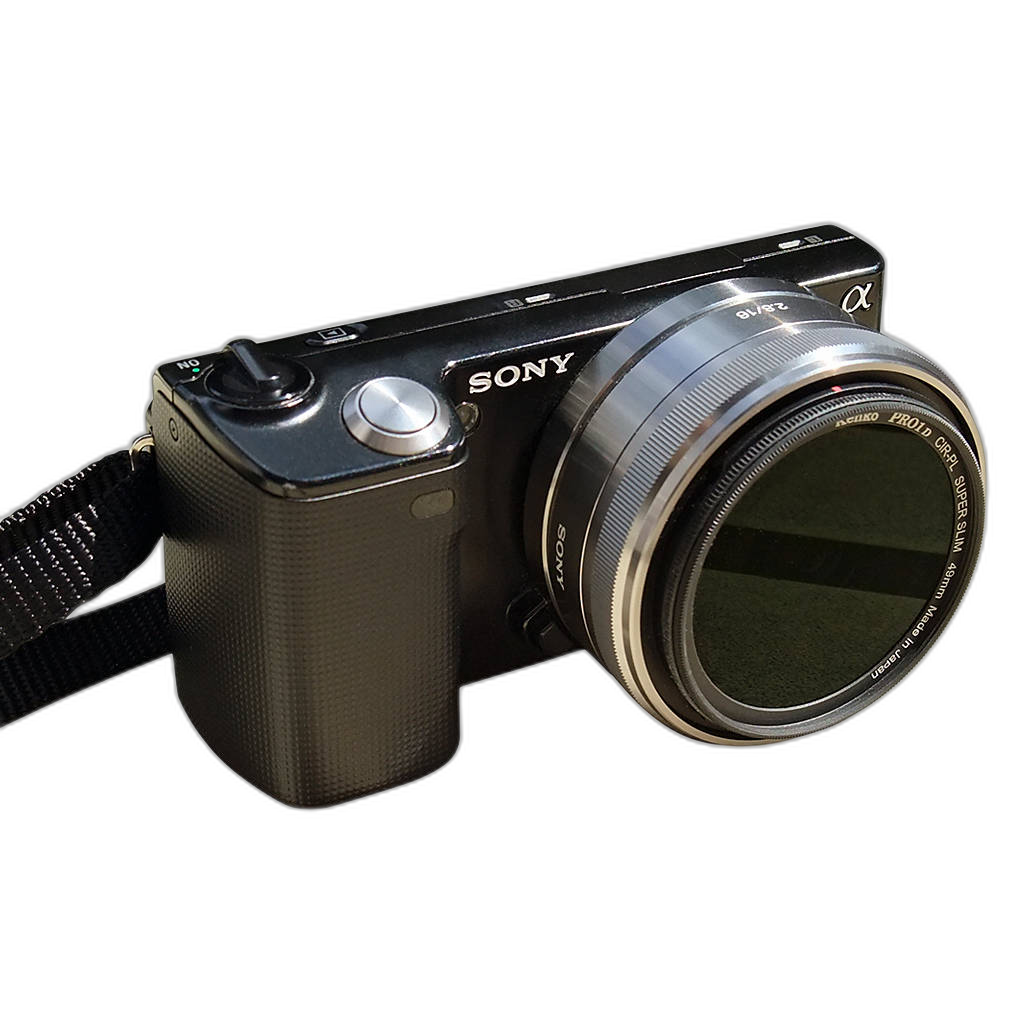
In spring 2010, Sony introduced a camera that felt pointed squarely at the future. The Sony NEX-5, announced on May 11, 2010, arrived as a remarkably compact interchangeable-lens camera built around a large 14.2MP APS-C sensor and an all-new Sony E mount. At a $699 launch price in the U.S., it was positioned as a serious step forward for photographers who wanted DSLR-class image potential without the bulk that usually came with it.
Looking back, the NEX-5 matters for more than its slim metal body and eye-catching size. It was one of the cameras that helped define Sony's mirrorless direction for the decade that followed. More importantly, it marked the public beginning of the E-mount system, a lens mount that would go on to become one of the most influential in modern photography.
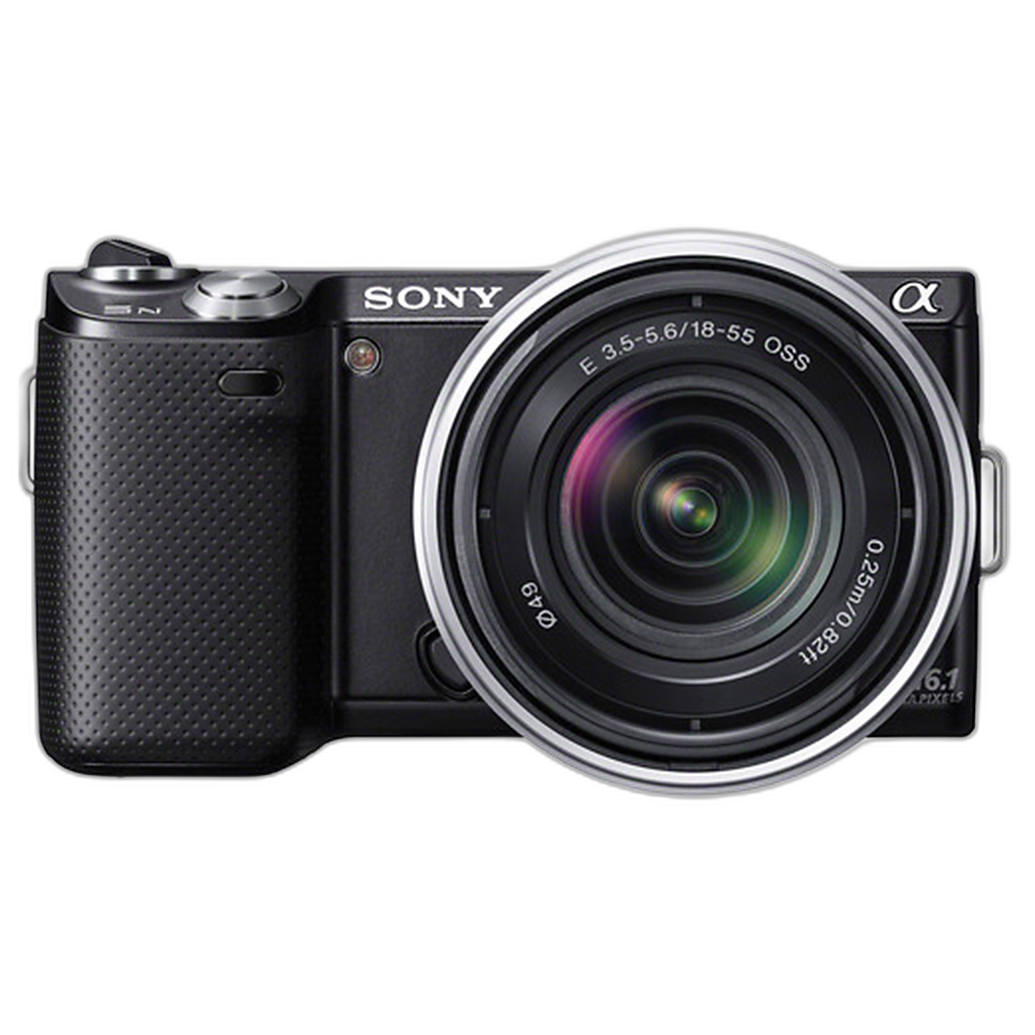
A New System, Not Just a New Camera
The NEX-5 did not arrive as a one-off experiment. Sony launched it as part of a new family of compact system cameras designed around short flange distance, small bodies, and the flexibility that comes from eliminating the reflex mirror of a DSLR. That decision allowed Sony to combine a large APS-C sensor with a body shape that looked far closer to a premium compact than a traditional interchangeable-lens camera.
In 2010, that was a striking proposition. Mirrorless cameras were still in an early stage, and many photographers were trying to decide whether these new designs were a novelty or a genuine alternative. Sony's answer with the NEX-5 was direct: image quality starts with sensor size, and there was real appeal in fitting an APS-C sensor into something this small.
The other half of that story was the mount itself. The Sony E mount was new, and with it Sony was clearly laying groundwork for a broader ecosystem. At launch, the promise of a compact interchangeable-lens system was as important as the camera body. For enthusiasts and early adopters, the NEX-5 represented an entry point into something larger than a single model release.
Why the NEX-5 Stood Out in 2010
What made the NEX-5 immediately memorable was not just that it was mirrorless, but that it looked and felt genuinely small for what it offered. Compact cameras were common, of course, but they usually came with much smaller sensors. DSLRs offered APS-C image quality, but they were rarely subtle or pocket-friendly. The NEX-5 occupied a new middle ground.
That combination of 14.2 megapixels and APS-C format gave the camera credibility with photographers who cared about more than convenience. Sony was effectively arguing that you did not need to sacrifice sensor size to carry less camera. In release-period terms, that was a compelling message for travelers, family photographers, and enthusiasts looking for a lighter everyday option.
Its design also reflected a broader shift in camera thinking. The NEX-5 traded the familiar DSLR silhouette for a modern, minimalist body style. It looked less intimidating than a conventional interchangeable-lens camera, which helped Sony appeal to users stepping up from point-and-shoot models while still attracting experienced photographers interested in new technology.
The Importance of the 14.2MP APS-C Sensor
Even in a camera remembered for its size, the sensor remained the headline feature. A 14.2MP APS-C sensor in such a compact body was central to Sony's pitch and central to the NEX-5's historical significance. In practical terms, APS-C format gave the camera a strong foundation for image quality expectations in an era when many compact cameras still struggled to match the output and low-light confidence of larger-sensor systems.
For buyers in 2010, megapixels still carried marketing weight, but sensor size was increasingly recognized by enthusiasts as the more meaningful differentiator. Sony's choice to pair a sizable sensor with a genuinely portable design helped the NEX-5 stand apart from both fixed-lens compacts and some early mirrorless rivals using smaller formats.
From a historical perspective, that sensor choice also foreshadowed Sony's long-term confidence in mirrorless as a serious platform rather than a simplified side category. The NEX-5 was not built around compromise as much as around rethinking the package.
The Birth of Sony E-Mount
If the NEX-5 is remembered today, it is often because of what came next. The camera's debut effectively introduced photographers to Sony E-mount, now one of the most significant lens mounts in the industry. At the time, however, the mount was simply new: a clean-sheet system intended for mirrorless cameras, designed to support smaller bodies and future expansion.
That launch gave the NEX-5 a special place in Sony history. This was the camera that helped establish the idea that Sony was serious about mirrorless not as a niche branch, but as a system with room to grow. In hindsight, the NEX branding was an early chapter in a much larger story that would later merge into Sony's broader Alpha mirrorless identity.
For photographers shopping in 2010, buying an NEX-5 meant buying into possibility. A new mount always comes with questions, but it also carries excitement. Sony was inviting users to invest in a platform whose best days were still ahead.
Design and Appeal at Launch
Release-period reactions to the NEX-5 naturally centered on its proportions. It was the kind of camera that prompted a double take: an interchangeable-lens model that seemed almost too small to contain an APS-C sensor. That visual impression mattered. Camera buyers often judge a product before they ever ask about image quality, and the NEX-5 had a distinctive, modern look that made it feel new in every sense.
Its $699 launch price placed it in an accessible but still aspirational range. That was important. Sony was not pitching the NEX-5 solely to specialists. It was offering a camera for people who wanted to move upward from simple compacts, but who were not eager to carry a full DSLR kit. In that respect, the NEX-5 captured one of the central ideas of mirrorless photography: less bulk, fewer barriers, and a more casual path to serious imaging.
There was also a cultural appeal to the camera. In 2010, cameras were increasingly competing with the convenience expectations created by consumer electronics. Products that felt sleek, lightweight, and contemporary had an advantage. The NEX-5 fit that moment unusually well.
A Historical Turning Point for Sony
While Sony had already established itself in digital imaging, the NEX-5 signaled a strategic shift that would become clearer in the years ahead. This was a camera that suggested Sony understood where the market might be going. Instead of treating the mirror box as essential, Sony embraced a new form factor and built a fresh mount around it. That move would prove far-reaching.
The NEX-5 was not just another model in a crowded release calendar. It was a foundational product. It helped normalize the idea that a compact interchangeable-lens camera could be a primary camera rather than a backup or novelty. It also helped establish Sony's reputation for bold engineering decisions in the mirrorless space.
For collectors and historians today, that is what makes the NEX-5 more than simply an early 2010s camera. It stands at the beginning of a lineage. Many later Sony bodies would become more advanced, more refined, and more expansive in capability, but the NEX-5 remains one of the key starting points.
Why the Sony NEX-5 Still Matters
Seen from today's perspective, the NEX-5 represents a moment when mirrorless photography stopped looking hypothetical and started looking practical. It offered a big sensor, interchangeable lenses, and a fresh new mount in a body small enough to reshape expectations. That alone would make it notable. That it also launched Sony E-mount gives it lasting significance.
As an archival piece of camera history, the NEX-5 deserves recognition as one of Sony's most consequential introductions of the era. It was ambitious, stylish, and pointed clearly toward the future of the company's camera strategy.
If you want to explore historic Sony gear, discover current E-mount cameras and lenses, or learn more about the evolution of mirrorless photography, Unique Photo is a great place to buy, compare, and continue the story.