Compare the Sony FE 600mm F6.3 GM OSS Lens with Sony's 600mm f/4 and Nikon's Z 600mm f/6.3 before choosing a super-telephoto prime.
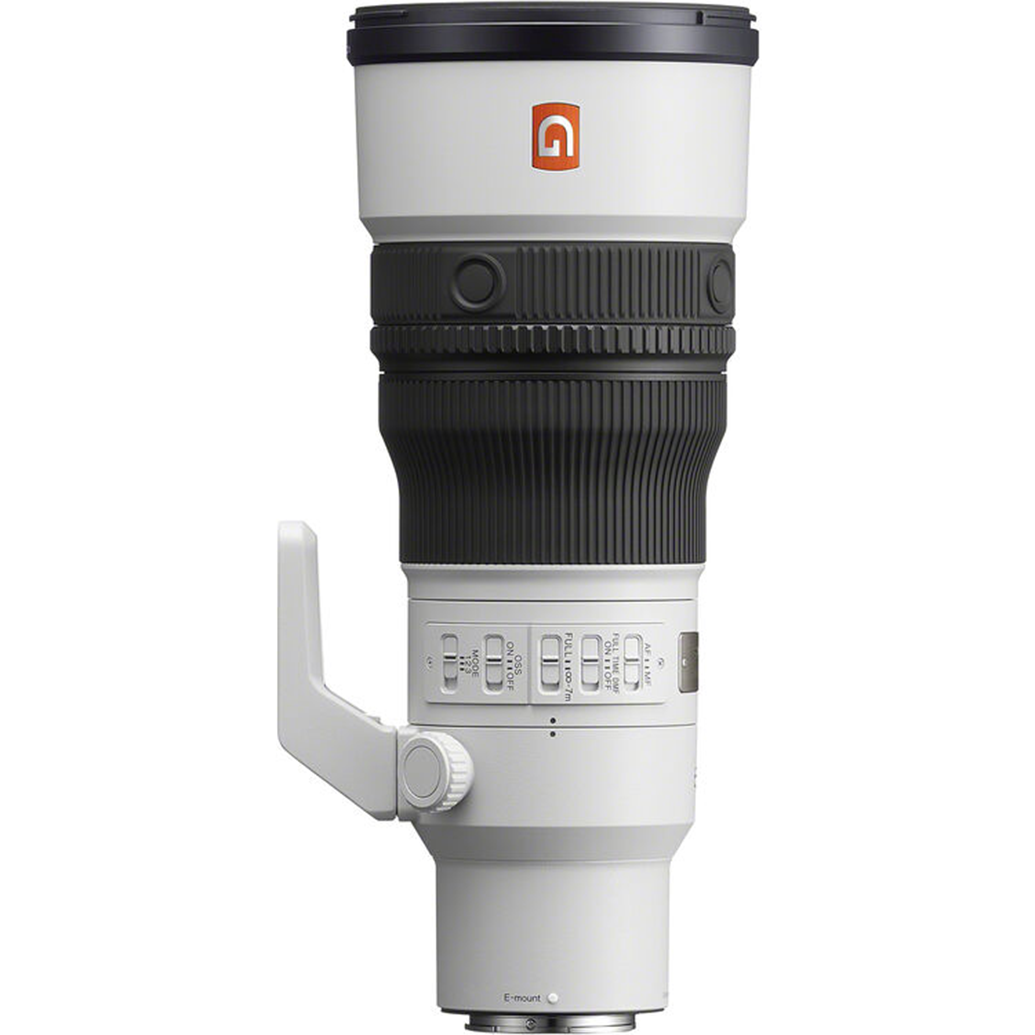
Three 600mm primes, two camera mounts
The Sony FE 600mm F6.3 GM OSS Lens costs $3,698 and is available to order. The Sony FE 600mm F4.0 GM OSS Lens costs $14,098 and is also available to order. Both are full-frame Sony E-mount primes. The buying decision is not about reaching farther: each is 600mm. The main exposure difference is paying for f/4 rather than f/6.3.
The Nikon NIKKOR Z 600mm f/6.3 VR S Lens costs $5,196.95 and is in stock. It matches the Sony f/6.3 lens's focal length and maximum aperture, but uses Nikon Z mount. That makes it a native-mount option for Nikon Z owners, not a direct substitute on a Sony E body. For someone choosing a camera system alongside a lens, it belongs in the comparison.
Shared specifications compared
All three are full-frame 600mm primes with optical image stabilization. Their common specifications show where the exposure settings match and where the hardware differs.
| Specification | Sony 600mm f/6.3 GM OSS | Sony 600mm f/4 GM OSS | Nikon Z 600mm f/6.3 VR S |
|---|---|---|---|
| Mount | Sony E | Sony E | Nikon Z |
| Format | Full-frame | Full-frame | Full-frame |
| Focal length | 600mm | 600mm | 600mm |
| Maximum aperture | f/6.3 | f/4 | f/6.3 |
| Minimum aperture | f/20 | f/22 | f/32 |
| Optical stabilization | Optical SteadyShot | Optical SteadyShot | VR |
| Autofocus motor system | Two XD Linear Motors | Two XD Linear Motors | Stepping motor (STM) |
| Diaphragm | 11 rounded blades | 11 circular blades | 9 rounded blades |
F/4 buys shutter speed, not more reach
The Sony f/4 is roughly 1.3 stops brighter at maximum aperture than either f/6.3 lens. Under the same light, that gives room for a faster shutter speed or lower ISO while maintaining exposure. For wildlife moving through shade or sports continuing into dim light, this is the difference most likely to justify the higher price. The focal length remains 600mm.
In brighter conditions, f/6.3 can provide enough exposure room for the shutter speed a subject needs. That does not erase the aperture difference; it makes it less decisive. The Nikon and Sony f/6.3 lenses have the same maximum-aperture setting, so the Nikon's higher price does not buy a brighter aperture.
Both Sony lenses include Optical SteadyShot, while Nikon rates its VR stabilization at 6.0 stops. Stabilization reduces the effect of camera shake. It cannot stop a bird's wing or a runner's stride. A wider aperture and optical stabilization solve different problems: one admits more light, while the other helps steady the image. For moving subjects in low light, shutter speed still matters.
Autofocus ratings and lens-mounted controls
Both Sony lenses use two XD Linear Motors. Sony lists continuous AF/AE tracking up to 120 fps for the f/6.3 lens, while its f/4 listing gives focusing performance up to 20 fps with a particular camera pairing. These figures should not be read as a sixfold autofocus-speed comparison. The 120 fps figure describes tracking support; it does not make every attached camera shoot at that rate.
Nikon uses a stepping motor, or STM. The motor type alone does not establish how accurately a lens will track a particular subject. For an action photographer, the useful consideration is the lens and camera combination, rather than ranking lenses by motor names.
The Sony f/6.3 has a function ring and four focus-hold buttons. The Sony f/4 also provides four multifunction focus-hold buttons. Lens-mounted buttons are useful when the supporting hand stays on the lens while following a subject. They provide a way to hold focus without moving that hand back to the camera controls.
Carrying dimensions, collars and teleconverters
Nikon lists the Z 600mm f/6.3 at 1,470 g with its tripod collar and approximately 1,390 g without it. The collar is removable, and the lens measures 106.5 x 278 mm. Keep the collar configuration attached to the weight figure when planning a carrying kit; those two numbers describe different setups.
The Sony f/4 measures 163.6 x 449 mm and weighs 107.3 oz. Sony uses magnesium construction and a weight distribution designed to reduce front-heaviness. Balance and total weight are separate considerations: moving mass closer to the camera changes how a lens carries in the hands, but does not remove that mass from the bag.
Sony describes the f/6.3 as a portable super-telephoto, with a single-front-element design that places the center of gravity closer to the camera body. Its tripod collar is fixed and rotates. That allows switching between horizontal and vertical framing while the lens remains supported.
The Sony f/4 also supports optional 1.4x and 2.0x teleconverters. That is a concrete reason to consider it when 600mm is only the starting point for a kit. Teleconverter compatibility matters most when additional reach is part of the intended setup, rather than an accessory purchase left for later.
Who should choose each 600mm lens
Choose the Sony 600mm f/6.3 for a Sony E system when 600mm reach matters more than the wider maximum aperture. At $3,698, it is the lowest-priced lens here. It makes particular sense for daylight work where f/6.3 leaves enough room for a suitable shutter speed. Its listed high-rate AF/AE tracking support is also relevant when paired with a camera that can use it.
Choose the Sony 600mm f/4 when dim light and moving subjects regularly meet. The brighter aperture is an exposure tool, not extra reach. Its optional 1.4x and 2.0x teleconverter support is another reason to choose it for a system built around subjects that remain distant. Paying for f/4 is easier to justify when those conditions are routine rather than occasional.
Choose the Nikon Z 600mm f/6.3 for a Nikon Z system when its 600mm focal length and f/6.3 aperture suit the work. Its removable collar allows two carrying configurations, and Nikon specifies 6.0-stop VR. Plan around the 1,470 g figure if the collar will stay attached. For an existing Nikon Z owner, native mount compatibility is the first practical distinction from either Sony.
Prices at Unique Photo
- Sony FE 600mm F6.3 GM OSS Lens (Sony E): $3,698.00
- Sony FE 400mm F4.5 GM OSS Lens (Sony E): $2,698.00
- Sony FE 600mm F4.0 GM OSS Lens: $14,098.00
- Nikon NIKKOR Z 600mm f/6.3 VR S Lens: $5,196.95
Prices as of October 19, 2026. Browse more: Mirrorless Lenses, Sony at Unique Photo.
Related reading: Sony FE 600mm F6.3 GM OSS Lens: Specs and Price.
Frequently asked questions
How much does the Sony FE 600mm F6.3 GM OSS Lens cost?
The Sony FE 600mm F6.3 GM OSS Lens costs $3,698 and is available to order.
What is the aperture difference between Sony's 600mm f/6.3 and 600mm f/4 lenses?
The f/4 lens has a maximum aperture roughly 1.3 stops brighter than f/6.3. Both have the same 600mm focal length.
How much does the Nikon NIKKOR Z 600mm f/6.3 VR S weigh?
Nikon lists 1,470 g including the tripod collar and approximately 1,390 g without it. The collar is removable.
Does the Sony FE 600mm F4.0 GM OSS support teleconverters?
Yes. Sony lists compatibility with optional 1.4x and 2.0x teleconverters.