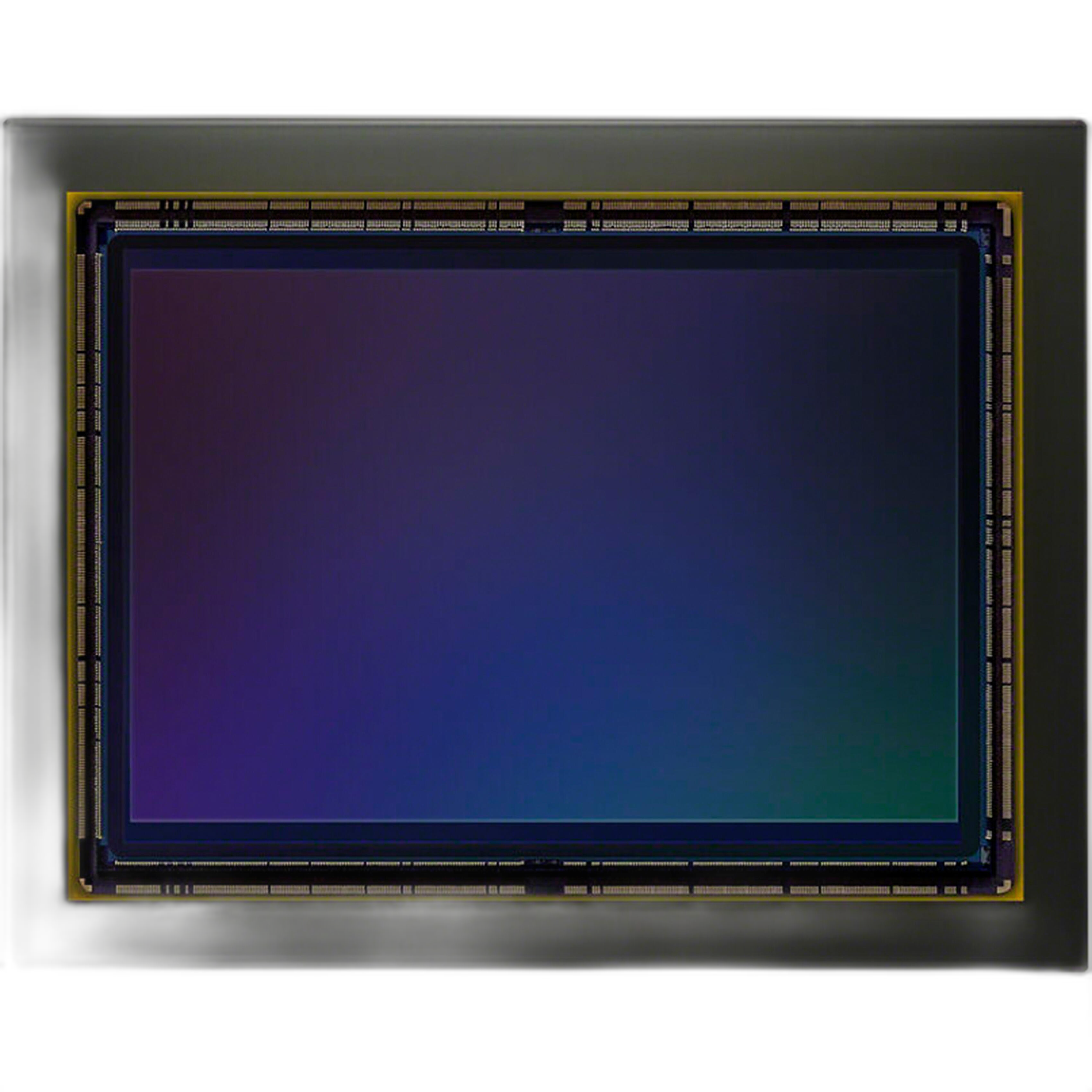
Sony has officially announced the a7R V, a new high-resolution full-frame mirrorless camera that builds on the a7R line’s reputation for detail while introducing one of the company’s most notable autofocus developments to date. Revealed on October 26, 2022, the camera pairs a 61MP full-frame BSI sensor with a dedicated AI processing unit, signaling Sony’s intent to make its flagship-resolution body not just a studio and landscape machine, but a more adaptable all-around tool for photographers working across genres.
At launch, the Sony a7R V arrived with a U.S. price of $3,899. For photographers already invested in the Sony E mount system, its announcement represented more than a routine update: it showed how computational subject recognition and traditional high-resolution imaging were beginning to merge in a serious professional body.
A New Chapter for the a7R Series
By 2022, Sony’s a7R family had long been associated with resolution-first performance. The series helped define the idea that a relatively compact mirrorless camera could deliver medium-format-challenging detail in many real-world applications, especially when paired with high-quality lenses. Earlier a7R models were embraced by landscape photographers, commercial shooters, portrait specialists, and anyone whose work demanded latitude for cropping and large-format output.
The a7R V continues in that tradition with its 61MP back-side illuminated full-frame sensor. That headline specification kept the camera firmly planted in the high-resolution camp, and it preserved continuity for photographers who had come to expect top-tier detail from the line. But Sony’s messaging around the launch made it clear that this was not simply a resolution story. The bigger narrative was intelligence: the company positioned the a7R V as a camera that could better understand subjects, track them more effectively, and reduce some of the handling compromises that historically accompanied ultra-high-pixel bodies.
61MP Full-Frame BSI Sensor: Resolution Still Matters
The core appeal of the a7R V begins with its 61MP full-frame BSI sensor. In 2022, 61 megapixels remained an attention-grabbing figure, and for good reason. That level of resolution offers substantial flexibility for fine-art printing, commercial retouching workflows, architectural photography, product imaging, and detailed landscape work. It also benefits photographers who routinely crop, whether to refine composition after capture or to simulate additional reach from a given lens.
Back-side illuminated sensor design had already become an important part of Sony’s sensor leadership, and in a camera like the a7R V it carried particular significance. High-resolution cameras are often judged not just by detail, but by how gracefully they handle demanding light, tonal transitions, and real-world shooting conditions. The use of a BSI full-frame sensor underscored Sony’s effort to balance pixel count with modern imaging performance expectations.
Historically, this is what made the a7R line so influential. Earlier generations proved that high resolution no longer had to be confined to bulky systems or slow, specialized bodies. The a7R V’s announcement reinforced that philosophy while updating it for a market increasingly concerned with speed, detection, and automated tracking.
The Big Headline: A Dedicated AI Processing Unit
If the sensor defined what the a7R V was, the autofocus system defined why it mattered in late 2022. Sony highlighted the camera’s dedicated AI processing unit as a major step forward, and that emphasis reflected a broader shift in camera design at the time. Autofocus was no longer only about raw speed or the number of detection points; it was increasingly about recognition, prediction, and the camera’s ability to identify subjects in a more nuanced way.
For the a7R V, the inclusion of a dedicated AI processing unit suggested a more advanced layer of subject analysis than photographers had seen in earlier generations of the line. In practical terms, this was significant because ultra-high-resolution cameras often place greater demands on focus accuracy. At 61MP, even slight misses become more obvious. A more intelligent autofocus system therefore was not just a convenience feature. It was central to realizing the potential of the sensor itself.
From a historical perspective, the a7R V arrived at a moment when manufacturers were increasingly using terms like AI and deep learning to describe autofocus advances. Sony’s framing of the camera showed how these technologies were moving from niche talking points into the mainstream of professional mirrorless design. The result was a camera that appeared aimed not only at deliberate tripod-based work, but also at portrait, event, editorial, and even select action-oriented assignments where dependable tracking could make a real difference.
Sony E Mount and System Context
The a7R V’s use of the Sony E mount was, of course, expected, but it remained one of the camera’s practical strengths at launch. By 2022, Sony’s full-frame E-mount ecosystem was mature and broad, with lenses covering everything from compact primes to specialized G Master optics. For a high-resolution camera, lens quality is never a side note; it is part of the whole proposition. A body capable of resolving fine detail benefits most when paired with optics that can support that level of output.
That ecosystem maturity also helped make the a7R V more attractive to existing Sony users weighing an upgrade. Rather than asking photographers to buy into a new mount or an unproven lens roadmap, Sony was introducing a sophisticated new body into a system that many professionals and serious enthusiasts already trusted.
It is also worth noting that the E mount had become one of the defining pillars of the mirrorless era. Sony’s early commitment to full-frame mirrorless gave it a head start, and cameras like the a7R V showed how the company continued to refine that position through iteration rather than reinvention. The mount remained the constant, while autofocus, processing, ergonomics, and computational intelligence advanced around it.
Launch Price and Market Position
With a launch price of $3,899 in the U.S., the Sony a7R V entered the market as a premium body for demanding users, but not as an unreachable halo product. That pricing placed it squarely in serious enthusiast and professional territory. In context, it made sense: the a7R line had always served photographers who were willing to invest in image quality and who often paired these cameras with high-end lenses and robust post-production workflows.
The price also reflected the camera’s dual identity. On one hand, this was a specialist-resolution body. On the other, the AI-driven autofocus messaging suggested Sony wanted buyers to see it as more versatile than the traditional high-megapixel stereotype. The a7R V was not presented merely as a slower, detail-focused alternative to other Alpha models. Instead, it was framed as a modern flagship-resolution body for photographers who wanted fewer tradeoffs.
Why the a7R V Announcement Mattered
Looking back at the a7R V’s launch, what stands out is how clearly it captured a turning point in camera development. For years, photographers often had to choose between resolution and responsiveness. High-resolution bodies excelled in controlled work, while faster models were favored for movement and unpredictability. The a7R V did not erase that distinction overnight, but its combination of 61MP capture and a dedicated AI processing unit showed the industry moving toward cameras that aimed to do more of both.
That mattered not just for Sony fans, but for the broader mirrorless market. The camera illustrated how manufacturers were beginning to treat intelligent subject recognition as a core capability rather than a premium add-on. It also reinforced Sony’s longstanding strength in sensor technology while showing a growing focus on processing and recognition systems.
As an archival release-period announcement, the a7R V stands as one of the more interesting Sony launches of 2022: a camera rooted in the familiar strengths of the a7R name, yet clearly shaped by the next phase of autofocus development.
Final Thoughts
The Sony a7R V arrived in late 2022 as a compelling statement of where high-resolution mirrorless cameras were headed. Its 61MP full-frame BSI sensor preserved the detail-first identity that made the a7R line famous, while its dedicated AI processing unit suggested a future in which resolution and autofocus intelligence would increasingly go hand in hand. Combined with the established flexibility of the Sony E mount system and a launch price of $3,899, it was one of the most significant Sony announcements of its release period.
If you want to explore the Sony Alpha system, shop current gear, or learn more about landmark camera releases like the a7R V, Unique Photo is a great place to buy, compare, and stay informed.