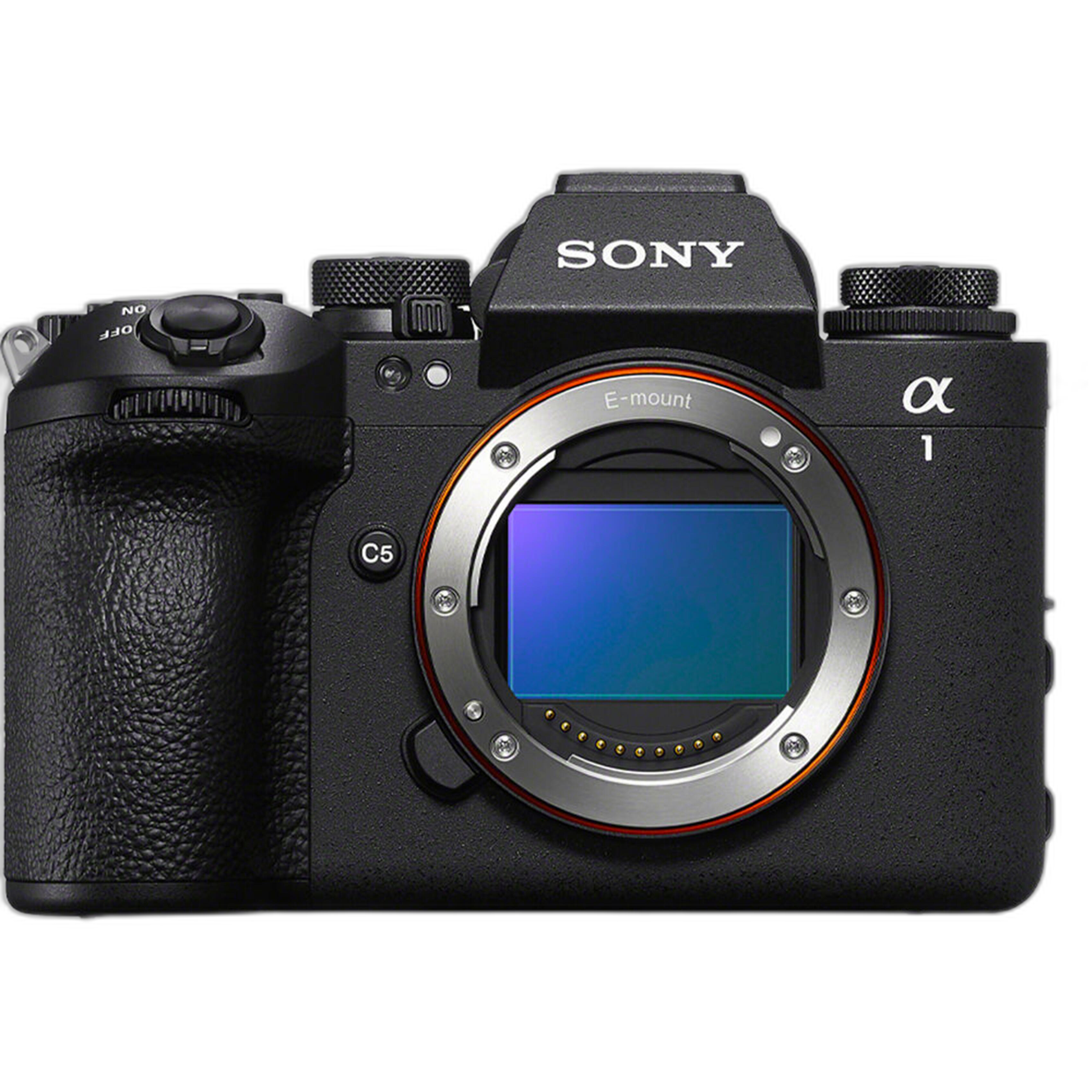
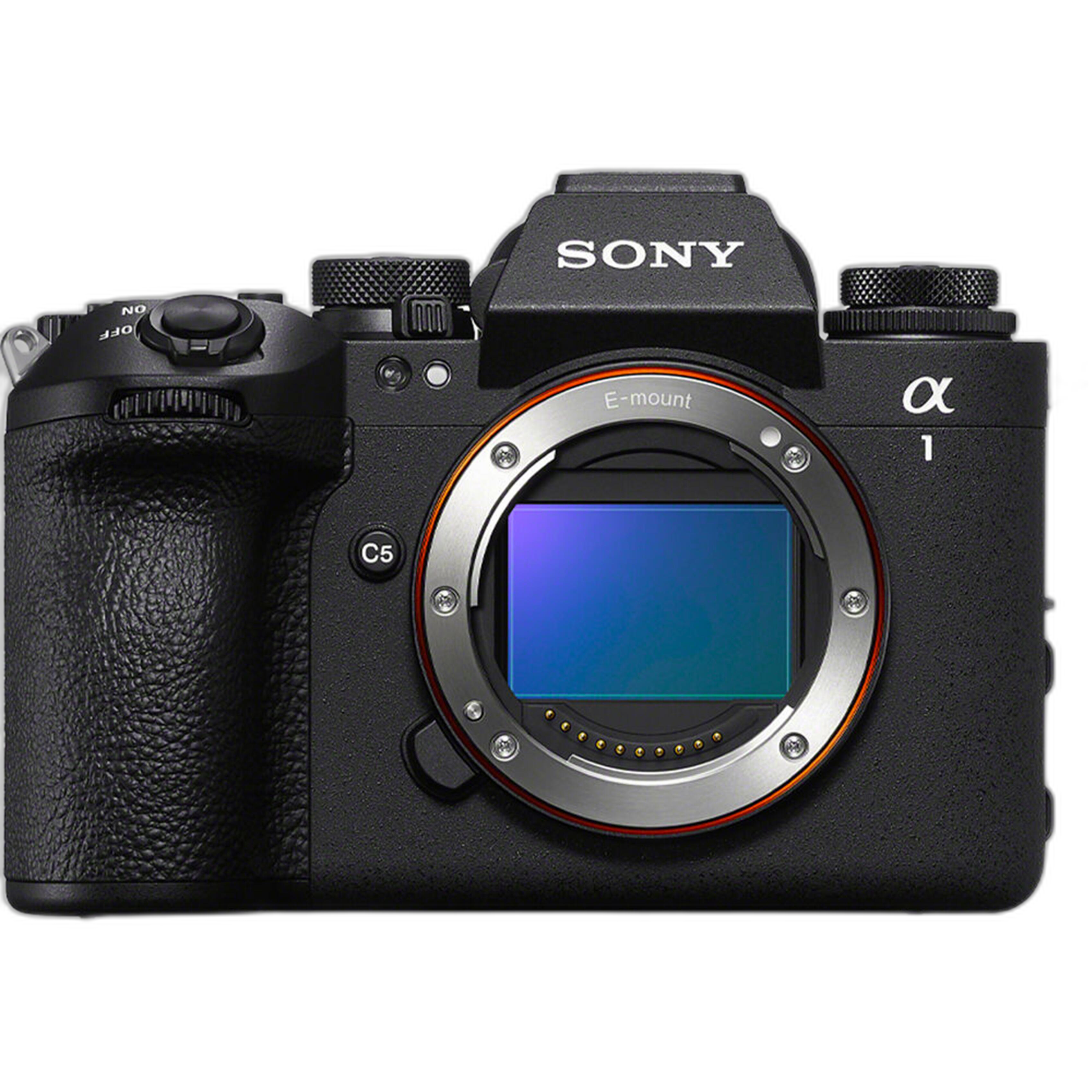
In January 2021, Sony unveiled the Sony a1, a camera positioned not simply as another high-end Alpha body, but as a statement piece for the company’s full-frame mirrorless system. For years, Sony’s lineup had been defined by specialization: one model emphasizing speed, another resolution, another video. The a1 arrived as the camera that aimed to bring those strengths together in one flagship body. With a 50.1MP stacked full-frame sensor, 30 fps continuous shooting, and 8K30 video recording, it was announced as a no-compromise tool for professionals who had previously been forced to choose between detail, speed, and advanced video features.
At launch, the a1 entered the market at $6,499, clearly targeting working professionals, agencies, and demanding hybrid shooters. In historical context, the announcement marked an important moment not just for Sony, but for the broader mirrorless market: it underscored how far flagship mirrorless cameras had come, and how directly they were now challenging the most established professional systems.
A New Alpha Flagship
By the time of the a1’s announcement, Sony had already built a formidable reputation in the mirrorless world. The Alpha system had matured rapidly, with bodies that appealed to portrait photographers, event shooters, sports specialists, and filmmakers. But even in a strong lineup, there was still room for a true halo product: a camera that would represent the pinnacle of the E-mount system and communicate Sony’s technological ambition in a single model.
The a1 was that camera. Its very name suggested primacy. Rather than slotting into the familiar a7 or a9 pattern, the a1 stood above them as a flagship intended to serve multiple disciplines at once. This was significant. Historically, flagship cameras from major manufacturers often reflected a single priority—speed for sports, resolution for studio work, or video for cinema-adjacent production. Sony’s announcement framed the a1 as an answer to photographers and creators whose assignments no longer fit neatly into one category.
The Core of the Camera: 50.1MP Stacked Full-Frame Sensor
The headline specification was the 50.1MP stacked full-frame sensor. Resolution at this level immediately drew attention from commercial, fashion, editorial, and landscape photographers who needed substantial detail and cropping flexibility. Yet the phrase stacked mattered just as much as the megapixel count. In Sony’s modern camera history, stacked sensor technology had become closely associated with faster readout and more responsive performance, especially in demanding professional use.
This combination of high resolution and stacked architecture was central to the a1’s identity. Traditionally, photographers had expected tradeoffs: high megapixel bodies often offered slower burst rates and less emphasis on speed, while action-oriented cameras reduced resolution in favor of responsiveness. The a1’s announcement challenged that assumption. Sony was not merely presenting a detailed sensor; it was presenting one designed to operate at a flagship level across multiple shooting scenarios.
For professionals, this promised practical benefits. Sports and wildlife shooters could work with enough resolution for extensive cropping. Commercial and portrait photographers could capture files suited to high-end output without entirely giving up speed. News and event shooters, who increasingly deliver both stills and video under tight deadlines, could see the appeal of one camera covering more assignments with fewer compromises.
30 fps: Speed Without the Usual Penalty
If the sensor was the intellectual centerpiece of the a1 announcement, the 30 fps burst rate was the specification that made many photographers stop and look twice. That figure placed the camera squarely in elite action territory. Just as importantly, it did so while retaining the kind of resolution normally associated with slower, studio-oriented bodies.
Historically, speed has always had symbolic power in flagship camera launches. It signals not only the ability to freeze action, but also confidence in the overall platform—sensor readout, processing, autofocus design, and system integration. In the a1, Sony was clearly asserting that mirrorless had advanced beyond simply matching traditional pro tools in certain areas. It could now redefine what a top-tier professional camera might look like.
For sports, wildlife, and fast-moving documentary work, a 30 fps burst rate suggested the ability to capture subtle changes in gesture, expression, and peak action with extraordinary precision. For wedding and event photographers, it hinted at greater confidence during fleeting moments. Even for shooters outside traditional action genres, that level of speed could be useful when working with motion, changing light, or unpredictable subjects.
8K30 Video and the Hybrid Professional
The other major pillar of the a1’s identity was 8K30 video. By 2021, the stills/video divide had already narrowed substantially. Many professionals were expected to deliver both forms of content, and camera makers were increasingly judged on how well a single body could support hybrid work. Sony’s decision to make 8K30 one of the a1’s defining launch features reflected that market reality.
In historical terms, 8K carried both practical and symbolic weight. Practically, it offered filmmakers and content creators more resolution for reframing, downsampling, and future-facing production workflows. Symbolically, it announced that Sony intended the a1 to be perceived not only as a stills flagship but as a serious tool for advanced video production.
This mattered because Sony had already earned respect in video circles through both its Alpha line and broader imaging divisions. The a1’s announcement suggested a convergence of those strengths. Rather than forcing creators to choose between a photo-first flagship and a video-first body, Sony was offering a camera designed to bridge those worlds more completely.
Sony E-Mount and System Significance
The a1 launched for the Sony E mount, reinforcing the maturity of Sony’s full-frame mirrorless ecosystem. By 2021, the mount was no longer an experiment or an emerging alternative. It was a well-established professional platform supported by Sony’s own lenses as well as an increasingly robust third-party ecosystem.
That context is important in understanding why the a1 announcement resonated so strongly. A flagship camera can only be as persuasive as the system around it. With E-mount, Sony had already demonstrated that mirrorless professionals could build complete kits for portraiture, sports, landscape, weddings, filmmaking, and commercial production. The a1 was therefore not an isolated technological showcase; it was the top expression of a system that had reached full professional credibility.
Launch Price and Market Position
At a launch price of $6,499, the Sony a1 was unmistakably a premium product. Sony was not attempting to pitch it as an enthusiast aspiration piece first and foremost, though many enthusiasts would naturally admire it. This was a professional flagship priced accordingly, intended for users who could justify its cost through demanding workflows and high-stakes assignments.
That price also reflected the camera’s role in Sony’s lineup. The a1 was not meant to replace every other Alpha body. Rather, it functioned as a summit model: the camera for buyers who wanted the broadest possible performance envelope in a single full-frame mirrorless body. In this sense, its market position echoed earlier eras of professional camera design, when flagship models often served as both practical tools and technological showcases for an entire brand.
Why the Announcement Mattered
Looking back, the Sony a1 announcement stands as a key moment in the evolution of mirrorless professional cameras. It encapsulated several industry trends at once: the rise of stacked-sensor performance, the expectation that one camera should handle both high-end stills and advanced video, and the growing confidence of mirrorless systems at the very top of the professional market.
More than a specification sheet, the a1 represented a strategic message from Sony. It said that the company no longer saw professional users as segmented into rigid camps of resolution shooters, action specialists, and video creators. Instead, it acknowledged a new reality: many photographers and filmmakers need a single flagship body capable of crossing those boundaries.
That is why the a1 made such an impression upon its release. A 50.1MP stacked full-frame sensor, 30 fps burst shooting, and 8K30 recording in one Sony E-mount camera was, in early 2021, a striking proposition. It was the sort of launch that signaled not just a new camera, but a new benchmark.
Final Thoughts
As an archival look back at its January 26, 2021 announcement, the Sony a1 remains easy to understand as one of the most ambitious Alpha launches of its era. It arrived as Sony’s no-compromise flagship: a camera designed to unite resolution, speed, and video capability in one professional body and to reinforce the strength of the E-mount ecosystem at the highest level.
If you want to explore the Sony Alpha system, compare current models, or learn more about landmark cameras like the a1, Unique Photo is a great place to shop, research gear, and connect with photographic expertise.