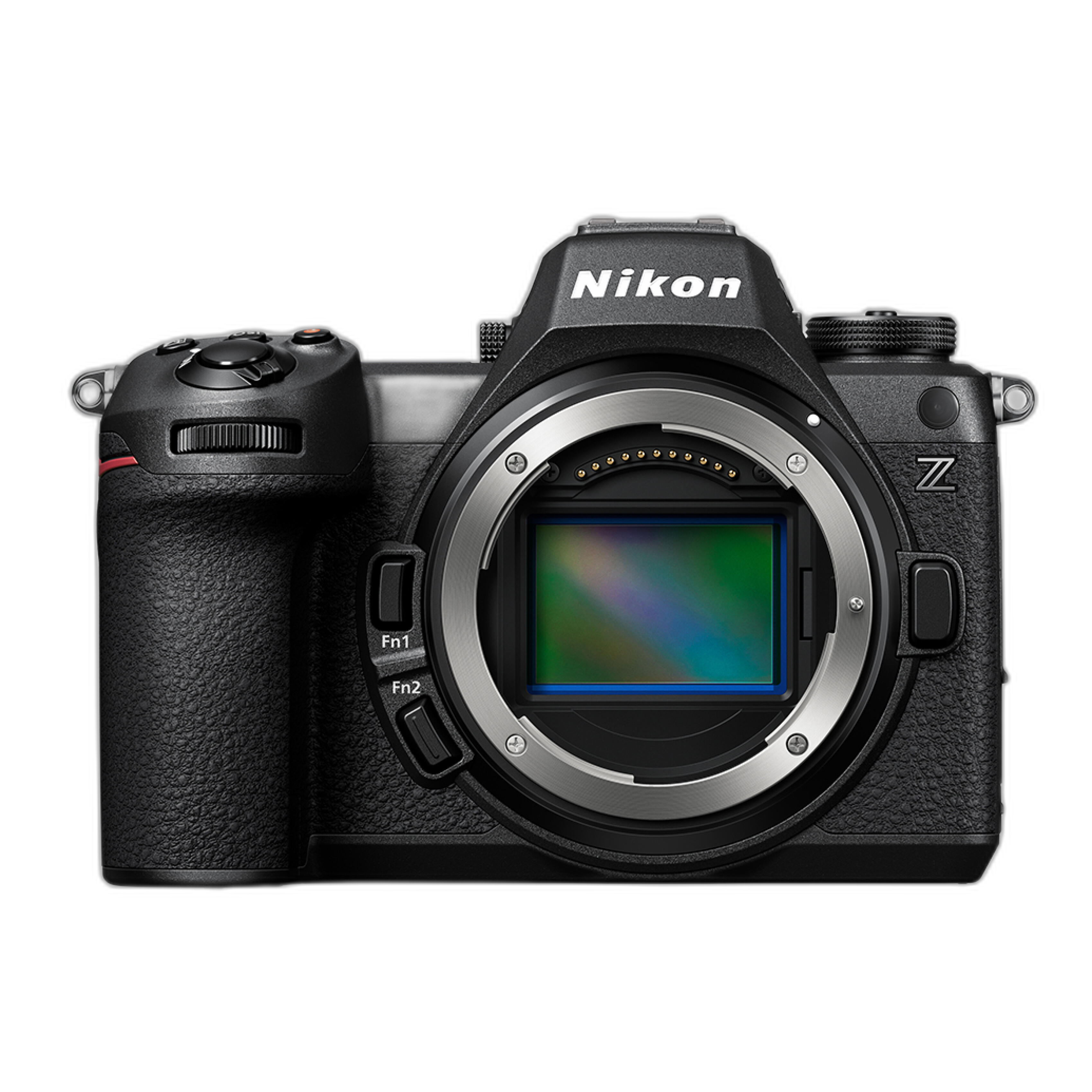
In October 2020, Nikon officially announced the Nikon Z6 II, an important update to one of the company’s most broadly appealing full-frame mirrorless cameras. Positioned in the middle of Nikon’s Z-mount lineup, the Z6 II arrived as a refinement of the original Z6 formula rather than a radical reinvention. That approach made sense: the first Z6 had already established itself as a capable hybrid camera, and the new model focused on the practical upgrades photographers and filmmakers had been asking for most loudly.
At launch, the Nikon Z6 II brought together a 24.5MP full-frame sensor, Nikon Z mount, 4K60 video, and a $1,999 launch price. Just as notably, it introduced two headline improvements that quickly defined its release: dual EXPEED 6 processors and dual card slots. For Nikon users considering the move to mirrorless—or existing Z shooters looking for a more polished second-generation body—the Z6 II was clearly meant to signal that Nikon was listening.
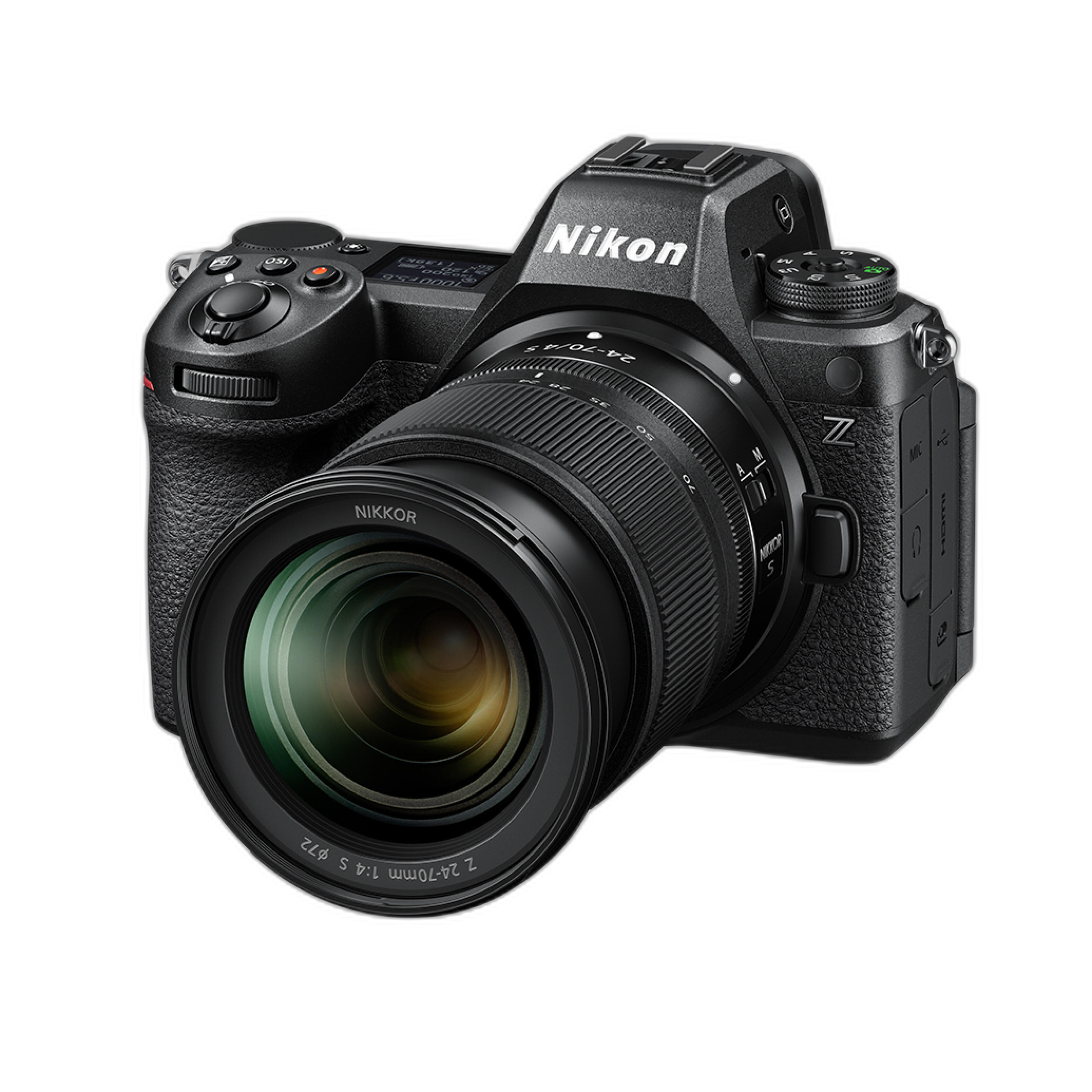
A Second-Generation Answer to Early Z-System Feedback
By the time the Z6 II was announced on 2020-10-14, Nikon’s full-frame mirrorless system had already made its debut and established the Z mount as a serious platform with long-term potential. The original Z6 had been praised for image quality, ergonomics, and the advantages of the wide-diameter Z mount, but users also had a short list of requests for a sequel. Near the top of that list were faster overall performance and the security and flexibility of a second memory card slot.
The Z6 II addressed both concerns directly. Nikon’s decision to equip the camera with dual processors was significant not only from a marketing perspective but also because it reflected a broader maturing of the Z system. More processing power suggested gains in responsiveness, autofocus handling, burst shooting behavior, and video capability. In practical terms, the Z6 II was presented as a camera better suited to the demands of working photographers while preserving the approachable balance that had made the Z6 so popular.
Equally important was the addition of dual card slots. For many enthusiasts this was a welcome convenience, but for event, wedding, and commercial photographers it carried deeper weight. Dual-slot recording had long been seen as a must-have feature for professional reliability, and Nikon’s inclusion of it in the Z6 II helped broaden the camera’s appeal to users who needed backup recording or more flexible workflow options.
The Core Formula: 24.5MP Full-Frame Imaging
At the heart of the Nikon Z6 II is a 24.5-megapixel full-frame sensor, a resolution class that has long represented a sweet spot in the market. It offers enough detail for serious still photography while maintaining manageable file sizes, fast handling, and strong all-around utility. In historical context, this was part of what gave the Z6 line its identity: not an ultra-high-resolution specialist body, but a versatile, do-everything full-frame camera aimed at photographers who value speed, flexibility, and balanced performance.
For Nikon shooters, that 24.5MP count placed the Z6 II squarely in the hybrid all-rounder category. It was well suited to portraiture, documentary work, travel, wedding coverage, and editorial assignments, while still remaining attractive to advanced hobbyists entering full-frame mirrorless. In the broader market of 2020, that made the Z6 II one of the most strategically important cameras in Nikon’s system—a body intended to meet the needs of the largest cross-section of users.
Nikon Z Mount and System Growth
The Nikon Z mount was central to the story of the Z6 II announcement. Nikon had introduced the mount as the foundation of its mirrorless future, and by late 2020 the company was continuing to expand lenses and accessories around it. Every new Z body announcement was therefore about more than just a camera; it was a statement about Nikon’s long-term confidence in the system.
The Z6 II reinforced that message. By improving one of the mount’s key mainstream full-frame bodies, Nikon demonstrated that the platform was evolving in response to real-world user experience. Existing Nikon DSLR photographers considering a transition could see a clearer path forward: familiar Nikon handling, a modern mirrorless mount, and a body that addressed some of the practical reservations surrounding the first generation.
That mattered at a time when camera buyers were weighing not only individual specs but also system momentum. The Z6 II helped strengthen Nikon’s case that Z mount was not merely a new option, but the company’s serious present and future in interchangeable-lens cameras.
4K60 Video and the Hybrid Camera Push
One of the headline specifications attached to the Nikon Z6 II was 4K60 video. In 2020, this was an attention-grabbing capability because it spoke directly to the increasing overlap between stills photography and video production. Hybrid shooters—content creators, wedding filmmakers, journalists, and small production teams—were no longer treating video as a secondary feature. They expected capable, flexible moving-image performance from their stills cameras, especially in the full-frame segment.
By promoting 4K60, Nikon was clearly positioning the Z6 II as a stronger multimedia tool than its predecessor. Even for users who did not need that frame rate every day, its presence signaled a more advanced video feature set and a more competitive profile in a fast-changing mirrorless market. This was part of a larger industry shift in which camera makers increasingly needed to serve creators whose work moved fluidly between stills and motion.
The Z6 II therefore stood as an important product not just for photographers, but for the broader class of hybrid image-makers who wanted one body to cover multiple assignments. That dual-purpose appeal was one of the defining camera trends of the era, and Nikon’s announcement acknowledged it directly.
Launch Price and Market Position
With a launch price of $1,999, the Nikon Z6 II entered the market at a critical price point. It was expensive enough to be taken seriously as a high-performance full-frame tool, yet accessible enough to remain within reach of committed enthusiasts and working shooters upgrading from older cameras. In Nikon’s lineup, this pricing underscored the Z6 II’s role as a practical, mainstream full-frame mirrorless body rather than a niche flagship.
Price always helps define how a camera is understood historically. In the case of the Z6 II, the $1,999 launch placed it into one of the most fiercely contested categories in the industry: the midrange full-frame hybrid camera. That meant Nikon’s upgrades had to do more than look good on a spec sheet. They needed to answer real objections, strengthen confidence in the system, and reassure buyers that Nikon was committed to refining its mirrorless offerings at a competitive pace.
Seen from that perspective, the dual-processor and dual-slot messaging was especially effective. These were not abstract engineering details; they were highly legible improvements that addressed common buying concerns in plain language.
Why the Z6 II Announcement Mattered
Historically, the Nikon Z6 II announcement stands as a meaningful milestone in Nikon’s mirrorless development. It showed the company moving from first-generation introduction to second-generation refinement. Rather than abandoning the Z6 concept, Nikon doubled down on it, keeping the proven 24.5MP full-frame foundation while improving the camera in the areas users considered most important.
That kind of release can sometimes be overshadowed by more dramatic launches, but it often proves more consequential. Cameras like the Z6 II help determine whether a system feels trustworthy and complete. They are the products that convince photographers to invest, to switch mounts, or to stay within a brand ecosystem for the long term.
In that sense, the Z6 II was more than just a new model. It was Nikon’s statement that the Z system was entering a more mature, more responsive phase—one shaped as much by market realities and user feedback as by technical ambition.
Final Thoughts
The Nikon Z6 II, announced in October 2020, arrived as a carefully judged evolution of Nikon’s full-frame mirrorless strategy. With its 24.5MP full-frame sensor, Z mount, 4K60 video, dual processors, dual card slots, and $1,999 launch price, it answered key demands from photographers and filmmakers while reinforcing confidence in Nikon’s growing mirrorless platform.
For anyone looking back at the early development of Nikon’s Z system, the Z6 II remains an important archival release—one that helped define what a modern Nikon hybrid camera should be. To explore Nikon cameras, lenses, and accessories, or to learn more about the history of major camera releases, visit Unique Photo.