
Panasonic Brings the Lumix S Line Into a Smaller, More Accessible Full-Frame Body
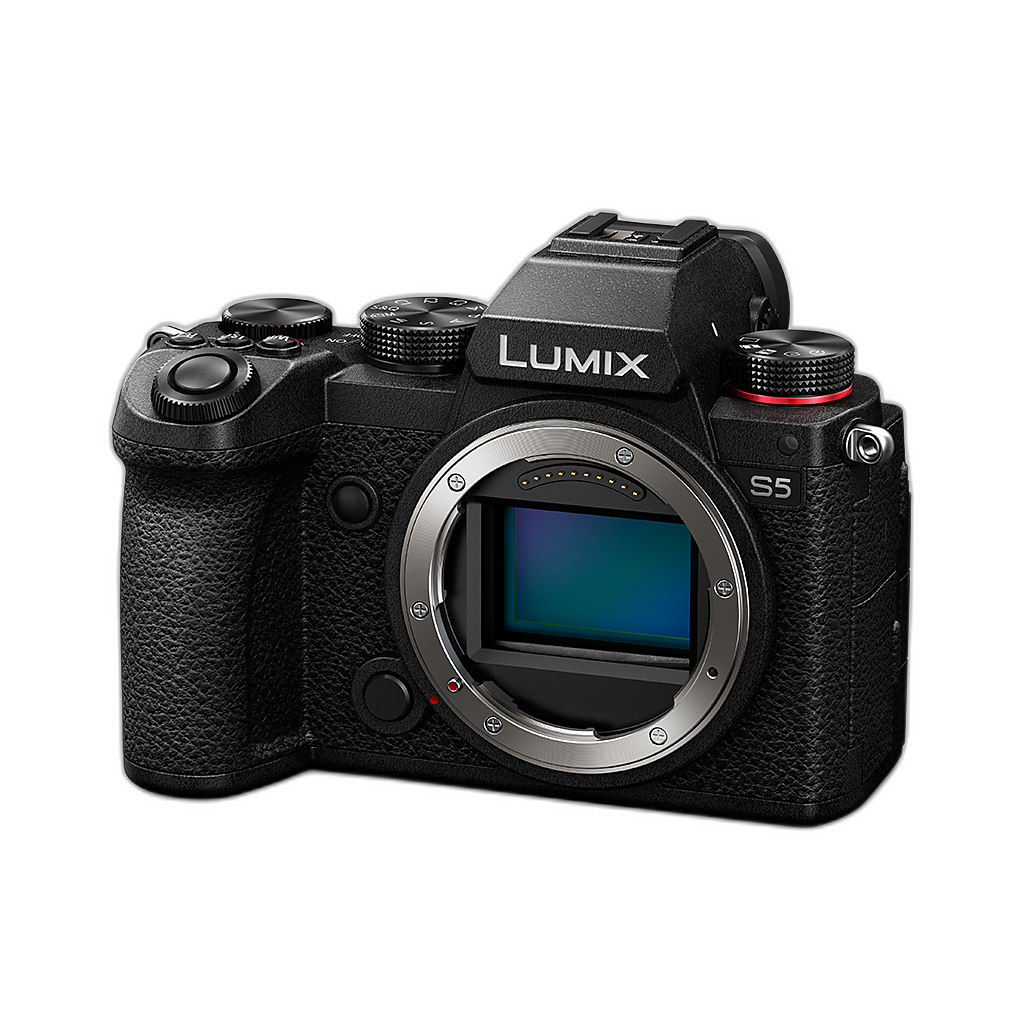
With the Panasonic Lumix S5, announced on September 2, 2020, Panasonic expanded its full-frame mirrorless lineup with a camera aimed squarely at hybrid creators who wanted serious stills and video performance in a more compact package. Positioned within the company’s L-mount Lumix S system, the S5 arrived as a notable addition to Panasonic’s growing full-frame family, combining a 24.2MP full-frame sensor with advanced video capabilities including 4K60 10-bit recording.
At a launch price of $1,999, the Lumix S5 entered the market at an important moment. Full-frame mirrorless cameras had become increasingly competitive, and Panasonic’s reputation in video made every new release in the Lumix line especially significant for filmmakers, content creators, and photographers looking for a single tool that could serve both disciplines well. The S5’s announcement made clear that Panasonic was not only focused on high-end flagship bodies, but also on making the Lumix S system more approachable without abandoning the features that had earned it attention in the first place.
A Full-Frame Hybrid Camera With Broad Appeal
From the outset, the Lumix S5 was framed as a hybrid camera. That term had become increasingly common by 2020, but Panasonic had a particularly strong claim to it. The company had spent years building a loyal following among video shooters through its Micro Four Thirds GH-series cameras, while simultaneously working to establish its full-frame credentials through the Lumix S line. The S5 brought those efforts together in a body that appeared designed to appeal not only to dedicated videographers, but also to photographers, multimedia journalists, wedding shooters, travel creators, and independent filmmakers.
The inclusion of a 24.2MP full-frame sensor was central to that positioning. In 2020, a sensor of this resolution sat in a sweet spot for many users: high enough to deliver detailed still photographs for professional and enthusiast applications, while also remaining practical for strong low-light performance, manageable file sizes, and efficient video readout. Panasonic’s choice here suggested balance over headline chasing. Rather than pushing for maximum megapixels, the S5 focused on versatility.
That approach fit well with the broader needs of the audience Panasonic seemed to be targeting. A camera intended to move fluidly between stills and motion work benefits from moderation in all the right places. Resolution, file handling, body size, and feature set all need to work together. The S5’s spec sheet, as announced, reflected exactly that kind of balancing act.
4K60 10-Bit: A Major Part of the Story
If the sensor gave the Lumix S5 broad credibility as a photographic tool, its video specifications were what made the announcement especially compelling. Panasonic highlighted 4K60 10-bit capture, a feature set that, at this price point, underscored the company’s continuing seriousness about serving filmmakers and advanced video users.
By 2020, 4K had become an expected benchmark in many segments of the interchangeable-lens camera market. But not all 4K implementations were equal. Panasonic’s emphasis on 10-bit recording mattered because it spoke directly to users who color grade their footage, work in more demanding post-production environments, or simply want more flexibility than standard 8-bit capture can provide. For creators producing commercial work, documentary projects, branded content, interviews, or cinematic personal work, this was exactly the sort of feature that elevated a camera from merely capable to professionally interesting.
The inclusion of 4K at 60 frames per second also widened the camera’s usefulness. Higher frame rates in 4K gave creators more options for smooth motion rendering and modest slow-motion work while maintaining strong image quality. In practical terms, this meant the S5 could appeal to shooters covering events, action, movement-heavy documentary work, social content, and narrative productions where flexibility in frame rate was increasingly expected.
Historically, this is an important part of the S5’s identity. Panasonic had built trust by giving filmmakers meaningful internal recording features rather than treating video as a secondary box to check. The S5’s announcement continued that tradition in a body and price class that suggested wider market ambitions.
L-Mount and the Growth of the Lumix S System
The L-mount platform was another key element of the S5 story. As part of Panasonic’s full-frame mirrorless strategy, the Lumix S line operated within the L-mount ecosystem, giving users access to a developing lens lineup and tying the camera to a broader system rather than a one-off body. In 2020, system confidence mattered. Buyers considering an investment in a camera were also evaluating lens availability, long-term support, and room to grow.
For Panasonic, the S5 represented a chance to make the L-mount system feel less exclusive and more attainable. Earlier full-frame Lumix S bodies had established Panasonic’s intentions in the market, but the S5 helped broaden the lineup with a model that looked more portable and more financially accessible while still remaining clearly part of the same family.
That mattered to photographers and filmmakers alike. A strong mount ecosystem supports everything from compact walkaround shooting to more specialized production setups. By placing the S5 within the Lumix S and L-mount framework, Panasonic was reinforcing the idea that users could enter the system with this body and build outward over time.
Compact Body, Serious Intent
One of the most notable aspects of the Lumix S5 announcement was its emphasis on a compact body. In the context of full-frame cameras, compactness was not just about convenience. It was increasingly connected to how and where cameras were used. Hybrid creators were traveling, vlogging, shooting handheld video, building gimbal rigs, and working in fast-moving environments where a smaller camera could be a genuine advantage.
For still photographers, a more compact full-frame body offered clear everyday benefits. It could make the camera easier to carry for long periods, more appealing as a daily-use tool, and less intimidating in casual or documentary settings. For video creators, the size could help with mobility, rigging flexibility, and solo operation.
Yet the S5’s announcement did not position the camera as stripped-down or entry-level in any simplistic sense. Instead, Panasonic presented it as a capable hybrid model with serious features packed into a smaller form. That distinction is important historically. By 2020, camera makers increasingly understood that many users wanted portability without compromise. The S5 was very much part of that shift.
Where the S5 Fit in 2020
The Lumix S5 arrived during a period when camera makers were aggressively refining what the modern full-frame mirrorless camera should be. Some models prioritized resolution, others autofocus speed, others rugged professional handling, and others video specialization. Panasonic’s S5 was notable because it attempted to draw these categories closer together, emphasizing a practical middle ground.
At $1,999 at launch, it was priced to attract ambitious enthusiasts and working creators who needed more than a beginner camera but were not necessarily shopping for the most expensive flagship in the system. That pricing made the S5 a particularly interesting release for photographers looking to step into full-frame mirrorless, as well as for video shooters who had long admired Panasonic’s video heritage and wanted those strengths in a full-frame format.
Seen from the release-period perspective, the S5 felt like Panasonic answering a clear market demand: give users a true hybrid full-frame camera, keep the video credentials strong, make the body smaller, and bring the entry point down. Those goals were easy to understand, and they gave the announcement a strong sense of purpose.
An Important Lumix Announcement
Looking back at the Panasonic Lumix S5 announcement, what stands out is how clearly the camera expressed Panasonic’s direction in 2020. This was not simply another body added to a growing mirrorless catalog. It was a strategic model that sought to translate Panasonic’s video expertise and full-frame ambitions into a camera with broad real-world appeal.
The combination of a 24.2MP full-frame sensor, 4K60 10-bit video, L-mount compatibility, and a $1,999 launch price made the S5 one of the more compelling hybrid announcements of its moment. For creators who needed a camera that could move confidently between stills and motion, the S5 looked like a thoughtful and timely answer.
For photographers and filmmakers interested in the history of Panasonic’s Lumix S system, the S5 remains a meaningful release. To explore Panasonic cameras, lenses, and more archival gear coverage, visit Unique Photo—a trusted place to buy equipment or learn more.