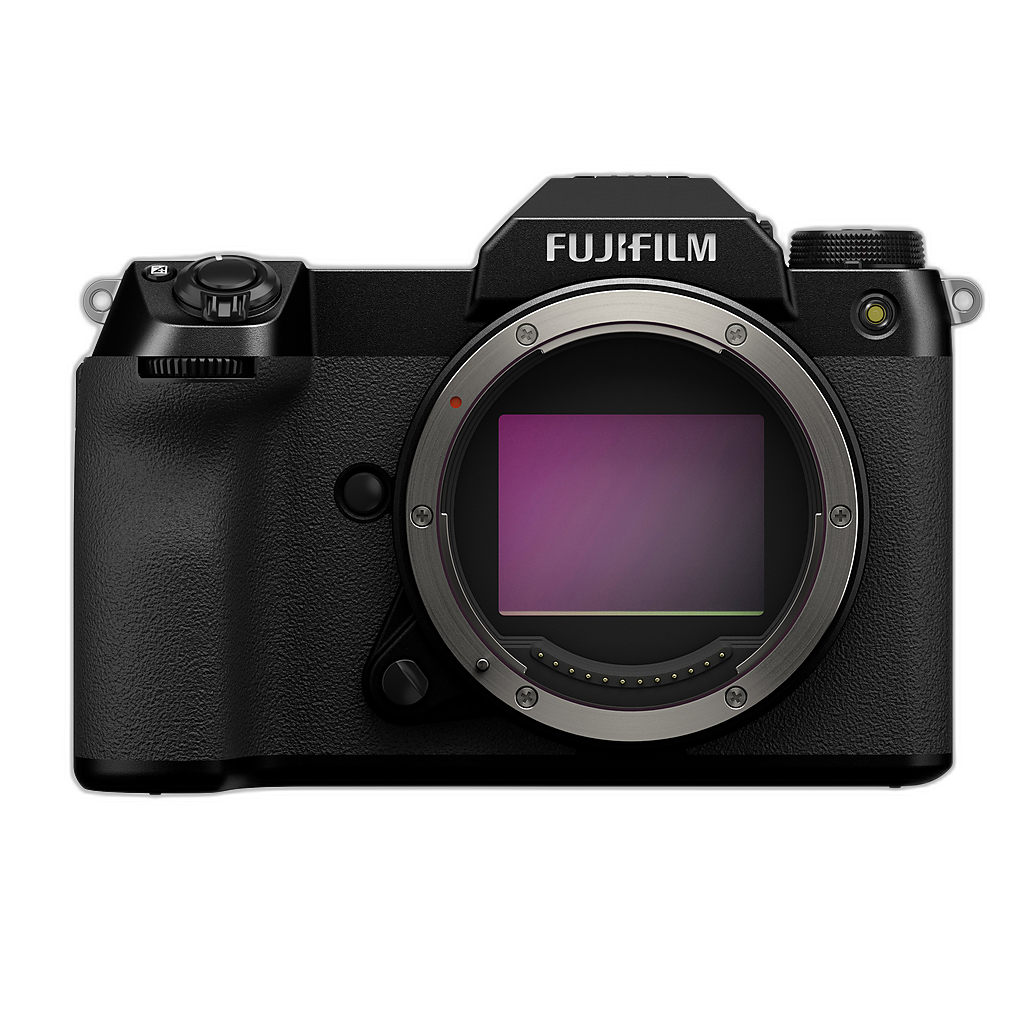
Fujifilm has announced the GFX 100S, a landmark addition to the company’s medium format mirrorless lineup that brings 102MP capture into a notably compact, DSLR-sized body. Introduced on January 27, 2021, the GFX 100S represents a significant moment not only for Fujifilm’s GFX system, but for the broader camera industry: a medium format camera aimed at making ultra-high-resolution photography more portable, more practical, and more accessible than before.
For photographers who have watched the GFX system evolve, the GFX 100S immediately stands out as a camera designed to broaden the appeal of large-sensor image making. It pairs the hallmark image quality potential of Fujifilm’s 102MP medium format sensor with in-body image stabilization rated for up to 6 stops, all in a body that feels far closer in scale to a professional full-frame DSLR or mirrorless camera than to traditional medium format designs.
A Major Step for the GFX System
Since the launch of the GFX line, Fujifilm has steadily built a reputation for delivering medium format cameras that emphasize both image quality and usability. Earlier GFX bodies helped establish the platform as a serious tool for studio, landscape, portrait, commercial, and fine art photographers. The GFX 100S builds on that foundation by shrinking the concept of a 102MP medium format camera into a body that appears purpose-built for everyday professional use.
The headline specification is, of course, the 102MP medium format sensor. Resolution at this level opens up considerable creative and professional possibilities. For commercial shooters, it means room for extensive cropping while retaining immense detail. For portrait and fashion photographers, it means rich tonal rendering and the kind of file flexibility that high-end clients often demand. For landscape photographers, it offers the promise of vast detail, subtle gradation, and large-print potential in a camera that is easier to carry into the field.
But the announcement of the GFX 100S is about more than megapixels. Fujifilm’s strategy here is clearly centered on reducing the historic barriers associated with medium format photography: bulk, weight, and cost. With a launch price of $5,999, the GFX 100S arrives as an especially notable product in the context of medium format history, positioning 102MP capture at a price that would have seemed remarkable not many years earlier.
102MP Medium Format, Reframed for Portability
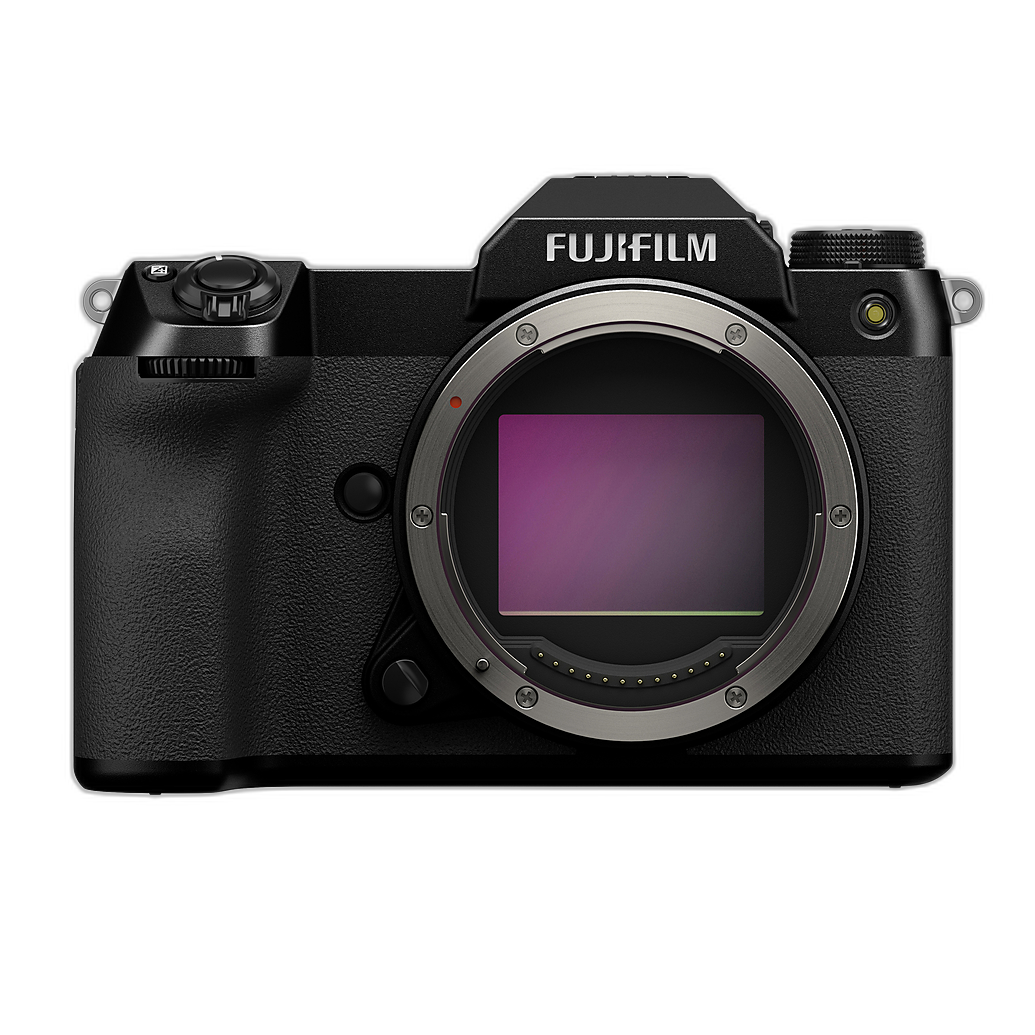
One of the most talked-about aspects of the GFX 100S at launch is its size. Fujifilm describes the camera as bringing medium format performance into a DSLR-sized body, and that point is central to its appeal. Medium format has long carried an aura of deliberate, tripod-based shooting and slower operation. While those traditions remain part of the format’s identity, the GFX 100S suggests a more agile future.
By housing a 102MP medium format sensor in a more compact body, Fujifilm appears to be speaking directly to photographers who want medium format image quality without adopting a camera that dramatically changes how they work. Wedding photographers, environmental portraitists, travel-oriented fine art shooters, and editorial image makers may all see the GFX 100S as a more realistic path into the format.
This body concept is also significant in terms of ergonomics. Cameras that resemble familiar DSLR-sized forms often allow a faster transition for photographers already accustomed to professional full-frame systems. That familiarity can matter as much as any specification when a camera is intended not merely as a studio specialty tool, but as a daily working instrument.
In-Body Image Stabilization Up to 6 Stops
Another central feature of the GFX 100S is in-body image stabilization rated for up to 6 stops. On a camera with 102MP resolution, stabilization is especially important. High pixel counts can reveal the smallest traces of camera shake, and the ability to stabilize the sensor helps photographers realize more of the sensor’s resolving potential in real-world shooting.
For handheld work, this could be one of the camera’s defining practical advantages. Medium format image quality has traditionally often come with the expectation of careful support techniques, whether that means a tripod, high shutter speeds, or highly controlled environments. IBIS on the GFX 100S points toward a different kind of user experience, where photographers may feel more comfortable working handheld in lower light or at slower shutter speeds than they might have expected from a camera in this category.
That matters for portrait sessions on location, architectural interiors, available-light editorial work, and travel photography, where conditions are not always ideal and spontaneity can be as important as sheer technical perfection. Fujifilm’s inclusion of up to 6 stops of stabilization reinforces the camera’s identity as a medium format system that is meant to move beyond static workflows.
Fujifilm G Mount and System Growth
The GFX 100S uses the Fujifilm G mount, continuing Fujifilm’s investment in the GFX ecosystem. For buyers considering the camera at launch, lens support is naturally part of the larger story. The strength of any medium format camera depends not only on the sensor but on the quality and maturity of the surrounding system, and by early 2021 the GFX platform had established itself as a serious interchangeable-lens environment for professionals and advanced enthusiasts.
The G mount has become associated with lenses designed to match the demands of high-resolution capture, and that is especially relevant with a 102MP sensor. A camera like the GFX 100S invites careful consideration of optics, shooting style, and output needs. It is not simply a body announcement; it is a statement about the confidence Fujifilm has in the long-term viability of the GFX system.
From a historical perspective, the GFX 100S is an important signpost in the normalization of medium format mirrorless cameras as part of mainstream professional discussion. Rather than being seen only as niche alternatives, cameras in this class are increasingly positioned as practical choices for a wider range of assignments.
Who the GFX 100S Appears Designed For
At the time of its announcement, the GFX 100S seems especially well suited to photographers who want the tonal depth, detail, and large-sensor look of medium format without stepping into the size and handling compromises that traditionally come with it. Studio photographers remain an obvious audience, but they are far from the only one.
Commercial and advertising photographers may be drawn to the combination of 102MP resolution and a relatively approachable launch price. Portrait photographers may appreciate the camera’s promise of refined image quality and stabilization for handheld work. Landscape photographers are likely to take notice of both the resolution and the more portable form factor, particularly for location-based shooting. Fine art photographers, meanwhile, may see the GFX 100S as a compelling blend of detail-rich capture and manageable field usability.
Perhaps most importantly, the GFX 100S appears aimed at photographers who may have previously considered medium format aspirational rather than practical. By compressing so much imaging capability into a DSLR-sized body at $5,999, Fujifilm is making a broader argument: that medium format no longer has to be cumbersome to be credible.
An Archival View of the Announcement
Looking at the GFX 100S from the perspective of its January 2021 announcement, it is easy to see why the camera generated so much attention. It distilled several major trends in camera design into one product: high resolution, reduced body size, advanced stabilization, and a push toward making premium imaging tools more attainable. While medium format has always carried prestige, the GFX 100S frames that prestige in a far more practical package.
In historical terms, announcements like this matter because they reflect shifts in what manufacturers believe photographers want. The GFX 100S is not presented as an exotic outlier. It is presented as a serious, everyday professional camera—just one that happens to offer 102MP medium format capture and up to 6 stops of IBIS. That positioning says a great deal about the maturation of the category.
Final Thoughts
The Fujifilm GFX 100S arrived in early 2021 as one of the most notable medium format announcements of its time: a 102MP mirrorless camera with up to 6 stops of in-body image stabilization, a Fujifilm G mount lens ecosystem, and a launch price of $5,999, all wrapped in a DSLR-sized body. For photographers who had long wanted medium format image quality in a more flexible and realistic form, the GFX 100S stood out immediately as a pivotal release.
For those interested in the history of Fujifilm cameras, medium format innovation, or the continuing evolution of the GFX system, Unique Photo is a great place to buy camera gear or learn more about landmark releases like the Fujifilm GFX 100S.