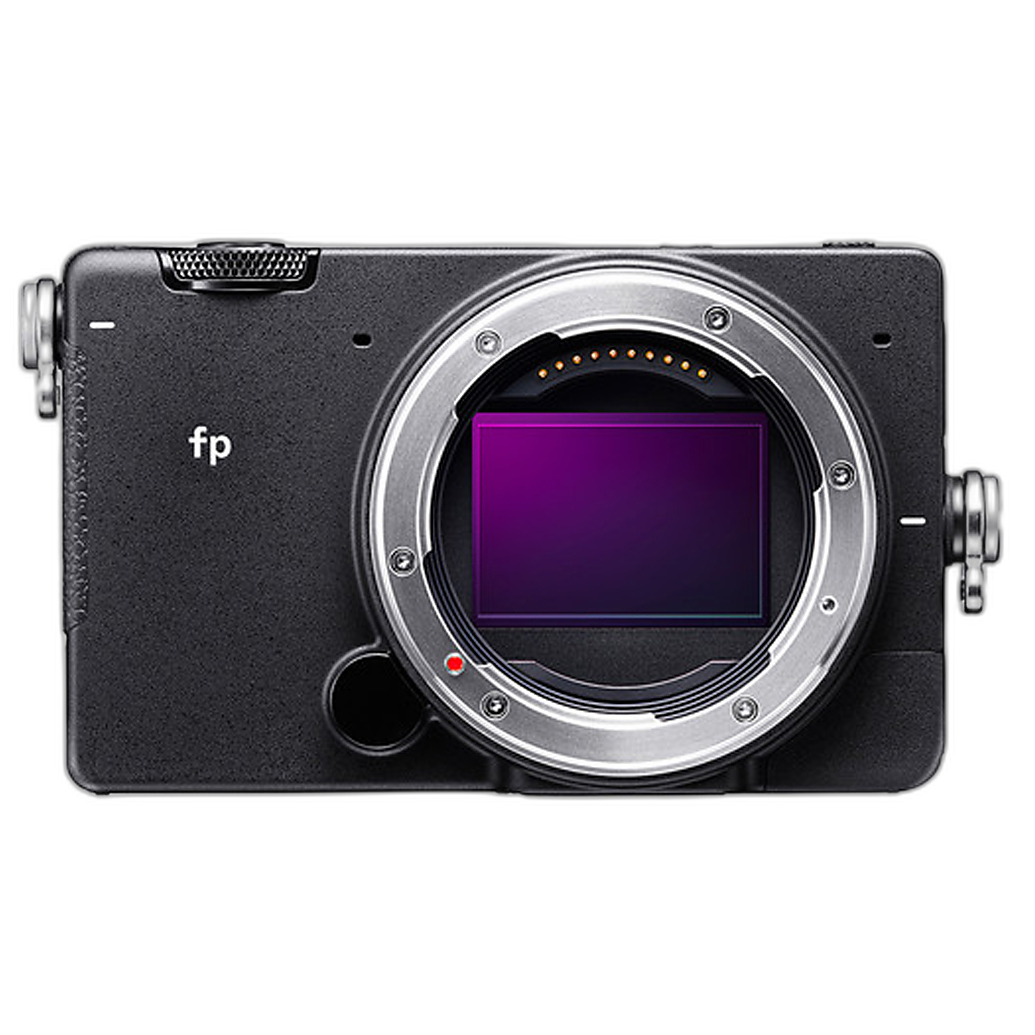
In 2019, Sigma made one of the year’s most surprising camera announcements with the Sigma fp, a compact full-frame mirrorless camera that immediately stood apart from the market. At launch, Sigma positioned the fp as the world’s smallest and lightest full-frame mirrorless camera, a bold claim that matched the product’s unusually minimal design and ambitious hybrid stills/video approach. For photographers and filmmakers watching the rise of the L-Mount Alliance, the fp was also significant as a fresh statement of intent: Sigma was not just building lenses for the system, but a camera body unlike anything else on the shelf.
Announced for release on October 25, 2019, the Sigma fp arrived with a 24.6MP full-frame sensor, L-mount compatibility, and serious video credentials including 4K30 and 12-bit RAW output. With a launch price of $1,899, it entered the market as a premium but comparatively accessible full-frame option for users who valued portability, modularity, and cinematic flexibility.
A Different Kind of Full-Frame Camera
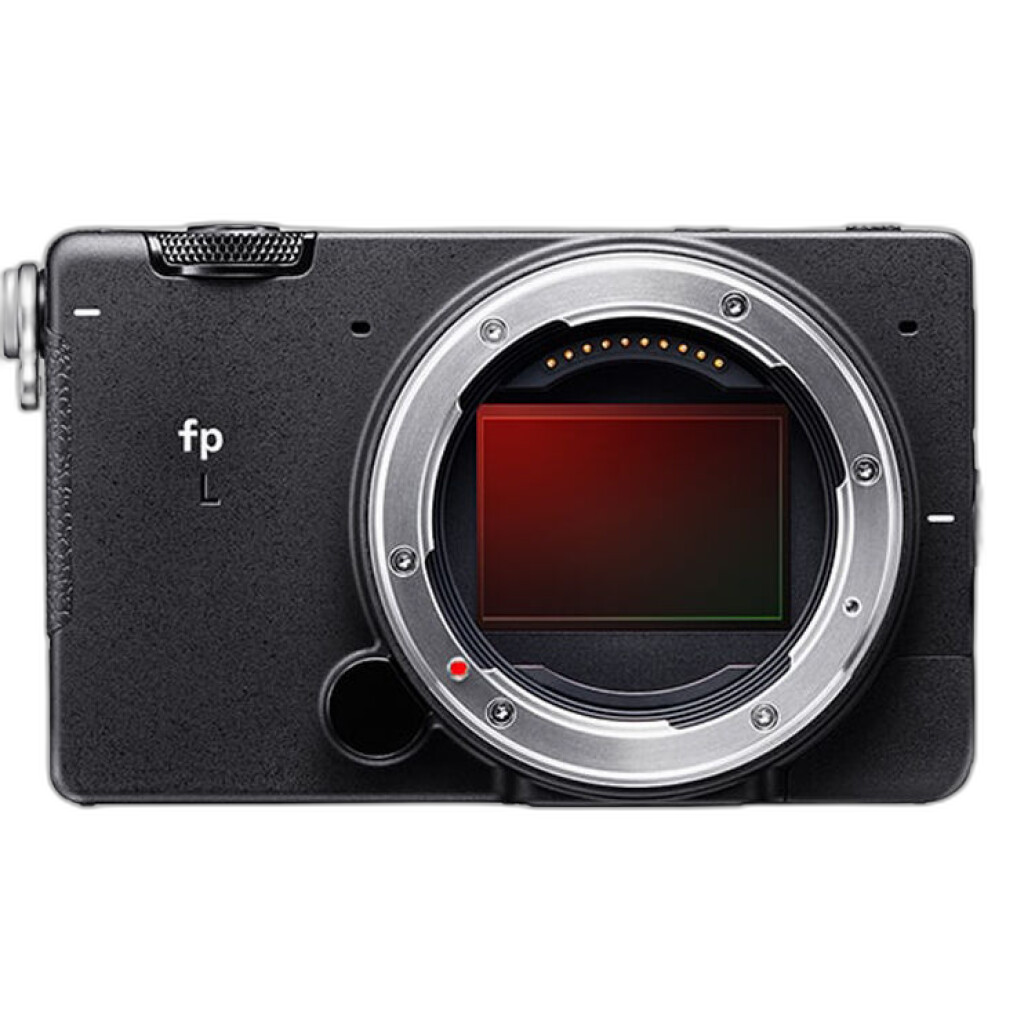
By late 2019, full-frame mirrorless cameras were no longer a novelty. Canon, Nikon, Panasonic, and Sony were all pushing the category forward, often emphasizing larger grips, built-in viewfinders, and increasingly complex control layouts. Sigma chose a radically different path. The fp was stripped down, boxy, and compact to a degree that made it feel closer to an industrial tool or a modular cinema component than a conventional still camera.
This was not a camera designed to imitate a DSLR or even the rangefinder-inspired styling common in mirrorless products. Instead, Sigma embraced a minimalist design language that prioritized size and flexibility. The result was a camera that could be used in a bare-bones everyday configuration, then built out with accessories, rigs, external monitors, and storage solutions for more demanding production work.
That design philosophy was central to the fp’s identity. Sigma was clearly aiming at image-makers who wanted one camera capable of fitting into very different workflows. For travel and street shooting, the body’s compactness was a major appeal. For video crews, gimbal operators, and filmmakers working in tight spaces, the tiny full-frame form factor opened up creative possibilities that larger bodies could complicate.
24.6MP Full-Frame Sensor in an Exceptionally Small Body
At the heart of the Sigma fp was a 24.6-megapixel full-frame sensor, a resolution that struck a practical balance for both stills and video. In 2019, this put the fp in a sweet spot: high enough for detailed still images and commercial use, while remaining well suited to serious video capture. Rather than chasing headline-grabbing megapixel counts, Sigma’s emphasis was on image quality, versatility, and the camera’s unusual physical package.
For photographers, the significance of a full-frame sensor in such a compact body was immediately obvious. Full-frame image quality traditionally came with larger cameras and lenses, especially when advanced video features were part of the equation. The fp challenged that assumption. Its dimensions and pared-down controls suggested a camera that could travel lightly, mount in unconventional positions, or serve as a discreet imaging tool without giving up the larger sensor format many users preferred.
The fp was also notable as part of Sigma’s broader camera story. While many enthusiasts associated Sigma cameras primarily with the company’s distinctive Foveon-based models, the fp represented a different direction—one aligned with broader system compatibility and hybrid use. It was a major step in Sigma’s camera evolution and an important expansion of the brand’s identity.
Serious Video Ambitions: 4K30 and 12-Bit RAW
If the fp’s size made headlines, its video specification made it genuinely compelling. Sigma gave the camera 4K video at up to 30 frames per second, along with 12-bit RAW capability, underscoring that this was not simply a still camera with casual video bolted on. The fp was designed from the outset with moving-image creators in mind.
In the context of 2019, RAW video support in a body this small was especially attention-grabbing. Many cameras could produce high-quality 4K footage, but fewer offered a workflow so clearly aimed at users who wanted greater flexibility in post-production. For cinematographers and advanced content creators, 12-bit RAW suggested the potential for richer grading latitude and a more production-oriented pipeline than the camera’s tiny footprint might imply.
This blend of compactness and serious video potential helped the fp stand out in a crowded market. It was easy to imagine it being used as a B-camera, crash camera, gimbal camera, or even a primary camera for creators who valued modularity above all else. Sigma’s announcement made it clear that the fp was meant to live comfortably in both photographic and cinematic environments.
The L-Mount Alliance and System Significance
The Sigma fp also mattered because of its L-mount. As a member of the L-Mount Alliance alongside Leica and Panasonic, Sigma was helping build a broader ecosystem around a shared mount standard. The fp gave buyers another reason to take the system seriously, especially those already familiar with Sigma’s strong lens reputation.
L-mount compatibility meant access to an expanding range of lenses and adapters, making the fp more than an isolated experiment. For users considering entry into the L-mount world, Sigma’s camera offered a very different body style from Panasonic’s full-frame mirrorless models and Leica’s premium offerings. It effectively broadened the personality of the entire system.
That system relevance should not be overlooked. In 2019, mount ecosystems were central to buying decisions, and the fp’s arrival helped reinforce the idea that L-mount could support a diverse set of tools rather than a single design philosophy. Sigma’s contribution was not merely another body; it was a new interpretation of what an L-mount camera could be.
Launch Price and Market Position
With a launch price of $1,899, the Sigma fp entered the market at a point that made it intriguing for both enthusiasts and professionals. It was not a budget camera, but neither was it priced out of reach for serious creators looking for a specialized full-frame tool. The cost reflected its premium sensor format, advanced video ambitions, and unusually engineered body.
Importantly, the fp was not competing only on conventional value metrics like grip comfort, included viewfinder, or burst-focused feature lists. Its appeal was more conceptual. Sigma was selling an idea: that a full-frame camera could be radically compact, modular, and production-friendly without conforming to established mirrorless templates. For the right buyer, that proposition was compelling enough to make the fp one of the more memorable announcements of the year.
Why the Sigma fp Stood Out in 2019
Looking back at the announcement period, the Sigma fp felt like one of the rare cameras that genuinely expanded the conversation. It was not just another incremental upgrade or spec-sheet response to a competitor. Instead, it asked photographers and filmmakers to reconsider priorities. Did a full-frame camera need a built-in EVF? Did it need a large handgrip? Could a modular body better serve modern hybrid creators than a traditional all-in-one design?
The fp’s importance lies in that sense of experimentation. Sigma brought a distinctive point of view to a category that was rapidly becoming standardized. Even those who did not see it as their ideal camera could recognize that it introduced a fresh design philosophy into the full-frame mirrorless space.
An Archival Look at a Bold Release
From the vantage point of its 2019 release, the Sigma fp was a bold and unconventional arrival: a 24.6MP full-frame mirrorless camera with 4K30, 12-bit RAW, L-mount compatibility, and a launch price of $1,899. More than just a new body, it represented Sigma’s willingness to challenge assumptions about size, workflow, and what a full-frame hybrid camera could be.
For photographers, filmmakers, and collectors of significant digital camera milestones, the Sigma fp remains one of the most distinctive product announcements of 2019. To explore Sigma cameras, lenses, and more historical gear coverage, visit Unique Photo—a trusted place to buy equipment or learn more about the tools that have shaped modern photography.