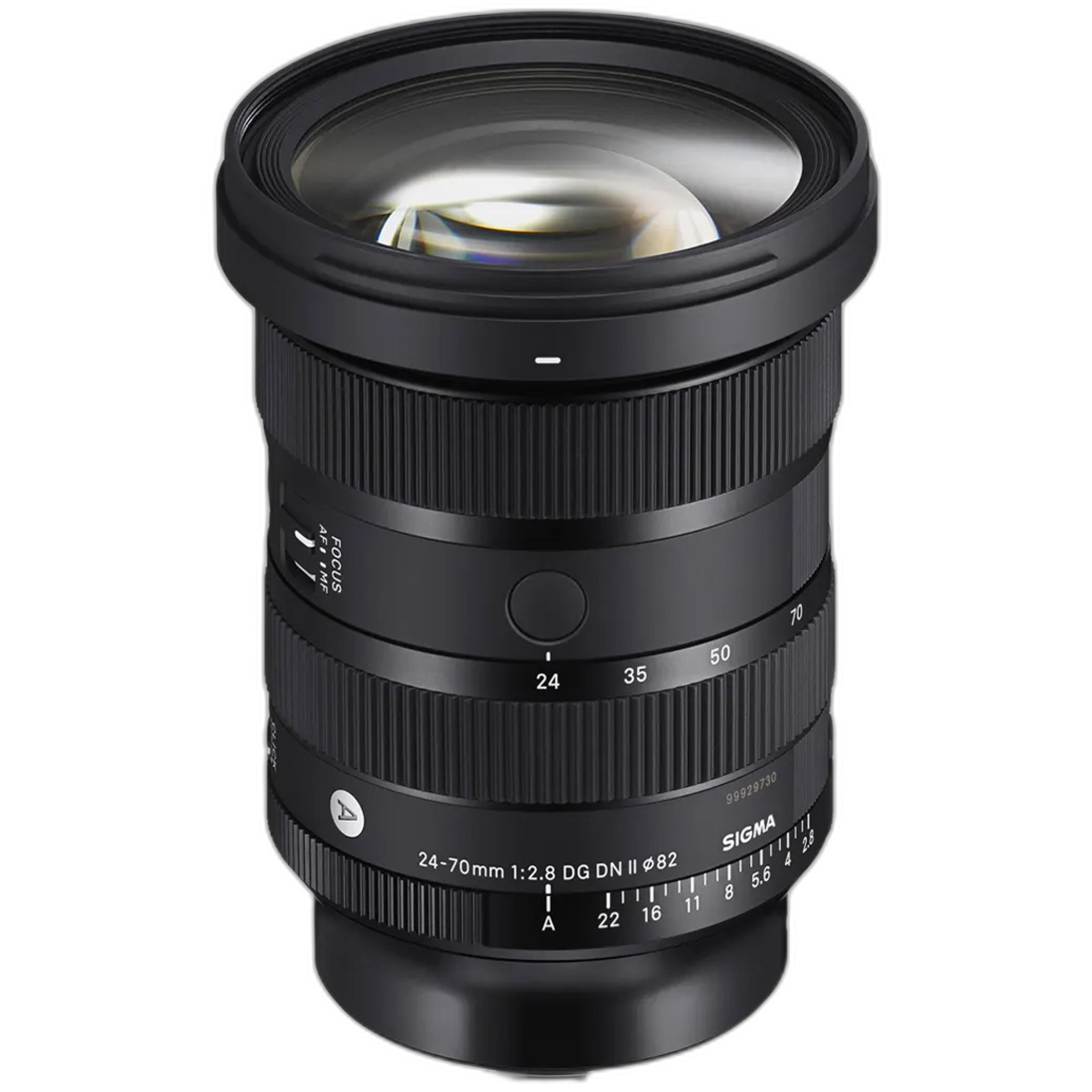
When Sigma introduced the 24-70mm f/2.8 DG DN Art in late 2019, it immediately stood out for a simple reason: it brought one of photography’s most important zoom ranges to full-frame mirrorless shooters at an unusually aggressive price. For Sony E and L-mount users, the lens arrived at a moment when the mirrorless system camera had already proven itself professionally, but buyers still weighed every lens purchase carefully. A 24-70mm f/2.8 is often the workhorse optic in a serious kit, covering wide-angle environmental views, normal perspective, and short telephoto framing in a single body-friendly package. Sigma’s challenge was not to invent a new category, but to deliver a credible, high-performance standard zoom in its Art line for mirrorless cameras, and to do it at a launch price of $1,099.
A classic focal range, rethought for mirrorless
The 24-70mm zoom has long been one of the central lenses in modern photography. It is the optic many photographers mount for weddings, events, portraits, travel, documentary work, and even studio assignments where flexibility matters more than a fixed focal length. For decades, camera makers refined this range for SLR systems, but mirrorless design opened the door to different optical approaches. Sigma’s DG DN designation is important here: this was not simply an adapted DSLR formula with a new mount. It was part of the company’s dedicated effort to build lenses specifically for full-frame mirrorless cameras.
That context matters historically. By 2019, Sigma had already established a strong reputation with its Global Vision program, dividing products into Art, Contemporary, and Sports categories. The Art line in particular had become associated with ambitious optical performance and strong value, especially in prime lenses. Bringing that philosophy to a mirrorless-native 24-70mm f/2.8 made strategic sense. It addressed one of the most demanded focal ranges while signaling that Sigma intended to compete seriously in the native mirrorless space, not merely support it on the margins.
The significance of the DG DN and Art combination
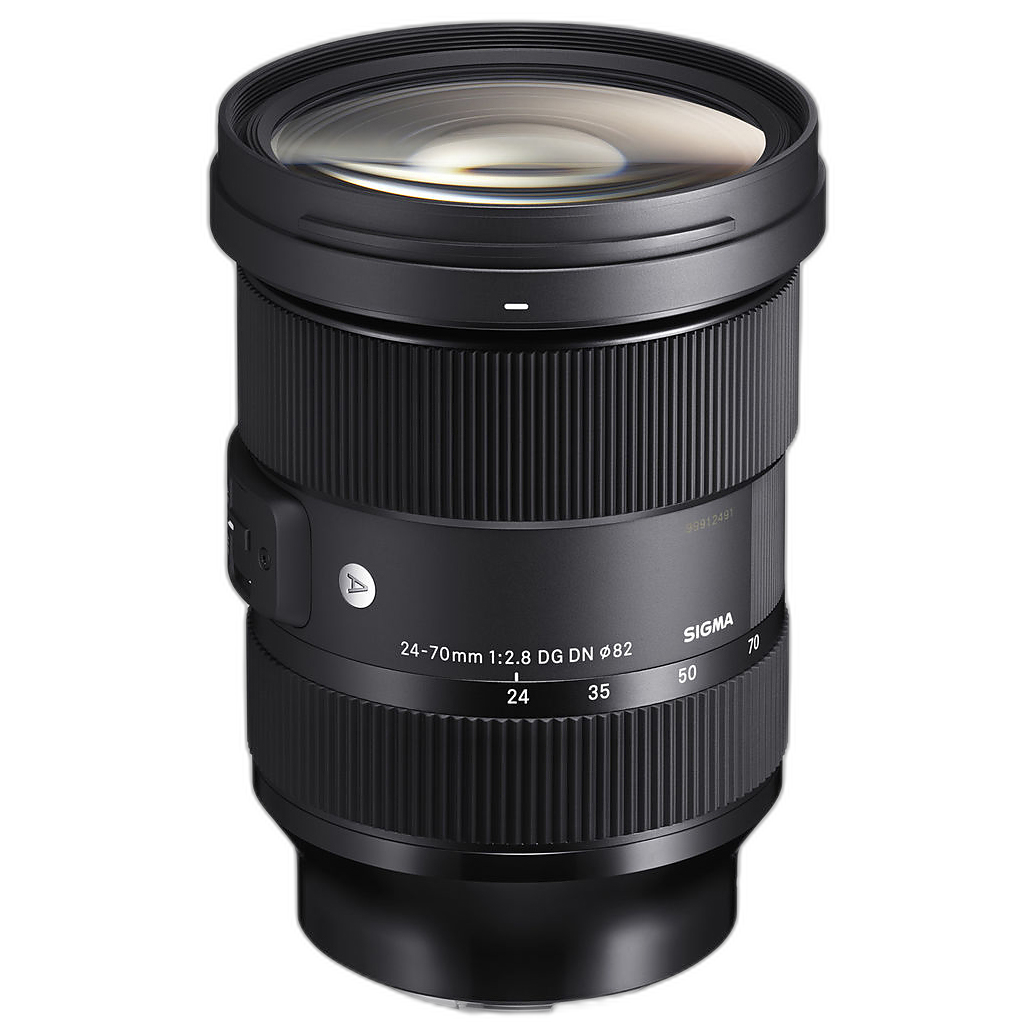
The name “Sigma 24-70mm f/2.8 DG DN Art” tells a knowledgeable buyer quite a lot. “24-70mm” marks it as a standard zoom with broad everyday usefulness. “f/2.8” indicates a constant maximum aperture across the zoom range, a major advantage for low-light shooting, subject separation, and consistent exposure behavior during zooming. “DG DN” identifies it as a full-frame lens designed for mirrorless systems. And “Art” places it within Sigma’s premium optical lineup, where image quality is a central promise.
That combination was especially compelling because the lens launched for Sony E and L-mount. Both mounts represented important growth areas in 2019. Sony E was by then a mature and highly active full-frame mirrorless ecosystem with many serious users looking beyond first-party glass for cost-effective alternatives. L-mount, meanwhile, was still building momentum, and third-party support carried real weight in helping establish the system’s viability. By serving both mounts, Sigma positioned the lens not just as a single product, but as part of a broader mirrorless infrastructure.
Why the 24-70mm f/2.8 matters so much
It is difficult to overstate how central a 24-70mm f/2.8 zoom is in real-world photography. At 24mm, photographers can handle interiors, landscapes, architecture-in-context, and environmental scenes. Around the middle of the range, the lens behaves like a natural general-purpose optic suited to reportage and everyday shooting. At 70mm, it moves into flattering portrait territory and gives extra reach for detail isolation. Maintaining f/2.8 throughout means the lens stays versatile in dim reception halls, on city streets after sunset, or anywhere a photographer needs a practical mix of speed and adaptability.
This is exactly why the category is so competitive. The standard 24-70mm f/2.8 is often the lens by which a system’s seriousness is measured. If a maker can produce a dependable, optically convincing lens in this class, photographers take notice. Sigma knew that. The company’s move here was not casual; it was a statement that the Art philosophy could be applied to one of the most demanding and commercially important zoom segments in the industry.
A value story that defined its reception
The headline many photographers noticed at launch was the $1,099 U.S. price. In historical terms, that figure was central to the lens’s identity. Standard professional-grade f/2.8 zooms are rarely inexpensive, and native mirrorless options from first-party manufacturers often occupied significantly higher price territory. Sigma’s launch price did not merely make the lens “affordable” in a broad sense; it made it a true value proposition in one of the market’s most expensive categories.
That value positioning fit Sigma’s broader reputation at the time. The company had spent much of the 2010s proving that third-party did not have to mean second-tier. Instead, Sigma frequently offered lenses that appealed to discerning photographers who cared about image quality but did not want to pay the highest possible premium for a brand badge alone. The 24-70mm f/2.8 DG DN Art extended that logic into the mirrorless-native standard zoom space, where many buyers had been waiting for exactly this kind of option.
Position within Sigma’s Global Vision era
Seen as part of Sigma’s larger history, this lens belongs to a particularly interesting phase. The Global Vision structure had already helped clarify Sigma’s product philosophy for consumers. Art lenses were the ambitious, image-quality-driven members of the family; Contemporary balanced portability and performance; Sports handled action and durability priorities. By assigning the 24-70mm f/2.8 DG DN to the Art line, Sigma effectively told photographers that this was not intended as a compromise lens or a stripped-down budget zoom. It was meant to be a serious everyday professional tool.
That matters because “value” can sometimes imply “entry level.” In Sigma’s case, the message was different. The company was pursuing value through pricing strategy, not by abandoning the expectations associated with the Art badge. Historically, that distinction helped the lens earn attention from advanced enthusiasts and professionals alike, particularly those building out Sony E or L-mount kits without wanting every purchase to land at the top of the price ladder.
Mirrorless timing and market impact
The release date, November 21, 2019, placed the lens at a productive moment in the evolution of full-frame mirrorless systems. By then, many photographers had either switched from DSLR platforms or were actively considering it. Early adopters had often invested in a body first and then gradually assembled a lens set. A reliable 24-70mm f/2.8 was a natural next step, and Sigma’s offering arrived when buyers were comparing ecosystems, evaluating third-party support, and looking for lenses that made a long-term system commitment feel more practical.
In that sense, the 24-70mm f/2.8 DG DN Art was more than a standalone release. It was part of the normalization of mirrorless as the mainstream professional and enthusiast standard. Lenses like this helped prove that the ecosystem had matured beyond specialty primes and top-tier flagship glass. A photographer could now reasonably expect a broad set of native options, including a cornerstone standard zoom from a respected independent manufacturer.
Who it appealed to at launch
Working photographers
Event, portrait, wedding, and editorial shooters all understand the utility of a 24-70mm f/2.8. For them, Sigma’s lens represented a chance to equip a primary working focal range without absorbing the highest possible system cost.
Advanced enthusiasts
Serious hobbyists often aspire to the same practical lens set used by professionals. A standard zoom with a constant f/2.8 aperture is often the first “serious” all-purpose lens after a basic starter option, and the Sigma fit that progression well.
System builders in Sony E and L-mount
For photographers assembling a mirrorless kit from the ground up, the lens made strategic sense. It covered the most useful everyday range while leaving budget room for a portrait prime, an ultrawide, or a telephoto later on.
An archival look back
Looking back from a historical perspective, the Sigma 24-70mm f/2.8 DG DN Art captured several important currents at once: the rise of full-frame mirrorless, the growing confidence of third-party native lens makers, the continuing strength of Sigma’s Global Vision identity, and the market’s appetite for high-value professional tools. It was not revolutionary because it changed the purpose of the standard zoom. Instead, it was important because it delivered a familiar, indispensable lens type at the right time, for the right mounts, and at a price that expanded access.
That remains the key to understanding its place in Sigma history. The lens was a practical product with strategic impact, reinforcing the idea that mirrorless users could expect serious alternatives outside first-party catalogs. For many photographers around its release, that was exactly the point.
If you are building a system, researching Sigma lens history, or looking for current availability and advice on standard zooms, Unique Photo is a great place to buy, compare, or learn more.