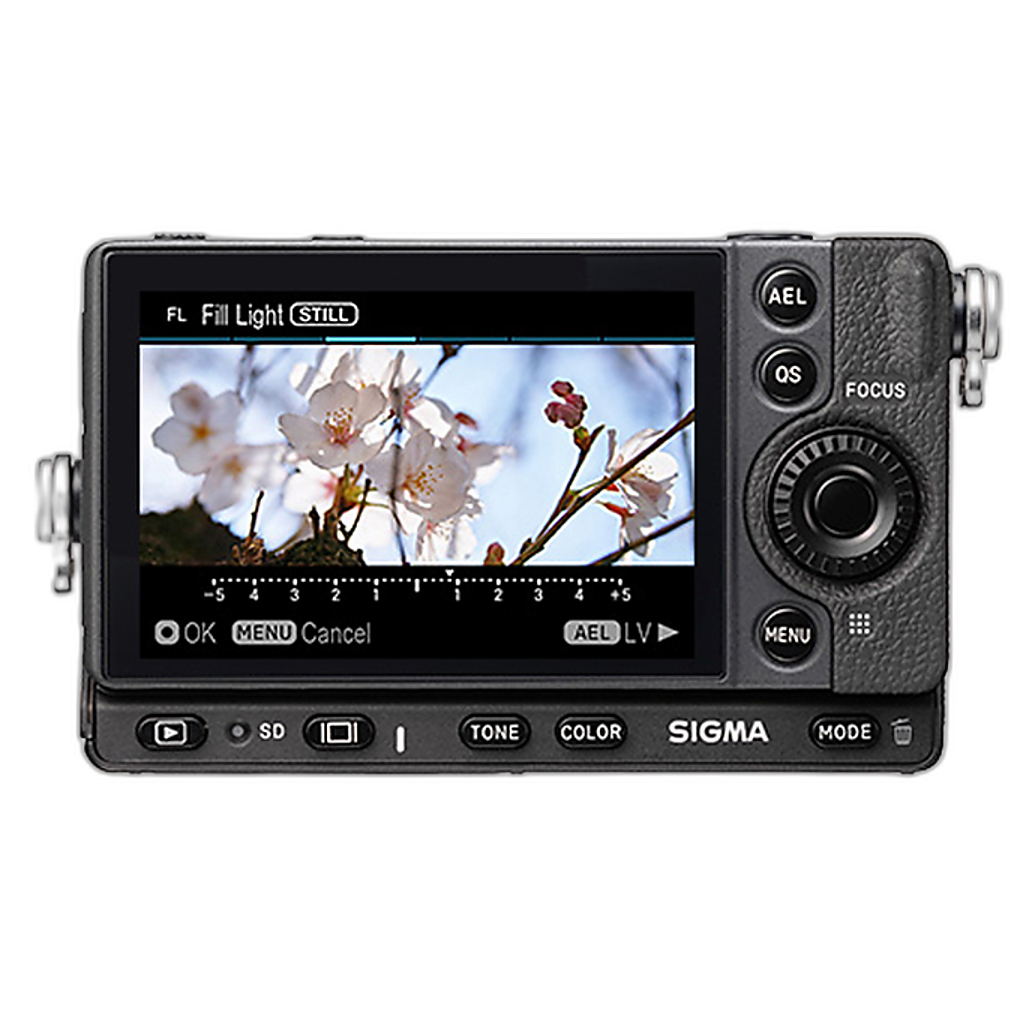
Sigma has long occupied a fascinating place in modern camera history. Better known to many photographers as a lens manufacturer, Sigma also built one of the most distinctive digital camera lineages of the 2000s and 2010s: compact and DSLR-style bodies centered around the company’s unusually ambitious Foveon image sensor technology. By 2019, Sigma had entered a new chapter with the remarkably small Sigma fp, a full-frame mirrorless camera built around the L-Mount alliance and aimed at both still and cinema-minded creators. Seen together, these cameras tell a story of a company willing to take risks where larger manufacturers often moved more cautiously.
This archival guide is designed as a release-history hub: a chronological overview of Sigma cameras from the Foveon-era SD and dp families through the arrival of the modular, pocketable fp platform. Rather than treating each model in isolation, the goal here is to explain the lineage—how Sigma’s camera philosophy evolved, what each generation tried to improve, and why these cameras still matter in conversations about color, image rendering, compact full-frame design, and the boundaries of digital camera engineering.
Sigma as a camera maker: a different path
To understand Sigma cameras, it helps to begin with Sigma’s identity as an optics company. Sigma built its reputation through lenses, but unlike many third-party makers, it did not limit itself to accessories for someone else’s system. The company repeatedly explored what a digital camera could be if it were designed from the image sensor outward.
That sensor-first mentality became most visible through Sigma’s embrace of the Foveon concept. At a time when nearly all mainstream digital cameras used Bayer-pattern sensors—capturing color through an array that requires interpolation—Foveon’s layered design promised a different approach to color capture. In simplified terms, its appeal was the idea of recording color information at each pixel location through stacked layers rather than through a mosaic of filtered photosites. For enthusiasts, this translated into a reputation for uniquely detailed files, especially at low ISO settings and in good light, along with a rendering style many found especially compelling for landscapes, still life, architecture, and deliberate photography.
But Sigma cameras were never simply about a sensor novelty. Over time, they also became known for unusual industrial design, uncompromising lens choices, stripped-down operational philosophies, and a willingness to ignore prevailing trends. That made Sigma cameras less universal than many competitors, but often more distinctive.
The Foveon foundation: Sigma SD-series cameras
Early SD cameras and the DSLR-style concept
Sigma’s SD-series cameras established the company’s main interchangeable-lens digital line in its Foveon years. Styled more like compact DSLRs than luxury collector objects, SD cameras gave Sigma a platform for photographers who wanted system flexibility while staying within the company’s own lens ecosystem.
Historically, the SD line matters because it framed Sigma not merely as a lens company experimenting on the side, but as a manufacturer serious enough to build a dedicated camera system around its preferred image-making philosophy. The SD bodies were always somewhat specialized. They appealed less to the broadest possible audience than to photographers intrigued by Foveon color, crisp detail, and Sigma’s willingness to make different tradeoffs from the market leaders.
Across multiple generations, the SD line evolved in the same broad direction: better processing, improved handling, and attempts to refine the practical experience of using a Foveon-based interchangeable-lens camera. Sigma users often accepted that these cameras were not designed to win spec-sheet wars in every category. The attraction was the file output and the rendering character, not just speed or all-purpose convenience.
What made Foveon significant in the SD era
For many photographers, the defining point of the SD line was image quality at its best. Foveon-equipped SD cameras developed a reputation for producing richly textured files with especially attractive fine detail and color separation under favorable conditions. While mainstream digital photography increasingly prioritized versatility, burst speed, high ISO capability, and autofocus sophistication, Sigma continued to cultivate a system that rewarded slower, more intentional shooting.
This made the SD series particularly interesting in genres where the photographer could control pace and light. Landscape photographers, studio shooters, and detail-focused enthusiasts often found the output striking. The tradeoff, of course, was that Sigma’s cameras could feel demanding. Workflow, battery life, speed, and low-light flexibility were not always their strongest points relative to larger-market competitors. Yet that very tension—between inconvenience and image character—is part of why the SD series remains historically important.
The maturing of the SD idea
As Sigma continued developing its SD bodies, the broader strategy became clearer. The company was not chasing a conventional “me too” DSLR path. Instead, it treated each generation as a further refinement of a specialist toolset. Improvements in controls, processing, ergonomics, and file handling aimed to make the Foveon concept more usable, even as the cameras retained a niche identity.
By the mid-to-late Foveon era, Sigma had firmly established that it was willing to pursue image quality and rendering style even if that meant its cameras would remain enthusiast-oriented rather than mass-market leaders. In hindsight, that consistency gave the SD line a stronger identity than many more conventional cameras from the same period.
The fixed-lens alternative: Sigma dp-series cameras
The dp concept: a compact built around image quality
If the SD line represented Sigma’s interchangeable-lens Foveon system, the dp-series represented an equally important parallel idea: the fixed-lens camera built with uncompromising image ambitions. This was a bold proposition in its own right. Rather than asking photographers to commit to a full camera system, Sigma offered compact cameras that paired Foveon sensors with carefully matched lenses and a minimalist, sometimes austere design ethos.
These cameras often made the strongest case for Sigma’s image-first philosophy because the lens and sensor could be treated as a fully integrated package. In the best circumstances, dp cameras were capable of a look that many photographers felt was unusually crisp, dimensional, and tonally rich.
The dp series stood apart from the general compact-camera market. These were not casual point-and-shoots built around convenience, zoom range, or family-travel versatility. Instead, they were deliberate photographic tools. The photographer who chose a dp camera was usually choosing a way of seeing: walking with a fixed focal length, composing carefully, and extracting the most from light, subject texture, and color.
How the dp line evolved
Over time, Sigma expanded and refined the dp family into a more complete set of options. Rather than simply updating one model repeatedly, Sigma increasingly treated the line as a collection of focal-length-specific cameras. That approach helped orient photographers around use cases: wide, standard, and longer-normal perspectives, each optimized for a particular style of work.
This was one of Sigma’s smartest moves in the compact category. It made the dp line feel less like a single novelty product and more like a coherent photographic system—even though the cameras themselves had fixed lenses. For some users, carrying more than one dp body was functionally similar to carrying a compact kit of specialized primes.
The Merrill generation
Among Sigma followers, the dp Merrill era became especially notable. Without overstating any one generation, the Merrill name is widely associated with a period in which Sigma’s Foveon compacts gained an even stronger reputation for remarkable detail and distinctive rendering. These cameras became enthusiast favorites precisely because they were so unapologetically specialized.
The Merrill generation helped cement the idea that Sigma was offering not just cameras, but a different image aesthetic. Many photographers who spent time with the files described a particular “presence” to fine detail and a very direct, almost tactile quality in properly exposed images. That did not mean the cameras were easy or universal; rather, it meant they rewarded commitment.
The Quattro generation
The later dp Quattro models marked another major chapter in Sigma’s compact-camera evolution. The Quattro generation was significant not only for sensor architecture changes within Sigma’s Foveon approach, but also for a dramatic rethinking of industrial design. The dp Quattro cameras were visually unmistakable, with a bold, elongated body shape that immediately separated them from nearly everything else on the market.
That design made clear that Sigma was not trying to blend in. The dp Quattro series represented a continuation of the company’s willingness to prioritize its own handling assumptions over conventional compact-camera expectations. The resulting cameras were divisive in ergonomics but memorable in identity.
Just as importantly, the Quattro era demonstrated that Sigma was still actively iterating on the Foveon idea rather than preserving it unchanged. Whether photographers preferred earlier or later Foveon expressions often became a matter of personal taste, workflow, and subject matter. But historically, the Quattro line showed Sigma’s refusal to stand still.
The SD line in its later form: toward the SD Quattro era
From DSLR roots to a more modern interpretation
As mirrorless cameras increasingly reshaped the broader market, Sigma’s own camera development reflected changing expectations in design and operation. The later SD Quattro generation carried Foveon into a body style that felt more contemporary and purpose-built than a conventional legacy DSLR shell.
The SD Quattro cameras were significant because they translated Sigma’s image-quality-first philosophy into a body that looked and felt like a statement product, not simply a derivative system camera. The visual language echoed the broader Quattro family identity and reinforced Sigma’s role as one of the industry’s true design outliers.
For photographers interested in interchangeable lenses but committed to the Foveon look, the SD Quattro era represented a mature expression of Sigma’s long-running experiment. It was not an abandonment of the SD idea; it was a redesign of it for a market that had become much more conscious of ergonomics, electronic viewing, and camera identity.
Why the SD Quattro mattered historically
The SD Quattro generation now stands as one of the clearest examples of Sigma doing things its own way. In a period when camera companies were converging around certain norms, Sigma produced a body that was both unmistakably modern and unmistakably niche. This was not a camera built to disappear into a crowded category. It was built to appeal to photographers who specifically wanted what Sigma did differently.
From a historical perspective, that makes the SD Quattro line an important bridge. It represented the culmination of years of Foveon-system development while also preparing photographers to think of Sigma as a company capable of reimagining camera form factors more radically than many competitors.
Transition point: Sigma in a changing camera market
By the late 2010s, the digital camera market had changed dramatically from the era in which Sigma’s early Foveon cameras first stood out. Mirrorless systems had become central, video capability mattered more than ever, and full-frame had moved from premium aspiration to mainstream enthusiast target. At the same time, many photographers increasingly valued compactness without wanting to give up serious imaging capability.
This market context is essential to understanding Sigma’s next move. The company had spent years proving it could pursue distinctive imaging philosophies outside the mainstream. The question was what Sigma would do next when the market itself was moving toward smaller, more flexible, hybrid-oriented cameras.
The answer, arriving in 2019, was the Sigma fp.
The Sigma fp arrives in 2019
A new chapter: full-frame, mirrorless, and modular
Released in 2019, the Sigma fp marked one of the most dramatic departures in Sigma camera history. While it remained unmistakably Sigma in its willingness to reject convention, it did so in an entirely different way from the Foveon SD and dp lines. Instead of centering the conversation on Foveon, Sigma introduced a full-frame mirrorless camera built around the L-Mount and an unusually compact, modular body.
The fp was notable from the outset because of how small it was relative to its sensor format and ambitions. Rather than building a traditional SLR-style grip-heavy body, Sigma embraced a box-like design that felt almost elemental: a camera reduced to its essentials, with the expectation that users could configure it for still photography, video production, cage-based rigging, or travel-light shooting as needed.
This was a major philosophical shift. Earlier Sigma cameras often asked photographers to adapt themselves to the camera’s specific vision. The fp, by contrast, was designed to be adapted more readily to different workflows. In that sense, it was both very modern and very Sigma: stripped down, highly intentional, and unlike almost everything around it.
The importance of L-Mount
The fp’s adoption of the L-Mount placed Sigma in a broader ecosystem and represented another important shift in the company’s camera history. Rather than operating in a more isolated camera-lens environment, Sigma’s mirrorless full-frame effort existed within a shared mount standard that had growing significance in the industry.
For photographers and filmmakers, this was practical as well as symbolic. It suggested a more open and future-facing Sigma camera platform, one with access to a wider range of compatible lenses and a clearer path into hybrid shooting. This was a very different proposition from the more self-contained world of Sigma’s earlier Foveon-specific bodies.
How the fp advanced Sigma’s lineage
Chronologically, the fp can be understood as a continuation of Sigma’s experimental spirit through different means. The company did not stop being unconventional; it simply redirected that energy. Where the SD and dp generations emphasized sensor difference and still-image rendering as Sigma’s defining traits, the fp emphasized form factor, modularity, and cross-disciplinary use.
That made the fp especially intriguing in its release period. It arrived when many full-frame mirrorless cameras were becoming more capable, but also more complex and physically larger. Sigma responded by making a camera that was almost startlingly compact and open-ended. It appealed not only to photographers looking for a minimalist full-frame body, but also to creators interested in compact cinema rigs, gimbals, adaptable lens use, and highly portable professional imaging tools.
The fp as a historical turning point
From Foveon identity to broader system relevance
For longtime Sigma followers, the fp was more than just a new model. It was evidence that Sigma’s camera business was not defined solely by Foveon, even though Foveon remained central to the company’s historical identity. The fp broadened Sigma’s relevance in the market by offering a camera that could be discussed alongside the most current full-frame mirrorless designs of its day.
At the same time, the fp did not erase Sigma’s past. In a deeper sense, it inherited key Sigma values: a willingness to challenge assumptions, an emphasis on purposeful design, and a refusal to produce a generic camera merely to check market boxes. The result was a model that felt like a clean break in specification terms but a continuation in attitude.
The fp L and the expansion of the platform
Although this article is rooted around the 2019 release period, any historical overview of Sigma cameras now also benefits from noting the fp L as part of the fp family’s significance. The fp L extended the platform and demonstrated that Sigma viewed the fp not as a one-off curiosity, but as the foundation of an ongoing mirrorless concept.
Taken together, the fp and fp L show how Sigma translated its longstanding identity into a more contemporary system framework. Where earlier generations built out the SD and dp branches of the Foveon story, the fp line established a new branch: small, full-frame, modular, L-Mount mirrorless cameras intended to flex across stills and video applications.
Looking across the generations: what changed, and what stayed the same?
What changed
Across the journey from early SD bodies to the fp platform, Sigma cameras changed in several major ways:
- System approach: Sigma moved from more self-contained, Foveon-centered systems to a broader mirrorless ecosystem through L-Mount.
- Body philosophy: The company evolved from DSLR-like and fixed-lens forms to strikingly modular compact full-frame design.
- Audience: Earlier Sigma cameras mainly attracted still photographers drawn to Foveon output, while the fp expanded Sigma’s appeal to hybrid shooters and filmmakers.
- Market position: Sigma shifted from being a niche camera outlier to becoming part of a larger contemporary full-frame mirrorless conversation.
What stayed the same
Just as revealing is what remained constant:
- Design independence: Sigma never lost its habit of making cameras that looked and felt different from mainstream rivals.
- Image-first thinking: Whether through Foveon rendering or the fp’s full-frame compactness, Sigma consistently built cameras around a strong central idea.
- Niche confidence: Sigma has repeatedly shown comfort in serving photographers who want something specialized rather than universally optimized.
- Enthusiast appeal: Sigma cameras have long rewarded users who enjoy understanding a tool deeply and working within its strengths.
Why Sigma’s camera lineage still matters
Sigma’s camera history matters because it offers a counter-narrative to the assumption that digital imaging innovation only comes from the largest system brands. The SD and dp Foveon families demonstrated that image quality could be pursued through unconventional sensor design and focused photographic intent. The fp then showed that Sigma could pivot into a very different part of the market without losing its identity.
That gives Sigma a uniquely layered place in camera history. Few companies can claim both a major alternative sensor legacy and one of the most compact, conceptually pure full-frame mirrorless bodies of the late 2010s. Even photographers who never owned a Sigma camera have felt the influence of the company’s willingness to ask different questions about how a camera should work and what kind of photographer it should serve.
Final thoughts
Seen chronologically, Sigma’s camera story is less a straight line than a series of bold experiments linked by a consistent mindset. The Foveon SD cameras gave serious photographers an interchangeable-lens system built around distinct image rendering. The dp series translated that same image-first philosophy into compact fixed-lens form, with the Merrill and Quattro generations becoming especially memorable chapters. Then, with the Sigma fp in 2019—and later the fp L—Sigma opened a new era built around full-frame mirrorless design, L-Mount flexibility, and modular use.
For anyone exploring Sigma cameras historically, the key is not to look for a single “typical” Sigma model. The brand’s importance lies in its variety of unconventional answers. If you want to learn more about Sigma cameras, compare current and historical models, or shop Sigma gear, Unique Photo is an excellent place to explore the lineup and get expert guidance.