The Sigma AF 50-120mm f/2.8 DC OS Contemporary adds telephoto reach; the Sigma 18-50mm and Fujifilm XF 16-50mm start wider.
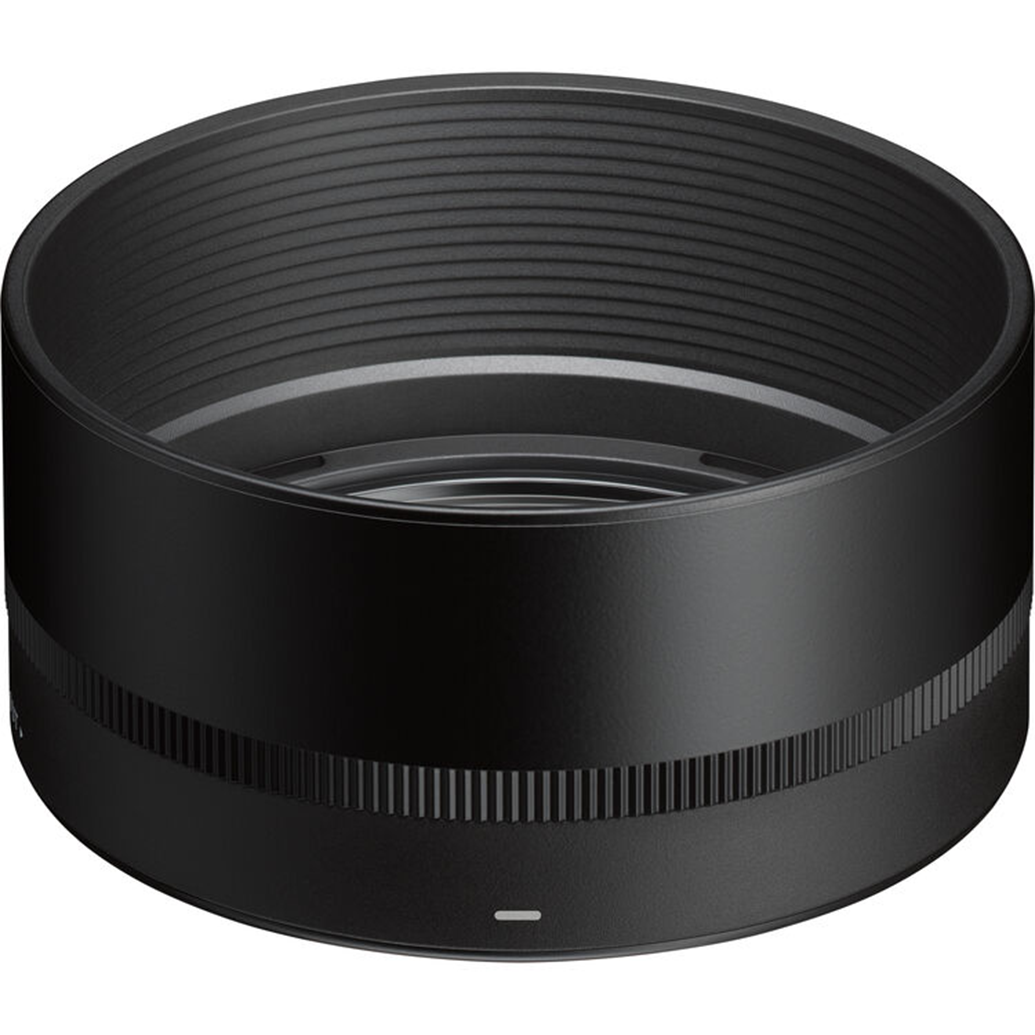
The 50-120mm starts where the standard zooms stop
The Sigma AF 50-120mm f/2.8 DC OS Contemporary Lens for Canon RF starts at 50mm, exactly where the Sigma 18-50mm f/2.8 DC DN Contemporary Lens (Canon RF) finishes. This is a choice between different framing needs, not two versions of the same zoom. The 50-120mm is a telephoto lens for APS-C cameras; the 18-50mm covers a standard-zoom range.
For Fujifilm X, the Fujifilm FUJINON XF 16-50mm f/2.8-4.8 R LM WR Lens provides another standard-zoom option. It also stops at 50mm. A standard zoom covers broader scenes, while the Sigma telephoto allows tighter framing of subjects farther away. That distinction matters more than their shared f/2.8 designation.
Specifications compared across the three lenses
The 50-120mm column uses Canon RF specifications. The Fujifilm lens is an X-mount option, not an RF-mount substitute.
| Specification | Sigma 50-120mm DC OS | Sigma 18-50mm DC DN | Fujifilm XF 16-50mm |
|---|---|---|---|
| Mount of version compared | Canon RF | Canon RF | Fujifilm X |
| Focal length | 50-120mm | 18-50mm | 16-50mm |
| Maximum aperture | Constant f/2.8 | Constant f/2.8 | f/2.8-4.8 |
| Minimum aperture | f/22 | f/22 | f/22 |
| Focus type | Autofocus | Autofocus | Autofocus |
| Minimum focus distance | 9.1 inches at wide end; 21.7 inches at telephoto end | 4.8 inches | 9.45 inches |
| Maximum magnification | 1:3 at wide end; 1:4.7 at telephoto end | 0.36x | 0.3x |
| Filter size | 55mm | 55mm | 58mm |
| Diaphragm blades | 11 | 7, rounded | 9, rounded |
| Length | 3.8 inches | 2.9 inches | 2.8 inches |
Wide coverage versus tighter framing
Starting at 50mm means the Sigma telephoto needs more working distance to include a broad scene. For indoor family pictures or building interiors, the standard zooms can include more from the same position. Backing up is not always possible. More telephoto reach does nothing to solve a wall behind the photographer.
At the other end, 120mm gives tighter framing than 50mm without moving closer. That matters for portraits with room to work, or subjects that cannot be approached. The buying question is which end of the range is currently causing missed pictures. Owners of either standard zoom should generally consider the 50-120mm an additional lens, rather than a replacement for their wide coverage.
Constant f/2.8 and handheld shooting
Both Sigma zooms maintain an f/2.8 maximum aperture throughout their ranges. Zooming does not force a smaller maximum aperture. The Fujifilm is an f/2.8-4.8 lens, reaching f/4.8 at 50mm. Compared with f/2.8, that admits less light and can require a slower shutter speed or higher ISO for the same exposure.
Sigma describes the 50-120mm's OS2 optical stabilization as providing 6.5 stops of shake compensation at 50mm and 4.5 stops at 120mm. Those are maker ratings, not a guaranteed shutter speed for every situation. Stabilization addresses camera shake, not a subject moving through the frame. A moving subject can still require a fast shutter speed. The Sigma 18-50mm has no lens-based image stabilization.
The autofocus mechanisms also differ. The 50-120mm uses Sigma's High-Response Linear Actuator, or HLA, which Sigma describes as suitable for tracking fast subjects. The 18-50mm uses a stepping motor described as fast and quiet. Sigma also says the 50-120mm minimizes focus breathing, reducing changes in framing as focus shifts during video. That is separate from the framing change caused by zooming.
Close focus and carrying size
The Sigma 18-50mm focuses as close as 12.1cm, compared with 23.1cm at the 50-120mm's wide end and 55.1cm at its telephoto end. Fujifilm lists a 0.24m minimum focus distance. These distances are measured from the camera's sensor plane, not the front of the lens. They should not be read as the clearance available between lens and subject.
Magnification is the more useful specification for how large a small subject can appear in the frame. The 18-50mm reaches 0.36x, while the Fujifilm reaches 0.3x. Sigma lists the 50-120mm at 1:3 at the wide end and 1:4.7 at the telephoto end.
For carrying size, Sigma lists the Canon RF 50-120mm at 410g, while Fujifilm lists its 16-50mm at 240g. The Fujifilm also has internal zoom, so its length stays consistent while zooming. Both Sigma lenses use 55mm filters; the Fujifilm takes 58mm. Matching filter sizes can reduce duplicate purchases in a two-lens kit.
Mount versions, prices and availability
For Canon RF, the Sigma 50-120mm is $799 and available to preorder. The Sigma 18-50mm RF is in stock at $659. The lower price buys a different focal-length range, not the same reach for less money.
The Sigma AF 50-120mm f/2.8 DC OS Contemporary Lens for Fuji X Mount is also $799 and available to preorder. The Fujifilm XF 16-50mm is in stock at $849.
The Sigma AF 50-120mm f/2.8 DC OS Contemporary Lens for Sony E is $799 and available to preorder. Select the version that matches the camera mount. The Canon RF and Fujifilm X lenses compared here are not interchangeable between those mounts.
Who should choose each lens
Choose the Sigma 50-120mm if a standard zoom already covers the wider pictures and the remaining need is tighter framing without approaching the subject. Its constant f/2.8 aperture is useful when maintaining shutter speed matters. It is a less practical first zoom for someone regularly working in small rooms.
Choose the Sigma 18-50mm for Canon RF if the priority is one standard zoom for broader everyday coverage, with f/2.8 available throughout the range. Its close-focus capability also suits small-detail pictures without immediately changing lenses. Choose it for those needs, rather than expecting it to cover distant subjects like a telephoto.
Choose the Fujifilm XF 16-50mm for an X-mount standard zoom when a 16mm wide end and a 240g body matter more than retaining f/2.8 at 50mm. Its internal zoom is useful when keeping the lens the same length during framing changes is a priority.
Prices at Unique Photo
- Sigma AF 50-120MM F/2.8 DC OS Contemporary Lens for Fuji X Mount: $799.00 (preorder)
- Sigma AF 50-120MM F/2.8 DC OS Contemporary Lens for Canon RF: $799.00 (preorder)
- Sigma AF 50-120MM F/2.8 DC OS Contemporary Lens for Sony E: $799.00 (preorder)
- Sigma 18-50mm f/2.8 DC DN Contemporary Lens (Canon RF): $659.00
- Fujifilm FUJINON XF 16-50mm f/2.8-4.8 R LM WR Lens: $849.00
Prices as of November 2, 2026. Browse more: Sigma Mirrorless Lenses, Sigma at Unique Photo.
Related reading: Sigma AF 50-120MM F/2.8 DC OS Contemporary Lens: Specs and Price.
Frequently asked questions
Can the Sigma 50-120mm replace the Sigma 18-50mm?
Their ranges meet at 50mm, but serve different purposes. The 50-120mm adds telephoto reach and does not provide the 18-50mm's wider coverage.
Which mounts does the Sigma 50-120mm come in?
Sigma offers Canon RF, Fujifilm X and Sony E versions. Each is $799 and available to preorder.
Is the Fujifilm XF 16-50mm a constant f/2.8 lens?
No. Its maximum aperture varies from f/2.8 to f/4.8 across the zoom range.
Do the Sigma 50-120mm and 18-50mm use the same filters?
The Canon RF versions compared here both use 55mm filters. The Fujifilm XF 16-50mm uses 58mm filters.