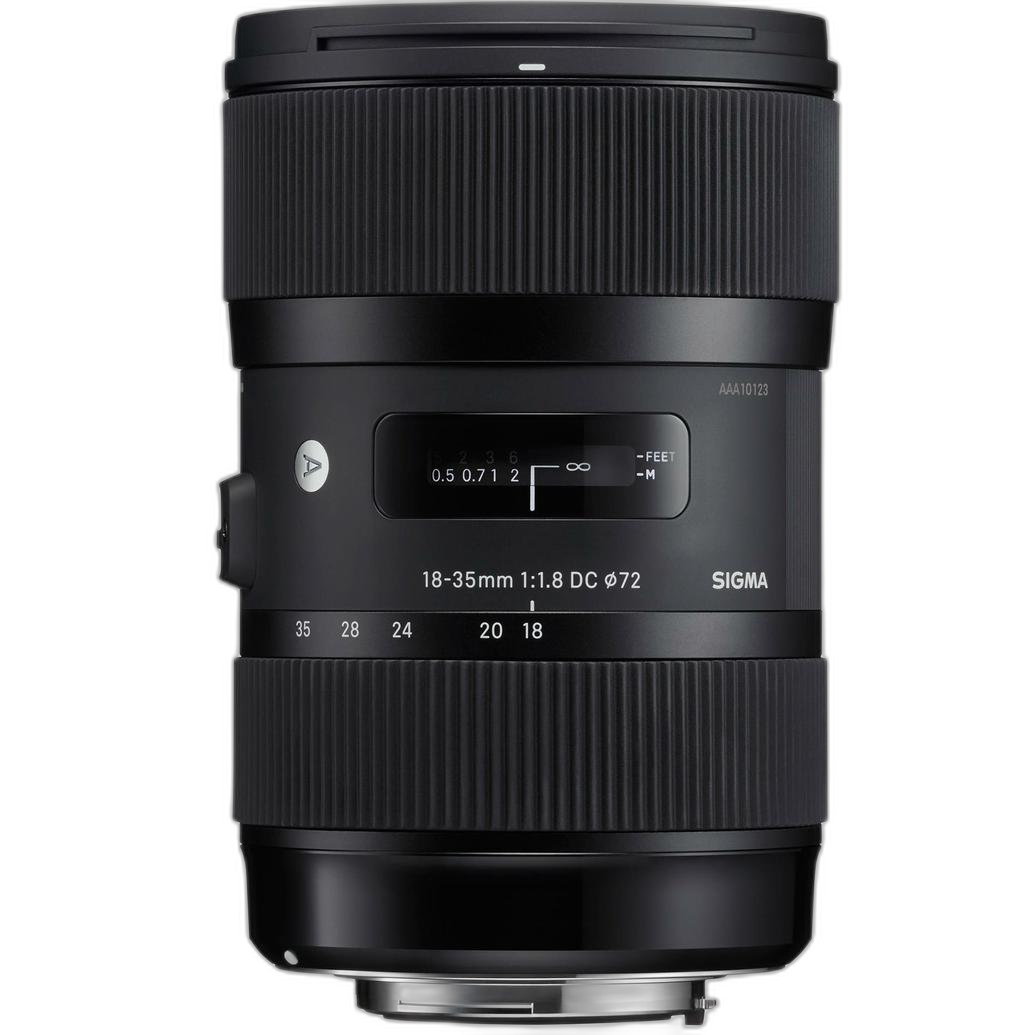
When Sigma introduced the 18-35mm f/1.8 DC HSM Art on April 19, 2013, it immediately stood apart from nearly every standard zoom on the market. Fast zooms were nothing new, and photographers were already well acquainted with constant-aperture designs at f/2.8. But a constant f/1.8 zoom was something else entirely. For APS-C shooters, this lens arrived as a bold statement: a standard-range zoom with the kind of light-gathering ability and shallow-depth-of-field potential usually associated with prime lenses.
Positioned within Sigma's then-new Global Vision lineup and carrying the Art designation, the 18-35mm f/1.8 represented more than a technical exercise. It signaled Sigma's intention to compete not merely on value, but on ambition, optical character, and headline-making innovation. At a launch price of $799, it drew immediate attention from enthusiasts, working photographers, and filmmakers looking for a uniquely capable fast standard zoom for APS-C-format cameras.

A Landmark in Zoom Lens Design
The phrase most closely tied to this lens from the start was simple and memorable: the world's first f/1.8 constant-aperture zoom. That distinction mattered. For decades, zoom lenses had involved a series of practical compromises. If a photographer wanted flexibility, a zoom was the obvious tool. If ultimate speed and subject isolation were the goal, primes still ruled. Sigma's 18-35mm f/1.8 challenged that familiar divide.
On APS-C cameras, the lens covered a highly useful 18-35mm range, making it a natural fit for wide-to-normal work. That meant environmental portraiture, documentary shooting, interiors, events, street photography, and general-purpose available-light work were all squarely in its wheelhouse. More importantly, the lens delivered that range while holding f/1.8 throughout the zoom span, allowing shooters to maintain exposure and depth-of-field characteristics without stepping down as they zoomed in.
In the context of 2013, that was a remarkable proposition. Photographers accustomed to kit zooms and even premium f/2.8 models immediately understood what Sigma was offering: more speed, more creative control, and a level of specification that had previously seemed impractical in a standard zoom.
The Art Line and Sigma's New Identity
The 18-35mm f/1.8 DC HSM Art also arrived at an important moment in Sigma's corporate and design history. By 2013, Sigma had reorganized much of its interchangeable-lens strategy under the Global Vision umbrella, dividing lenses into Art, Contemporary, and Sports categories. This was not just a branding exercise. It was Sigma's way of clarifying purpose and signaling a more focused, design-led approach to lens development.
Within that framework, the Art line was especially important. It emphasized image quality, expressive rendering, and optical performance aimed at photographers who prioritized the final image above all else. The 18-35mm f/1.8 fit that mission perfectly. Rather than trying to be the smallest or least expensive standard zoom, it was engineered to do something no mainstream rival had done before.
The lens therefore became one of the clearest early examples of what the Art line could mean in practice: not only strong optical ambition, but a willingness to pursue unconventional designs if they offered real photographic value.
Why f/1.8 Changed the Conversation
Numbers on a spec sheet can seem abstract until they affect how a lens behaves in the field. With a constant f/1.8 aperture, the Sigma 18-35mm offered photographers a meaningful advantage in low light and a distinctive look for an APS-C zoom. In practical terms, this meant the lens could be used in darker conditions without pushing ISO quite so hard, and it also gave photographers more latitude to separate a subject from the background than they were used to from a standard zoom.
That combination was especially compelling for event and documentary photographers working indoors, as well as for videographers who wanted a brighter zoom with more cinematic control over depth of field. During the early 2010s, hybrid shooting and DSLR video were becoming increasingly important parts of the conversation, and a lens like this naturally appealed to users who wanted speed without constant lens changes.
Just as importantly, f/1.8 made the 18-35mm feel less like a compromise lens. For many APS-C users, it offered an alternative to carrying several fast primes to cover adjacent focal lengths. While it would never replace every prime aesthetically or ergonomically, it narrowed the gap enough to become genuinely disruptive.
An APS-C Specialist with Serious Intent
The designation DC identified the lens as designed for APS-C-format cameras, and that format-specific focus was central to its identity. Sigma was not trying to create a universal full-frame standard zoom. Instead, it concentrated on building an APS-C optic with unusually high ambition. That approach gave the 18-35mm f/1.8 a clear purpose and helped explain its immediate resonance with enthusiasts and professionals who regularly worked in crop-sensor systems.
In the APS-C world, the 18-35mm range sits in an especially useful part of the photographic map. It covers moderate wide-angle views through a natural normal perspective, making it versatile enough for daily shooting while still encouraging a more deliberate visual style than an all-purpose superzoom. For many users, that was part of the appeal. The lens was flexible, but not generic.
Its position in the market also reflected a broader truth about Sigma's strategy at the time: the company was increasingly willing to create lenses that did not simply mimic a camera maker's own catalog. The 18-35mm f/1.8 was an original answer to a real need, not just a lower-cost variation on an established formula.
Handling, Perception, and Early Reception
Even before extensive long-term reviews accumulated, the lens attracted attention simply because photographers understood what it represented. It was seen as daring, specialized, and unusually ambitious for a third-party manufacturer. Sigma had certainly made notable lenses before, but this release helped change the tone of the conversation around the brand. The 18-35mm f/1.8 did not ask to be judged only as a value proposition. It asked to be judged as a breakthrough.
That distinction mattered in 2013. The lens entered a market where many photographers still viewed third-party optics through a cautious lens, often assuming compromises in consistency, build, or prestige. A product like this helped challenge those assumptions. Its very existence suggested that Sigma was not merely following trends, but helping set them.
For photographers considering a fast APS-C zoom, the launch price of $799 also made the lens notable. It was not an impulse purchase, but neither was it positioned as an unreachable exotic. Given the novelty of the specification, the pricing underscored Sigma's ability to offer something genuinely new without pushing it into a stratospheric niche.
A Lens That Bridged Stills and Motion
It is difficult to discuss the historical significance of the Sigma 18-35mm f/1.8 Art without acknowledging its appeal to video shooters. By the early 2010s, the DSLR and large-sensor video world had matured enough that lens choices were becoming central creative decisions. A zoom that maintained f/1.8 across the range gave filmmakers and multimedia creators a powerful tool for interviews, run-and-gun coverage, narrative work, and music videos on APS-C cameras.
Because the focal range was practical and the aperture unusually bright, the lens fit naturally into production environments where changing primes repeatedly was inconvenient or impossible. For many users, that made it more than a still-photo lens with incidental video utility. It became part of a broader shift toward hybrid tools that could serve both disciplines well.
Historical Importance in Sigma's Catalog
Looking back, the 18-35mm f/1.8 DC HSM Art stands as one of the defining lenses of Sigma's modern era. It embodied the confidence of the Global Vision relaunch, gave the Art line immediate credibility, and provided a memorable proof point that Sigma could reshape expectations in a mature product category.
Not every important lens is historically significant because it launches a new mount or introduces a new autofocus technology. Sometimes a lens matters because it changes what photographers imagine is possible. The Sigma 18-35mm f/1.8 did exactly that. It made the standard APS-C zoom exciting again, and it did so by delivering a specification that was easy to understand yet difficult to ignore.
Conclusion
As an archival landmark of the early Global Vision period, the Sigma 18-35mm f/1.8 DC HSM Art remains one of the most memorable zoom introductions of its time. Its 18-35mm APS-C focal range, constant f/1.8 aperture, Art-series positioning, and $799 launch price combined to create a lens that felt genuinely new in 2013. More than a strong product, it was a statement of intent from Sigma at a pivotal moment in the company's history.
If you'd like to explore Sigma lenses, compare current options, or learn more about the history behind influential photographic equipment, Unique Photo is a great place to buy, research, and stay connected to the craft.