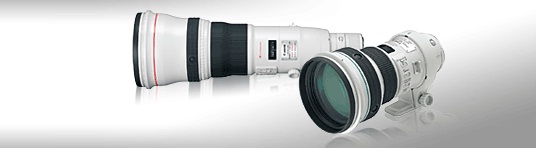
Photographers use long lenses for better magnification. The long lenses lend pictures sharpness and clarity, but mind you, a mistake made with the long lenses will also be magnified, as much as the magnification. The lack of sharpness in pictures can be due to various reasons, but usually, it is the vibration due to an uneven platform or shaking hands that spoil a picture. A tripod not sturdy enough for the lens or strong winds are also very common reasons for a blurred picture. So, while using a long lens, reducing the vibrations must be your top priority. To avoid this, you can practice a few tricks of the trade, passed on to us by practising photographers.

A simple trick: when shooting, try to add your own weight to the lens by leaning and pressing on it from the top. Also, push your eye against the viewfinder as much as you can. This will give the setup extra bulk, and thus, decrease the chances of vibration. Do not jab when tripping the shutter; a gentle roll of the fingers will do the job just fine. It is hard to believe, but irregular breathing, too, contributes to the problem. Irregular breathing is connected to your heart rate. Regular breathing will help you reduce your heart rate, which will, in turn, improve your grip and overall handling of the equipment. If your subjects are static, you don’t need to do constant reframing. In such cases, you should check your camera settings and look for the lockup mirror option. Locking up the mirror will reduce the vibrations to a considerable degree, and even the blur will go. This is again along the lines of adding weight to the camera. You can think of strapping your jacket on the top of the lens, wrapping it just tight enough to allow you to move the lens. You can also hang a weight to the bottom of the center column to give a downward pressure. The idea is to make the tripod more stable. However, this simply won’t work in windy weather and will only lead to an unstable stand. If your tripod comes with a collar, make sure to use it. Also, you may want to acquire a gimbal mount. With all this, you end up stabilizing the shooting platform and making the tripod very sturdy. In fact, for wildlife and sports photographers, a gimbal head is a must-have accessory. These are some of the less-obvious methods to reduce the vibrations. The obvious ones are well known: shooting with a high ISO and shutter speed, or using image stabilization and shooting in burst mode. None of these actually let you control the equipment manually, and you shoot in modes you might not want to shoot in. The methods discussed here will come handy only if you practice them often. And with practice, slowly and surely, you will realize that they make a difference.

Courtesy - E J Peiker
Also read: Tamron ultra wide angle zoom lens,Canon's EF ultra wide angle zoom lens, Tip for better lens care Do leave us a line regarding what you thought of this article and don’t forget to share it with your fellow photographers.