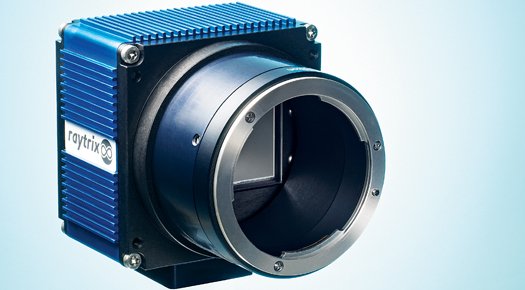
As the plenoptic camera has finally arrived, a new chapter in the world of photography unfolds. It is safe to say that we are witnessing history in the making, as the magic of light field photography spreads. However, the concept is still unknown to a lot of photographers. To make things simple, we give you the rundown on the concept of plenoptic cameras and its basics. Read on to discover a whole new way of capturing scenes.
The plenoptic camera was first introduced in 1992 with the purpose of solving computer vision problems. Plenoptic Camera 2.0 is the improved version of it, a device that solves a great deal of problems faced by photographers who use regular cameras, such as rendering 3D views and focussed images. It also helps combat the issue of poor resolution, which was a major downside of the earliest plenoptic camera model. Greater processing capabilities have been made possible by plenoptic cameras. So let’s see the basic principle of their working.
We all know how a standard 2D camera is only capable of recording a 3D scene’s flat projection. Although you can capture the intensity of light rays striking pixels in a 2D array, there is no way to record information about how light rays travel a point to a pixel.

Now a light field camera, or a plenoptic camera, is capable of recording a full 3D light field of a 3D object or scene. We are not just talking about the radiance and intensity of a light ray striking a pixel, but also the angle of incidence! With this additional information, it is possible to render images at various distances from the camera’s lens. What we do to focus a camera is change the distance between the lens and sensor. During post processing, an image can be refocused by using the recorded light field.
There is a lot more that can be achieved with this technique. The perspective can be altered as well. In this way, a depth map can be calculated and stereoscopic pair of images can be made. If we have information of where the rays are coming from, it is also possible to block stray light or ghost images.
Light field or plenoptic cameras can be constructed in several ways. Plenoptic 2.0 cameras make use of micro lenses that are mounted in front of the sensor. Each micro lens takes an image of a part of the scene. The micro lenses take images of a specific spatial point of the object, all from different angles. Hence, a plenoptic camera is a device capable of capturing 4D radiance. Since multiple images of the same scene are being captured at different exposure levels—known as the multiple exposure technique—the images can be merged into one HDR (High Dynamic Range) image if the scene is static.
So we see how photographers now have the power to portray an interactive story instead of just a flat piece of reality, all possible with the advent of light field photography.
Did you like this article? Share this with your friends if you did. Check out the range of cameras available at Unique Photo.