Inspired by Steve McCurry and his "Last Roll of Kodachrome" project, I decided to drag my Nikon N80 out of a cabinet, load it with fresh batteries and a new roll of Kodak Ektar 100 film. A few days ago, I took some time to wander around a local historical park to reconnect with my inner film shooter, who briefly made an appearance for a black and white class in college a few years back; he was scarcely heard from since.
Since this was really the first roll of color film I've ever shot with my N80, I decided to make the predominant theme on the roll "color". Not any particular one, either, as one of my previous posts suggests. I tried to look for interesting contrasts between them, their context, and their environment. I took a great amount of time in framing, focusing, and choosing exposure settings, as I realized that every frame counts when you only have 36 opportunities. That's when it hit me like a splash of stop-bath to the face: a perfect photo exercise is to limit the amount of photos you can take!

I bet you're not used to THAT low a number, eh?
What am I proposing? Simple: if you don't have a film camera, dig out some of your primitive 256mb (or thereabouts) memory cards so that you're limited to 20-50 pictures. If you no longer have a card that small, fill up a bigger memory card with video or other bloated files so that you only have space for a few photos. As a general rule, you can't delete any photo you take (unless you come across something monumental or news-worthy). Take a day to explore your hometown, local park, or wherever you think you may find some photo ops. Since you're very limited in storage space, you'll find that you'll be looking around you with a different perspective. I'm not in any way suggesting that the photos you'll take will be any better than what you normally take with a digital camera, but you'll more than likely find yourself paying much more attention to what - and how - you're photographing.
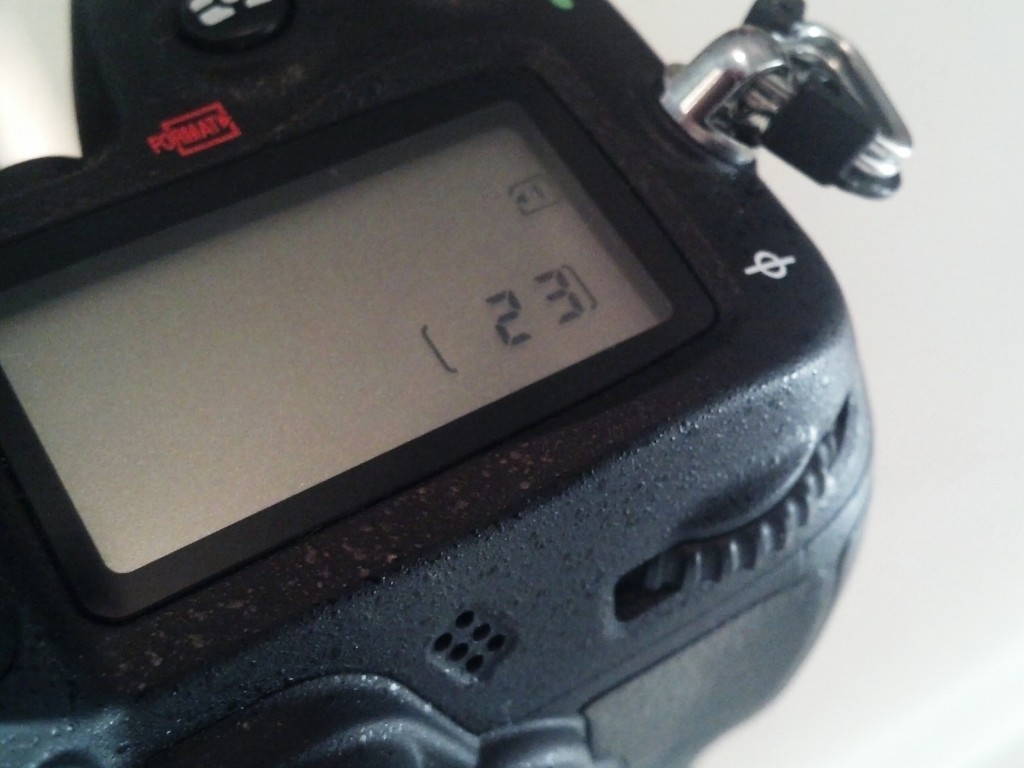
All too often, we are comforted by our LCD screens saying that we can take "2.5k" photos on our gigantic memory cards. After shooting a roll of film over the course of the day, I realized that the effect those huge memory cards have on me is a little detrimental. Although I still go through all of the same dedication while composing digital images, I often say to myself "oh, I can fix this in post", or "I can always take another set of these photos (since I have so much storage space)". With the roll of film, every frame counts. I can't compose as quickly as I can with a digital camera; I need my tripod, bubble level, and to really think about whether or not the camera's meter is being fooled by a particularly bright or dark area of the frame. On digital, I snap, check, and recompose, which is fine in that case. With film, though, I need to rely on a deeper level of intuition, to realize what kind of light was in my frame and how it would ultimately turn out. In essence, I realized a few days ago that I need to rethink my method and be able to understand how all of the light in my photograph would look, rather than simply turning some dials, looking at a screen, and readjusting. All of this came about because I had a very finite amount of exposures; I've been spoiled by the convenience of digital technology.

Yes, MEGA-byte. Remember the megabyte?
If you grew up in the heyday of film, perhaps you're already familiar with what I'm talking about. However, if you've been spoiled by - or grew up with - the digital sensor, you may find this exercise refreshing. If anything else, it's a nice reminder that photographers didn't always have the luxury of 2,500 potential pictures loaded into their camera.
Tim Kauger is a blogger and photographer based in Short Hills, NJ. You can visit his website here.