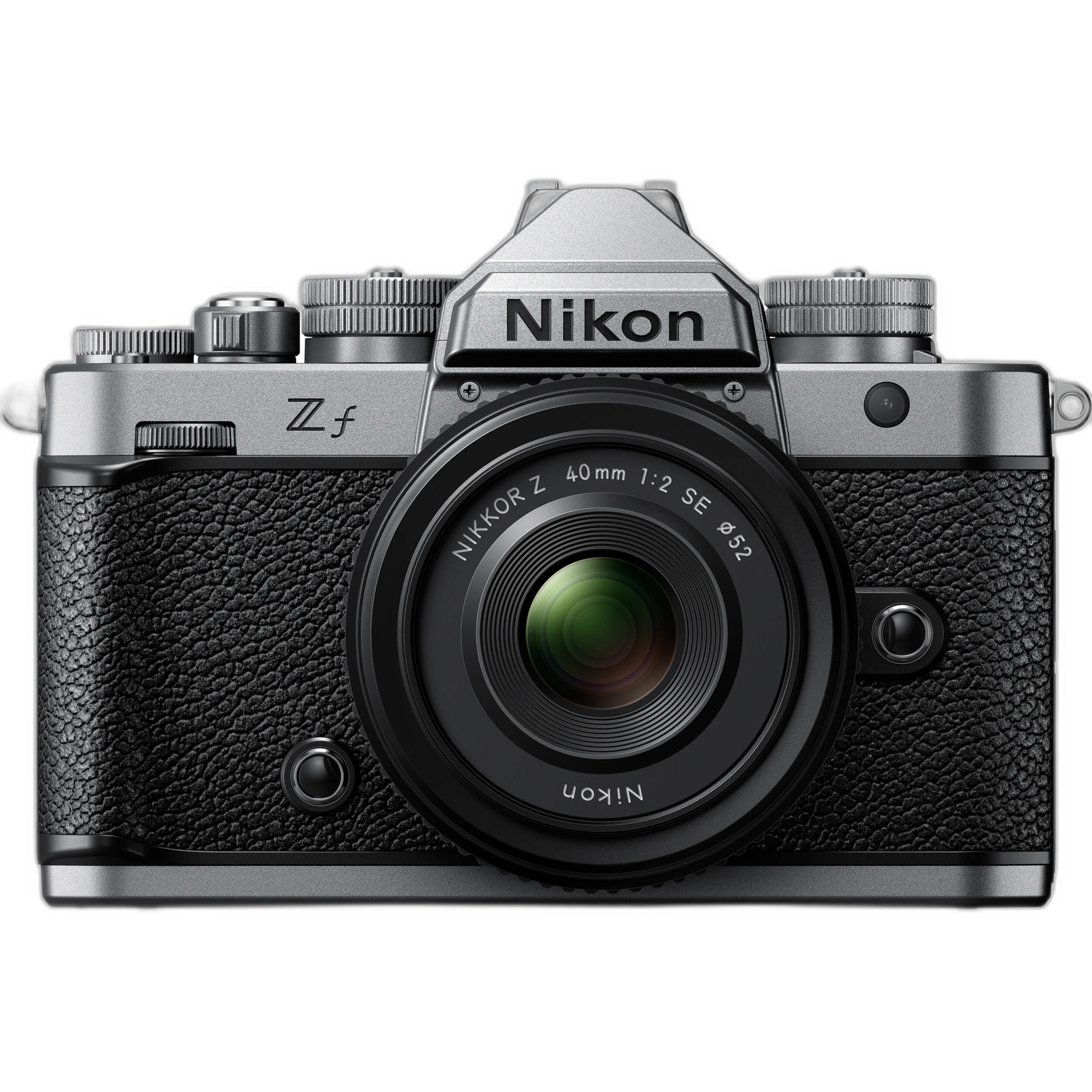
In September 2023, Nikon unveiled the Zf, a full-frame mirrorless camera that immediately stood out by pairing a heritage-inspired exterior with the contemporary performance expectations of the Z-mount era. Positioned as a 24.5MP full-frame model with a distinctly retro design, the Zf arrived as more than a styling exercise. It was a statement about Nikon’s ability to connect its classic film-camera visual language with the demands of modern autofocus, in-body image stabilization, and day-to-day hybrid shooting.
At launch, the Nikon Zf carried a U.S. price of $1,999, placing it in an especially interesting segment of the market: premium enthusiast territory, but with obvious appeal to longtime Nikon users, collectors of classic camera design, and photographers looking for a camera that felt more tactile than many contemporary bodies. As an announcement-period camera, the Zf generated attention not simply because it looked different, but because it suggested Nikon was taking the emotional side of camera ownership seriously while still delivering current imaging technology.
A Heritage-Inspired Body for the Z-Mount System
The Nikon Zf’s defining visual feature at launch was its retro styling. Nikon has a long and respected history of camera design, and the Zf clearly drew from that legacy in a way that would be immediately recognizable to photographers familiar with the company’s classic film-era bodies. In an age when many digital cameras emphasize smooth contours and minimalist industrial design, the Zf took a different route, foregrounding mechanical-looking control surfaces and a more traditional silhouette.
That heritage direction was important strategically. The Nikon Z system had already established itself with modern mirrorless tools across enthusiast and professional categories, but the Zf expanded the system’s personality. It offered a camera that could appeal emotionally as well as technically. For some users, that meant nostalgia. For others, it meant a more deliberate photographic experience centered around visible controls and a body that invited engagement even before a lens was mounted.
Historically, these heritage-inspired digital cameras occupy a meaningful place in the market. They often serve as bridges between generations of photographers: those who remember Nikon’s analog legacy firsthand, and newer users discovering that camera design can carry identity, tradition, and ergonomics in equal measure. The Zf fit squarely into that conversation at release.
24.5MP Full-Frame Sensor: A Familiar and Flexible Resolution Class
At the core of the Nikon Zf is a 24.5MP full-frame sensor. That resolution has become one of the most versatile sweet spots in modern photography, balancing image quality, manageable file sizes, and broad suitability across genres. For event photography, portraiture, documentary work, travel, and general creative use, a 24.5MP full-frame sensor offers enough detail for serious output without forcing the compromises that can accompany significantly larger files.
From a launch-period perspective, this sensor class also positioned the Zf as a camera designed for actual use rather than mere display. The retro body may have sparked headlines, but the full-frame 24.5MP imaging pipeline signaled practical intent. It was not a novelty product. It was a contemporary Nikon Z camera that happened to arrive in a form factor and visual language meant to celebrate the brand’s history.
That distinction matters. Cameras with classic styling sometimes risk being dismissed as niche products, but the Zf’s core imaging format ensured broad relevance. Full-frame remained the benchmark for photographers seeking strong low-light capability, depth-of-field flexibility, and the familiar rendering associated with larger sensors. In that sense, the Zf was aimed not just at collectors or style-conscious buyers, but at active photographers wanting a capable everyday body in a more characterful package.
Modern Nikon Z Mount Advantages
The Nikon Zf uses the Nikon Z mount, giving it access to the rapidly growing Z lens ecosystem. This was one of the most important practical advantages surrounding the announcement. However appealing the body design, a camera system ultimately lives or dies by lens support, and Nikon’s mirrorless strategy had already established the Z mount as central to the company’s future.
For photographers considering the Zf at release, the Z mount meant the camera belonged fully within Nikon’s current mirrorless platform rather than standing apart as a lifestyle offshoot. Users could approach it as a serious system body, with access to native Z-mount lenses spanning wide-angle, standard, portrait, and telephoto applications. That gave the Zf relevance beyond its appearance and made it easier to justify as either a primary body or a complementary second camera within an existing Nikon kit.
The combination of classic exterior styling and modern mount compatibility was arguably one of the camera’s strongest selling points. It suggested Nikon understood that nostalgia alone is not enough; heritage becomes much more compelling when paired with a lens ecosystem designed for the present and future.
Up to 8 Stops of IBIS: A Major Modern Counterpoint to the Classic Exterior
If the Zf’s exterior looked back, its in-body image stabilization clearly looked forward. Nikon specified up to 8 stops of IBIS, a headline feature that underscored just how current the camera was beneath its vintage-inspired shell. In practical terms, strong in-body stabilization broadens handheld shooting opportunities, supports low-light work, and helps photographers get more out of both native lenses and adapted optics.
This was one of the most compelling contrasts in the camera’s launch identity. Historically styled cameras can sometimes be associated with restraint or simplicity, but the Zf’s stabilization capability placed it firmly among advanced modern imaging tools. For handheld stills in available light, travel shooting, and general everyday photography, robust IBIS is one of the features users notice most immediately in real use.
There is also a symbolic dimension here. Nikon was not merely wrapping old aesthetics around modest internals; it was pairing tactile, heritage-minded design with one of the most useful contemporary technologies available in mirrorless cameras. That helped the Zf avoid the trap of feeling like an exercise in branding. Instead, it entered the market as a camera with both personality and practical ambition.
Why the Zf Mattered at Announcement
The 2023 release of the Nikon Zf was important because it reflected broader shifts in camera culture as much as product strategy. By this point, the mirrorless market had matured considerably. Performance gains in autofocus, stabilization, and sensor technology remained crucial, but many photographers also wanted tools that felt distinctive and enjoyable to use. The Zf addressed that desire directly.
Its announcement suggested that Nikon recognized a camera can succeed not only by competing on spec sheets, but by offering a compelling shooting experience rooted in brand history. The retro design was not incidental. It was central to the camera’s identity and to the way Nikon framed the Zf within its lineup.
At the same time, the camera did not abandon the realities of 2023 photography. A 24.5MP full-frame sensor, Nikon Z mount compatibility, and up to 8 stops of IBIS ensured that the Zf entered the market with meaningful substance behind the style. For many observers, that balance was exactly what made it notable. It honored Nikon’s past without pretending photographers wanted to give up the conveniences and capabilities of the present.
Launch Price and Market Position
With a launch price of $1,999 in the U.S., the Nikon Zf sat in a premium enthusiast bracket that made strategic sense. It was expensive enough to signal seriousness and quality, yet not so high as to place it entirely out of reach for dedicated hobbyists and working photographers seeking a secondary body with a different handling philosophy.
That price also reflected the camera’s unusual blend of attributes: full-frame imaging, premium design emphasis, and strong stabilization in a body meant to stand out visually. The Zf was not competing purely as a budget route into full-frame. Instead, it was positioned as a desirable object and a capable tool, a combination that often defines the strongest heritage-inspired cameras.
An Archival View of the Nikon Zf
Looking back at the announcement period, the Nikon Zf can be understood as one of the more character-driven mirrorless launches of 2023. It was a camera that clearly aimed to evoke Nikon’s historical identity while remaining grounded in modern expectations. The 24.5MP full-frame sensor, Nikon Z mount, retro design, and up to 8 stops of IBIS gave it a distinct profile in the market from day one.
For Nikon users, it represented both continuity and evolution: continuity in the visual and tactile cues associated with the brand’s legacy, and evolution in the way those cues were translated into the mirrorless era. For the broader camera industry, it reinforced the idea that heritage design still matters—especially when backed by practical imaging technology rather than nostalgia alone.
If you want to explore the Nikon Zf, compare Nikon Z-system options, or learn more about landmark camera releases past and present, Unique Photo is a great place to buy gear, get expert guidance, and stay connected to the history of photography equipment.