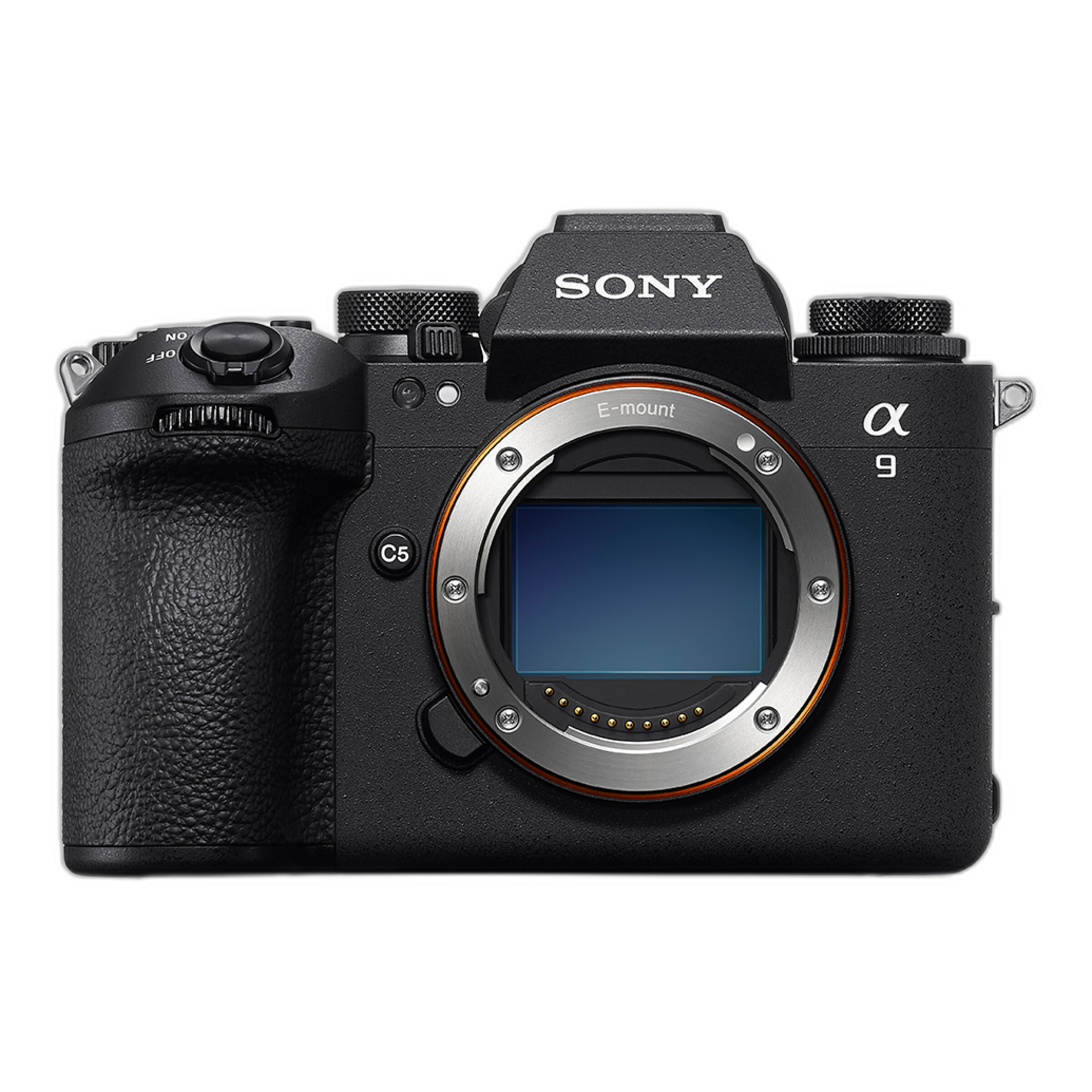
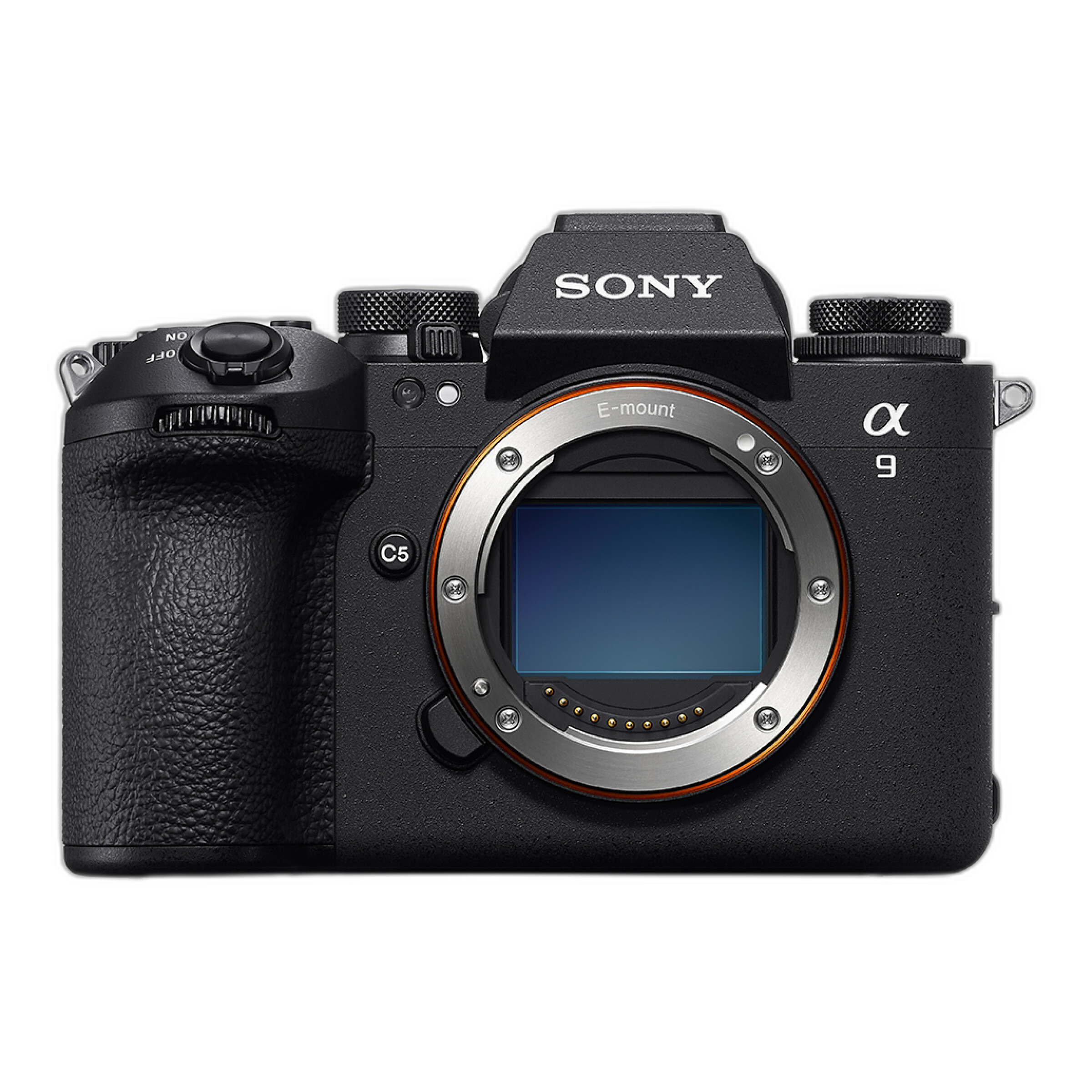
In November 2023, Sony unveiled one of the most technically significant full-frame mirrorless cameras of the era: the Sony a9 III. Positioned within Sony’s flagship Alpha lineup, the new model arrived with a headline feature that immediately set it apart from nearly every other interchangeable-lens camera on the market: a 24.6MP full-frame global-shutter sensor. For photographers who follow camera history as closely as camera specs, this announcement marked a genuine milestone. The a9 III was presented as the world’s first global shutter full-frame camera, bringing a technology long discussed in professional imaging circles into a mainstream full-frame mirrorless body.
At launch, the Sony a9 III was announced at $5,999, squarely targeting professional sports, news, action, and event photographers who demand speed, timing precision, and dependable performance in unpredictable conditions. Built around the Sony E mount and designed as part of the company’s high-performance Alpha ecosystem, the a9 III did not merely add incremental speed. It represented a notable shift in how a modern full-frame camera could capture motion.
A Landmark Announcement in Sensor Technology
To understand why the Sony a9 III generated so much attention at launch, it helps to understand what a global shutter means in practical terms. Most digital cameras, including many high-end mirrorless models, use a rolling shutter readout. In those systems, the sensor captures an image line by line rather than all at once. In everyday shooting, that approach can work extremely well, but in fast-moving situations it may introduce artifacts such as skewed vertical lines, warped moving subjects, or banding under certain artificial light sources.
The a9 III’s global-shutter full-frame sensor changes that equation by capturing the entire frame simultaneously. Historically, global shutter has been highly valued in industrial, scientific, and specialized cinema applications, but bringing it to a professional full-frame stills camera was a major engineering achievement. With the a9 III, Sony effectively positioned the camera as a solution for situations where timing and image integrity are everything: peak sports action, rapidly moving subjects, split-second journalistic moments, and challenging lighting environments.
From a historical perspective, the significance of the a9 III lies not just in its specifications, but in what it suggested about the future of flagship mirrorless design. Sony had already established the a9 line as a speed-focused family. The a9 III took that identity and pushed it into a new technological chapter.
24.6MP Full-Frame Resolution with a Different Mission
The Sony a9 III was announced with a 24.6-megapixel full-frame sensor, a resolution that reflects a clear professional priority. Rather than chasing maximum pixel count, Sony balanced image size with responsiveness, throughput, and operational speed. For sports, wildlife, press, and event shooters, this kind of resolution has long occupied a practical sweet spot: enough detail for publication, agency workflows, and substantial cropping flexibility, while still supporting fast capture rates and efficient file handling.
What made the sensor truly historic, however, was not simply the megapixel figure, but the fact that it paired that 24.6MP full-frame format with global-shutter operation. In the context of 2023, that combination was remarkable. Sony’s announcement underscored that the a9 III was not intended as a studio-first, resolution-first machine. It was conceived as a professional camera for people who routinely photograph action too fast for compromise.
120 fps Burst Shooting: Built for Decisive Moments
Just as striking as the sensor architecture was the camera’s announced 120 fps burst capability. That number alone placed the a9 III in elite company and made clear that Sony intended it to be one of the fastest stills cameras available. Burst rate has always been a powerful talking point in professional camera history, especially in the sports and wire-service world, where the difference between one frame and the next can define a career-making image.
At 120 frames per second, the a9 III was announced as a camera capable of recording fleeting expressions, minute shifts in body position, and key moments in a sequence with extraordinary density. For photographers covering Olympic-style athletics, motorsports, court sports, or any fast-developing subject, that speed represented more than bragging rights. It meant a dramatically expanded chance of catching the exact instant when form, gesture, and storytelling align.
When viewed against the evolution of pro digital cameras, the a9 III’s burst rate reinforced how far mirrorless technology had advanced. Earlier generations of action cameras often required careful tradeoffs between speed, blackout behavior, viewfinder continuity, and sensor artifacts. Sony’s 2023 announcement suggested a new level of maturity in high-speed imaging.
Sony E Mount and System Appeal
The a9 III was introduced as part of the Sony E-mount system, an important point for working professionals and advanced enthusiasts alike. By late 2023, Sony’s full-frame E-mount lens ecosystem had matured into one of the deepest mirrorless lineups in the industry, with broad native options for sports, wildlife, portraiture, events, and video production. That mattered because a body as specialized and capable as the a9 III depends heavily on the surrounding lens and accessory infrastructure.
For photographers already invested in Sony’s Alpha system, the a9 III offered a compelling upgrade path into leading-edge capture technology without requiring a mount change. For those considering entry into a professional mirrorless platform, the camera’s announcement strengthened Sony’s case as a system builder, not just a camera manufacturer. In historical terms, cameras that shift the market rarely do so in isolation. They succeed because they arrive within a mature ecosystem, and the a9 III clearly did.
A Camera Aimed at Professionals, Priced Accordingly
With a launch price of $5,999, the Sony a9 III entered the market as a premium professional tool. That price positioned it in serious flagship territory, signaling that Sony saw this model as a camera for photographers whose livelihood depends on speed, reliability, and access to cutting-edge imaging technology.
Importantly, the a9 III’s value proposition at launch was tied less to luxury than to capability. A global-shutter full-frame sensor was not a cosmetic feature or a marketing flourish. It represented a meaningful answer to real-world shooting challenges that professionals have dealt with for years. For the right user, especially one working in fast action or difficult lighting, the camera’s core technology directly addressed problems that could affect deliverables.
Why the a9 III Matters in Camera History
Every so often, a camera announcement stands out not because it is merely better than what came before, but because it introduces a capability that may influence the direction of the industry. The Sony a9 III fits that description. Its release in 2023 gave the camera world a new benchmark for what a full-frame professional mirrorless body could do, and it did so in a way that felt historically significant from the moment it was announced.
The phrase “world’s first” is used frequently in consumer technology, but in this case it carried genuine weight. A full-frame global-shutter camera from a major manufacturer was the kind of development that photographers, reviewers, and industry watchers had anticipated for years. Sony’s a9 III brought that future into the present and attached it to an established flagship line known for speed and professional intent.
That does not mean the camera was meant for every photographer. Instead, its importance lies in its specificity. The a9 III was designed for users who need uncompromising performance at the instant of capture. In that sense, it continued a long tradition of landmark professional cameras that earn their place in history by excelling at one of photography’s oldest challenges: freezing the decisive moment.
Final Thoughts
The Sony a9 III’s November 7, 2023 announcement will be remembered as a pivotal moment in the evolution of digital still cameras. With its 24.6MP global-shutter full-frame sensor, 120 fps burst shooting, Sony E mount, and $5,999 launch price, it arrived as a purpose-built flagship for professionals who need world-class speed and precision. More than just another Alpha release, the a9 III stood as a notable milestone in sensor design and a statement about where the high-end mirrorless market could go next.
If you want to explore the Sony Alpha system, learn more about landmark camera releases, or shop current Sony gear, Unique Photo is a great place to buy, compare, and stay informed.