
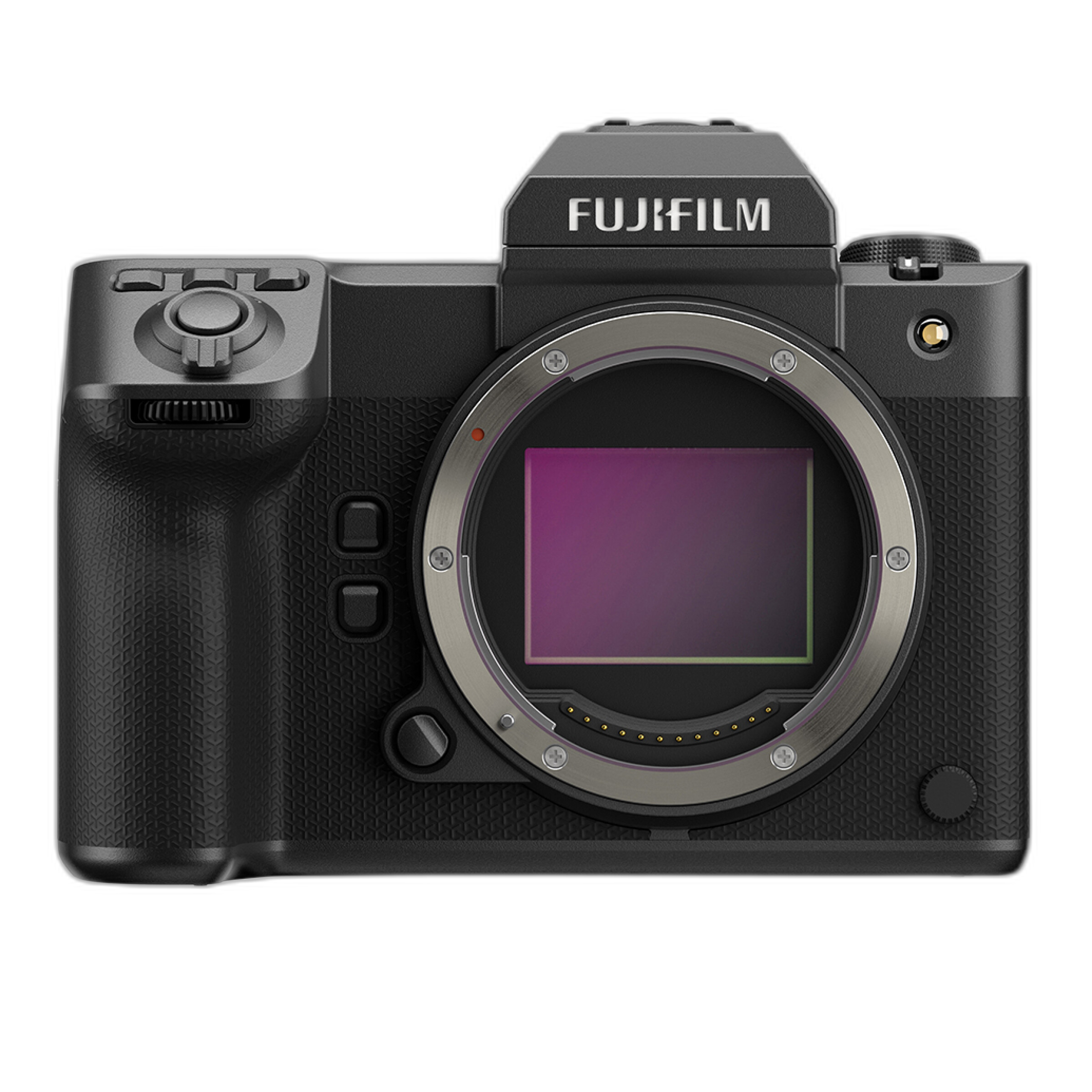
Fujifilm has officially announced the GFX100 II, a new flagship in the company’s GFX medium format lineup that signals just how far the category has evolved. Once associated primarily with deliberate studio workflows, medium format is increasingly being asked to do more: faster autofocus, more responsive handling, and serious hybrid video performance. With the GFX100 II, Fujifilm’s answer is clear. This is a camera built around a 102MP medium format HS sensor, the Fujifilm G mount, and headline-grabbing 8K30 video, all at a launch price of $7,499.
That combination makes the GFX100 II one of the most ambitious cameras in Fujifilm’s digital history. It is aimed not only at photographers who want the scale and tonal richness that have defined the GFX system, but also at image-makers who need more speed and broader production flexibility than earlier medium format cameras were known for. In the context of 2023, this announcement is significant: Fujifilm is not treating medium format as a niche luxury category, but as a serious professional platform for both stills and motion.
A New Flagship for the GFX System
Since introducing the GFX system, Fujifilm has steadily carved out a distinct place in the market. Rather than simply chasing full-frame rivals on their own terms, the company positioned GFX as an accessible path into digital medium format, emphasizing image quality, color science, and a user experience familiar to photographers coming from the X Series. Over time, that strategy broadened from studio and landscape specialists to editorial, commercial, portrait, and fine art photographers.
The GFX100 II represents an important next step in that progression. As a flagship model announced on September 12, 2023, it arrives with the kind of feature set that suggests Fujifilm is refining medium format for modern professional demands. The core appeal remains the larger-format sensor and the high-resolution output, but the message around this release is equally about performance. The inclusion of a 102MP medium format HS sensor indicates a focus on speed and responsiveness as much as on sheer detail.
The 102MP Medium Format HS Sensor
The centerpiece of the GFX100 II is its 102-megapixel medium format HS sensor. In practical terms, that means extremely high resolving power paired with the larger imaging area that has made the GFX system so attractive to photographers seeking depth, tonal subtlety, and an expansive rendering style. Fujifilm’s medium format cameras have long been associated with files that feel especially accommodating in post-production, particularly for commercial and fine-art applications where precision matters.
At 102MP, the GFX100 II is clearly designed for users who need room to crop, print large, or preserve the finest textures in fashion, portraiture, product work, architecture, and landscape photography. But the key word in the official specification here is HS. In the context of the announcement, that branding underscores that this is not simply a resolution-driven update. Fujifilm is positioning the sensor as part of a faster overall imaging pipeline, one that aims to reduce the traditional compromises associated with high-resolution medium format capture.
That matters because medium format has often carried a reputation for slower operation. The GFX100 II’s launch messaging suggests Fujifilm is continuing to challenge that assumption. For working professionals, speed is not just about burst shooting; it is also about responsiveness in the field, faster image readout, and the confidence to use a medium format camera in less controlled situations.
8K30 Video Signals a Broader Ambition
Perhaps the most attention-grabbing specification in the announcement is 8K30 video. Video capability in medium format has historically occupied a specialized corner of the market, but Fujifilm’s decision to headline 8K capture here shows a much more expansive vision. The GFX100 II is being presented not merely as a high-resolution stills camera that also records video, but as a genuine hybrid tool within the premium cinema-adjacent conversation.
For filmmakers and hybrid creators, 8K30 opens up obvious practical benefits: oversampling opportunities, flexibility in reframing, and a workflow that can serve demanding commercial and high-end production environments. Just as important symbolically, it tells us that Fujifilm sees the GFX line as capable of participating in contemporary motion production rather than sitting outside it.
This is a notable development in the history of digital medium format. Earlier generations of the category were often defined by exceptional image quality paired with significant operational limitations. The GFX100 II announcement reflects a different philosophy. Medium format, in Fujifilm’s 2023 framing, can be fast, video-forward, and adaptable enough to meet the needs of modern creators who move fluidly between stills and motion.
The Fujifilm G Mount and System Context
The Fujifilm G mount remains central to the appeal of the GFX100 II. A camera like this matters most within the system that surrounds it, and Fujifilm has spent years building out G-mount lenses to support a broad range of professional work. That lens ecosystem is one reason the GFX line has matured from an intriguing alternative into a credible long-term platform.
For photographers already invested in GFX, the GFX100 II would have been immediately understandable as a flagship body aimed at unlocking more from that lens lineup. For newcomers, the camera’s announcement likely made the system look more complete than ever. A high-resolution medium format body is one thing; a high-resolution medium format body that promises greater speed and advanced video is another. It reframes the conversation around what G mount can be used for.
Within Fujifilm’s broader catalog, the GFX100 II also reinforces the company’s unusual and successful dual-track strategy. The APS-C X Series remains compact and versatile, while GFX serves users who want the look and output of a larger format. With the GFX100 II, Fujifilm sharpened the distinction further by making medium format feel less like a separate specialist tool and more like a top-tier professional choice with fewer compromises.
Launch Price and Market Position
At a launch price of $7,499, the GFX100 II sits squarely in flagship territory, but that number is also part of the larger GFX story. Fujifilm has been notably aggressive over the years in making medium format more attainable than many photographers once assumed possible. While $7,499 is unquestionably a professional-level investment, it is also a statement about value within the upper end of the market, especially given the combination of 102MP capture and 8K30 video.
Positioned this way, the GFX100 II was announced not simply as a prestige object, but as a working camera for professionals who can justify the capabilities. Commercial shooters, studio portraitists, fine-art photographers, and hybrid production teams all fit naturally into the audience Fujifilm seems to have had in mind. The camera’s release also put competitive pressure on assumptions that medium format must remain slower, more limited, or less adaptable than smaller-sensor alternatives.
Why This Announcement Matters Historically
Looking back at the GFX100 II announcement from an archival perspective, its importance lies in what it represented for medium format in 2023. Fujifilm had already done a great deal to democratize the category, but this model pushed the concept further. It combined the familiar draw of a large, high-resolution sensor with a clear emphasis on speed and contemporary video performance.
That blend is what makes the GFX100 II stand out in the historical arc of Fujifilm digital cameras. It is not just another high-megapixel body. It is a marker of medium format’s modernization, a camera that reflects changing expectations among professionals who no longer want to choose between exceptional still-image quality and advanced hybrid capability.
In that sense, the GFX100 II fits into a broader shift across the industry during the early 2020s. Camera makers were under pressure to build tools that could satisfy increasingly diverse workflows, and Fujifilm responded by making one of the boldest statements yet for large-format digital capture. A 102MP medium format camera with 8K30 video would once have sounded improbable as a mainstream product announcement. By September 2023, Fujifilm was presenting it as the logical next step.
Final Thoughts
The Fujifilm GFX100 II arrived as one of the most important camera announcements of 2023, bringing together a 102MP medium format HS sensor, 8K30 video, the established Fujifilm G mount, and a $7,499 launch price in a package designed to expand what photographers and filmmakers expect from medium format. It stands as a major moment in the continuing evolution of the GFX system and in Fujifilm’s broader effort to redefine high-end digital imaging.
If you want to explore the Fujifilm GFX system, compare current models, or learn more about the history and capabilities of cameras like the GFX100 II, Unique Photo is a great place to buy gear or dig deeper with expert guidance.