When Nikon introduced the D1 in 1999, it marked a turning point not only for the company, but for professional photography as a whole. Digital SLRs had existed before, but the D1 arrived as a camera that signaled a new phase: a Nikon-built professional DSLR designed around the familiar Nikon F mount and aimed squarely at working photographers. From that foundation, the Nikon D-series DSLR line would grow across two decades, spanning flagship press cameras, advanced enthusiast models, compact entry-level bodies, and high-resolution tools for landscape, studio, and commercial work.
This historical overview looks at the Nikon DSLR release lineage from the D1 to the D6, covering the broad arc of Nikon's F-mount digital SLR era from 1999 to 2020. Rather than treating the line as a simple list of bodies, this hub is intended to help orient readers: where the line began, how Nikon divided its DSLR families, and how each generation advanced in speed, image quality, autofocus, handling, and video capability over time.
The Beginning of Nikon's DSLR Era
The Nikon D-series DSLR story begins on September 13, 1999, with the release of the Nikon D1. That date matters. By the end of the 1990s, digital imaging was no longer experimental, but many professional systems were still expensive, specialized, or transitional. The D1 represented Nikon's intent to build a complete professional digital system within the framework photographers already knew: Nikon ergonomics, Nikon lenses, Nikon F mount compatibility, and a body philosophy rooted in the company's pro film SLR heritage.
From the start, the D-series name became synonymous with Nikon's digital SLR family. Over the next twenty years, the line expanded into distinct branches:
- Single-digit flagships such as the D1, D2, D3, D4, D5, and D6, designed for professionals covering sports, news, and demanding assignments.
- High-resolution professional and advanced enthusiast bodies including cameras in the D100, D200, D300, D700, D800, and D850 tradition.
- Entry-level and midrange DSLRs that made Nikon digital photography accessible to a wider audience while preserving access to the F-mount lens ecosystem.
Seen as a whole, Nikon's DSLR history is the story of digital photography maturing from an emerging professional tool into a complete system spanning every level of use.
The First Generation: D1, D1H, and D1X
Nikon D1
The original D1 established the template for Nikon's professional digital SLR design. It was built for working photographers who needed speed, familiarity, and integration into existing Nikon systems. In historical terms, the D1 is best understood not just as Nikon's first DSLR, but as the camera that launched Nikon's sustained digital era.
Its importance lies in what it represented: Nikon no longer treated digital as an external adaptation of a film body. The D1 was a true Nikon DSLR platform. The F mount was central to that promise. For photographers with established Nikon lens kits, the D1 offered continuity at a time when continuity mattered greatly.
D1H and D1X
Nikon soon clarified the professional market by splitting priorities between speed and resolution. The D1H emphasized performance for action-oriented photographers, while the D1X pushed toward greater resolving power for applications where detail was more important than outright frame rate. This was an early sign of a strategy Nikon would revisit repeatedly across the D-series era: not every professional needed the same kind of flagship.
With these models, Nikon showed that digital SLR development would not proceed as a single straight line. Instead, the company would refine bodies according to the real needs of photojournalists, sports photographers, studio shooters, and advanced enthusiasts.
The D2 Generation: Refinement and Professional Maturity
After the D1 family established the concept, the D2 generation represented refinement. Cameras such as the D2H, D2Hs, D2X, and D2Xs advanced Nikon's professional DSLR platform with improved responsiveness, more mature autofocus behavior, stronger durability expectations, and better image processing than the first generation.
The distinction between speed-focused and detail-focused bodies continued here. Nikon clearly understood that the sports and press market valued different strengths than studio and commercial photographers. The D2 line also reflected a broader truth about early-2000s digital imaging: progress was happening quickly, and professional users expected frequent, meaningful improvements.
In this period, Nikon's DSLRs were increasingly judged not merely on novelty, but on how fully they could replace film in daily professional use. Reliability, battery performance, workflow, and sustained shooting speed all mattered. The D2 era strengthened Nikon's credibility in exactly those areas.
The Flagship Breakthrough: D3 and the New Nikon Professional Standard
If the D1 started Nikon's digital SLR history, the D3 stands as one of the line's most consequential turning points. By the time Nikon introduced the D3 generation, DSLR technology had advanced enough that professional digital cameras were no longer measured against compromise in the same way. The D3 represented a new level of confidence in Nikon's high-end digital system.
Just as importantly, the D3 era helped define Nikon's modern professional DSLR identity. It was accompanied by related bodies that broadened the concept of what a Nikon DSLR could be, especially for photographers who wanted professional image quality in different body forms.
D3, D3X, and D3S
The D3 line branched into several notable directions:
- D3 as the central professional flagship.
- D3X as a high-resolution variant aimed more directly at photographers prioritizing detail.
- D3S as an evolution emphasizing low-light and high-ISO performance, which became a defining strength of Nikon's pro bodies in this era.
Historically, this generation is where Nikon's DSLR system reached a new kind of maturity. Image quality, speed, autofocus, and ruggedness were no longer just improving; they were now shaping reputations and loyalties among working professionals. For many photographers, the D3 family marked the point where digital SLR technology felt not transitional but fully established.
The Parallel Pro-Body Path: D700 and the Expansion of Full-Frame Appeal
One of the most important developments in Nikon DSLR history was the way flagship technology began to influence smaller bodies. The D700 is especially significant in that story. It brought much of the appeal of Nikon's high-end digital imaging approach into a more compact professional form, helping expand full-frame DSLR enthusiasm beyond the largest integrated-grip flagships.
The D700 demonstrated Nikon's willingness to rethink segmentation. Not every professional or serious enthusiast wanted the bulk of a top sports body. By offering a powerful alternative in a different form factor, Nikon widened the practical audience for its advanced digital imaging platform.
This pattern would continue later in the line, where technology developed at the top often filtered down into enthusiast and hybrid-use models.
The Enthusiast and Prosumer Rise: D100, D200, and D300
While the single-digit flagships often attract the most historical attention, Nikon's DSLR story cannot be told without the enthusiast and prosumer bodies that made digital SLR photography more attainable and more flexible.
D100
The D100 helped establish Nikon's serious non-flagship DSLR category. It gave advanced users and many professionals a more accessible path into Nikon digital ownership while preserving the core appeal of the F mount system. For photographers stepping into digital from Nikon film SLRs, this kind of body mattered enormously.
D200
The D200 deepened Nikon's position in the upper enthusiast and working-photographer segment. It offered a more robust and feature-rich platform, reflecting how quickly expectations were rising for digital cameras below the flagship tier. Bodies in this class increasingly needed to satisfy demanding users, not merely aspiring ones.
D300 and D300S
The D300 and later D300S became especially influential in the DX-format segment. These cameras earned strong reputations for balancing speed, ruggedness, autofocus capability, and control sophistication. Historically, they represent Nikon's confidence in creating APS-C DSLRs that felt genuinely professional in use, not merely scaled-down consumer options.
The D300 generation also illustrates how Nikon's DSLR lineup became more carefully layered. A photographer could choose a flagship integrated-grip body, a full-frame professional camera in a more compact shell, or a highly capable DX-format camera depending on budget, reach requirements, and shooting style.
The Accessible DSLR Boom: D40 Through D90 and Beyond
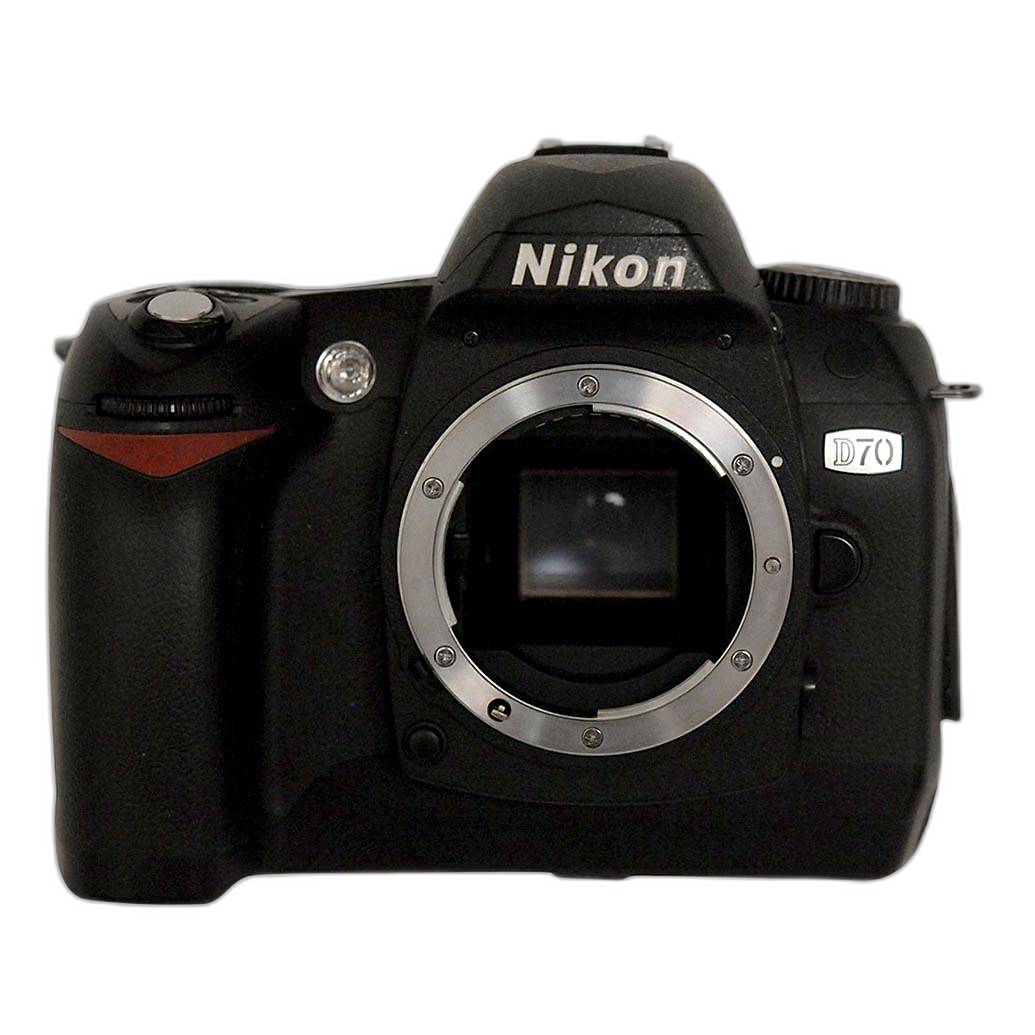
As DSLRs became mainstream, Nikon expanded aggressively into entry-level and lower-midrange categories. Cameras such as the D40, D40X, D50, D60, D70, D70S, D80, and D90 helped introduce a large generation of photographers to interchangeable-lens digital photography under the Nikon name.
These models mattered historically because they normalized the DSLR as a consumer purchase. For many users, a Nikon DSLR was no longer exclusively an aspirational professional tool. It became a practical first system camera.
The importance of these bodies goes beyond sales volume. They helped build lens collections, user familiarity, and long-term loyalty to the F mount ecosystem. Once photographers entered the system with an accessible DSLR, they often moved upward through Nikon's lineup over time.
The D90's Place in History
Among this broad category, the D90 occupies a particularly notable place in DSLR history. It stands as one of the era's landmark enthusiast cameras and is widely remembered as part of the period when DSLR capabilities expanded beyond still photography in ways that would influence the whole industry. In Nikon's chronology, it symbolizes a broader transition: the DSLR was becoming not just better at still imaging, but more versatile overall.
The Full-Frame Resolution Era: D7000 to D850 and the Rise of Specialized Excellence
As the 2010s progressed, Nikon's DSLR families became increasingly specialized and sophisticated. The company no longer needed simply to prove digital viability. Instead, it had to offer the right tool for different kinds of photographers.
D600, D610, D750, and D780
In the full-frame enthusiast and hybrid-professional space, Nikon developed a line of cameras that brought strong image quality and capable handling to a wider audience. The D600 and D610 helped broaden access to full-frame shooting, while the D750 became especially well regarded as a versatile all-around camera for weddings, events, portraiture, and travel. Later, the D780 reflected how far the DSLR had evolved by the end of the era, incorporating lessons from changing autofocus expectations, live view use, and hybrid shooting.
D7000, D7100, D7200, and D7500
In the enthusiast DX line, Nikon's D7000-series served photographers who wanted a balance of performance, portability, and value. These cameras sat between beginner models and more overtly professional bodies, and they became highly important to serious hobbyists and working shooters who preferred the reach and efficiency of APS-C.
The D7000 line showed Nikon's skill in making the middle of its range genuinely compelling. These were not stripped-down compromises; they were often the sweet spot for photographers who wanted serious capability without moving into the highest price tiers.
D800, D810, and D850
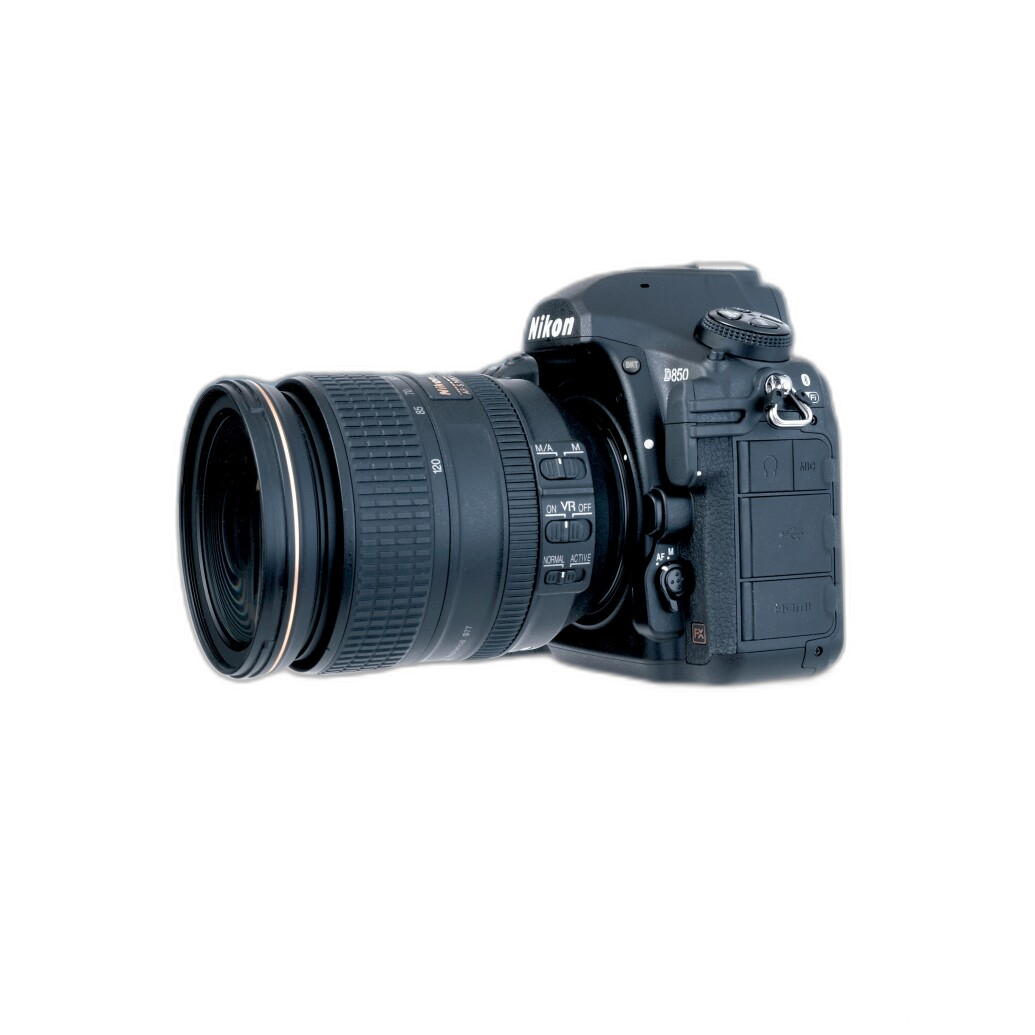
If one branch of Nikon DSLR history defines the high-resolution age, it is the line from the D800 to the D850. These cameras became central to Nikon's reputation among landscape, commercial, portrait, architecture, and studio photographers. The emphasis here was not just on more resolution in a simple numerical sense, but on image quality that supported demanding print and post-production workflows.
The D810 refined the concept, and the D850 came to be regarded as one of the standout Nikon DSLRs of the entire era. Historically, the D850 is important because it embodied the mature DSLR at a very high level: strong resolution, strong all-around performance, broad appeal, and a specification philosophy that suggested Nikon was trying to deliver as few compromises as possible within the DSLR form.
The Professional Flagship Line Continues: D4, D4S, D5, and D6
While enthusiast and resolution-oriented cameras broadened Nikon's audience, the flagship integrated-grip line remained the symbolic core of the D-series.
D4 and D4S
The D4 and D4S continued Nikon's commitment to the sports, action, and photojournalism market. This generation advanced the qualities professionals depended on most: speed, endurance, autofocus reliability, image quality in difficult conditions, and a body design intended for constant heavy use.
By this stage, Nikon's flagships were expected not only to perform at the highest level, but to do so under pressure, in poor weather, and on unforgiving deadlines. The D4 line reinforced the idea that Nikon's top DSLR was a working machine above all else.
D5
The D5 further developed Nikon's flagship formula in an era when autofocus sophistication, low-light performance, and file delivery speed had become even more central to professional use. Sports, news, and event photographers needed cameras that could not just capture decisive moments, but do so consistently in unpredictable environments.
The D5 represented the DSLR flagship near its mature peak: a camera designed to remove obstacles between photographer and result.
D6
The D6, introduced in 2020, stands as the final chapter in this historical arc. As the last flagship in Nikon's D-series DSLR line, it arrived in a photographic world already shifting rapidly toward mirrorless systems. Yet that context only heightens its significance. The D6 is the culmination of two decades of Nikon DSLR evolution, carrying forward the central priorities that had defined the line since the D1: speed, ruggedness, dependability, and professional-oriented control.
For historians of Nikon equipment, the D6 is both an endpoint and a summary. It shows what the F-mount DSLR had become at its most refined after twenty years of continuous development.
How Nikon Structured the D-Series Over Time
One reason Nikon's DSLR history can seem complex is that the company built multiple parallel families rather than a single ladder. Viewed clearly, though, the structure makes sense:
- Single-digit D cameras were the top professional flagships.
- D x00 and D x000 families often targeted enthusiasts and semi-professional users.
- D x and D xx entry-level bodies opened the system to newcomers.
- Specialized high-resolution variants gave Nikon a strong position in detail-critical work.
This strategy allowed Nikon to serve a broad photographic audience while keeping users within the same F-mount ecosystem. A beginner could start with an accessible DSLR, then later move to a D7000-series body, a D750, a D850, or even a flagship D-series camera without abandoning Nikon lenses and handling conventions.
The Nikon F Mount as the Line's Foundation
Across the entire span from 1999 to 2020, one of the defining constants of the Nikon DSLR line was the Nikon F mount. That continuity was one of Nikon's greatest strengths. It linked the digital era to decades of photographic history and gave photographers confidence that their investment in lenses mattered beyond the lifespan of any one body.
For professionals especially, system continuity was not an abstract advantage. It affected daily work. Existing lenses, accessories, handling habits, and field experience all carried forward into the digital age. Nikon's decision to build its DSLR identity around the F mount helped make the transition from film to digital more practical and less disruptive for long-time users.
At the same time, the F mount also became a thread connecting very different classes of cameras. The same mount tied together beginner DX bodies, full-frame enthusiast models, and top-tier professional flagships. That broad compatibility is central to understanding why Nikon's DSLR system remained so influential for so long.
The Arc of Advancement: What Changed from D1 to D6
Looking across the entire D-series era, the story is one of steady and often dramatic advancement. The broad themes include:
- Image quality improved generation by generation, with better dynamic range, cleaner high-ISO output, and more refined processing.
- Autofocus systems became faster, smarter, and more dependable, especially for moving subjects.
- Shooting speed and buffer performance advanced to meet the demands of sports and action work.
- Build quality and weather sealing matured, particularly in the higher-end lines.
- Ergonomics and control layouts became more polished and more familiar across the range.
- Video capability emerged as a major factor in later generations.
- Resolution segmentation allowed Nikon to tailor cameras for speed, portability, or detail depending on need.
From an archival perspective, what stands out is not merely that Nikon made cameras better over time. It is that Nikon used the DSLR era to define multiple kinds of photographic tools within one shared system language.
The Legacy of the Nikon D-Series DSLR Line
The Nikon D-series DSLR line, spanning the years 1999 through 2020, remains one of the central chapters in modern camera history. It begins with the D1 at the dawn of Nikon's self-defined professional digital era and concludes with the D6, a camera that represents the mature end state of the flagship F-mount DSLR.
In between, Nikon built an entire ecosystem of cameras that served nearly every type of photographer. Some became newsroom staples. Some became wedding and portrait favorites. Some became landscape legends. Others were first cameras that introduced photographers to interchangeable-lens systems for the first time. Taken together, they show how the DSLR moved from a specialized professional instrument to the dominant interchangeable-lens camera format of its time.
For anyone tracing Nikon's camera history, the D-series is not just a product line. It is the record of Nikon's digital transformation.
If you are researching classic Nikon cameras, building an F-mount system, or looking to buy Nikon gear and learn more about its history, Unique Photo remains a trusted place to explore equipment, compare options, and connect with knowledgeable staff who understand the legacy of Nikon's D-series DSLRs.