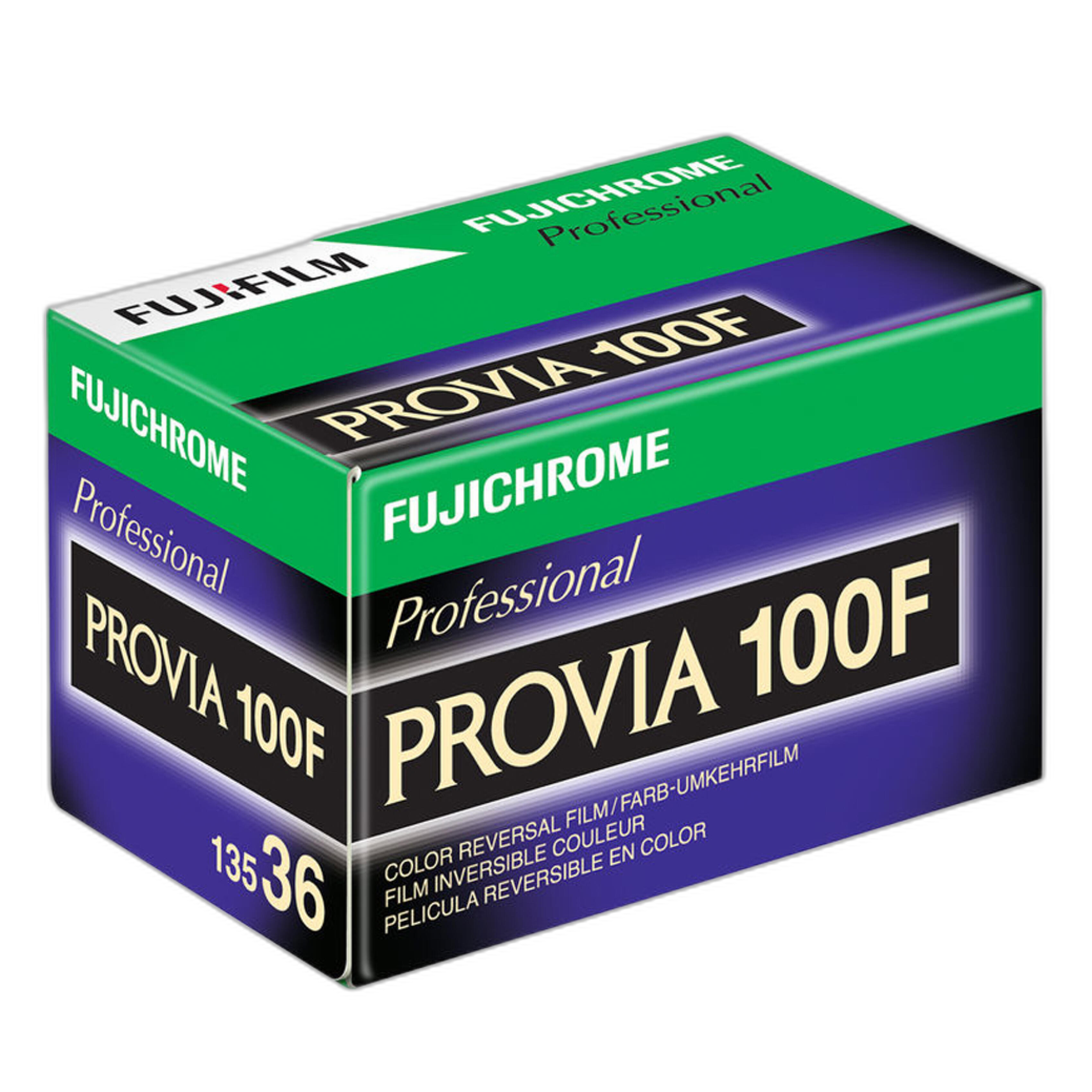
In the world of color transparency film, balance is often the hardest quality to achieve. Some emulsions win photographers over with vivid saturation and dramatic contrast, while others earn loyalty through subtlety, tonal accuracy, and versatility. Fujifilm Provia 100F, introduced in 2000, arrived as a color reversal film aimed squarely at that middle ground: a professional ISO 100 slide film with a neutral look and fine grain, designed for photographers who wanted clean, natural color without sacrificing the precision and clarity expected from transparency film.
As a historical profile from the period of its introduction, Provia 100F stands out as an important addition to Fujifilm's professional film lineup. It represented a thoughtful answer to the needs of working photographers who wanted a dependable E-6 slide film for landscapes, travel, editorial use, studio applications, and general-purpose shooting where color fidelity mattered as much as impact.
A New Professional Transparency Film for a Broad Range of Uses
By 2000, slide film remained a critical medium for many serious photographers. Transparencies were valued for projection, editorial submission, publication workflows, and the unmistakable look they delivered on a light table. In that environment, every film stock developed a reputation. Some were chosen for high saturation and bold scenic color; others for skin tones, consistency, or flexibility under mixed conditions.
Fujifilm positioned Provia 100F as a professional color reversal (slide) film with an ISO 100 speed and a rendering style centered on realism. Its appeal was straightforward: photographers could expect a film that did not push color too aggressively, yet still offered the clarity, crispness, and polish that slide shooters demanded. That made it especially attractive to those who wanted one stock capable of handling many assignments without imposing an exaggerated signature.
The Look: Neutral Color and Fine Grain
The defining character of Provia 100F is contained in two ideas: neutral color and fine grain. For many photographers, that combination was exactly the point.
Natural, Controlled Color
Unlike films prized primarily for heightened saturation, Provia 100F aimed for a more measured palette. Blues, greens, reds, and skin tones could appear clean and believable rather than overstated. For landscape photographers, that meant scenes could retain realism while still benefiting from the inherent richness of reversal film. For portrait and travel work, it meant subjects were less likely to take on the overcooked appearance that some highly saturated emulsions could produce.
This neutrality also made Provia 100F a useful option when the subject itself carried the visual interest. Architecture, documentary work, product photography, and editorial subjects often benefit from faithful reproduction. A film that imposes less of its own color bias can be easier to trust across a wide range of situations.
Refined Grain Structure
Fine grain has always been central to the professional appeal of slower slide films, and Provia 100F fit comfortably in that tradition. An ISO 100 transparency film naturally occupies a sweet spot for photographers seeking detail, sharp presentation, and smooth tonal transitions. Whether viewed on a light table, projected, or drum-scanned for publication, a fine-grained emulsion offers a polished result that professionals immediately notice.
That refinement contributed to the film's all-around usability. Scenic subjects with delicate textures, still lifes with controlled lighting, and editorial images requiring crisp reproduction could all benefit from an emulsion that delivered detail without a coarse grain pattern intruding on the image.
Why Provia 100F Mattered in Fujifilm's Lineup
Fujifilm's professional film catalog was known for giving photographers distinct choices rather than one-size-fits-all solutions. Within that larger ecosystem, Provia 100F filled an important role. It served photographers who wanted a transparency film that was neither excessively restrained nor aggressively stylized. In practical terms, it was a stock that could be loaded with confidence when the assignment did not call for extremes.
This positioning was significant. Many professionals and advanced enthusiasts do not want every subject rendered with maximum punch. In commercial and editorial contexts, accurate reproduction can be more valuable than spectacle. In travel and nature work, realism may better preserve the character of a place. Provia 100F offered a disciplined, professional interpretation of color that made it especially appealing as an everyday slide film.
Best Uses Around the Time of Release
Seen from the standpoint of its 2000 introduction, Provia 100F was well suited to a broad list of photographic applications.
Landscape Photography
Landscape photographers often value transparency film for its luminous highlights and rich color separation. Provia 100F gave them those strengths while keeping hues relatively natural. Instead of dramatically amplifying every sunrise or patch of foliage, it could preserve subtle atmospheric differences and more believable transitions in the scene.
Travel and Documentary Work
For travel photographers, flexibility matters. A film with a neutral rendering is easier to use from one location to the next, especially when subjects vary widely in palette and lighting. Street scenes, markets, architecture, and environmental portraits all benefit from a film that can record color honestly and attractively.
Studio and Product Photography
In studio settings, controlled color is often a virtue. Products, fabrics, packaging, and commercial subjects may require accurate representation rather than interpretation. Provia 100F's balanced palette made it a practical choice for photographers who needed transparency film that would respond predictably under well-managed lighting.
General Professional Use
Perhaps most importantly, Provia 100F worked as a dependable general-purpose professional slide film. That may sound modest, but it is one of the highest compliments any emulsion can receive. Films that become trusted defaults often do so because they handle many subjects well without introducing surprises.
Shooting Characteristics of an ISO 100 Slide Film
As an ISO 100 color reversal film, Provia 100F belonged to a class that rewards careful technique. Slide film, by nature, asks photographers to expose thoughtfully. Highlights can be unforgiving, and precision matters more than with many negative films. For photographers comfortable with that discipline, the reward is a transparency with striking clarity and a directness of color that remains distinctive.
The ISO 100 speed offered a practical compromise. It was fast enough for regular daylight and tripod-free outdoor work in many conditions, while still preserving the fine-grain advantages expected from a slower professional emulsion. In studio use or on a tripod outdoors, it offered even more control, making it especially appealing to photographers who prized image quality above all.
Archival Perspective
Looking back, Provia 100F represents an era when film choice was a central creative and technical decision. Before digital capture became dominant, selecting an emulsion was often as important as selecting a lens. Each stock had a voice. Provia 100F's voice was measured, polished, and trustworthy.
That quality helps explain its lasting reputation among film photographers. While some emulsions are remembered for bold special effects or highly stylized color, Provia 100F is remembered for doing something arguably more difficult: delivering a balanced, professional result that suited a remarkable range of subjects. Its place in photographic history rests not on novelty, but on consistency and restraint.
Conclusion
Fujifilm Provia 100F entered the market in 2000 as a professional ISO 100 color reversal film defined by neutral color and fine grain. In a slide-film landscape full of strong personalities, it earned distinction by being balanced, dependable, and broadly useful. For photographers who wanted natural color with the crisp, luminous qualities only transparency film can provide, Provia 100F was an especially compelling choice.
For collectors, film enthusiasts, and photographers interested in the history of Fujifilm materials, Provia 100F remains an important stock to know. To explore more classic film profiles, discover current photographic gear, or learn more about the tools that shaped image-making history, visit Unique Photo.