From the early days of affordable digital SLRs to the mature, high-speed professional bodies that closed out the DSLR era’s peak, Canon’s EOS DSLR line tells one of the most important stories in modern photographic history. Spanning roughly 2000 through 2020 and built around the Canon EF mount, the EOS DSLR family helped define how photographers transitioned from film to digital without giving up the handling, lens choice, and creative control they expected from a serious camera system.
This release-history hub follows that lineage chronologically, from the landmark EOS D30 through the flagship EOS-1D X Mark III. Along the way, Canon expanded DSLR photography from a specialist digital niche into a mainstream, professional, enthusiast, and entry-level ecosystem. Sensor formats evolved, autofocus systems grew more sophisticated, burst rates climbed, video became central, and image quality improved generation after generation. Just as importantly, Canon built this progress atop the EF mount, giving photographers continuity across a vast lens catalog while steadily refining the capabilities of the bodies themselves.
What follows is an archival overview of the major Canon EOS DSLR generations and the roles they played in the system’s development.
The Beginning of Canon’s Native EOS DSLR Era
By 2000, digital imaging was no longer a curiosity. Photojournalists, commercial studios, and early adopters were already exploring digital workflows, but the market remained fragmented. Canon’s EOS film SLR system was well established, and the arrival of more fully integrated digital bodies represented a pivotal shift: instead of a niche digital solution built around modified film cameras or partnerships, photographers could begin to see a coherent digital future inside the EOS family itself.
The Canon EOS D30, introduced in 2000, stands as one of the most significant starting points in that history. Not to be confused with the earlier Kodak-built Canon DCS models, the D30 marked Canon’s own digital SLR effort in a more complete sense and helped establish the pattern that would define the line for the next two decades: EOS handling, EF lens compatibility, and a body designed for the digital age rather than simply adapted to it.
Canon EOS D30 (2000)
The D30 occupies an important place in camera history because it made the idea of a practical Canon digital SLR feel real to a much broader audience. It was an early indication that digital capture was not merely a premium add-on for agencies and institutional users, but a viable path forward for serious photographers invested in EOS lenses. Canon users could now imagine building a digital workflow while staying inside the familiar EF ecosystem.
In historical terms, the D30 matters less for isolated specifications and more for what it represented: a credible, integrated Canon DSLR platform with room to grow. It helped set expectations for future EOS digital bodies in ergonomics, lens compatibility, and the notion that DSLR development would proceed in generations, each one refining speed, image quality, and user experience.
Canon EOS D60 and EOS 10D
If the D30 announced Canon’s intentions, the EOS D60 and later EOS 10D showed that Canon was serious about cadence and advancement. Early digital photography moved quickly, and Canon responded with bodies that improved practicality and confidence for photographers making the switch from film or older digital systems.
The 10D, in particular, became emblematic of Canon’s strengthening enthusiast and prosumer position. These cameras helped normalize the APS-C EOS DSLR as a serious photographic tool, not just a compromise solution. For many photographers, this tier became the gateway into the digital EOS system: substantial enough to handle demanding work, but not positioned at flagship prices.
The EOS Digital Rebel Revolution
EOS Digital Rebel / 300D
No discussion of Canon DSLR history is complete without the EOS Digital Rebel, known in some markets as the 300D. If the earlier D-series bodies established Canon’s digital credibility, the Digital Rebel changed the market’s center of gravity. It brought EOS DSLR photography to a dramatically wider audience and helped turn the DSLR from an aspirational professional tool into an enthusiast and family-photography reality.
This was a watershed moment. For countless users, the Digital Rebel was the first digital interchangeable-lens camera that felt attainable. Canon’s EF mount lens ecosystem now had a lower barrier to entry on the digital side, and the effects rippled throughout the industry. The DSLR was no longer only for dedicated specialists; it became the default upgrade path for advanced compact users and many first-time interchangeable-lens buyers.
Rebel Generations: XT, XTi, XS, T1i and Beyond
Canon capitalized on this momentum by steadily updating the Rebel line. Through models such as the XT, XTi, XS, T1i, T2i, T3i, T4i, T5i, T6i, T7i, SL-series variants, and later consumer-oriented bodies, Canon continually refined the formula that made the Rebel family so influential. The broad pattern was consistent: more resolution, better screens, improved autofocus, faster operation, stronger low-light performance, and eventually stronger video functionality.
The importance of the Rebel lineage cannot be overstated. These cameras introduced generations of photographers to exposure control, interchangeable lenses, flash systems, and the broader EOS ecosystem. In practical retail terms, they were often the bodies that sold the system. A user might begin with a kit zoom and an entry-level Rebel body, then gradually expand into portrait lenses, telephotos, macro optics, and advanced accessories—all without leaving the EF mount.
From a historical standpoint, the Rebel series also illustrates Canon’s great strength during the DSLR era: segmentation without fragmentation. Entry-level users, enthusiasts, and professionals all inhabited recognizably related systems. The menus, handling concepts, lens mount, and overall philosophy were connected enough that moving up the line felt natural.
The Enthusiast Midrange: The XXD Series
EOS 20D, 30D, 40D, 50D
Parallel to the Rebel line, Canon developed a robust enthusiast segment often associated with the two-digit EOS DSLR bodies. These cameras served photographers who wanted something more substantial than an entry-level body: stronger build quality, more direct controls, faster responsiveness, and a handling style that edged closer to Canon’s professional offerings.
The EOS 20D, 30D, 40D, and 50D collectively helped define what the enthusiast DSLR should be in the mid-2000s. They were especially appealing to event photographers, advanced hobbyists, and working shooters who needed reliability and speed but did not necessarily require a flagship body. This tier often became the sweet spot of the lineup, balancing price, capability, and portability.
Across these generations, Canon refined ergonomics and performance in ways that mattered in day-to-day use. Better controls, more responsive shooting, stronger autofocus, and improved image pipelines made these cameras trusted tools. Historically, the XXD line also helped distinguish Canon’s DSLR strategy from a simple good-better-best staircase; instead, Canon built specialized value at each level.
EOS 60D, 70D, 80D, 90D
As the line evolved, the 60D, 70D, 80D, and eventually 90D reflected changing user expectations. Articulating screens, live view improvements, and stronger hybrid stills/video features became increasingly important. The 70D is especially notable in Canon’s DSLR history because it arrived during a period when video usability and live-view autofocus had become central competitive concerns.
By the time of the 80D and 90D, the enthusiast DSLR had become a remarkably mature photographic instrument. These cameras were expected to do nearly everything well: action, portraits, travel, video, low-light work, and daily use. The evolutionary story here is one of broad competence. Canon was no longer merely improving image quality generation by generation; it was building cameras intended to serve as complete visual tools for a wide range of creators.
The Advanced APS-C Branch: The 7D Series
EOS 7D
When Canon introduced the EOS 7D, it signaled that APS-C did not have to mean entry-level or even merely midrange. The 7D was positioned as a high-performance camera for photographers who prized speed, reach, and ruggedness. Sports shooters, wildlife photographers, and action specialists immediately understood its appeal.
Historically, the 7D showed Canon’s willingness to treat crop-sensor cameras as serious performance machines rather than simple stepping stones to full frame. In the EOS DSLR release story, that matters. It acknowledged that sensor format was not a hierarchy of legitimacy so much as a question of use case. For many applications—especially where apparent telephoto reach and high burst shooting mattered—APS-C could be the ideal format.
EOS 7D Mark II
The 7D Mark II extended that philosophy into a later era, reinforcing Canon’s commitment to a truly advanced APS-C DSLR. By this point, the market had become more demanding, and the camera had to satisfy photographers expecting professional-grade autofocus behavior, durable construction, and speed suited to demanding field work.
As part of the overall EOS history, the 7D series stands out for preserving a high-end APS-C identity at a time when many buyers might otherwise have assumed full frame was the only serious destination. It gave Canon’s DSLR lineup greater depth and made the system more adaptable to specialized shooting disciplines.
Full-Frame EOS for Enthusiasts and Professionals
EOS 5D (Original)
If the Digital Rebel democratized the DSLR, the original EOS 5D democratized full-frame digital photography in a different sense. It brought the look and field-of-view familiarity of the 35mm format to a wider tier of serious users. For portrait, wedding, landscape, and editorial photographers, the 5D became a landmark model.
The significance of the 5D was cultural as well as technical. It helped make full frame an aspiration within reach of advanced users, not just flagship buyers. The camera’s place in history rests on that role: it shifted expectations around what a non-flagship full-frame DSLR could be.
EOS 5D Mark II
The EOS 5D Mark II is one of the most consequential DSLRs Canon ever made. In still photography, it further advanced the 5D concept. But its broader historical impact came from video. By helping usher full-frame DSLR video into mainstream professional and creative use, the 5D Mark II reached far beyond the traditional stills market.
Its influence was enormous. Independent filmmakers, multimedia journalists, wedding studios, commercial creators, and hybrid shooters embraced the idea that a single DSLR could produce both high-quality stills and cinematic-looking video. In hindsight, the 5D Mark II was one of the key cameras of the converged image-making era.
EOS 5D Mark III and EOS 5D Mark IV
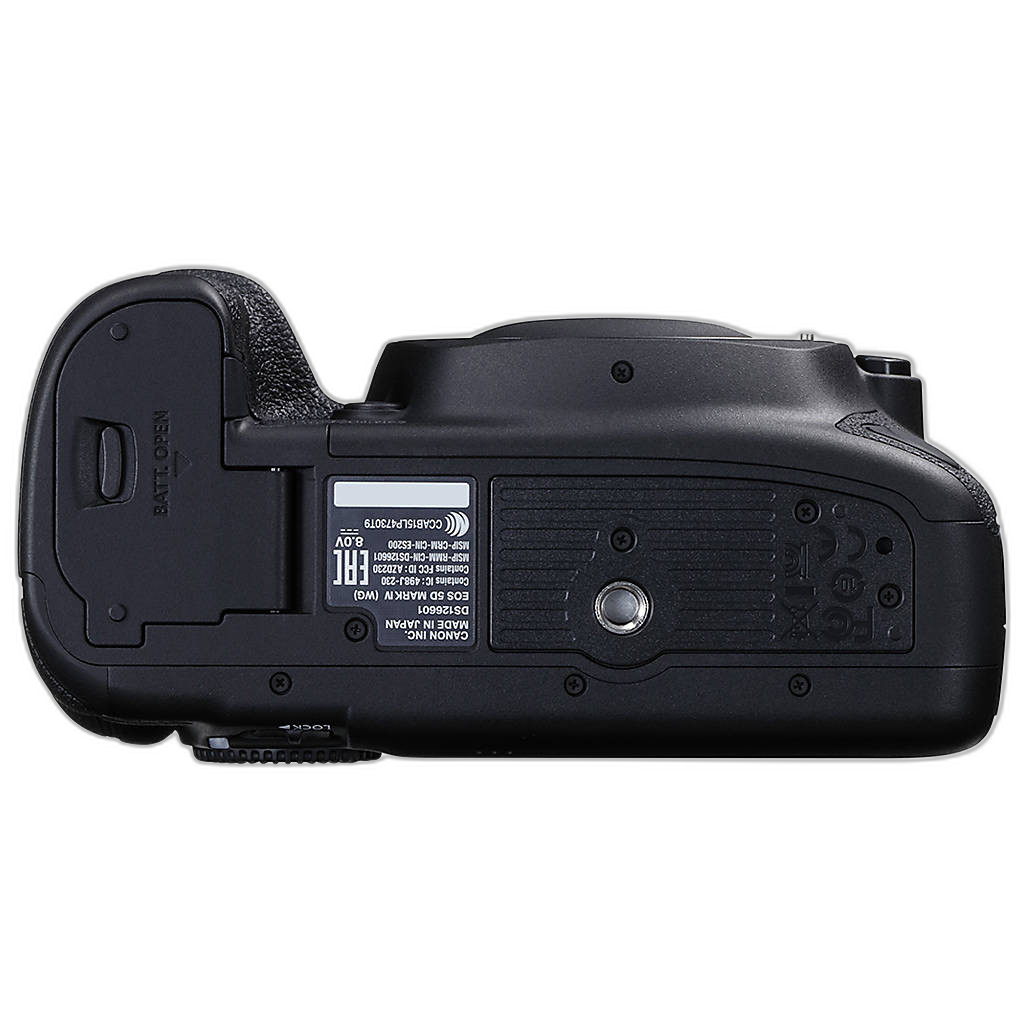
The later 5D generations refined this hybrid identity. The 5D Mark III delivered a more rounded, dependable professional platform, while the 5D Mark IV continued Canon’s full-frame workhorse tradition into a more modern imaging environment. These cameras were expected to be versatile in the truest sense: wedding camera, editorial tool, video platform, travel companion, and general-purpose professional body.
Within the EOS release chronology, the 5D line became the clearest expression of Canon’s middle path between specialized flagship cameras and lower-cost enthusiast bodies. It represented all-around professional utility.
EOS 6D and 6D Mark II
Canon later broadened its full-frame lineup with the 6D family, opening the format to users who wanted full-frame image characteristics in a more accessible package. The 6D series is important in release-history terms because it shows Canon continuing the democratization pattern that began with the Rebel line and continued with the original 5D: as technologies matured, Canon worked to make them available to wider portions of the market.
For many enthusiasts, travel photographers, and portrait shooters, the 6D line offered an inviting path into full frame without requiring a flagship or upper-tier professional investment.
The Professional Flagships: 1D, 1Ds, and 1D X
EOS-1D and EOS-1Ds Families
At the top of the EOS DSLR hierarchy sat Canon’s professional 1-series bodies. These were the cameras that defined Canon’s credibility in sports, news, commercial, and high-end professional photography during the digital transition. Built for durability, speed, and dependable operation under pressure, they served the photographers for whom missed frames and equipment hesitation were unacceptable.
The 1D and 1Ds branches historically represented two complementary priorities: speed and high-end image quality. In broad terms, these cameras showed Canon addressing the needs of elite working professionals with dedicated tools rather than a one-size-fits-all flagship.
The 1-series bodies also played an outsized role in public perception. They were the cameras seen on sidelines, at major events, and in the hands of agency and press photographers. Their presence reinforced Canon’s status as a dominant professional system maker in the DSLR era.
EOS-1D Mark II, Mark III, Mark IV
As the 1D line advanced through its Mark II, Mark III, and Mark IV generations, the emphasis remained on speed, responsiveness, autofocus capability, and ruggedness. This was the part of Canon’s DSLR history where incremental refinements had direct consequences in the field. Faster performance, stronger subject tracking, and more efficient workflows were not luxuries; they were professional necessities.
In archival perspective, these cameras mark the maturation of the digital press and sports camera. By the time later 1D models arrived, the DSLR had fully replaced film in the most demanding applications. Canon was no longer proving that digital could work. It was optimizing digital for elite performance.
EOS-1D X, 1D X Mark II, 1D X Mark III
The EOS-1D X line unified Canon’s top-tier DSLR strategy into a single flagship direction. This was a significant moment in the EOS chronology. Rather than maintaining separate top-end branches, Canon consolidated the concept into one highly capable professional body designed to satisfy a broad spectrum of flagship users.
The original 1D X established this modern flagship identity, and the 1D X Mark II built on it during a period when professional image-makers increasingly expected not just faster stills performance, but meaningful video capability as well. By the time the EOS-1D X Mark III arrived, Canon had brought the DSLR flagship to an extraordinarily mature level.
Seen from the vantage point of 2000 to 2020, the 1D X Mark III stands as one of the culminating expressions of the EOS DSLR concept: fast, durable, deeply refined, and built around two decades of accumulated autofocus, metering, ergonomics, and image-processing expertise. It represents the end point of a long developmental arc that began with the D30’s promise and ended with a DSLR platform operating at remarkable sophistication.
How the EOS DSLR Generations Advanced
Image Quality and Sensor Development
One of the clearest through-lines in Canon DSLR history is image quality. Across the 2000–2020 period, Canon steadily improved resolution, noise behavior, dynamic performance, color rendering, and processing sophistication. Early digital SLRs had to persuade photographers that digital was viable. Later models competed on nuance: low-light flexibility, tonal subtlety, and workflow confidence.
Sensor format diversification also became central to Canon’s strategy. APS-C bodies served entry-level, enthusiast, and high-performance action niches, while full-frame bodies addressed users seeking wider-angle coverage, different depth-of-field characteristics, and premium image quality. Throughout it all, Canon anchored the system with EF mount continuity.
Autofocus, Speed, and Responsiveness
Autofocus advancement is another defining theme. Early DSLRs proved the concept; later generations turned autofocus into one of the main battlegrounds of camera design. Tracking performance, point coverage, low-light sensitivity, and intelligent subject handling became increasingly important. Canon’s higher-end lines in particular showed how much progress could be made in real-world shooting confidence.
Burst rates and operational speed followed a similar path. What began as respectable digital SLR performance became genuinely high-speed capture in professional bodies and increasingly capable action performance further down the range. This progression helped DSLRs dominate sports, wildlife, and event work for many years.
Live View and Video
At the beginning of the EOS DSLR story, video was not part of the category’s identity. By the middle and later years, it had become essential. Canon’s DSLR line evolved alongside major changes in how photographers and filmmakers worked, and some EOS models—most famously the 5D Mark II—had an influence far beyond conventional still photography.
Live view also changed expectations around focusing, composition, and shooting style. Articulating displays, better on-sensor or live-view focusing behavior, and improved interfaces helped bring the DSLR into a more hybrid future, even as mirrorless designs began to emerge.
The Importance of the Canon EF Mount
Throughout this entire DSLR history, the Canon EF mount remained the system’s central pillar. That continuity gave EOS users extraordinary flexibility. A photographer who entered the system with an affordable Rebel body could access the same broad lens family that served advanced enthusiasts and working professionals. In practical terms, that meant the system could grow with the user.
The EF ecosystem was not just extensive; it was one of the reasons Canon’s DSLR line became so durable in the market. Standard zooms, fast primes, specialist macro lenses, long telephotos, tilt-shift optics, and professional L-series glass all helped make the EOS DSLR family feel complete. Bodies came and went in regular generations, but the lens investment remained meaningful across the line.
The EOS DSLR Line in Historical Perspective
Looking back over the 2000–2020 era, Canon’s EOS DSLR release history is not merely a sequence of product launches. It is a record of digital photography becoming normal, then dominant, then highly refined. The D30 helped establish Canon’s native DSLR path. The Digital Rebel widened the market. The XXD cameras strengthened the enthusiast middle. The 7D proved APS-C performance could be elite. The 5D series reshaped expectations for full frame and hybrid creation. The 1-series bodies defined professional confidence. And the 1D X Mark III brought the flagship DSLR concept to a remarkably advanced endpoint.
This chronology also reveals Canon’s broader strategy: maintain system continuity through the EF mount, address multiple levels of the market with purpose-built bodies, and evolve the DSLR from a digital experiment into a comprehensive imaging platform. For two decades, that strategy helped make EOS one of the defining names in photography.
Closing Thoughts
For photographers studying the transition from film-era SLR systems to mature digital platforms, Canon’s EOS DSLR lineage remains one of the most instructive stories in the industry. From the EOS D30 to the EOS-1D X Mark III, these cameras chart the rise of digital capture, the expansion of hybrid imaging, and the long-term value of a well-supported lens mount system.
If you are exploring Canon history, comparing classic EOS bodies, or looking to buy Canon cameras and lenses from a trusted source, Unique Photo is an excellent place to learn more, shop current gear, and connect with people who understand the legacy of the EOS system.