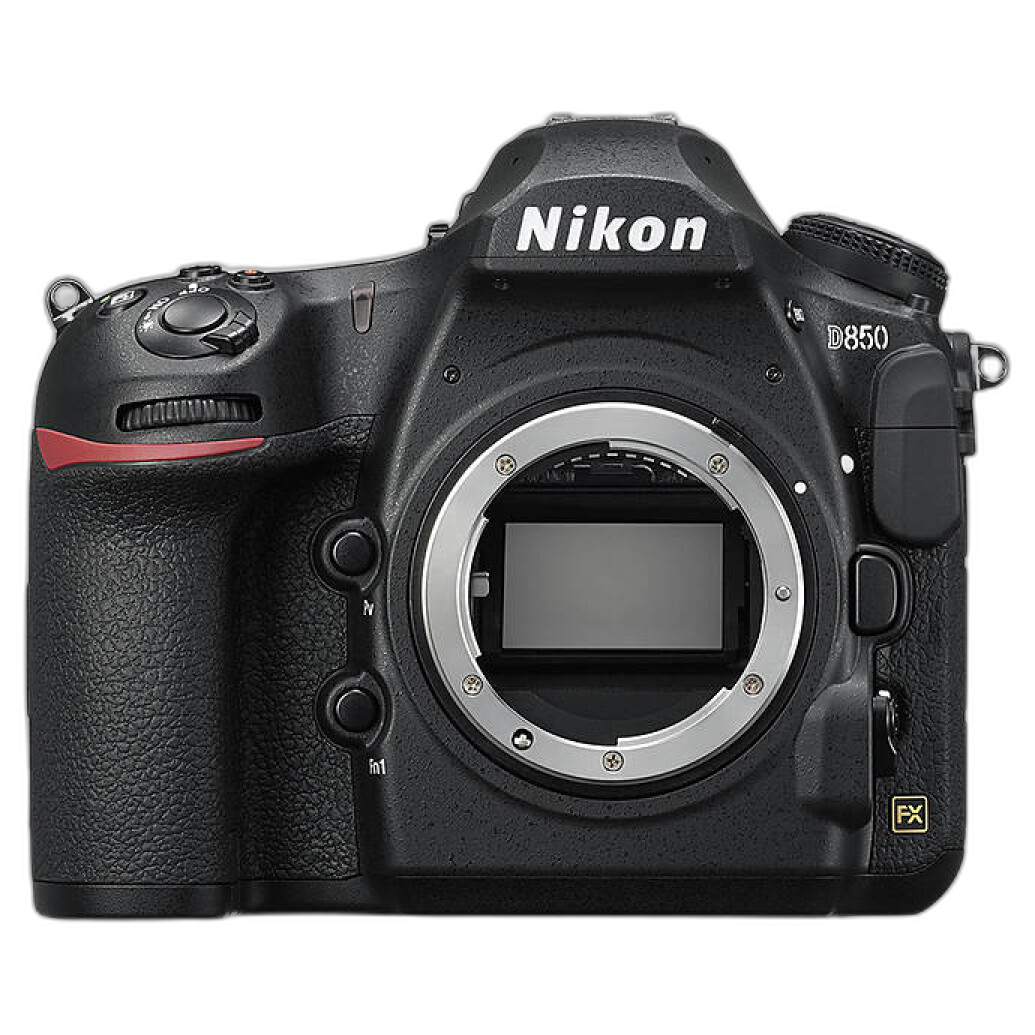
When Nikon introduced the D850 in August 2017, it arrived at a moment when the camera industry was already talking more and more about mirrorless futures. Yet Nikon’s message with this flagship-class DSLR was clear: the traditional optical-viewfinder camera still had room to evolve, and for many photographers, it still represented the most complete all-around tool available. In hindsight, that confidence was well placed. The Nikon D850 quickly earned a reputation as one of the defining DSLRs of its era, blending high resolution, speed, durability, and versatility in a way that appealed to landscape photographers, portrait shooters, commercial professionals, wedding specialists, and even action-oriented users who needed more from a high-megapixel body than studio-bound performance.
Seen from the vantage point of its release period, the D850 felt less like a niche update and more like Nikon’s fullest statement of what the F-mount DSLR system could be at its peak. It was ambitious without being experimental, familiar without seeming dated, and powerful without forcing photographers into a specialized workflow. That balance is a major part of why the camera remains so respected today.
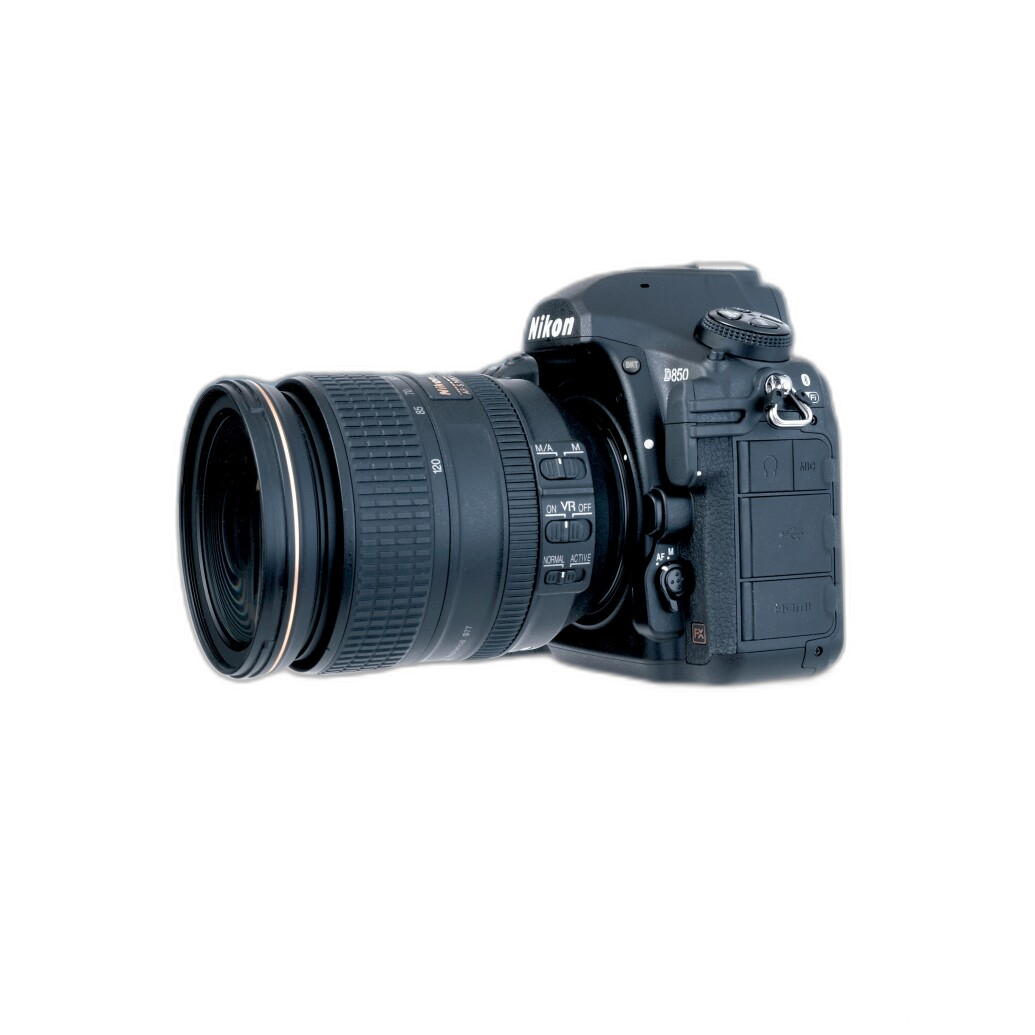
A High-Resolution DSLR Built Without Compromise
The headline feature of the Nikon D850 was its 45.7-megapixel full-frame BSI sensor. On paper, that immediately positioned it as a camera for photographers who demanded serious detail. In practice, what made the D850 so notable was that Nikon did not present high resolution as an excuse to sacrifice overall responsiveness. For years, photographers often had to choose between a camera optimized for speed and one optimized for sheer image size. The D850 challenged that tradeoff.
Its back-side illuminated sensor design was especially significant in the context of 2017. BSI technology had become increasingly familiar in smaller sensors, but its use in a full-frame DSLR reinforced Nikon’s intent to push image quality forward while maintaining the ergonomics and shooting style that working professionals already trusted. For landscape and studio photographers, the promise was obvious: rich, highly detailed files from a rugged Nikon body built to withstand extensive field use. For wedding and event photographers, the appeal was subtler but equally important: resolution ample enough for large prints and flexible cropping, without abandoning the dependable handling of a professional DSLR.
Speed That Changed the Conversation
A camera with 45.7 megapixels might once have been assumed to be slow by definition. Nikon made sure that was not the D850 story. The camera offered continuous shooting at 7 frames per second, with the ability to reach 9 frames per second when paired with a grip. That specification mattered because it expanded the D850’s audience beyond the obvious high-resolution crowd.
Wildlife photographers, sports shooters, and photojournalists often have little patience for cameras that interrupt timing in exchange for pixel count. The D850 did not replace Nikon’s dedicated speed-centric bodies, but it gave professionals and advanced enthusiasts a serious argument for carrying one camera that could move between genres with unusual confidence. A portrait photographer could spend the morning making large commercial files and the afternoon capturing dynamic motion with a burst rate that felt far from compromised. That breadth helped define the D850’s identity from the beginning.
The Strength of the Nikon F Mount
The D850 also benefited from something beyond its sensor and frame rate: it arrived as part of the deeply established Nikon F ecosystem. By 2017, the F mount represented decades of lens development and professional trust. For existing Nikon users, the D850 was not simply a new body; it was an opportunity to extract more performance from lenses they already owned and knew well. That mattered enormously in professional environments, where changing systems involves cost, retraining, and workflow disruption.
In that sense, the D850’s arrival was as much about continuity as innovation. Nikon was giving its DSLR base a camera that felt decisively modern while respecting the value of an existing kit. That kind of continuity is easy to underappreciate in retrospect, especially in an era often framed as a race toward newer form factors. But many working photographers measure cameras not by novelty alone, but by how seamlessly they fit into real assignments. The D850 fit immediately.
Positioning and Price at Launch
At a launch price of $3,299 in the United States, the Nikon D850 entered the market as a premium enthusiast and professional body, but it did so with a value proposition that was hard to ignore. A camera offering this level of resolution, robust performance, and broad usability could easily have felt more narrowly specialized or more prohibitively priced. Instead, Nikon positioned the D850 as a serious investment for photographers who needed top-tier capability without stepping into an entirely separate category of camera system.
That pricing also reflected Nikon’s confidence that the D850 would appeal across multiple segments. It was not only a camera for commercial studios or only for landscape specialists. It was intended to be aspirational and practical at the same time, and that dual identity helped fuel the enthusiasm around its launch.
Why the D850 Resonated So Strongly
Part of the D850’s enduring status comes from timing. It arrived late enough in DSLR development to benefit from years of refinement, but early enough to represent a peak rather than a farewell. Nikon had learned what professionals wanted from its higher-end bodies: dependable handling, substantial battery life, rugged construction, familiar controls, and image quality that could satisfy demanding clients. The D850 brought those expectations together in a camera that seemed to do nearly everything well.
There was also an emotional component that should not be overlooked. Many photographers still preferred the directness of an optical viewfinder, the balance of a full-size DSLR body with larger lenses, and the tactile certainty of Nikon’s established control layout. The D850 was not trying to persuade those users to change their working habits. Instead, it validated them. It said that the DSLR was not merely surviving; it was still capable of setting a benchmark.
A Camera for More Than One Kind of Professional
What makes the D850 especially interesting in historical retrospect is how many different kinds of photographers claimed it as their camera. Landscape photographers praised the 45.7MP full-frame BSI sensor for detail-rich files. Portrait and wedding photographers appreciated the blend of resolution and responsiveness. Commercial users saw a flexible production tool. Action-oriented shooters recognized that 7 fps, or 9 fps with a grip, made the body more adaptable than many high-resolution rivals. Even photographers who already owned more specialized equipment often saw the D850 as the body that could cover the widest range of assignments with the fewest caveats.
That versatility is the reason the D850 is often discussed not just as a successful product, but as a culmination. It represented a mature design philosophy: deliver excellent image quality, preserve professional usability, and avoid forcing unnecessary compromises. Cameras that succeed in one area are common. Cameras that satisfy so many disciplines at once are rare.
The D850’s Place in Nikon History
Within Nikon’s DSLR lineage, the D850 stands as one of the most important late-generation F-mount bodies. It distilled the company’s experience in building cameras for photographers who expected durability and precision, while also acknowledging the market’s growing demand for ever-higher resolution and all-purpose flexibility. If earlier Nikon DSLRs often asked photographers to choose a lane, the D850 suggested that the lane itself could be wider.
That is why, years later, it remains a touchstone whenever photographers discuss the finest digital SLRs ever made. It was not significant solely because of one standout specification. It was significant because the whole package made sense. The sensor, the speed, the mount, the handling, and the price all aligned around a coherent idea of what a professional-grade DSLR should be in 2017.
Closing Thoughts
The Nikon D850 endures in memory and in active use because it arrived as more than a spec-sheet triumph. It was a camera that understood photographers’ real needs and delivered a rare combination of detail, speed, and system continuity. For many professionals, that combination has been difficult to replace, which is exactly why the D850 still inspires such loyalty. As a historical marker, it represents the DSLR near its peak; as a photographic tool, it remains one of Nikon’s most admired modern classics.
If you want to explore the Nikon D850, compare it with other landmark Nikon bodies, or learn more about the history of Nikon’s F-mount system, Unique Photo is a great place to buy camera gear or dig deeper with expert guidance.