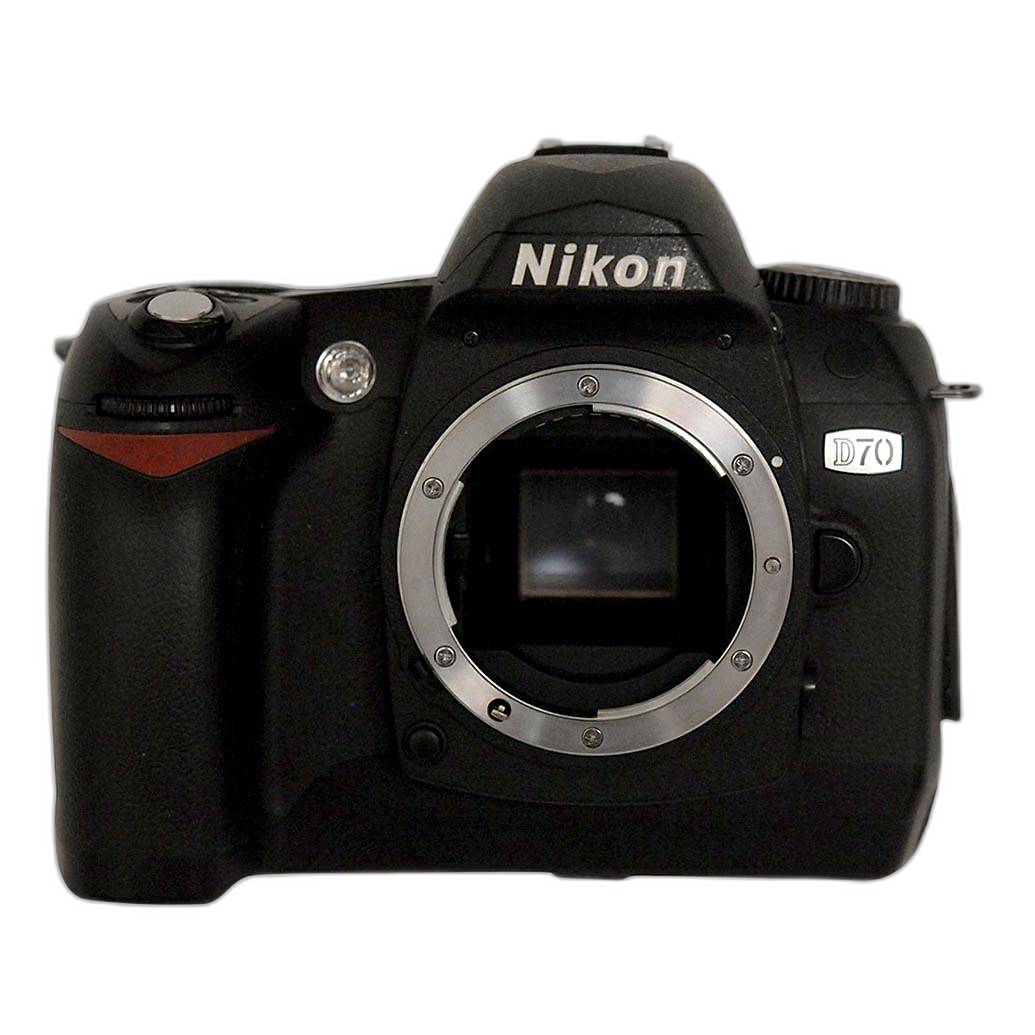
In early 2004, the digital SLR market is moving fast. Prices are falling, performance is improving, and serious enthusiasts who once saw DSLRs as out-of-reach tools for working professionals are beginning to find realistic entry points. Into that atmosphere comes the Nikon D70, announced on January 28, 2004, as a camera with clear significance: a comparatively affordable Nikon digital SLR built to bring more photographers into the company’s established F-mount system.
At a launch price of $999, the D70 immediately stands out as a major statement. Nikon is not merely introducing another DSLR; it is signaling that digital SLR ownership is no longer reserved for the top tier of the market. For photographers already invested in Nikon lenses, and for newcomers deciding where to build a system, the D70 arrives as a timely and strategic answer in the race toward DSLR affordability.
A Key Moment for Nikon Digital
The D70 enters Nikon’s lineup during a period when digital photography is shifting from specialist territory toward the mainstream enthusiast market. Nikon had already established credibility in digital SLRs, but affordability remained one of the biggest barriers to wider adoption. By introducing a 6.1-megapixel APS-C, or DX-format, DSLR at $999, Nikon positions the D70 as a pivotal model for hobbyists, advanced amateurs, students, and even working photographers looking for a lower-cost second body.
That price matters not only in absolute terms, but symbolically. A sub-$1,000 Nikon DSLR body draws attention because it lowers the threshold for entry without asking photographers to leave behind the ecosystem and handling traditions that made Nikon cameras so popular in the film era. The D70 is, in many ways, a bridge camera: it carries the company’s photographic heritage into a digital future that is becoming increasingly accessible.
6.1 Megapixels and the DX Format
At the heart of the D70 is a 6.1MP APS-C sensor in Nikon’s DX format. In 2004, that resolution sits in a very practical sweet spot. It is enough for sharp prints, magazine-quality work in many applications, and the kind of image detail most enthusiasts are looking for as they transition from film or step up from compact digital cameras. While megapixel counts are often the headline in consumer marketing, the D70’s importance lies more in the total package than in raw numbers alone.
The APS-C-sized DX sensor also reinforces Nikon’s evolving digital strategy. By using a smaller-than-35mm imaging area, Nikon can deliver a compact, comparatively affordable DSLR while keeping photographers in the Nikon F lens family. For many users, this continuity will be one of the D70’s strongest appeals. Existing Nikon shooters can look at the D70 and see not a dead-end consumer device, but a true system camera built around a mount with decades of lens history behind it.
The Nikon F Mount Advantage
Perhaps the D70’s greatest strategic strength is that it is a Nikon F-mount camera. In practical terms, that means the D70 is more than just a body with a digital sensor; it is an invitation into one of photography’s most established lens systems. For photographers already using Nikon film SLRs, the D70 represents continuity. For new buyers, it offers confidence that lens purchases made today can be part of a larger long-term system.
That matters enormously in 2004, when system commitment is a major factor in DSLR buying decisions. A digital SLR is not a one-time purchase. It often leads to additional lenses, flashes, bags, and accessories. Nikon understands this, and the D70 looks designed to reassure photographers that buying in at a lower price point does not mean buying into a lesser platform. Instead, the D70 makes the broader Nikon ecosystem feel attainable.
Designed for the Serious Enthusiast
The D70’s market position is especially interesting because it avoids the impression of being merely stripped down for price. Nikon appears to have aimed this camera at photographers who care deeply about image-making and want direct control, interchangeable lenses, and the familiar feel of an SLR. That is a very different proposition from the point-and-shoot digital cameras that still dominate the consumer market in 2004.
For users stepping up from compact digitals, the D70 promises a more deliberate photographic experience: optical viewfinder shooting, lens choice, and the responsiveness that draws many photographers to SLRs in the first place. For film Nikon users, it offers a path into digital that feels recognizable rather than disruptive. It is easy to imagine the D70 appealing to photographers who have been waiting for the right moment to switch, especially if price was the last major obstacle.
Nikon’s Competitive Response
It would be impossible to view the D70 outside the broader competitive climate of its day. The early 2000s are defined by a rapid push among camera makers to bring DSLR prices down and to capture the growing enthusiast market before brand loyalties harden. In that context, the D70 is plainly Nikon’s answer in the affordability race.
What makes Nikon’s move especially noteworthy is that the company is not abandoning its identity to chase lower pricing. Instead, it is trying to translate the Nikon SLR formula into a more accessible digital body. The D70 therefore serves two purposes at once: it competes on price, and it protects Nikon’s long-term place in the expanding DSLR market.
From a historical perspective, this is exactly the kind of model that helps define an era. The cameras that matter most are not always the most expensive or technically exotic. Often, they are the ones that arrive at the right moment and open the door for a wider audience. The D70 has all the signs of being such a camera.
Why the D70 Matters Historically
Looking back, the Nikon D70 stands as an important marker in the democratization of the DSLR. Its 6.1MP DX sensor, Nikon F mount, and headline-grabbing $999 launch price combine to tell a larger story about where photography was heading in 2004. Digital was no longer just the future; it was becoming the practical present for enthusiasts.
The D70 also reflects a broader transformation in how photographers thought about their tools. Buying a digital SLR in this period was not simply purchasing a new camera body. It was choosing a workflow, committing to a lens system, and deciding how quickly to move beyond film. Nikon’s challenge was to make that leap feel both exciting and sensible. The D70 appears crafted to do exactly that.
Its significance is therefore larger than any one specification. Yes, 6.1 megapixels is the core image-making figure. Yes, the DX sensor format is central to the design. Yes, the F mount makes the camera part of a rich and familiar system. But what truly defines the D70 is how those elements come together in a package aimed at bringing more photographers into the DSLR world.
An Accessible Nikon DSLR With System Depth
That may be the D70’s most enduring promise: accessibility without isolation. A lower initial body price does not trap the user in a limited category. Instead, it places them on Nikon’s main road, with room to grow through lenses and accessories over time. In 2004, that is a compelling proposition, and one likely to resonate with exactly the photographers Nikon most wants to reach.
Final Thoughts
The Nikon D70 arrives as one of the most important Nikon announcements of its moment: a 6.1MP APS-C DX DSLR with a Nikon F mount and a disruptive $999 launch price. More than just another product release, it represents Nikon’s determination to compete aggressively as the digital SLR market broadens. For photographers watching the affordability race unfold in real time, the D70 looks like a camera with the power to shift expectations.
For collectors, historians, and photographers interested in landmark digital cameras, the D70 remains a notable chapter in Nikon’s transition-era story. To explore classic Nikon gear, shop current cameras, or learn more about photographic history, visit Unique Photo.