In late 2005, Nikon introduced a camera that immediately felt like a serious step forward for enthusiast photographers who wanted professional handling without stepping all the way into the company’s top-tier bodies. The Nikon D200 arrived with a strong feature set, a sturdy build, and the kind of control layout that suggested it was made for photographers who spend more time shooting than digging through menus. Positioned between entry-level digital SLRs and Nikon’s flagship professional offerings, the D200 quickly stood out as a camera with unmistakably pro-inspired ambitions.
At launch, the Nikon D200 carried a price of $1,699 in the U.S., placing it squarely in the advanced amateur and working enthusiast category. Yet from the first look, this was clearly more than a simple midrange camera. Its body design, performance, and Nikon F-mount compatibility made it a compelling option for photographers already invested in the Nikon system, as well as those looking to move into a more capable digital SLR.
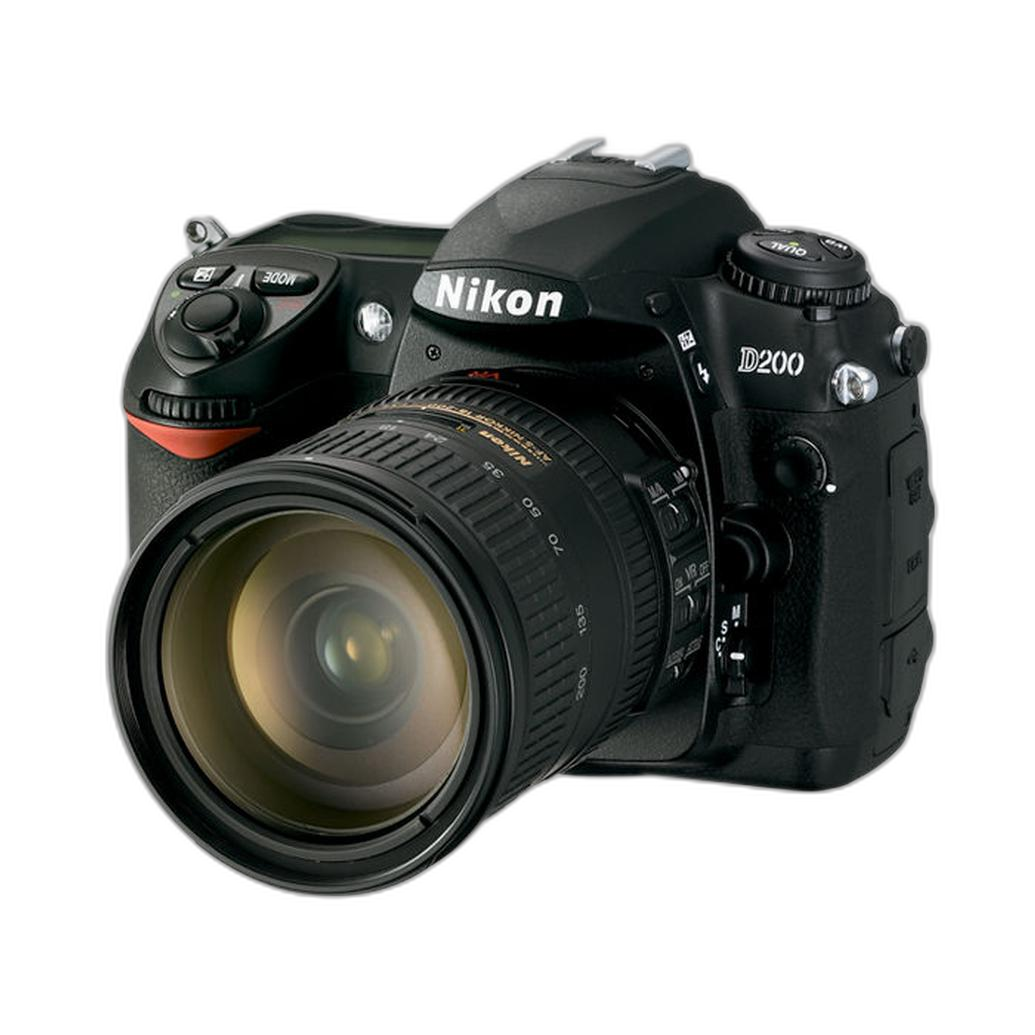
A Serious Camera for Serious Enthusiasts
The D200’s appeal in 2005 was rooted in how convincingly it bridged the gap between consumer digital SLRs and pro models. It was not just about higher resolution or faster shooting, though it offered both. It was about the total experience of using the camera. Nikon gave the D200 an advanced control philosophy that would feel familiar to experienced users of the company’s professional F-mount system. Dedicated buttons, direct access to key settings, and a robust body all helped communicate that this was a camera designed for deliberate, frequent use.
That mattered in the mid-2000s digital market. Many photographers were transitioning from film SLRs or from earlier digital bodies and wanted a camera that preserved the tactile confidence of a traditional Nikon while embracing the speed and convenience of digital capture. The D200 answered that demand with conviction.
10.2 Megapixels on a DX Sensor
At the heart of the Nikon D200 is a 10.2-megapixel APS-C size sensor, which Nikon refers to as DX format. In the context of 2005, that resolution represented a meaningful step for photographers who wanted flexibility for larger prints, tighter crops, and more room in post-processing than earlier generations of digital SLRs often allowed. For editorial, portrait, travel, event, and general-purpose photography, 10.2 megapixels was a very attractive figure at the time.
The DX format also meant that Nikon users could continue working within a familiar lens ecosystem while taking into account the crop factor associated with APS-C capture. For telephoto shooters in particular, that could be a welcome advantage. Sports and wildlife photographers, or anyone wanting a bit more apparent reach from existing lenses, could see immediate practical value in the format.
Performance That Kept Pace
One of the D200’s headline specifications was its 5 frames-per-second continuous shooting speed. That kind of burst performance gave the camera a distinct edge for action-oriented users and further reinforced its status as a serious photographic tool. In 2005, 5 fps was enough to make the D200 feel responsive and capable in a wide range of assignments, from candid event coverage to local sports and fast-moving documentary work.
Just as important as the number itself was what it represented: Nikon was not treating this model as a stripped-down compromise. The D200 was designed to keep up with photographers who needed speed, consistency, and confidence in the field. For many buyers, that would have made it a particularly attractive second body for professional work or a primary body for advanced enthusiasts ready to move up.
Nikon F Mount Compatibility
The Nikon F mount was one of the D200’s greatest strengths, not only technically but historically. By 2005, Nikon’s lens system was already one of the most established in photography, and the D200 benefited enormously from that lineage. The ability to build around Nikon F-mount lenses gave users access to a deep and respected ecosystem of optics for nearly every type of photography.
For existing Nikon photographers, that made the D200 an easy proposition. A camera body matters, but the lens system often determines the long-term value of a platform. With the D200, Nikon offered a body that could sit comfortably within a mature system and take advantage of lenses users may already have owned from previous film or digital Nikon cameras.
That continuity also helped make the D200 feel less like a technology experiment and more like a dependable continuation of the Nikon SLR tradition. In an era when digital was still rapidly evolving, that reassurance carried real weight.
A Pro Feel Without the Flagship Price
Perhaps the most important aspect of the D200’s identity was the way it delivered a professional character at a significantly more accessible price than Nikon’s highest-end bodies. At $1,699 at launch, it represented a substantial investment, but it also offered a lot of camera for the money. Its positioning made it especially compelling for photographers who wanted a body that felt durable, capable, and highly configurable without crossing into the cost of a flagship model.
The phrase “prosumer” was often used in this era, but in the D200’s case it did not simply mean a consumer camera with a few extra features. It meant a camera built for ambitious photographers who demanded direct control, solid performance, and a body that inspired confidence. The D200 earned a reputation as a workhorse because it was designed to be used hard and used often.
Why the D200 Mattered in 2005
Looking at the D200 from its release-period perspective, its significance becomes clear. Nikon was addressing a market segment that had become increasingly important: photographers who needed more than entry-level capability but did not necessarily need a full flagship body. The D200 hit that segment with precision. Its 10.2MP DX sensor, 5 fps shooting, Nikon F mount, and aggressive launch price combined to make it one of the most interesting DSLR announcements of its class.
It also reflected a broader moment in digital photography history. By 2005, the DSLR market was maturing, and buyers were becoming more selective. They were no longer just asking whether a camera was digital; they were asking whether it felt right in the hand, whether it responded quickly enough, whether it fit into an existing lens system, and whether it could hold up to demanding use. The D200 answered all of those questions in a way that made it feel credible and complete.
An Archival View of a Nikon Milestone
Today, the Nikon D200 remains an important marker in Nikon’s DSLR history because it captured a moment when enthusiast cameras began to inherit more of the design philosophy and operational confidence of professional tools. It was a camera that gave many photographers a taste of pro-grade handling while keeping the package within reach. That balance helped define its reputation then and continues to shape how it is remembered now.
For Nikon users in 2005, the D200 was not merely another model announcement. It was a declaration that advanced photographers could have speed, resolution, system depth, and a professional feel in one thoughtfully positioned body. That combination is exactly why the D200 earned its standing as a prosumer workhorse.
If you would like to explore classic Nikon gear, learn more about camera history, or shop photography equipment past and present, Unique Photo is a great place to buy, compare, and continue the conversation.