Canon’s August 2005 announcement of the EOS 5D marked a turning point in the DSLR market. Until this moment, full-frame digital capture had largely been the domain of much more expensive professional bodies. With the arrival of the 12.8-megapixel Canon EOS 5D at a launch price of $3,299, Canon introduced a camera that brought the look and field of view of 35mm-format photography within reach of a far broader audience of serious enthusiasts and working photographers. In the context of its release, the EOS 5D felt less like a niche product and more like a major shift: a full-frame DSLR that prioritized image quality, portability, and accessibility over the rugged, high-speed profile of a flagship press camera.
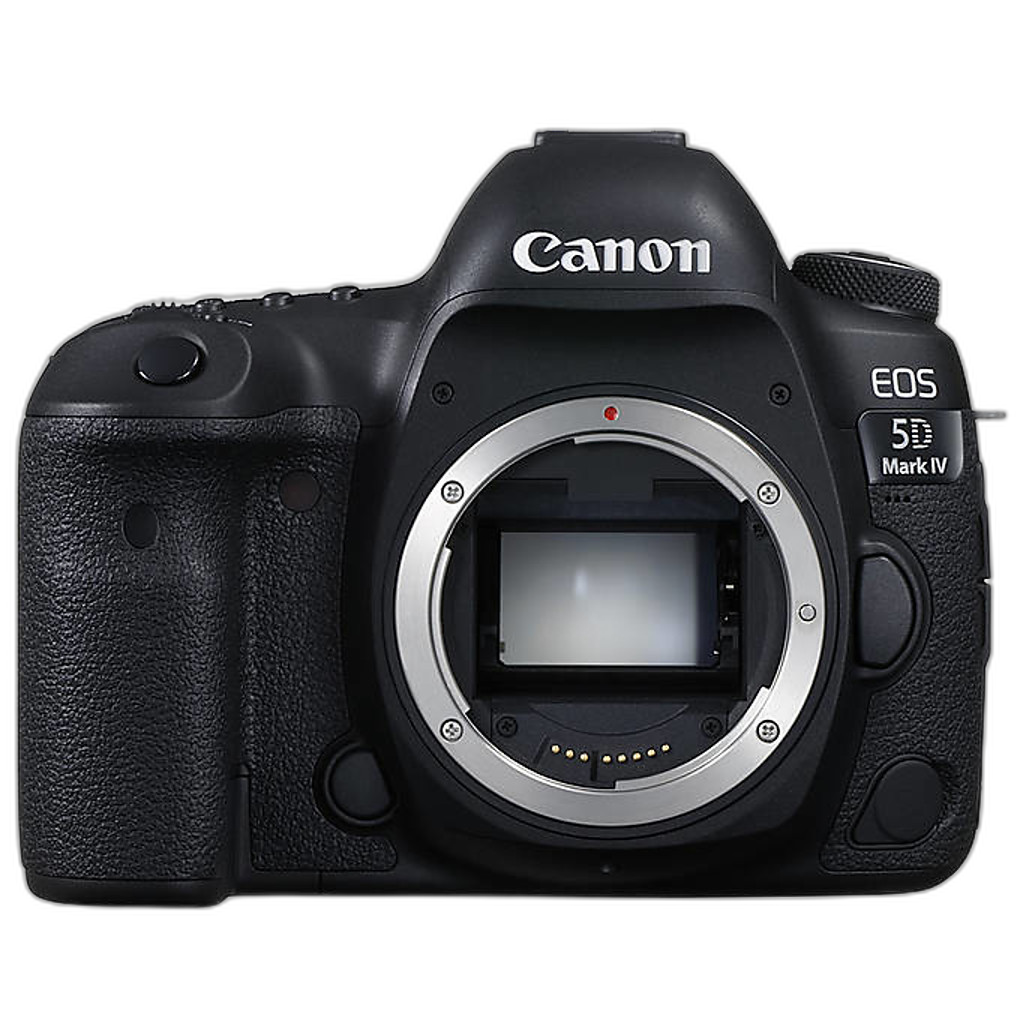
A New Kind of Full-Frame Canon DSLR
The Canon EOS system had already established itself as a leader in digital SLR development by 2005, but the EOS 5D occupied a particularly important place in that progression. Rather than following the formula of the company’s top-end professional bodies, the 5D was conceived as a more compact, more attainable full-frame option built around the Canon EF mount. For photographers invested in EF lenses, this mattered enormously. A full-frame sensor allowed familiar lenses to behave as they had on 35mm film, restoring the expected angle of view without the crop factor associated with smaller APS-C sensors.
That made the EOS 5D especially compelling for landscape photographers, wedding photographers, portrait shooters, studio professionals, and advanced amateurs who had long wanted digital capture without sacrificing the classic rendering of their wide-angle and standard prime lenses. In many ways, Canon was not just launching another DSLR; it was answering a growing demand from photographers who wanted a digital body that fit naturally into their existing lens kits and visual habits.
The Headline Feature: 12.8MP Full-Frame CMOS Sensor
At the center of the EOS 5D was its 12.8MP full-frame CMOS sensor, and this was the camera’s defining achievement. In 2005, the significance of full-frame digital capture cannot be overstated. It was not merely about resolution, although 12.8 megapixels was a strong figure for the era. It was about image character, lens compatibility, and the ability to work with a larger sensor format that many photographers associated with smoother tonal transitions, broader compositional flexibility, and stronger control over depth of field.
Canon had already earned considerable respect for its CMOS sensor development, and the 5D benefited directly from that reputation. For portrait photographers, the full-frame format promised a more familiar relationship between focal length and subject rendering. For architectural and landscape specialists, wide-angle EF lenses regained their intended coverage. For wedding and event professionals, the camera represented an attractive blend of image quality and relatively manageable size.
Seen from the vantage point of its release period, the EOS 5D was a camera whose sensor alone justified serious attention. It offered a specification that had previously implied a far steeper financial commitment. At $3,299, it still occupied premium territory, but compared with earlier full-frame digital bodies, the 5D made the category feel genuinely approachable.
Why “Affordable” Mattered in 2005
Calling the EOS 5D “affordable” requires historical context. By everyday standards, $3,299 was and remains a substantial investment. But in the DSLR market of 2005, full-frame was typically associated with significantly higher-priced professional cameras. Canon’s decision to release the 5D at this price point helped redefine what advanced users could realistically aspire to own.
This positioning was central to the 5D’s identity. It was not introduced as a stripped-down compromise. Instead, it was presented as a serious photographic tool for users who valued image quality first and did not necessarily need the heavier build, integrated vertical grip design, or sports-oriented emphasis of a flagship body. That distinction proved important. The EOS 5D appealed to photographers who wanted full-frame benefits in a package that felt closer to a conventional high-end EOS camera than a specialized top-tier press machine.
As a result, the camera quickly attracted interest from a broad cross-section of the photographic community. Professionals saw it as a practical second body or even a primary tool for certain assignments. Enthusiasts viewed it as an aspirational but finally attainable route into full-frame digital photography. In market terms, Canon had identified and expanded a crucial middle ground.
Canon EF Mount Compatibility and the Appeal to Existing Users
The Canon EF mount was another major part of the EOS 5D’s importance. By 2005, Canon users often had substantial investments in EF glass, including fast primes, wide-angle zooms, and specialized lenses built around the 35mm image circle. The 5D’s full-frame sensor allowed these lenses to be used in the way many photographers originally expected when they purchased them.
This was especially meaningful for photographers transitioning from film EOS bodies to digital. The move to APS-C digital had brought many advantages, but it also changed how familiar focal lengths behaved. A 24mm lens no longer looked like 24mm on the sensor. With the EOS 5D, Canon gave photographers a digital body that restored the traditional perspective of their lenses. That made the camera feel not just advanced, but comfortable and intuitive.
In practical terms, the 5D supported continuity. Photographers could bring established EF lens kits into the digital era with fewer compromises, and that continuity helped strengthen Canon’s already formidable EOS ecosystem.
A Camera Defined by Image Quality and Practical Design
One of the most notable aspects of the EOS 5D at launch was its sense of balance. This was not a camera built to dominate spec sheets through brute force alone. Its appeal came from a combination of full-frame capture, strong resolution for the era, EF lens compatibility, and a body style that did not feel unnecessarily oversized. It represented a practical, photographer-centered approach to camera design.
That balance helped distinguish the 5D from more specialized models. The camera’s announcement suggested that Canon understood an increasingly diverse digital market. Not every serious photographer needed the same tool. Some prioritized speed and maximum durability for news or sports. Others wanted high image quality, dependable operation, and the visual advantages of full-frame in a body suited to travel, weddings, portraits, editorial work, or fine-art practice. The EOS 5D squarely addressed the latter audience.
Even in the moment of its debut, there was a sense that Canon had created a camera with unusually broad appeal. It could satisfy demanding users without positioning itself exclusively as a top-of-the-line press body. That distinction helped define the 5D line’s identity from the start.
The EOS 5D’s Place in DSLR History
Historically, the Canon EOS 5D deserves recognition as one of the most influential DSLRs of its era. Its importance lies not simply in being a full-frame camera, but in helping normalize full-frame as a realistic option for a much larger segment of photographers. The phrase “first affordable full-frame DSLR” captures the spirit of its impact, even if affordability here must be understood in professional photographic terms rather than consumer-electronics terms.
The 5D demonstrated that there was a substantial market for a full-frame DSLR below the highest professional price bracket. In doing so, it helped reshape expectations across the industry. It also reinforced Canon’s reputation for sensor innovation and system depth at a time when digital photography was maturing rapidly and users were becoming more specific about the tools they wanted.
From today’s perspective, the original EOS 5D remains a landmark model because it bridged two worlds: the established language of 35mm photography and the expanding possibilities of digital capture. At release, it represented liberation for photographers who had been waiting for a digital camera that felt more like their trusted film SLRs in format and lens behavior. That made it more than a product launch; it was a milestone in how digital photography evolved.
Conclusion
The Canon EOS 5D arrived in 2005 as a remarkably significant announcement: a 12.8MP full-frame CMOS DSLR with the Canon EF mount and a launch price of $3,299 that brought full-frame capture to a wider audience than ever before. It was a camera aimed at photographers who cared deeply about image quality, familiar lens rendering, and the creative advantages of the 35mm format in digital form. For many, it was the long-awaited answer to a simple question: when would full-frame digital become realistically attainable?
As an archival look back, the EOS 5D stands as one of Canon’s most consequential DSLR introductions. To explore historic camera milestones like this one, or to shop Canon gear and learn more about the EOS system, visit Unique Photo.