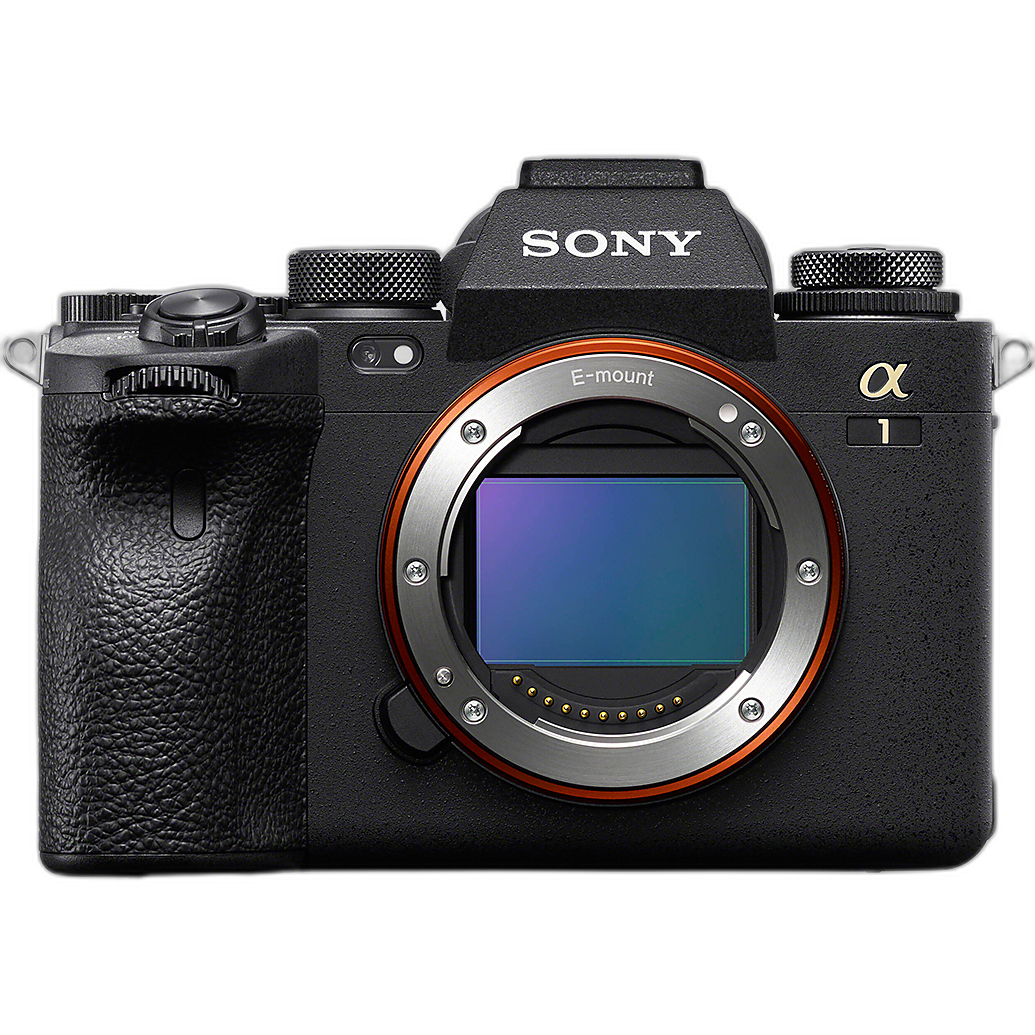
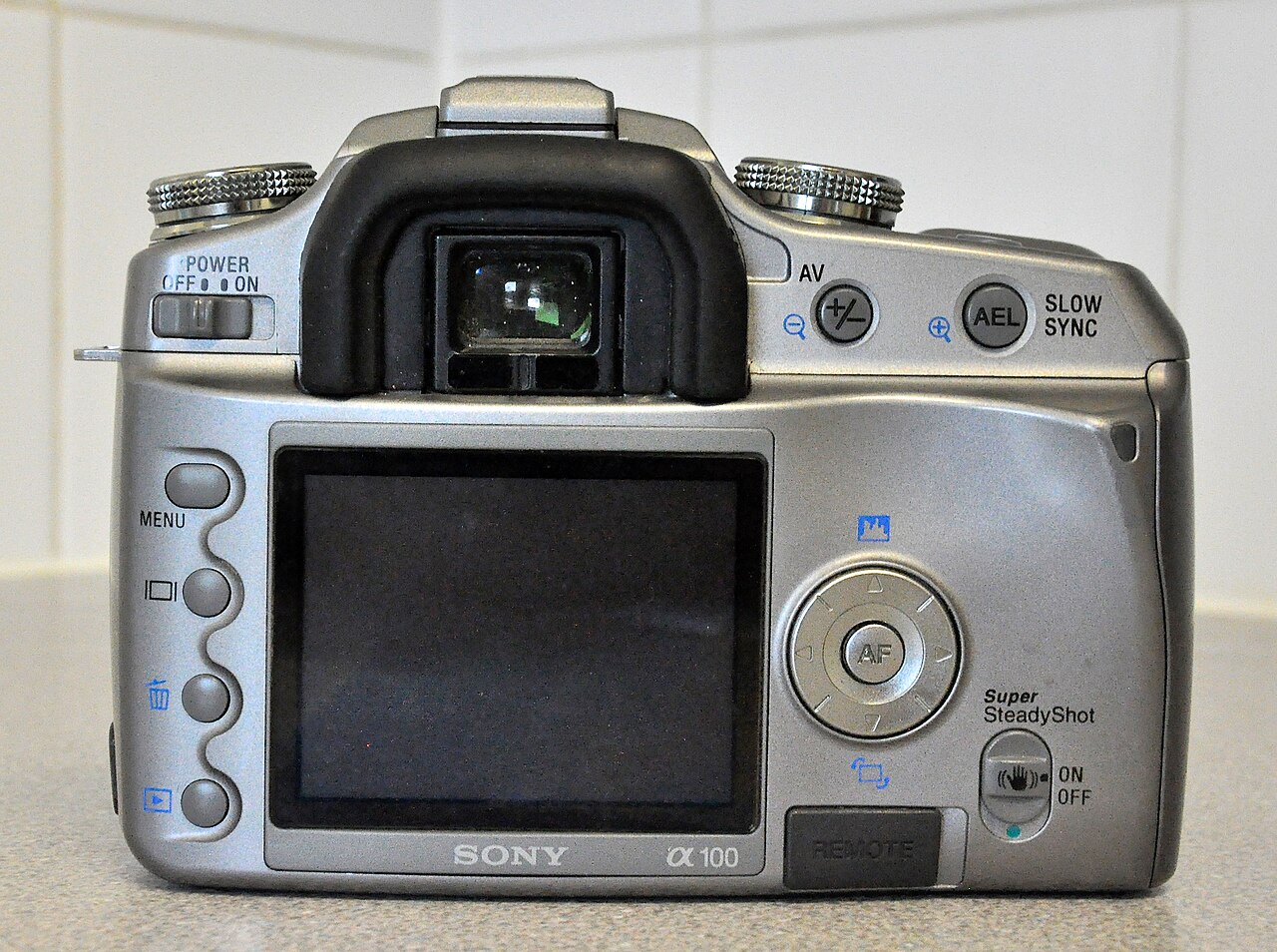
With the launch of the Sony Alpha A100 on June 5, 2006, Sony made its formal entry into the digital SLR market in a way that immediately felt familiar to Minolta users. Rather than starting from scratch, Sony introduced its first DSLR on a foundation that clearly carried forward the Minolta A-mount tradition, pairing that legacy with Sony branding, electronics expertise, and a strong signal of long-term ambition in interchangeable-lens photography.
At introduction, the Alpha A100 arrived as a camera of unusual importance. It was not simply another new DSLR in a busy mid-2000s market. It represented continuity for photographers invested in the Minolta system, while also marking the beginning of what Sony hoped would become a major new chapter in digital imaging. With a 10.2MP APS-C CCD sensor, in-body image stabilization, compatibility with Sony/Minolta A-mount lenses, and a launch price of $899, the A100 entered the conversation as both a practical camera and a statement of intent.
A Turning Point After Konica Minolta
To understand the Alpha A100, it helps to understand the moment that produced it. Earlier in 2006, Konica Minolta announced its withdrawal from the camera business, ending a long and respected history in photographic equipment. That left many photographers wondering what would become of the Minolta lens ecosystem, especially the A-mount system that had been in use since the autofocus era began in the 1980s.
Sony's answer was the Alpha system. By introducing the A100 with Sony/Minolta A-mount compatibility, Sony effectively told existing Minolta users that their lenses still had a future. That message mattered. Lens investment has always been one of the defining commitments in photography, and a mount's survival often determines whether photographers stay with a system or leave it behind. The A100 therefore arrived with significance beyond its spec sheet: it was a bridge between one company's heritage and another company's future.
Sony's First DSLR
The Alpha A100 holds a special place in camera history as Sony's first DSLR. In 2006, Sony was already a powerful name in consumer electronics, but the DSLR field was a different kind of challenge. Photographers expected not just attractive hardware and digital know-how, but also lenses, accessories, handling, and system depth. By entering through the A-mount platform, Sony gained immediate legitimacy and a ready-made ecosystem that had already proven itself in film and digital Minolta cameras.
The camera's naming also mattered. "Alpha" had prior history within Minolta branding in some markets, and Sony's adoption of the name helped establish continuity while giving the system a new identity under the Sony banner. In hindsight, the A100 stands as the opening model in what would become a much larger Sony interchangeable-lens story.
Core Specifications at Launch
At the heart of the Alpha A100 is a 10.2MP APS-C CCD sensor. In the release period, that resolution placed the camera competitively in the enthusiast DSLR segment. For many photographers in 2006, 10.2 megapixels was more than enough for serious everyday use, from family photography and travel to editorial work and moderate-size prints.
The use of an APS-C format sensor helped balance image quality, body size, and lens practicality. Just as important, the CCD sensor gave the camera a character consistent with the digital imaging expectations of the time. While later years would see CMOS technology take over much of the market, the CCD-based A100 belongs to a specific era of DSLR development when sensor rendering and color response were part of many photographers' buying considerations.
The Alpha A100 launched at $899, making it an accessible entry point for photographers moving up from compact digital cameras, as well as a compelling option for existing Minolta users seeking continuity in the digital SLR world.
In-Body Image Stabilization as a System Advantage
One of the most noteworthy features of the A100 at introduction was its in-body image stabilization. This was an especially meaningful carryover from Minolta's approach. Rather than requiring stabilization to be built into individual lenses, the camera body itself provided the feature.
That design gave the A100 a clear practical appeal. Photographers using compatible Sony/Minolta A-mount lenses could benefit from stabilization without needing specialized stabilized optics. In the mid-2000s, this was a real differentiator. It suggested system-wide value and made older lenses more attractive in digital use.
For longtime Minolta photographers, this was reassuring. For new Sony buyers, it was a strong argument in favor of the system. In-body stabilization helped the A100 feel not only competitive, but thoughtful in how it delivered value across a lens lineup.
The Importance of the A-Mount
The Sony Alpha A100 uses the Sony/Minolta A mount, and this was central to its identity from day one. Lens compatibility was not a side note; it was one of the camera's biggest selling points. The continuation of the A-mount meant that a large installed base of lenses retained relevance in the new Sony era.
That kind of continuity can shape buying decisions for years. A camera body may be replaced every few product cycles, but lenses often remain in a kit much longer. By preserving the mount, Sony reduced friction for existing users and gave the A100 immediate access to a lens heritage that many first-generation systems do not have.
Just as importantly, the A100's mount linked Sony's first DSLR not merely to a technical standard, but to a photographic lineage. Minolta had long been associated with autofocus innovation and strong enthusiast cameras, and the A100 inherited that context the moment it was announced.
Who the A100 Was For in 2006
Viewed in its own release period, the Alpha A100 was positioned for a broad but clearly defined audience. It appealed to upgraders entering DSLR photography, especially buyers already familiar with Sony as a consumer electronics brand. It also spoke directly to Minolta users looking for reassurance after a period of uncertainty.
For first-time DSLR buyers, the camera offered an attractive blend of resolution, interchangeable lenses, and stabilization in a system body from a globally recognized company. For established A-mount photographers, it offered something even more valuable: a continuation path.
That dual appeal was one of the A100's greatest strengths. It was not only a new camera; it was a stabilizing product at a moment when many photographers were deciding whether to remain with their existing lenses or change systems entirely.
A Historical Perspective
Today, the Sony Alpha A100 is best understood as a pivotal camera rather than merely an early one. It was the first DSLR to carry Sony's Alpha branding, but it was also a camera deeply shaped by the Minolta legacy that preceded it. Its 10.2MP APS-C CCD sensor, in-body image stabilization, and Sony/Minolta A-mount compatibility made it a credible and historically significant debut.
In retrospect, the A100 represents a rare kind of launch: a beginning that was also an inheritance. Sony did not enter the DSLR market empty-handed. It entered by taking stewardship of a system that already mattered to photographers, then signaling that the mount, lenses, and users would not be left behind.
For collectors, historians, and longtime Alpha shooters, the A100 remains an important milestone in modern camera history. It marks the exact point where Minolta's DSLR legacy passed into Sony's hands and where Sony's interchangeable-lens ambitions became real in the marketplace.
Closing Thoughts
The Sony Alpha A100 may be remembered as Sony's first DSLR, but that description alone undersells its role. This was a camera that carried a system forward at a moment of uncertainty, combining a 10.2MP APS-C CCD sensor, in-body stabilization, and A-mount continuity into a launch that mattered far beyond a simple product announcement. For anyone interested in the history of Sony, Minolta, or the evolution of digital SLRs, the A100 remains an essential camera to know.
To explore classic camera history, learn more about legacy systems, or shop current Sony gear and more, visit Unique Photo.