Get Better Audio on Location: A Practical Buying Guide
Clean, consistent audio can make or break your video. Whether you’re a beginner filming your first interview or a seasoned pro running-and-gunning for doc work, this guide distills community-favorite tips and budget-friendly pathways to better sound. We’ll cover the right microphones for the job, wireless systems that hold up outside the studio, and workflow advice for syncing your audio—plus specific product picks available at Unique Photo.
What to Consider Before You Buy
- Environment: Indoors vs. outdoors, noisy vs. controlled. Wind and traffic change your gear priorities.
- Number of voices: Solo talent? Two-person interview? Panel? Choose mics and wireless links accordingly.
- Rig and mobility: Handheld camera, gimbal, or locked-off tripod affects whether you go wired or wireless.
- Connectivity and power: XLR vs. 3.5mm, phantom power needs, rechargeable vs. AA batteries.
- Workflow: Will you record in-camera or to an external recorder and sync later?
Product Recommendations
Rode NT5 Cardioid Studio Condenser Microphone (Single)
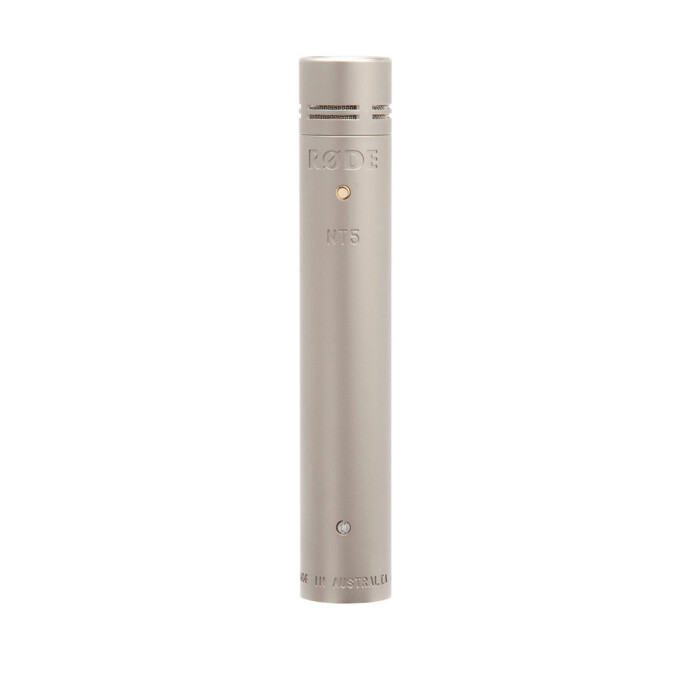
The Rode NT5 is a small-diaphragm cardioid condenser trusted for its natural, detailed sound. On location, it shines on a boom for indoor dialog, voiceover in a quiet space, or capturing instruments and ambience. It requires 48V phantom power and a clean preamp, but rewards you with clarity that lavs and on-camera mics often miss.
- Best for: Indoor dialog on a boom, music and foley, ambience beds
- Connection: Balanced XLR (requires 48V phantom power)
- Why it’s great: Tight cardioid pattern for focused pickup and controlled room tone
Saramonic Blink 500 Pro B8 4-Person Wireless 2.4GHz System
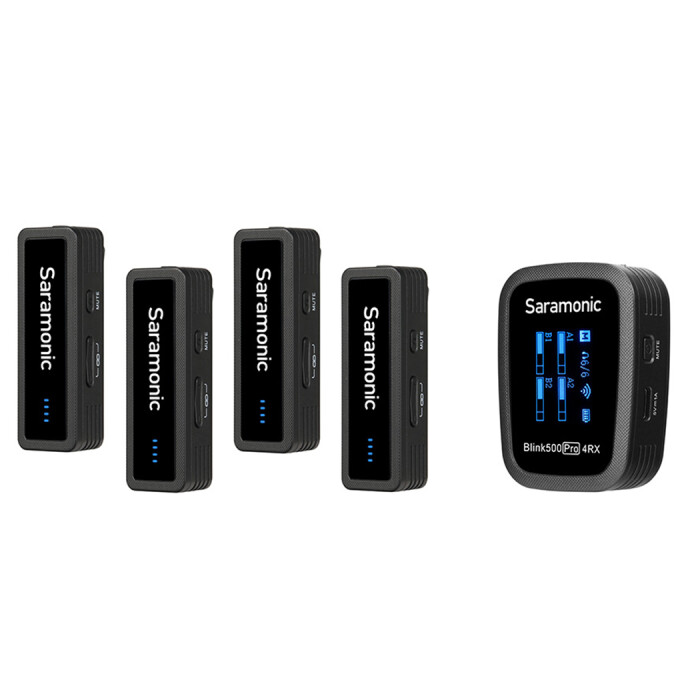
When you need to mic multiple speakers fast, the Blink 500 Pro B8 delivers. This compact 2.4GHz system is built for quick deployment, simple pairing, and flexible mounting to cameras or mobile rigs. It’s a go-to for interviews, panels, weddings, or multi-talent social content.
- Best for: 2–4 person interviews, events, quick-turn productions
- Connection: Camera-friendly 3.5mm output; rechargeable convenience
- Why it’s great: Portable multi-person coverage without a steep learning curve
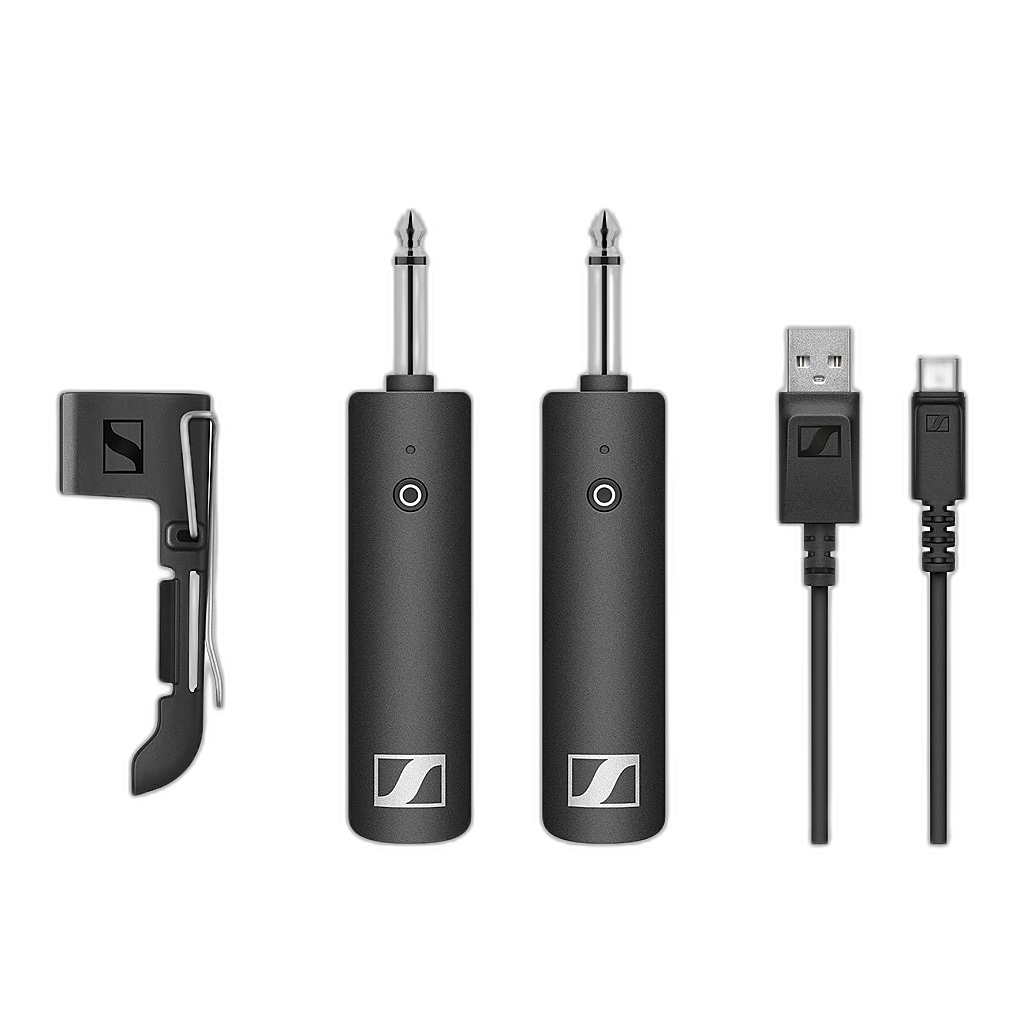
Sennheiser XSW-D Instrument Base Set Wireless (2.4 GHz)
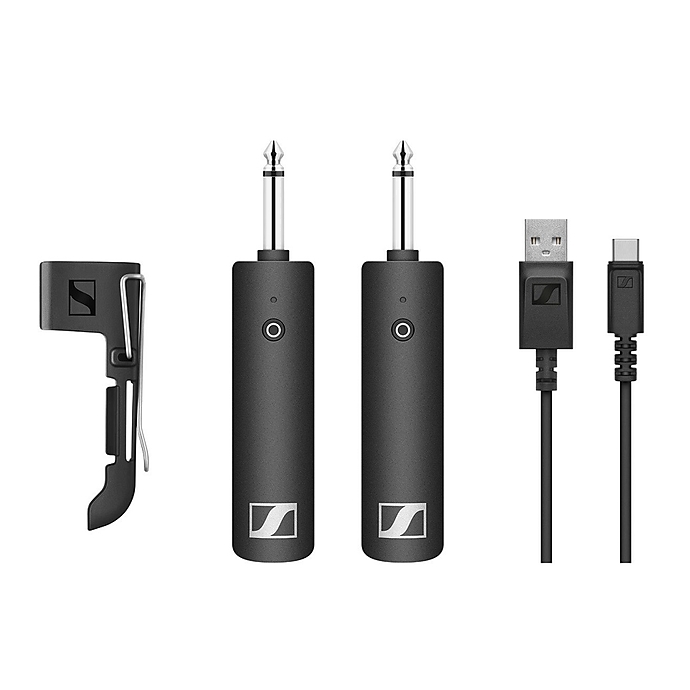
Originally designed for instruments, this XSW-D set provides a simple 2.4GHz wireless link that can double as a utility hop in video workflows. With the right adapters, it’s handy for sending audio from a field mixer/recorder to your camera for a reliable scratch track or reference feed.
- Best for: Wireless camera hops from line/instrument-level sources
- Connection: 1/4-inch instrument-style I/O (use adapters as needed)
- Why it’s great: Minimal setup, dependable short-range wireless for reference audio
Sony URX-P40 Camera-Mount Wireless Receiver (UC14: 470–542 MHz)
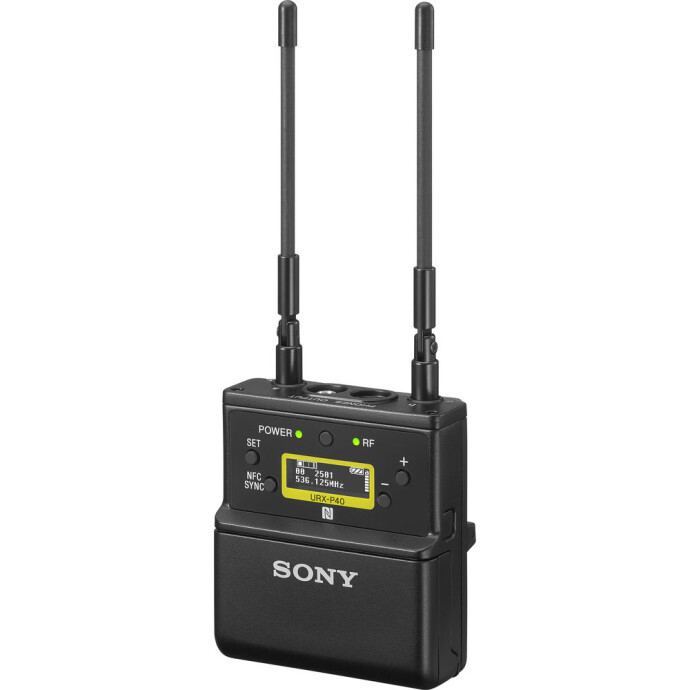
Stepping into UHF territory offers improved spectrum management versus crowded 2.4GHz environments. The URX-P40 is a robust camera-mounted UHF receiver compatible with select Sony UWP-D transmitters (sold separately). It’s built for professional shoots where stability and frequency coordination matter.
- Best for: Broadcast, documentary, and corporate work in RF-dense areas
- Connection: Camera-ready 3.5mm output
- Why it’s great: Reliable UHF performance and flexible pairing within Sony’s UWP-D ecosystem
At-a-Glance Comparison
| Product | Type / Band | Typical Use | Talent Supported | Output | Power | Key Notes |
|---|---|---|---|---|---|---|
| Saramonic Blink 500 Pro B8 | Digital wireless / 2.4GHz | Interviews, events, mobile video | Up to four-person coverage | 3.5mm to camera/recorder | Rechargeable | Fast setup; compact multi-person solution |
| Sennheiser XSW-D Instrument Base Set | Digital wireless / 2.4GHz | Instrument-to-camera, utility hop | Point-to-point | 1/4-inch (use adapters as needed) | Rechargeable via USB | Great for simple links and scratch tracks |
| Sony URX-P40 Receiver | UHF wireless receiver | Pro dialog capture with compatible TX | Single channel (per receiver) | 3.5mm to camera | AA batteries | Stable UHF operation; requires compatible Sony UWP-D transmitter |
| Rode NT5 (Single) | Wired condenser mic | Indoor boom, voiceover, foley | One source | XLR (48V phantom) | External phantom power | Natural, detailed sound; ideal in controlled spaces |
Accessory Essentials for Location Sound
- Wind control: Foam windscreens for light breeze; add deadcats or blimps outdoors.
- Mounting: Shock mounts reduce handling noise when booming the NT5 or other mics.
- Cables and adapters: Keep short, quality 3.5mm and XLR cables; adapters for 1/4-inch when using XSW-D as a hop.
- Power management: Spare AA batteries for UHF kits; USB power banks for rechargeable systems.
- Monitoring: Closed-back headphones for reliable on-set confidence checks.
Workflow and Sync Tips
- Slate and spikes: A quick clap before rolling gives you a sync point for camera and external audio.
- Dual-system sound: Recording to an external recorder? Feed a scratch track to camera (XSW-D or similar) for easy alignment later.
- Gain staging: Set transmitter and receiver levels conservatively to avoid clipping; monitor on headphones.
- Channel strategy: If your camera records two channels, consider a safety track at a lower level.
- RF planning: In crowded RF areas, UHF systems with more frequency options can reduce dropouts.
Budget-Based Picks
- Best budget for multi-talent: Saramonic Blink 500 Pro B8—fast, portable four-person wireless for interviews and events.
- Best for controlled indoor dialog: Rode NT5 on a boom with proper wind/shock isolation and phantom power.
- Best for RF-dense shoots: Sony URX-P40 receiver paired with compatible Sony UWP-D transmitters (sold separately) for robust UHF performance.
- Best utility hop/reference feed: Sennheiser XSW-D Instrument Base Set with appropriate adapters from your mixer/recorder.
Our Pick
The Bottom Line
Match the tool to the job: use a quality wired mic like the Rode NT5 for controlled interiors, lean on flexible 2.4GHz systems like the Saramonic Blink 500 Pro B8 for quick multi-person setups, deploy utility links such as the Sennheiser XSW-D Instrument Base Set for reference audio, and step into UHF with Sony’s URX-P40 for more demanding, interference-prone environments. Need help dialing in a complete kit? Visit or contact Unique Photo—our team can help you choose and configure the right on-location audio system for your workflow and budget.