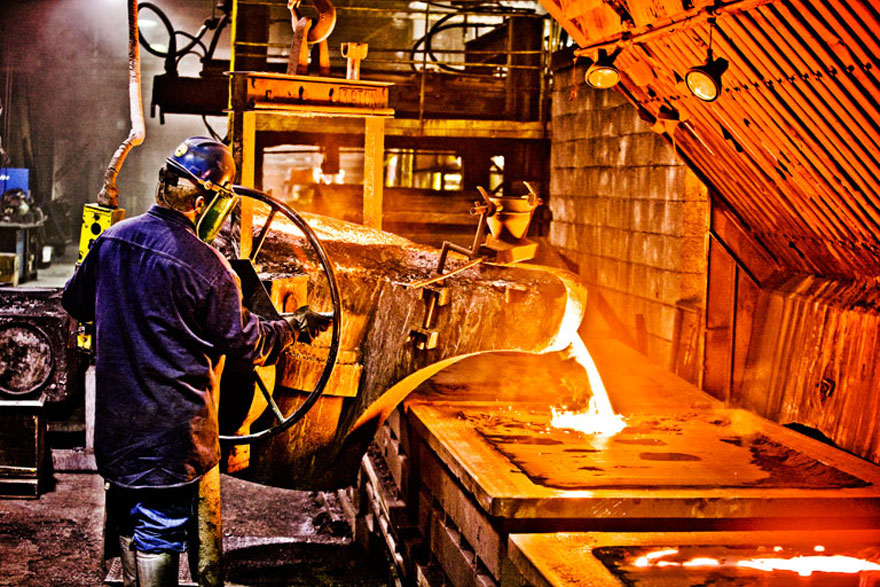
What many photographers don't realize is that machines and the world around them could make for some really fascinating pictures. Industrial photography if pursued diligently could provide you with the most gritty and raw images ever envisaged by the human psyche. Industrial photos include worn-and-torn machinery, perspiring unkempt laborers, soot, fire, and whole lot of other stark material. If done right, one could seriously contemplate building a reputable career as an industrial photographer. Let's take a small tour and find out just what is industrial photography all about. Along the way, you could even gain some valuable industrial photography tips that could serve you for a long time, in case you deliberate on treading this rare but highly profitable stream of photography as your career path.

Photo Credits - Jorg Dickmann
Industrial photography constitutes anything pertaining to a company's products, facilities, infrastructure, ambiance, or its employees, especially those toiling in the manufacturing section of the company. At times, pictures of managers or executives could also be included to spruce up the photo shoot. But remember, that no shoot containing industrial photos would ever be complete without capturing the manufacturing process and laborious construction jobs performed by the workers. Some more attractive pictures of the company could be shot by capturing its more tranquil public relations and advertising sectors.

Photo Credits - Stygian Echo

Photo Credits - Commercial Photographer Kent

Photo Credits - Flickr - Compound Eye
In order to develop your dexterity as a competent industrial photographer, you need to be versatile with myriad traits such as photojournalism, product photography, architectural shots, and portraits. You must be able to communicate through your images and for this you first need to communicate your ideas to your subjects. Depending on the nature or location of the shoot, you might also need to cough up some decent amount of dough for high-end shooting and lighting gear. Also, to be taken seriously as an industrial photographer, you always need to be neat and presentable, since most of the time you'll be dealing with the high brass of management in the corporate sector.

Photo Credits - Flickr - Luisfraguada
In order to make your pictures stand out from other industrial photos, you need to know what to capture and how to strike the right balance between the diverse kinds of machinery you shoot. Miniature details of technical hardware, electronic parts, and miniscule machine parts always complement the otherwise bulky machines and messy surroundings that generally flood a normal portfolio of industrial photos. For this reason, you need to be well versed with the art of shooting closeups and macro photos. To achieve this, you'd also need to carry along macro lenses, macro accessories, and other prerequisite equipment such as ring flashes in your kit.
Initially, one might need to assist a well-qualified and experienced industrial photographer to grasp the finer nuances of the trade. Only once you feel you have acquired sufficient knowledge to branch out on your own, should you start undertaking your own assignments. Begin with smaller and easier kind of endeavors and once you are confidence of your skills, you could start accepting bigger assignments from larger companies.

Photo Credits - Xaxor.com
The future of industrial photography is very bright. So, if you do decide to build your career as a photographer in this particular fields, be assured that with the right amount of hard work, guidance, and capital, there is no reason why you couldn't build a successful career as an industrial photographer.
Featured Image, Photo Credits: Scott Miller